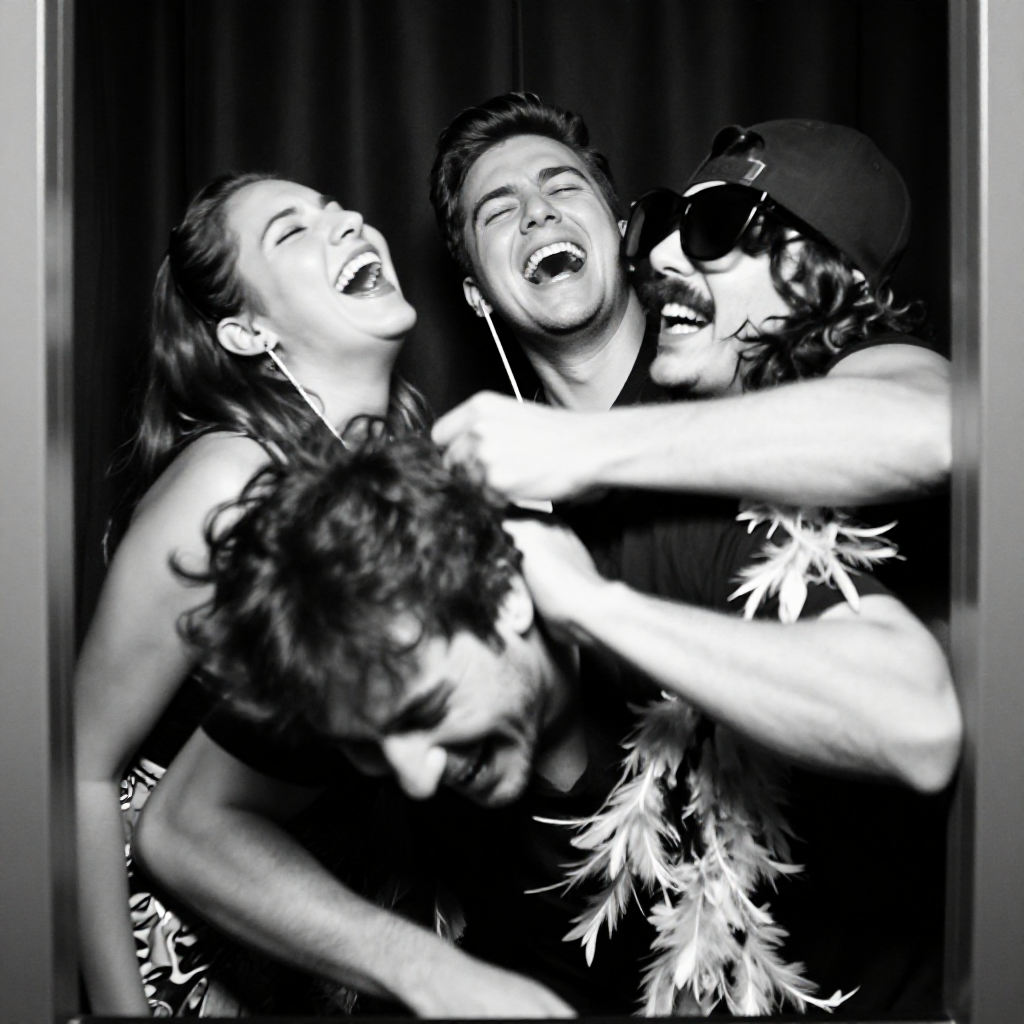
The cultural needle has moved. After a decade of chasing sun-drenched, perfectly staged, and filter-polished perfection, the collective visual taste has decisively swung in favor of one quality: authenticity. In 2026, the biggest trend in visual culture…from wedding albums to corporate branding…is the embrace of documentary style photography. It’s a shift that champions the raw, the immediate, and the unscripted moment over the choreographed tableau.
For years, photography’s gold standard was the posed portrait. Think of the family gathered, everyone looking directly at the camera with their best, practiced smile; the newly married couple locked in an art-directed embrace against a golden-hour backdrop; or the influencer striking a confident, static posture in front of an aesthetically pleasing wall. These images are beautiful, technically flawless, and entirely predictable. They capture what the moment should have looked like, not what it felt like.
Today, viewers are experiencing severe “aesthetic fatigue.” We have become so saturated with polished, curated content that our eyes skip right over anything that appears too perfect. A forced smile registers not as joy, but as performance. The moment a camera is brought up to the eye, a social contract is activated: the subject goes into “photo mode,” a stiff, self-conscious shell that actively inhibits genuine emotion. The photographer, no matter how talented, becomes a director, and the authenticity of the scene immediately plummets. We are now hungry for the grit, the off-guard glance, the genuine burst of laughter that crinkles the eyes just a little too much…the kind of photograph that proves the moment was real, not manufactured.
This is where the power of documentary-style photography truly shines. Unlike a traditional photographer, whose very presence can shape or spoil a scene, the documentary photographer is a ghost. Their mission is to observe, not intervene. They operate on the fringes, capturing the stolen moments: the nervous hand-holding under the table, the best man’s emotional reaction during the toast, the child mid-toddle with a face full of cake. These are the moments that hold the true emotional narrative of an event, and they are, by their very nature, unrepeatable and utterly authentic.
The goal isn’t technical perfection; it’s emotional resonance. A slightly blurry, poorly framed photo of unbridled joy will always resonate more deeply with a modern audience than a crisp, perfect image of feigned composure. The former contains a story; the latter contains an instruction.The Ultimate Test Case: Why Unattended Capture is King
If the key to modern photography is the removal of self-consciousness, the ultimate proof of concept lies in a tool that completely eliminates the photographer: the unattended photo booth.
The paradox of the photo booth is its genius. It is a space designed for performance…it invites you in, offers props, and gives you a clear task…but it removes the single greatest source of performance anxiety: the judgment of a skilled professional. When a dedicated photographer is in the room, subjects are aware of the rules of good photography: stand up straight, smile naturally, find your light, don’t look directly at the flash unless instructed. This self-monitoring is the death of authenticity.
The photo booth, however, changes the rules of the game entirely. Once the curtain is pulled, or the countdown begins, the participants are in a contained, private world. The pressure shifts from “I must produce a beautiful photograph for an artist” to “I am here with my friends to be silly, and the camera is merely a witness.” It is a psychological release valve. The moment the first flash goes off, the true documentary process begins.
Think about the dynamics:1. The Privacy Factor: The small, enclosed space creates intimacy. It encourages spontaneous touching, whispering, and genuine, uninhibited reactions that would never happen in front of a photographer. The subjects are playing to each other, not to the camera.
2. The Time-Lag Effect: The camera is on a timer. The subjects know they have a few seconds between flashes. This gap is where the magic lives. A posed shot captures the peak of the smile. An unattended photo booth captures the split-second before the pose collapses, the mutual eye-roll at a friend’s failed attempt at a serious face, the desperate adjustment of a ridiculous hat, or the sudden, unplanned head-to-head collision. These are the frames a professional photographer is almost guaranteed to miss, because their focus is on the peak moment, not the delightful chaos surrounding it.
3. The Element of Surprise: Unlike a professional camera system, which is often silent or gives a clear verbal cue, many unattended systems fire quickly or with an unannounced pattern. This captures a unique kind of unscripted joy…the shock of the flash, the immediate burst of shared laughter at the unexpectedness of it all. It’s the visual equivalent of a genuine chuckle that escapes before the subject can clamp down on it.The Unscripted Joy: Moments the Pro Misses
The true value of this approach is in the outtakes. While a photographer aims for the perfect portfolio shot, the unattended booth captures what we could call the “joyful debris” of an event. – The Belly Laugh: A photographer might capture a nice, composed smile. The photo booth captures the subject throwing their head back in an uncontrollable, soundless burst of laughter, their mouth wide open, eyes squeezed shut, an image that is technically unflattering but emotionally invaluable.
– The Blurry Mess of Affection: Two people, overcome with sudden warmth, might accidentally move too close, resulting in a blurry, out-of-focus capture of just their foreheads and an arm thrown around a shoulder. This visual mess, this moment of genuine, uncontrolled affection, is a goldmine for documentary value. It screams, “We were happy and forgot the camera existed!”
– The Prop Chaos: The moment where the fake mustache falls off mid-snap, or the prop signs are briefly…and hilariously…held upside down. This deliberate chaos and self-sabotage is a sign that the subjects have completely dropped their guard and are operating purely for the sake of shared fun.In 2026, clients are not just buying a set of images; they are buying proof that their event was emotionally resonant, spontaneous, and genuine. They want evidence of the human connection, not just the aesthetic perfection. When they look back at a photo booth strip, they are not seeing a staged picture, but a four-frame mini-narrative of escalating silliness and intimacy.
The integration of the unattended photo booth is a tactical move that embraces the 2026 zeitgeist. It’s a tool that works in direct support of the broader documentary mission, offering the raw, high-contrast, unedited proof of a moment’s unscripted joy. It’s the anti-curation device…a reminder that the best photographs are often the ones we didn’t plan to take, but desperately needed to have. By prioritizing these raw, human slices of life, we move beyond creating mere images and start capturing authentic history. This is why the candid moment, in all its messy, glorious imperfection, has decisively beaten the posed portrait.