Tag: Film Photography

  • Documentary Style: Why Candid Moments Beat Posed Portraits

    Documentary Style: Why Candid Moments Beat Posed Portraits

    The cultural needle has moved. After a decade of chasing sun-drenched, perfectly staged, and filter-polished perfection, the collective visual taste has decisively swung in favor of one quality: authenticity. In 2026, the biggest trend in visual culture…from wedding albums to corporate branding…is the embrace of documentary style photography. It’s a shift that champions the raw, the immediate, and the unscripted moment over the choreographed tableau.

    For years, photography’s gold standard was the posed portrait. Think of the family gathered, everyone looking directly at the camera with their best, practiced smile; the newly married couple locked in an art-directed embrace against a golden-hour backdrop; or the influencer striking a confident, static posture in front of an aesthetically pleasing wall. These images are beautiful, technically flawless, and entirely predictable. They capture what the moment should have looked like, not what it felt like.

    Today, viewers are experiencing severe “aesthetic fatigue.” We have become so saturated with polished, curated content that our eyes skip right over anything that appears too perfect. A forced smile registers not as joy, but as performance. The moment a camera is brought up to the eye, a social contract is activated: the subject goes into “photo mode,” a stiff, self-conscious shell that actively inhibits genuine emotion. The photographer, no matter how talented, becomes a director, and the authenticity of the scene immediately plummets. We are now hungry for the grit, the off-guard glance, the genuine burst of laughter that crinkles the eyes just a little too much…the kind of photograph that proves the moment was real, not manufactured.

    This is where the power of documentary-style photography truly shines. Unlike a traditional photographer, whose very presence can shape or spoil a scene, the documentary photographer is a ghost. Their mission is to observe, not intervene. They operate on the fringes, capturing the stolen moments: the nervous hand-holding under the table, the best man’s emotional reaction during the toast, the child mid-toddle with a face full of cake. These are the moments that hold the true emotional narrative of an event, and they are, by their very nature, unrepeatable and utterly authentic.

    The goal isn’t technical perfection; it’s emotional resonance. A slightly blurry, poorly framed photo of unbridled joy will always resonate more deeply with a modern audience than a crisp, perfect image of feigned composure. The former contains a story; the latter contains an instruction.The Ultimate Test Case: Why Unattended Capture is King

    If the key to modern photography is the removal of self-consciousness, the ultimate proof of concept lies in a tool that completely eliminates the photographer: the unattended photo booth.

    The paradox of the photo booth is its genius. It is a space designed for performance…it invites you in, offers props, and gives you a clear task…but it removes the single greatest source of performance anxiety: the judgment of a skilled professional. When a dedicated photographer is in the room, subjects are aware of the rules of good photography: stand up straight, smile naturally, find your light, don’t look directly at the flash unless instructed. This self-monitoring is the death of authenticity.

    The photo booth, however, changes the rules of the game entirely. Once the curtain is pulled, or the countdown begins, the participants are in a contained, private world. The pressure shifts from “I must produce a beautiful photograph for an artist” to “I am here with my friends to be silly, and the camera is merely a witness.” It is a psychological release valve. The moment the first flash goes off, the true documentary process begins.

    Think about the dynamics:1. The Privacy Factor: The small, enclosed space creates intimacy. It encourages spontaneous touching, whispering, and genuine, uninhibited reactions that would never happen in front of a photographer. The subjects are playing to each other, not to the camera.
    2. The Time-Lag Effect: The camera is on a timer. The subjects know they have a few seconds between flashes. This gap is where the magic lives. A posed shot captures the peak of the smile. An unattended photo booth captures the split-second before the pose collapses, the mutual eye-roll at a friend’s failed attempt at a serious face, the desperate adjustment of a ridiculous hat, or the sudden, unplanned head-to-head collision. These are the frames a professional photographer is almost guaranteed to miss, because their focus is on the peak moment, not the delightful chaos surrounding it.
    3. The Element of Surprise: Unlike a professional camera system, which is often silent or gives a clear verbal cue, many unattended systems fire quickly or with an unannounced pattern. This captures a unique kind of unscripted joy…the shock of the flash, the immediate burst of shared laughter at the unexpectedness of it all. It’s the visual equivalent of a genuine chuckle that escapes before the subject can clamp down on it.The Unscripted Joy: Moments the Pro Misses

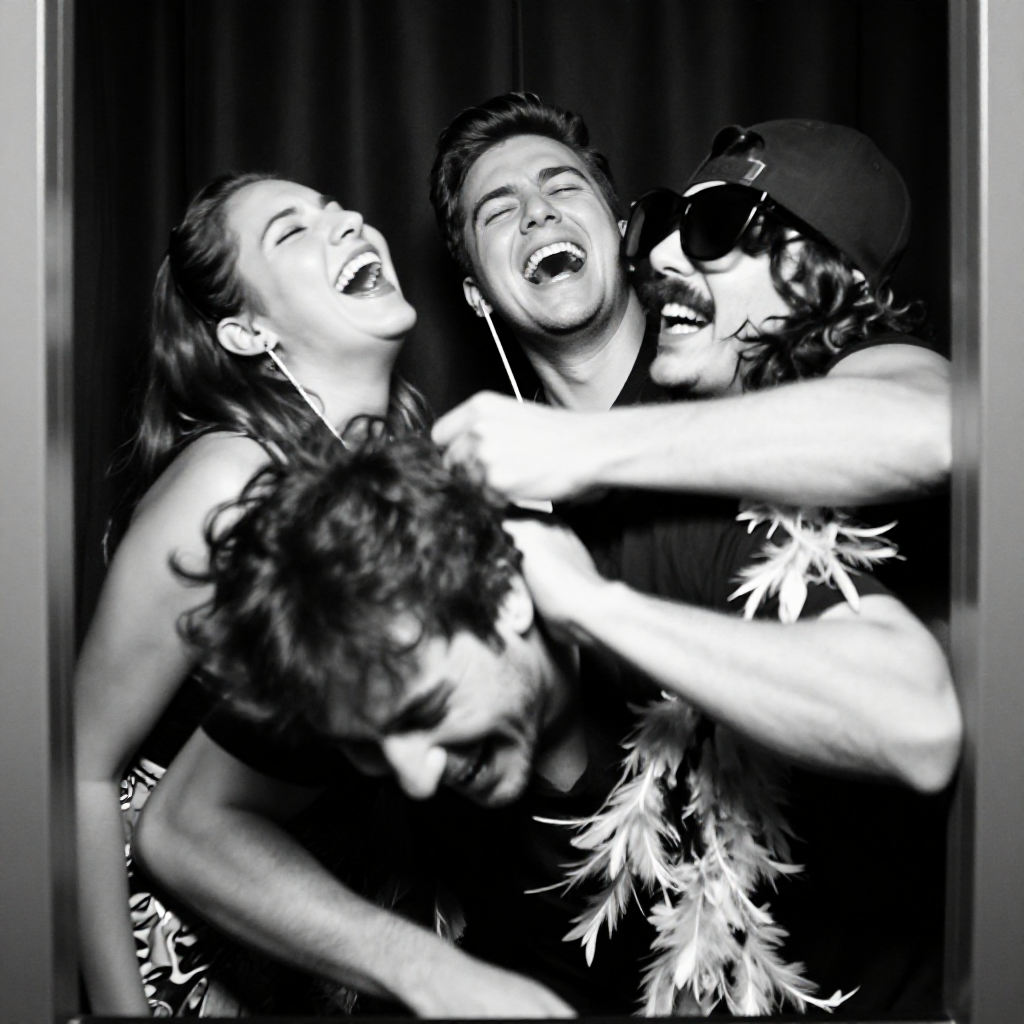
    The true value of this approach is in the outtakes. While a photographer aims for the perfect portfolio shot, the unattended booth captures what we could call the “joyful debris” of an event. – The Belly Laugh: A photographer might capture a nice, composed smile. The photo booth captures the subject throwing their head back in an uncontrollable, soundless burst of laughter, their mouth wide open, eyes squeezed shut, an image that is technically unflattering but emotionally invaluable.
    The Blurry Mess of Affection: Two people, overcome with sudden warmth, might accidentally move too close, resulting in a blurry, out-of-focus capture of just their foreheads and an arm thrown around a shoulder. This visual mess, this moment of genuine, uncontrolled affection, is a goldmine for documentary value. It screams, “We were happy and forgot the camera existed!”
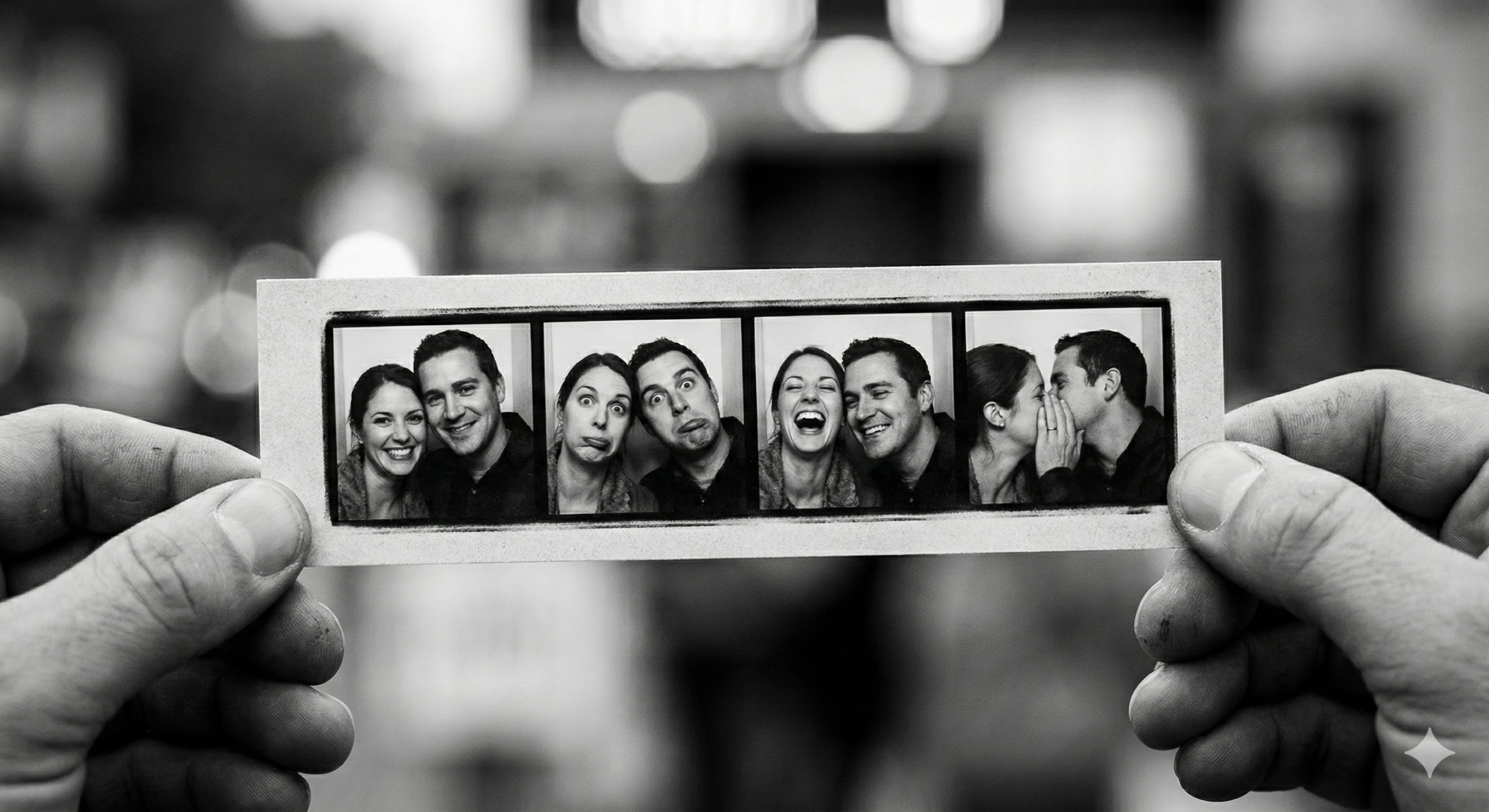
    The Prop Chaos: The moment where the fake mustache falls off mid-snap, or the prop signs are briefly…and hilariously…held upside down. This deliberate chaos and self-sabotage is a sign that the subjects have completely dropped their guard and are operating purely for the sake of shared fun.In 2026, clients are not just buying a set of images; they are buying proof that their event was emotionally resonant, spontaneous, and genuine. They want evidence of the human connection, not just the aesthetic perfection. When they look back at a photo booth strip, they are not seeing a staged picture, but a four-frame mini-narrative of escalating silliness and intimacy.

    The integration of the unattended photo booth is a tactical move that embraces the 2026 zeitgeist. It’s a tool that works in direct support of the broader documentary mission, offering the raw, high-contrast, unedited proof of a moment’s unscripted joy. It’s the anti-curation device…a reminder that the best photographs are often the ones we didn’t plan to take, but desperately needed to have. By prioritizing these raw, human slices of life, we move beyond creating mere images and start capturing authentic history. This is why the candid moment, in all its messy, glorious imperfection, has decisively beaten the posed portrait.
  • The “Vintage” Filter: Why We Hate It (And Why We Love Raw)

    The “Vintage” Filter: Why We Hate It (And Why We Love Raw)

    The modern aesthetic revolution is defined by one fundamental truth: we are filter-fatigued. The heavy-handed “vintage” filters of the early 2010s…sepia washes, aggressive vignetting, and manufactured scratches…have been soundly rejected, especially by Gen Z, who crave authenticity. They don’t want a digital representation of the past; they want the true characteristics of film photography. This distinction is everything. A filter adds a layer of artifice; true film characteristics are a function of light, chemistry, and optics. They are imperfections that tell a real story.

    Analog film photograph of section 1 related to The

    To replicate the coveted film look naturally in your ZillaBooth shots, you must stop thinking in terms of post-production layers and start thinking like a film photographer managing a constrained, chemical medium. The key is in manipulating light and contrast before you press the shutter.1. Embrace Imperfect Lighting and Underexposure: Film has a much more limited dynamic range than a modern digital sensor. When shooting, a film photographer had to choose what to sacrifice: highlights or shadows. The result is often a ‘moody’ look with deep, crushed blacks and perhaps slightly blown-out highlights.

    To mimic this: – Low-Key Setup: In ZillaBooth, intentionally use lighting that is slightly too dim for the scene, forcing the digital sensor to struggle and creating dramatic, inky shadows. – Manual Exposure Adjustment: Manually underexpose the shot by about -0.5 to -1 stop. This prevents the sensor from automatically lifting the shadows, which is what gives digital images their “clean” but often sterile look. By underexposing, you create a rich, heavy tonal range reminiscent of properly printed film that wasn’t trying to be perfectly balanced.2. The Warmth of Aged Emulsion: Many people associate “vintage” with a warm, slightly reddish tint. This is not a sepia filter; it’s the natural result of certain film stocks, print paper, or chemical shifts over time.

    Analog film photograph of section 2 related to The

    – Manual White Balance: Ignore the auto white balance. Manually shift your ZillaBooth white balance to a warmer Kelvin temperature (e.g., 5500K-6000K for a daylight-balanced shoot that wants a subtle, warm shift). This will naturally bathe the entire scene in a soft, golden cast that is far more nuanced and integrated than any overlaid filter. The subtle color shift feels organic and interacts realistically with the existing light sources in the shot.3. Soft Diffusion and Lens Glow: The lenses on old, inexpensive film cameras often weren’t perfectly sharp and lacked the sophisticated coatings of modern digital lenses.

    This resulted in a slight softness and a characteristic “glow” around bright highlights. – Simple Diffusion: For a natural glow, place a single layer of a very sheer material (like a thin stocking or a piece of plastic wrap) carefully over your ZillaBooth lens. This acts as an organic light diffuser, slightly softening the focus and creating a beautiful, subtle ‘bloom’ around light sources. This is a practical, in-camera effect that digital filters attempt to mimic poorly. – Avoid Over-Sharpening: Turn off any in-camera sharpening features to maintain that smooth, slightly fuzzy quality that film is known for.By focusing on these in-camera lighting, exposure, and lensing techniques within ZillaBooth, you are not applying a fake effect; you are engineering a high-quality digital image that inherently possesses the raw, imperfect, and beautiful characteristics that make true film photography timeless. It’s about light management, not filter application.

  • Film Photography Vibes: Why We Still Love the “Grain”

    Film Photography Vibes: Why We Still Love the “Grain”

    In an era dominated by instantaneous, high-resolution, and algorithmically perfect digital images, a surprising and deeply satisfying trend has taken hold: the resurgence of film photography. It’s more than a mere aesthetic choice; it’s a cultural counterpoint to the relentless pursuit of digital perfection.

    We have reached peak clarity. Our smartphone cameras, powered by computational wizardry, correct for every flaw, banish every shadow, and smooth every texture. And yet, what we truly crave are the imperfections…the light leaks, the accidental blur, the soft colors, and, most importantly, the inimitable texture of the “grain.” This craving is not just for the look of film, but for the feeling of it, and a new generation of users is discovering that the power of a tangible visual keepsake is far greater than that of a file saved in the cloud.

    The comeback of film is intrinsically linked to nostalgia…specifically, the nostalgia for a time when photography was deliberate, limited, and resulted in a physical object. A roll of film was finite. Each click of the shutter carried a cost and a risk. You wouldn’t know what you had until it was developed.

    This deliberate, slow, and physical process is the antithesis of modern digital photography, where we shoot hundreds of photos and immediately delete ninety-five of them, never truly bonding with the few we keep. The “grain”…that beautiful, organic texture resulting from silver halide crystals on film…is the fingerprint of that analog process. It signals authenticity, imperfection, and a moment captured without the heavy hand of over-editing. It is an aesthetic of trust: trust in the moment, trust in the light, and trust in the process.

    Analog film photograph of section 1 related to Film Photography Vibes: Why We Still Love the

    But the film phenomenon runs deeper than just texture and color palettes. It’s about the form in which these memories are kept. When we think of vintage photography, we picture stacks of Polaroids, shoeboxes of printed 4x6s, or even slides.

    These objects have weight, a scent, and a distinct physical presence. They can be held, shared, and rediscovered years later. In this space of profound digital fatigue, where our photos are trapped in an endless, undifferentiated stream on a phone’s camera roll, the desire for a physical, defined, and shareable format has become a dominant psychological need. We want keepsakes, not data.

    This is where the venerable photo booth and its classic 1×4 film strip format re-enters the conversation, not just as a novelty, but as a powerfully resonant memory vessel. The photo strip is perhaps the ultimate example of a “tangible visual keepsake.” It is a cultural icon. Think about it: four small, square images, arranged vertically, connected by the chemical-stained border of the strip. Each image is a mini-narrative…a progression of goofy faces, shared kisses, or spontaneous bursts of laughter.

    The strip itself is slender, easily pocketed, tacked onto a corkboard, or slipped into a wallet. It is inherently personal, collectible, and utterly resistant to the tyranny of the digital feed. The magic of the photo strip is that it forces a moment of performance and finality. You get four shots, and that’s it.

    The genius of ZillaBooth Pro is its recognition of this cultural demand, translating the spirit and physical constraints of the classic analog photo booth into a powerful, accessible modern tool. The key element is its signature 1×4 strip layout. By deliberately structuring the digital output into this instantly recognizable format, ZillaBooth Pro doesn’t just mimic the look of a physical strip; it satisfies the psychological craving for that defined, tangible keepsake.

    Analog film photograph of section 2 related to Film Photography Vibes: Why We Still Love the

    When a user selects the 1×4 strip layout in ZillaBooth Pro, they are not just selecting a template; they are opting into a curated experience that replicates the scarcity and progression of the analog process. The app guides the user through four distinct, sequential captures. This process encourages spontaneity and performance in a way a single digital shot never could. The images are meant to tell a story: the first shot is often the most controlled, the final two are the most expressive and relaxed.

    Crucially, the ZillaBooth Pro output is designed for both digital sharing and, more importantly, for physical printing . A traditional digital image file is an undefined, boundless entity. A ZillaBooth Pro 1×4 strip file, however, is a pre-formatted, printable object . When printed, the strip emerges as a perfect, standardized visual artifact, ready to be pinned up, given away, or archived.

    This direct translation from screen to object is the core of its appeal. It bypasses the complexity of a regular photo printer, eliminating questions about cropping, size, and aspect ratio. You hit print, and you have your tangible keepsake. This streamlined process is essential for bridging the gap between digital ease and analog desire.

    Furthermore, ZillaBooth Pro enhances the nostalgic experience by layering in film-emulating effects that work perfectly within the high-contrast photo booth context. Users can apply filters that introduce realistic digital “grain,” subtle vignettes, and color shifts that mimic the aging or imperfect chemical development of film stock.

    The application often incorporates the classic high-contrast black and white look…a staple of vintage photo booths…which inherently enhances the dramatic, raw, and spontaneous feeling associated with physical media. When these grain and color filters are combined with the rigid structure of the 1×4 layout, the final product feels less like a photo and more like a cherished piece of history, instantly created.

    Analog film photograph of section 3 related to Film Photography Vibes: Why We Still Love the

    The ZillaBooth Pro’s focus on the 1×4 strip is a brilliant move that addresses the limitations of the modern digital landscape. In the vast, infinite scroll of a social media feed, a single photo is easily lost. But a photo strip…especially one featuring the iconic texture and visual progression of the ZillaBooth Pro output…demands attention. It is a visual blockquote, a curated micro-gallery of a moment, and its distinct shape makes it a statement piece. It’s an instant signifier of fun, retro charm, and intentional memory-making.

    For many, the app’s value lies in its ability to recapture the communal, shared experience of the photo booth. We are drawn to film because it is a shared experience. You take photos with friends, you wait for the final strip, and you instantly divide the tangible memory between you. ZillaBooth Pro allows for this same dynamic interaction: friends gather, pose, and see their four-shot story unfold, culminating in a printout that is immediately split and treasured. It transforms a solo digital activity back into a group performance, forging stronger emotional links to the resulting images.

    In conclusion, the passion for film photography and the enduring appeal of the “grain” is not a fleeting trend but a significant shift toward value, substance, and tangibility in our digital lives. ZillaBooth Pro has successfully tapped into this desire by recognizing that the format is just as important as the content.

    By standardizing the output to the nostalgic, powerful 1×4 strip, and overlaying it with authentic film-like textures, ZillaBooth Pro is not simply a camera application.

    It is a modern engine for generating “tangible visual keepsakes.” It offers users a deliberate, curated, and wonderfully nostalgic way to capture, print, and cherish the moments that matter, rescuing our memories from the infinite, undifferentiated abyss of the digital camera roll and giving them the physical weight and personality they deserve. The grain, in this context, is more than just an effect…it’s the beautiful, imperfect signal that this memory is real, it’s ours, and it’s meant to be held.

  • The “Old School” Disposable Camera Trend (Without the Development Cost)

    The “Old School” Disposable Camera Trend (Without the Development Cost)

    The return of the harsh, unfiltered flash is one of the most surprising and dominant photography trends of 2026. After years of chasing soft, natural light, carefully editing out shadows, and defaulting to our phone’s automatic low-light settings, we’ve collectively thrown out the rule book and embraced the high-contrast, often unflattering aesthetic of the direct flash photograph. It’s not just a passing fad; it’s a full cultural moment rooted deeply in nostalgia for the late 1990s and early 2000s, an era when inexpensive point-and-shoot digital cameras and the classic disposable film cameras reigned supreme.

    What the modern photographer is craving is the “off-the-cuff” feel…that raw, sequential aesthetic born from a device that required zero technical expertise and gave you exactly what you got. It’s the look of spontaneity, a visual diary of real life captured without the digital artifice of filters, airbrushing, or meticulous staging.

    The disposable camera, with its non-diffused, front-facing flash, was the master of this style, casting deep, unmistakable shadows, often blowing out skin tones, and creating dramatic, high-contrast highlights. It’s a vibe that screams “This was taken right now and no one had time to adjust the lighting.” It feels real, spontaneous, and unposed.

    This aesthetic is the visual equivalent of lo-fi music…imperfect, slightly rebellious, and immediately evocative. It’s the raw energy that contrasts sharply with the meticulously curated, sun-drenched perfection that has dominated social media for the past decade. The shadows are part of the story, the blown-out highlights are a badge of authenticity, and the intense focus on the subject creates an undeniable sense of drama.

    The Expensive Wait for Authenticity

    So why not just buy an actual disposable camera? The truth is, while the aesthetic is cool, the classic “old school” method comes with major pain points that simply don’t fit into our instantaneous digital world. First, there’s the cost. Disposables are not cheap, and the film and developing fees quickly add up, turning a fun trend into an expensive habit.

    Analog film photograph of section 1 related to The

    Second, and perhaps the biggest hurdle: the wait. You have to finish the roll, drop it off, and wait anywhere from a few days to a week to see your pictures. That delay kills the immediacy of a moment, frustrating a generation used to instant feedback. You might realize your flash wasn’t working, or the moment was totally missed, but only after your memories have been held hostage in a lab for a week. The environmental cost of single-use plastic and chemical development is also a growing concern for many.

    This is where ZillaBooth enters the chat. We understand you want the look…that raw, sequential aesthetic…without the week-long wait, the cost per photo, or the environmental guilt. ZillaBooth is the ultimate digital equivalent of the classic disposable camera, giving you the power to capture that raw, high-contrast aesthetic instantly on your iPhone. It’s about leveraging your phone’s camera to behave exactly like a primitive, flash-forward-only point-and-shoot, but with the instant gratification of a modern device.

    Mastering the Look with ZillaBooth Pro

    Replicating the “disposable camera aesthetic” requires forcing your phone’s incredibly smart camera to override its automatic settings and behave in a simple, almost brutal way. The key lies in manual control over the flash, which is where a dedicated professional camera app like ZillaBooth Pro becomes essential. Your iPhone’s standard camera app is designed to prevent the harsh, high-contrast look you’re actually after, so we need to step outside of its controlled environment.

    Analog film photograph of section 2 related to The

    The core mechanism of the aesthetic is the Direct Flash…a technique that creates the same high-contrast, dramatic look found in those late ’90s/early ’00s shots. This style is often referred to as the ‘Paparazzi Aesthetic’ because it mimics the intense, unfiltered look of celebrity street style from tabloid magazines and grainy, late-night party photos taken in dimly lit clubs.

    Here is the tutorial for mastering the high-contrast aesthetic with ZillaBooth Pro:

    Step 1: Download and Open ZillaBooth Pro

    The journey begins with the application itself. If you haven’t already, download the ZillaBooth Pro application. This app is the gateway to granular control over your iPhone’s camera settings, crucially including the flash function that the native camera app manages automatically to avoid the desired harsh effect.

    Analog film photograph of section 3 related to The

    Step 2: Locate the Flash Control and Go Manual

    Once inside the ZillaBooth Pro interface, locate the flash icon…usually a small lightning bolt. In the standard iPhone app, this is often set to ‘Auto’ or ‘Off.’ Within ZillaBooth Pro, you’ll see primary settings for the flash: Auto, On, and Off. This is the crucial moment: set the flash control to Manual “Flash On”.

    Analog film photograph of section 4 related to The

    This single action is the secret sauce. It forces the flash to fire at its maximum intensity every single time you press the shutter, regardless of how bright the scene actually is. You want the flash to overpower the ambient light…even if there is plenty of natural light…which is what creates those signature deep, black shadows and the dramatic, spotlight look on your subject. The lack of diffusion is key; the iPhone’s tiny flash is perfect for this, as it acts like the unrefined light source of a classic point-and-shoot disposable.

    Step 3: Select Your Subject and Background for Maximum Drama

    The aesthetic works best when there is a strong, dramatic contrast between the subject and the background. * The Subject: The direct flash will highlight texture, makeup, and fabric dramatically. Encourage your subject to look directly at the camera for the classic, direct confrontation look, or let them move naturally in a chaotic setting to maximize the perceived spontaneity.

    Analog film photograph of section 5 related to The

    * The Background: Look for settings with deep shadows or busy, interesting textures, like a dark brick wall, a crowded bar, or a street scene at night. The harsh flash will powerfully cut your subject out of the darkness and push the background into deep shadow, enhancing the drama and sense of isolation common in this aesthetic. Step 4: Adjust Exposure (The Aggressive Underexposure Move)

    Even with the flash forced on, you can fine-tune the drama using ZillaBooth Pro’s manual controls. While the flash is active, try slightly underexposing the shot using ZillaBooth Pro’s manual exposure slider. This will make the shadows even deeper and the highlights of the flash pop even more aggressively, reinforcing the “spotlight” effect that defines the disposable aesthetic. For maximum effect, also use the manual focus control to ensure your subject is razor-sharp. The extreme contrast created by the direct flash demands perfect focus to maintain the image’s overall impact.

    Step 5: Shoot and Review Instantly

    Take the shot. The result should be a high-contrast image with a distinct, vintage-digital feel. Pay attention to the shadows…they should be harsh, dark, and clearly defined behind your subject. Look for the reflective qualities in eyes, jewelry, or glossy fabrics, which should gleam intensely under the direct, undiffused light. Best of all? You see it immediately. No waiting, no cost, no waste.

    Pro Tips for Digital Disposable Perfection

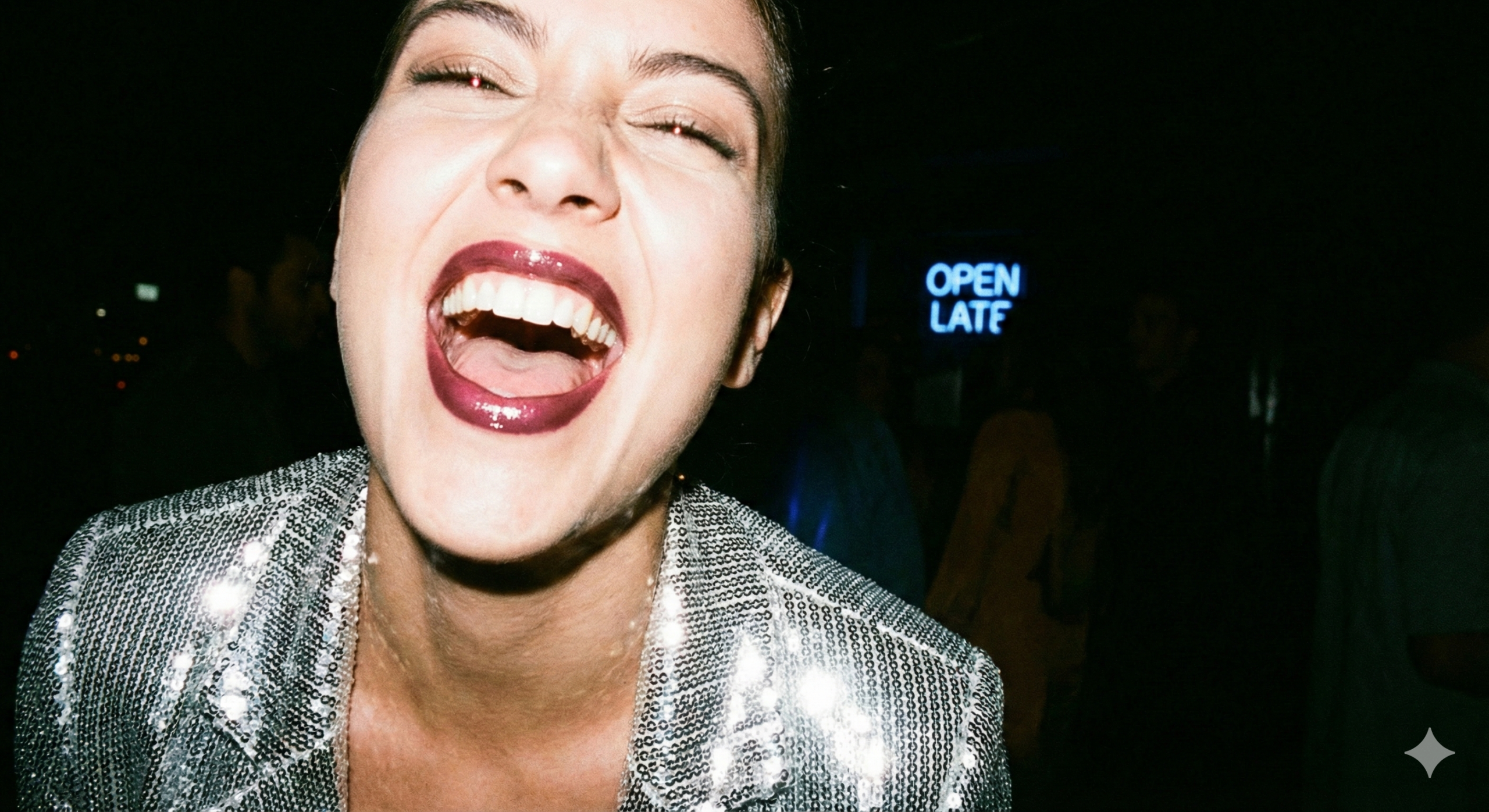
    To elevate your digital disposable game beyond a simple snapshot and into a refined piece of editorial-style content, keep these professional tips in mind:1. Embrace the Red Eye: Unlike conventional photography where red-eye is a flaw to be corrected, in this aesthetic, it can be a feature. Don’t worry about editing it out. It adds to the raw, uncontrolled, and nostalgic feel of a genuinely spontaneous late-night flash photo.

    1. Focus on Texture: Direct flash is unforgiving, but that’s its strength. It aggressively magnifies texture. Shoot subjects wearing sequins, vinyl, metallic finishes, or heavy glitter. The intense light will bounce off these materials, creating an explosive, dynamic effect that elevates the drama and adds an almost cinematic quality to the shot.

    2. Get Close: The Inverse Square Law is Your Friend: The closer you are to your subject, the more intense and dramatic the flash effect will be. Due to the physics of light, the inverse square law means the light from your phone’s small flash will fall off rapidly; this means your subject will be brilliantly illuminated while everything even a few feet behind them will dissolve into shadow. This enhances the “spotlight” or “caught in the act” effect which is the hallmark of the spontaneous aesthetic.

    3. Shoot in Broad Daylight (The Ultimate Power Move): Don’t reserve the flash just for dark environments. For the most aggressively contrasting and fashion-forward look, use the forced flash during the day. This technique, sometimes called “fill flash” (though here it’s more of an “overpower flash”), creates a surreal, hyper-real look where the sunlight and the flash compete, resulting in ultra-deep black shadows and perfectly lit faces…a signature style of editorial fashion photography from the early 2000s that gives the image a sense of heightened reality.

    4. Black and White Conversion: While shooting in color, consider a high-contrast black and white conversion afterward. The tonal separation created by the direct flash translates beautifully into dramatic monochrome, often mimicking the look of classic tabloid photography that had to be printed quickly and cheaply.The disposable camera trend isn’t about taking better photos in the traditional, technically perfect sense; it’s about taking photos with more personality and more story. It’s a statement against the polished, perfect grid, a rebellion in favor of the real, the raw, and the dramatically lit. ZillaBooth allows you to access this potent hit of digital nostalgia instantly and consistently, giving you the classic, sequential, and raw aesthetic you crave without the week-long wait or the development cost. Step out of the soft light and into the shadows, and let ZillaBooth be the source of your next great, imperfectly perfect shot.