Category: Photo Booth History

  • The “Photomaton”: The Machine That Started It All

    We live in an age of instant gratification, particularly when it comes to images. The photos we take on our phones are reviewed, edited, and uploaded before the shutter click echo has faded. In a world defined by this speed…where a modern service like ZillaBooth processes and sends your eight-shot digital strip straight to your email in less than a second…it’s easy to forget that the very concept of automated, self-service photography started with a patient, 8-minute wait.

    This is the origin story of the photo booth, a tale that begins not with a flash drive or a high-resolution sensor, but with a complex chemical process bubbling in the dark, and a Russian immigrant inventor named Anatol Josepho.

    The year was 1925, and the location was a bustling New York City street. The world was still amazed by the automobile, jazz was sweeping the nation, and having a personal photograph taken was still a formal, expensive endeavor, typically requiring a trip to a professional studio, careful posing, and a wait of several days for development. Josepho’s invention, which he dubbed the “Photomaton,” changed all of that forever. It was a revolutionary machine that promised to turn a private, spontaneous moment into a tangible photographic memory…all without a human operator.

    The Photomaton was an instant sensation because it democratized photography. For the price of a single quarter…25 cents, a remarkably accessible sum at the time…the machine would take a series of eight photos. Imagine the scene: a person would step inside the curtained booth, sit on a small stool, compose themselves in front of a lens, and begin the process. The flash would fire, the mechanism would whir, and the user would be left to ponder the results, perhaps nervously smoothing their hair or straightening their tie.

    And then came the wait. Eight minutes.

    In 1925, eight minutes was a miracle of speed. This seemingly brief interval was the time required for a fully automated, intricate dance of photographic chemistry to take place inside the machine. After the negative was exposed, it had to be automatically transported through a series of chemical baths: developer, stop bath, fixer, and wash, before finally being dried and cut into the finished strip of eight portraits. It was a darkroom miniaturized and mechanized…a fully automated photographic laboratory in a box.

    The experience of those eight minutes became part of the ritual. It was a period of anticipation, a small, shared tension with the unknown outcome. Patrons would stand just outside the booth, perhaps chatting with friends or reading a newspaper, waiting for the heavy machine to dispense their paper strip. When the photo strip finally dropped into the collection tray, it was a moment of genuine excitement. The resulting strip, often slightly imperfect, with the subject’s expression changing over the eight exposures, captured a slice of life unlike any other form of photography. It was raw, unposed, and deeply personal.

    The popularity of the Photomaton was staggering. Within six months of its debut, over 280,000 people had used the machine in its original location alone. By 1927, Josepho sold the rights to the Photomaton to a group of investors for a cool million dollars (the equivalent of over $17 million today), cementing the photo booth as a global cultural icon that quickly spread across Europe and the rest of the world. The Photomaton didn’t just take pictures; it created a new social activity and provided the first truly instant visual record for the common person.

    It is only when we step back into the era of the Photomaton that the true marvel of modern technology becomes apparent. The photo booth experience today, exemplified by digital leaders like ZillaBooth, is essentially the same magical ritual, but stripped entirely of the physical and chemical constraints of time.

    Consider the modern experience. The user steps into the booth…still a private, curtained space…and the session begins. They choose their filter, maybe a background, and the countdown starts. In a blur of flashes, eight digital images are captured. But there is no subsequent eight-minute wait. Instead, the images are instantly processed, stitched into a digital strip or GIF, and transmitted via WiFi to a dedicated gallery or directly to the user’s phone in a fraction of a second.

    This instantaneous processing transforms the entire experience from an act of patient retrieval into an opportunity for immediate sharing and creative iteration.

    The modern ZillaBooth is a direct descendant of the 1925 Photomaton, but its fundamental difference is the elimination of the darkroom. The magic no longer happens via developer and fixer baths, but through software algorithms and high-speed memory. The 8-minute wait…the core technical bottleneck of Josepho’s original invention…has been reduced to a non-existent latency. The ratio of time is astonishing: a single ZillaBooth session is 480 times faster than the original Photomaton.

    The evolution from the Photomaton’s chemical delay to ZillaBooth’s digital immediacy showcases a profound shift in consumer culture. In 1925, the novelty was the automation; today, the expectation is the speed. The physical print is often secondary to the digital file, which can be instantly shared across social media platforms, turning a private moment in the booth into a public broadcast.

    Yet, despite the technological gulf, the enduring appeal of the photo booth remains exactly what Anatol Josepho established a century ago. It is still about the four walls, the curtain, and the sense of freedom that comes with a brief, unobserved moment to be silly, intimate, or reflective. It’s a space where people intentionally drop their guard for the camera…something we rarely do in an age of constant surveillance and casual photography.

    The Photomaton was a mechanical wonder that gave people 8 photos for 25 cents after an 8-minute wait. The ZillaBooth is a digital marvel that gives people instant, shareable, high-quality images. The former laid the foundation for accessible portraiture; the latter perfected the speed and shareability of the experience.

    As we stand in a ZillaBooth today, laughing at the instant, perfectly framed digital strip that appears on our screen, we are participating in a tradition started by a visionary inventor nearly a hundred years ago. We no longer have to wait eight minutes, but the essential, spontaneous human desire to capture a moment in time, cheaply and privately, remains the heart of the invention…a legacy we owe entirely to the quiet, chemical genius of the 1925 Photomaton.

  • Happy Birthday, Photo Booth! Celebrating 100 Years of the Automaton

    The year is 1925. In the bustling, electric heart of New York City, a quiet revolution is taking place, not in politics or industry, but in the simple, ephemeral act of recording oneself. A Russian immigrant named Anatol Josepho, driven by a vision of accessible, instant self-portraiture, introduces his invention to the world: the Photomaton.

    The concept was simple, yet utterly transformative: step inside a small booth, drop 25 cents into the slot, and moments later, emerge with a strip of eight photographic portraits. No professional photographer, no long waits for developing, no technical skill required…just you, a curtain, and the machine. Josepho’s invention was an instant, overwhelming sensation. Within six months, over 280,000 people lined up to experience this new automaton, propelling the photo booth from novelty to cultural cornerstone.

    As we stand on the cusp of celebrating the photo booth’s centennial, it’s not just a time for nostalgia, but for appreciating one of the greatest stories of technological survival and adaptation. What Josepho invented was not merely a mechanical box that took pictures; he codified an experience…the act of creating an instant, intimate, and often silly self-portrait…that has survived wars, technological leaps, and the complete transformation of human communication to find its ultimate form right where Josepho may have least expected it: living in your pocket.

    Act I: The Birth of Instant Self-Portraiture (1925–1950s)

    To understand the genius of the Photomaton, you must first understand the context of 1925. Photography was still a relatively formal, expensive, and time-consuming process. Getting a portrait meant scheduling an appointment with a studio photographer, enduring long exposures under bright, hot lights, and then waiting days or weeks for prints to be developed.

    Josepho’s machine blew all those barriers away. The Photomaton offered an unprecedented combination of speed, privacy, and affordability. For a quarter, anyone could get a photographic souvenir. The act of entering the booth and drawing the curtain was a radical moment of personal freedom. Behind that felt curtain, the typical formality of the photograph dissolved, replaced by playfulness.

    The original Photomaton was a marvel of mechanical engineering. It was a darkroom in a box, a complex machine that took and developed the photographs on a single continuous roll of film and photographic paper. The multi-step process…exposing the film, developing it in a series of chemical baths, washing, and drying…all happened autonomously within the machine, culminating in the strip of finished photos sliding out a chute. This mechanical complexity was Josepho’s stroke of genius, earning him over a million dollars for the American rights to his invention…a staggering sum at the time…and sparking a global craze.

    The photo booth quickly became a fixture in train stations, boardwalks, dime stores, and arcades. It was the place where people took passport photos, but more importantly, it was the location for a first date’s stolen kiss, a group of friends making funny faces, or a soldier capturing a final memory before deployment. The photo booth created a new, vital visual artifact: the photo strip, a sequential narrative of four or eight images that told a micro-story.

    Act II: Pop Culture and the Icon Strip (1960s–1990s)

    While the technology slowly changed…color processing arrived, and the chemistry became a little cleaner…the core photo booth experience remained static, allowing its cultural significance to deepen.

    By the mid-20th century, the photo booth was no longer just a machine; it was an icon. It became indelibly associated with youth culture, rebellion, and a specific kind of urban grittiness. Its raw, direct lighting and the inherent sequential nature of the strip were perfect for capturing candid, unpolished moments, a sharp contrast to the staged photos of family albums.

    Perhaps the greatest artistic endorsement came from Andy Warhol, who, in the 1960s, embraced the photo booth aesthetic. Warhol saw the booth’s capacity for creating instant, cheap, reproducible portraits as an extension of his own Pop Art philosophy. He would use photo booth strips as source material for his iconic silkscreen portraits, or simply present the strips themselves as art. In his hands, the humble photo booth strip was elevated from a novelty souvenir to a meditation on identity, celebrity, and mass production.

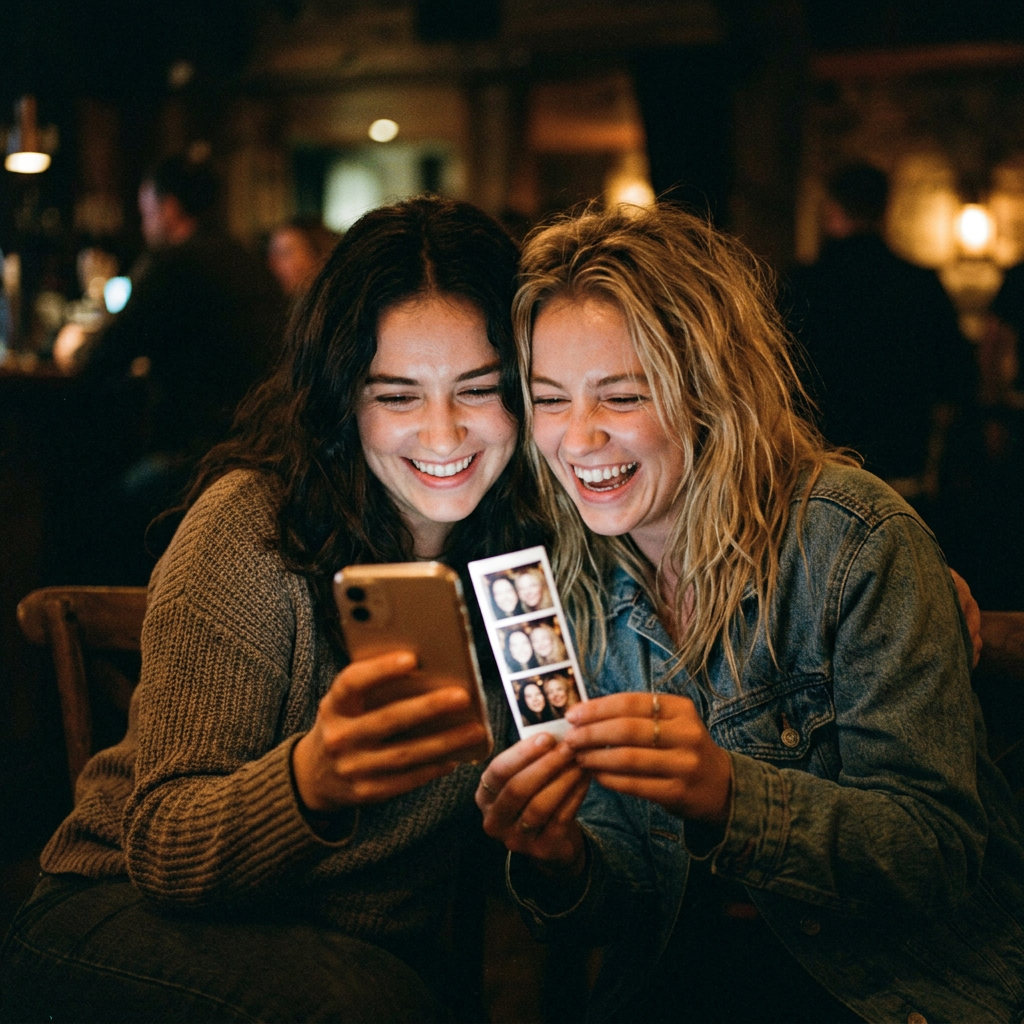
    For generations of teenagers in the 70s, 80s, and 90s, the photo booth was the ultimate analog social media. It was where you cemented a friendship with a strip of four identical, often goofy, poses, trading them with friends to keep in wallets or tape on lockers. The limited space forced intimacy, and the rapid-fire camera encouraged spontaneity, a shared performance under the brief spotlight of the flash. This physical strip, a tangible, slightly fragile piece of evidence, was a testament to “we were here.”

    Act III: The Digital Metamorphosis (2000s–Present)

    As the digital camera emerged in the early 2000s, the physical photo booth faced a crisis. Why pay for a paper strip when you could take an unlimited number of high-resolution digital photos for free? The number of traditional, chemical-processing booths plummeted, and it looked for a time as though Josepho’s invention would be relegated to museum exhibits and vintage arcade corners.

    But Josepho’s true invention…the concept of the instant, fun, disposable self-portrait…was not dead; it was merely preparing for its greatest evolution: it was about to move into your pocket.

    The rise of the smartphone was the photo booth’s ultimate salvation. The modern smartphone is, in essence, the perfect digital Photomaton. It provides the privacy (or lack thereof, if you’re using the front-facing camera) of the original booth, the instant gratification of an immediate result, and the capability to print (or share) the results instantly.

    Every time a user snaps a selfie and applies a filter, they are engaging in a digitized version of the photo booth ritual. When a group of friends takes four sequential pictures in an app to create an animated GIF, they are recreating the photo strip…the digital frames are the new physical paper. When they use an app that mimics the aesthetic of the 90s booth (harsh flash, blown-out highlights), they are consciously engaging in the nostalgic legacy of the original machine.

    The photo booth’s survival in the digital age is a case study in technological abstraction. The mechanics are gone…no chemicals, no gears, no paper roll. But the core functional elements have been translated directly to software: * The Curtain: Replaced by the front-facing camera, a mirror, and the personal space of the user.
    * The Quarter: Replaced by the “cost” of data or the subscription fee of a premium filter.
    * The Strip: Replaced by the multi-shot GIF, the collage feature, or the album of sequential selfies.The photo booth concept survived because it taps into a fundamental human desire for accessible, non-professional self-documentation that prioritizes fun and memory over technical perfection. It offered a middle ground between the perfect studio portrait and the fleeting memory of a moment.

    Act IV: Nostalgia, Events, and the Next 100 Years

    Today, the photo booth concept thrives in two parallel worlds.

    First, there is the nostalgic revival. High-end digital photo booths are a mandatory feature at weddings, parties, and corporate events. These modern booths offer the enclosed space, the instant print (now a digital thermal print), and the props, but they also integrate green screens, digital sharing options, and social media connectivity. They are physical, premium experiences that channel the intimacy and fun of the original machine. This market demonstrates that the appetite for the physical ritual remains powerful, even in a digital world.

    Second, and more universally, is the digital ubiquity. The photo booth now lives in the pocket of billions of people. From Snapchat filters that encourage playful transformation to Instagram’s Stories that prioritize immediate, unpolished visual updates, the principle of the quick, disposable self-portrait has become the dominant mode of visual communication.

    As the photo booth concept approaches its official centennial in 2025, we celebrate not just an invention of metal and chemicals, but a powerful idea. Anatol Josepho was not just an inventor; he was a visionary who understood the human desire for a quick, unfiltered look at themselves. He created a moment that broke through the formality of a bygone era and paved the way for the age of the selfie.

    From the complex machinery of 1925 to the sleek software running on the chips inside our phones today, the photo booth has completed a perfect century-long circle. It began as a mechanical marvel in a public space, and it has found its future as a digital marvel…powerful, instant, and ready to capture a moment…permanently nestled in the hands of its users. Happy centennial, old friend. The concept you created has never been more alive.

  • Passport Photos to Party Photos: A Pivot

    The hum of the Photomaton was once the sound of necessity. In 1925, when the automated photographic booth was patented and first presented to the public, it was nothing short of a technological marvel…a rapid, affordable, and private method for producing standardized photographs. But its mission was purely functional, almost clinical. The earliest photo booths were instruments of utility, designed to streamline bureaucracy and provide proof of identity. They were places you went to secure the image that would unlock access, validate your citizenship, or grant entry to an institution. The photograph itself, delivered in a stiff, perforated strip, was a cold, objective record of your face, a requisite component of official life.

    The entire experience was governed by solemn, unspoken rules. Sit up straight. Look directly at the lens. Maintain a neutral expression. Remove your glasses, if necessary. The lighting was unforgiving, designed for clarity over flattery. The backgrounds were plain…a simple, light-colored curtain that served only to provide contrast for facial recognition. This was not about personal expression or capturing a moment of joy; it was about compliance. The resulting image was a commodity, a small strip of paper that allowed you to complete a transaction, be it obtaining a passport, a driver’s license, or an employee ID badge. It was a means to an end, and the emotional context of the photo was zero. You left the booth not with a memory, but with a valid document. This was the foundational era of the photo booth: the Passport Photo era.

    The booth was a silent, unblinking witness to the serious business of identity. For decades, this utility-first mindset dominated the medium. The technology evolved slowly, moving from purely chemical development to faster printing, but the core purpose remained locked in the realm of documentation. The booth was a tool, placed in post offices, government buildings, and transit hubs…locations where people went to perform civic duties, not to seek entertainment. The idea of using such a machine to capture a moment of unbridled, spontaneous joy would have seemed absurd, almost a misuse of a serious technological resource. The strip of four identical frames was a stack of proofs, not a collection of memories.

    However, technology has a way of escaping its intended function, and the pivot began subtly, almost accidentally, when the photo booth migrated from the sterile halls of government to the lively corridors of commerce. As photo booths became more common in public spaces like shopping malls, movie theaters, and, most notably, arcades, the environment itself began to change the user’s intent. The booth was no longer surrounded by people waiting in line to complete paperwork; it was surrounded by friends, teenagers, and dates looking for cheap thrills and novel ways to spend time.

    This marked the beginning of the Transitional Period. Suddenly, the functional machine was reframed as a novelty. The experience transformed from an official transaction into a private, self-directed social ritual. Groups of friends squeezed onto the small bench, daring each other to make the silliest faces. The serious, neutral expressions of the Passport Photo era were replaced by spontaneous bursts of laughter, crossed eyes, and exaggerated poses. The cost…a handful of coins…was low enough to encourage experimentation and repeat attempts. The photo strip was no longer an ID component; it was a tangible piece of shared memory, easily slipped into a wallet or taped onto a bedroom mirror.

    The photo booth had found its voice as a social catalyst. It was a space where, for a few brief minutes, public rules of decorum could be suspended. The curtain offered a small, dark sanctuary for mischief and intimacy. The results…four frames of documented silliness…were physical proof of a friendship or a date. The photos became the product of the experience, not just a necessary step in a process.

    The ultimate and most profound shift, however, came with the Digital Revolution and the subsequent explosion of the Experience Economy. By the early 2000s, the photo booth had shed most of its heavy, boxy, utilitarian shell and was being reinvented for the event market. Weddings, corporate galas, milestone birthdays…the photo booth stopped being an optional accessory and became a mandatory, expected piece of entertainment infrastructure. This is the zenith of the shift, the true beginning of the Party Photo era.

    The key change was digital capture and instant social media sharing. Booths became sleek, open-air structures with high-definition cameras, professional lighting, and customizable backdrops. They no longer produced thin, often blurry, four-frame strips; they delivered instant, high-resolution digital files, GIFs, and boomerang videos, complete with filters and digital props that could be texted, emailed, or uploaded directly to Instagram or Facebook, often with a unique event hashtag.

    The purpose of the photo booth fully pivoted from utility to performance. The goal of the Party Photo is two-fold: first, to capture the fun of the event, and second, to provide guests with a piece of instant, shareable content that promotes the event itself. The booth became a central stage for expression, where guests were encouraged to be as dramatic, silly, or glamorous as possible. Props grew larger, more elaborate, and entirely unrelated to reality…oversized glasses, feathered boas, superhero masks. The constraint of the ID photo was not just broken; it was violently rejected in favor of pure, joyful chaos. The resulting images were not records of who you are, but records of how much fun you are having.

    This is the context into which ZillaBooth was born…a company dedicated not just to participating in the Party Photo era, but to perfecting it by focusing purely on the “Fun.”

    ZillaBooth recognized that in the digital age, the quality of the image and the seamlessness of the experience are what unlock uninhibited fun. Unlike some legacy systems, ZillaBooth’s hardware and software are designed from the ground up to minimize friction and maximize spontaneous joy. High-quality lighting and professional-grade cameras mean that every silly expression, every group pose, and every ridiculous prop choice is captured with flattering clarity. The lighting isn’t the harsh, flat light of the ID machine; it’s the warm, vibrant light of a high-end photography studio, engineered to make everyone look their best while they are being their most playful.

    The focus on “Fun” also means engineering the process to be part of the entertainment. The user interface is intuitive, fast, and visually engaging. There’s minimal wait time, allowing for rapid-fire pose changes and multiple attempts…crucial for capturing the perfect moment of collective laughter. The physical booth structure is often designed to fit seamlessly into high-end event aesthetics, turning the machine itself into an attraction, a colorful, illuminated beacon that draws guests in for a moment of celebratory escape.

    But ZillaBooth’s commitment to “Fun” goes deeper than just technology and good lighting. In the contemporary digital landscape, true, uninhibited fun is increasingly intertwined with authenticity and presence. The Party Photo era, while fun, has developed a pressure point: the implicit demand to perform for the online audience. Guests often feel a pressure to take the perfect, shareable photo, which can actually detract from the genuine, in-the-moment experience.

    This is where ZillaBooth subtly but powerfully separates itself, offering the kind of fun that is not diluted by the anxiety of online performance. By providing cutting-edge, offline-first capture technology, ZillaBooth gives the couple and the guests the best of both worlds. They get the professional-grade, entertaining photo experience without the immediate, compulsory broadcast to the wider world. The images are taken for the couple and the circle of trust, not for the endless scroll.

    ZillaBooth understands that the most genuine fun happens when people are truly present, when they are making memories for themselves and their loved ones, not for anonymous followers. This commitment to “pure fun” means creating a space free from the pressure of social media metrics. The result is a gallery of images that is more candid, more heartfelt, and fundamentally more fun, precisely because the participants felt free to be entirely themselves.

    The journey of the photo booth is a microcosm of modern social history. It began as a practical servant of the state, ensuring that the image matched the document. It evolved into a teenage rebel in the mall, providing affordable, private novelty. Today, in its most advanced form as ZillaBooth, it has completed its pivot into a dedicated engine of pure entertainment. It is an essential feature of modern celebration, a vessel for capturing joy, silliness, and the unscripted magic of being present together. The silent, somber machine of 1925 has transformed into the loud, colorful heart of the party, ensuring that the focus remains entirely on the essential element: the fun. The Passport Photo paved the way for the Party Photo, and ZillaBooth is the ultimate expression of that joyful, uninhibited transformation.

  • The 4-Pose Challenge: A History of Photo Booth Posing

    The 4-Pose Challenge: A History of Photo Booth Posing

    Long before phone cameras gave us a million takes and filters could erase a shadow, there was the photo booth. A simple, curtained-off enclosure that offered four flashes, four moments, and one strip of undeniable, unfiltered truth. It was more than just a novelty; the photo booth became a democratic canvas, a stage for cultural expression, and an accidental time machine, perfectly chronicling the evolution of how we present ourselves to the world.

    We all know the ritual: You pay your coin, pull the curtain, and suddenly the pressure is on. Four poses. A countdown begins. What do you do?

    The way people answered that question changed dramatically from decade to decade. The poses, the expressions, the proximity…they weren’t random; they were a direct reflection of the social, cinematic, and artistic trends of the era. To celebrate this history, we’re launching the ultimate style guide and fun experiment: How to Pose Like Every Decade, perfectly timed and executed using ZillaBooth’s unique in-app countdown feature.

    Your mission, should you choose to accept it, is to step into your ZillaBooth…whether in real life or via the app…and dedicate each of your four precious flashes to a specific decade. Ready to travel through time without leaving your seat?

    Flash One: The Stiff Upper Lip (The 1920s & 1930s)

    The first automatic photo machine, or “Autophotograph,” opened in New York City in 1925. In its earliest days, getting your picture taken was still a serious, formal affair. Photography was expensive, and the tradition of the studio portrait…where you stood stock-still for minutes…had not yet faded. The mood was less “fun” and more “proof of existence.” People viewed the resulting image as a legacy piece, something that needed to convey dignity, not fleeting joy.

    The Pose: Think of silent film stars and passport photos.1. The Head-On Gaze: Look directly and unsmilingly into the lens. The technology was slow, and holding a genuine, relaxed smile for the duration was physically uncomfortable, leading to the serious, almost somber expression we associate with early photography. Smiles were considered undignified for formal portraits.
    2. The Stiff Spine: Shoulders back, chin slightly down, and zero slump. Posture was paramount. Even when sitting with a partner, there was often a visible inch of space between bodies, a relic of Victorian formality that lingered in public life.
    3. The Somber Expression: No teeth, no exuberant joy. A subtle, almost stoic expression conveys respectability and maturity. The focus is on the architecture of the face, not the emotion.How to Execute with ZillaBooth: Use the first flash for your most formal, head-of-state portrait. The ZillaBooth timer gives you just enough time to perfect your posture and set your gaze, reminding you that this pose is about solemnity, not spontaneity. Challenge yourself to keep your eyebrows neutral and your jaw relaxed, avoiding any hint of a smile. This pose is the most historically challenging, forcing you to suppress modern instincts for cheerfulness.

    Flash Two: The Wartime Sweetheart (The 1940s & 1950s)

    The photo booth took on a new, deeply sentimental significance during World War II. For soldiers shipping overseas and the loved ones they left behind, a photo strip became a precious, tangible token of intimacy. The booth was no longer just for formal portraits; it was a private place for emotional connection, a final moment of contact before separation. This era gave rise to the classic, intimate “kiss strip,” a raw form of documentation that spoke to the era’s emotional intensity.

    The Pose: Focus entirely on the human connection…this is where posing begins to get playful and deeply emotional.1. The Shared Close-Up: Partners squeeze tightly together to ensure both faces are in the frame, often pressing cheek-to-cheek. This physical closeness was a direct, necessary contrast to the formality of the prior decade. The focus is exclusively on the two individuals.
    2. The Classic Kiss: The most iconic pose of the era. A deep, long-lasting kiss that lasted for multiple flashes, often with eyes closed to heighten the sense of privacy. Alternatively, the “Forehead Press,” where two heads touch, eyes closed, conveying deep affection and reliance.
    3. The Dramatic Prop: This era was heavily influenced by film noir. A cigarette, a fedora, a letter from the front, or a flower could be held, adding a cinematic, bittersweet drama to the moment, hinting at the context outside the curtain.How to Execute with ZillaBooth: If you’re alone, use the frame to capture an emotional moment with a hand gesture (a heart shape or a dramatic wave of farewell). If with a partner, challenge yourself to hold the kiss for the first two flashes after the ZillaBooth timer goes off, recreating the timeless romantic reel. The proximity is crucial; you should fill the frame.

    Flash Three: The Rebel’s Edge (The 1960s & 1970s)

    The rise of youth culture, rock and roll, and the counter-culture movement injected a new, playful, and often chaotic energy into the photo booth. This was the era of the ‘go-go’ pose…rapid, chaotic, and brimming with personality. Poses began to borrow heavily from magazine covers, album art, and fashion photography, becoming more performative. The goal was no longer dignity, but attitude and showing off one’s ‘groovy’ personality.

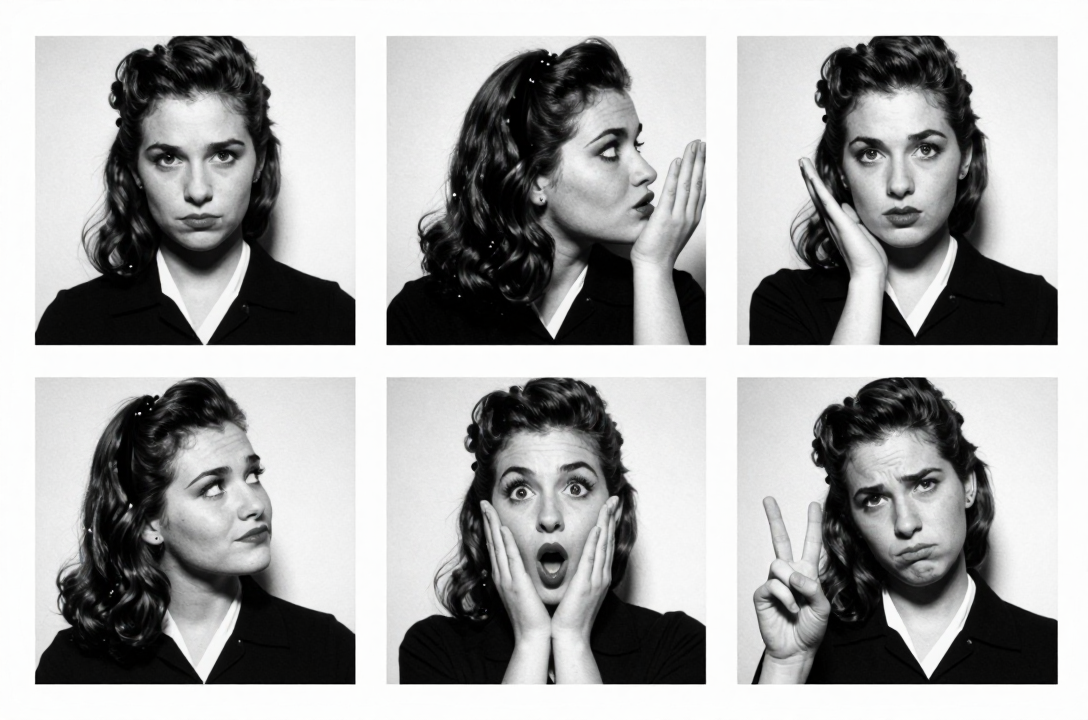
    The Pose: Think Twiggy, Andy Warhol, and Studio 54 disco queens. The poses are sharp, angular, and often feature the hands.1. The Exaggerated Reaction: Hands fly to the face…a shocked open mouth, eyes widened, a tongue might stick out. The expressions are intentionally over the top and designed to be funny or provocative. This is a move toward embracing imperfection.
    2. The Head Tilt and Chin Prop: The classic “pensive” or “intellectual” look. Tilt the head dramatically and rest the chin on a fist or open palm. It’s an intellectual-meets-model moment, often looking away from the camera for an aloof effect.
    3. The Side Profile: Instead of facing the camera, subjects would turn to the side and look ‘out of frame,’ adding an element of mystery or high-fashion drama, mimicking candid shots by a photographer.
    4. The Peace Sign: While fully embracing the 90s, the peace sign had its roots here, used as a sincere symbol of anti-war and counter-culture sentiment, often combined with long, flowing hair obscuring the face.How to Execute with ZillaBooth: Use the ZillaBooth’s flash notification sound as a trigger for a dramatic switch in attitude. Start calm, then when the timer counts down, switch to an exaggerated expression or a sharp profile turn. The speed of the pose change is key to capturing the chaotic, restless energy of the era. Aim for a graphic, bold silhouette against the background.

    Flash Four: Pop Culture Irony (The 1980s & 1990s)

    This is the era that cemented the photo booth as a truly iconic pop culture staple, largely thanks to its prominence in malls, arcades, and movies like Clerks and Amelie. The poses became self-aware, ironic, and often a parody of celebrity culture. The 80s brought big hair, bold makeup, and power poses, and the 90s ushered in grunge, anti-fashion, and a universal hand gesture that reigns supreme: the peace sign. This is the last stop on our historical tour before the digital selfie revolution.

    The Pose: A complex mix of super-confidence (80s) and complete apathy (90s).1. The Power Shrug (1980s): A flash of dramatic shoulder-pad posture, a hands-on-hips stance, and an intense, direct glare. This pose is about projecting ambition and saying, “I’m important, and I know it,” even if the subject is a teenager in acid-wash jeans.
    2. The Peace Sign (1990s): The most essential element of the challenge. The peace sign went from a serious symbol to a casual, ubiquitous placeholder for “Hey, I’m here.” Hold it up next to your face, slightly off-center, with a genuine sense of relaxed irony.
    3. The Duck Face / Kissy Face (Pre-Selfie Era): A precursor to modern posing. Pout the lips slightly for an exaggerated, playful kissy face. Crucially, in this era, it was often done ironically to mock the idea of ‘sexy’ posing, not seriously.
    4. The Group Huddle: Squeezing three or four people into a tiny booth, all looking in different directions, was a badge of social honor. The goal was to maximize the chaos and make sure everyone’s hair was perfectly visible.How to Execute with ZillaBooth: For this flash, go full 90s. Use your ZillaBooth timer to nail the perfect peace sign right as the light fires. For the ultimate nostalgic touch, pair your peace sign with a genuine shrug and a deadpan expression. The ZillaBooth’s countdown is the perfect cue for the spontaneous-yet-practiced casualness of the 90s aesthetic.—–The 4-Pose Challenge: Your ZillaBooth Checklist

    Ready to put history into practice? Here is your quick-fire checklist for the ultimate 4-Pose Photo Booth Challenge, using the ZillaBooth in-app timer to control your flashes and ensure authentic, high-pressure results.

    Step 1: Set the Stage
    Find your best photo booth environment…a real booth, the ZillaBooth app, or a simple wall with direct, harsh lighting. Use the ZillaBooth app’s countdown timer, which perfectly replicates the high-stakes pressure of the classic four-frame strip.

    Step 2: Pose Like a Puritan (The 1920s) * The Pose: The Serious, Formal Stare.
    * Action: Shoulders back, chin level. Look straight at the lens. Zero smile. Look like you’re posing for a marble bust that will be placed in a library. Hold your breath for the flash.
    * ZillaBooth Cue: When the countdown hits 1, freeze and hold the stare with complete stillness.Step 3: Pose Like a Soldier’s Sweetheart (The 1940s) * The Pose: Intimacy and Emotion.
    * Action: If alone, a hand dramatically covering half your face, eyes looking up with longing. If with a partner, squeeze in close and execute a tight, affectionate cheek-to-cheek pose, or a partial kiss that gets cut off by the frame.
    * ZillaBooth Cue: Use the last two seconds of the timer to adjust your hand or head placement for maximum dramatic, film-noir effect before the flash.Step 4: Pose Like a Pop Artist (The 1970s) * The Pose: Attitude and Profile.
    * Action: A sharp 45-degree turn of your head to the side. Chin up, a slight, knowing smirk. This is your ‘high-fashion’ moment. Alternatively, flash an exaggerated ‘gasp’ with hands pressed to your cheeks.
    * ZillaBooth Cue: Do a rapid, sharp turn into the profile pose just as the timer ends…the sharper the movement, the better the moment will look in the final, fixed frame.Step 5: Pose Like You’re Over It (The 1990s) * The Pose: Casual Irony (The Peace Sign).
    * Action: A relaxed shoulder shrug, a slight head cock, and the classic, two-fingered peace sign held casually up next to your eye or cheek. Your expression should be completely deadpan or slightly amused, embodying the era’s anti-effort cool.
    * ZillaBooth Cue: Hold this relaxed pose for the full countdown. This pose is about studied casualness; no last-second change is needed. Let the timer count down while you look unimpressed.The photo booth strip, across a century of change, has always been the visual scrapbook of human interaction. It’s a spontaneous moment, forever encased in glossy paper. By taking The 4-Pose Challenge, you’re not just taking four pictures; you’re honoring the history of self-expression, from the dignified silence of the Jazz Age to the ironic flash of the Grunge era. Now go, get into your ZillaBooth, and show us how you pose like every decade! Don’t forget to share your 4-Pose strip with the hashtag #ZillaBoothChallenge!