Tag: Authentic Photography

  • Capturing “The Real You”: Identity in the Booth

    Capturing “The Real You”: Identity in the Booth

    The modern landscape of digital identity is a minefield of comparison, performance, and external validation. Every uploaded image is a negotiation, a highly-edited statement designed to navigate the fickle currents of social approval. In this hyper-visible, public arena, where does one go to simply be? Where is the space to explore the messy, beautiful, contradictory reality of the self without the immediate pressure of a thousand judging eyes and an algorithmic thumbs-up or thumbs-down?

    The answer lies not in turning off the camera, but in stepping into a designated digital sanctuary: the booth. This feature transforms your phone from a public broadcasting device into a private creative studio, a darkroom for the soul. It provides a unique, safe space where the act of capturing “The Real You” is divorced from the expectation of public consumption. It is, fundamentally, a tool for introspection, enabling a profound form of identity exploration through the lens of the self-portrait.

    The genius of the booth is its enforced privacy. When you enter the space, the digital doors close. The usual metrics of social media…the like counts, the comments, the shares…vanish entirely. What remains is a pure, unadulterated relationship between you, your camera, and the vast, unmapped territory of your own face and persona. This lack of an immediate, critical audience is the key to unlocking true creative freedom. It permits experimentation with the self that would feel too vulnerable or too “off-brand” for public sharing.

    In the booth, the camera is no longer a documentarian of social moments but a mirror for the mind. It allows the user to consciously shed the “curated self,” the polished avatar maintained for the outside world, and experiment with the myriad other selves that constitute a genuine, complex identity. Are you the serious intellectual, the goofy friend, the melancholic artist, the defiant rebel? In the booth, you can be all of them, serially, without commitment. Each click of the shutter is an attempt to capture a fleeting facet of the truth, a momentary expression of an internal state. This is not about narcissism; it is about necessary self-inventory. It’s a visual diary where the images are less about aesthetics and more about information…data points on the trajectory of one’s becoming.

    To understand the profound potential of this simple, private act, we must look back to a master of self-image manipulation and serial identity: Andy Warhol. Warhol’s prolific output of self-portraits, particularly those utilizing the immediacy of the Polaroid camera, provides the perfect artistic and philosophical context for the modern digital self-portrait in the booth.

    Warhol understood that the self is inherently performative, a commodity to be replicated, scrutinized, and eventually, consumed. His self-portraits…from the early, starkly honest photo-booth strips to the later, garishly wigged and highly stylized silk-screen canvases…weren’t about finding the real Andy. They were about exploring the idea of Andy, the famous artist, the detached observer, the mutable icon. He used repetition and slight variation to deconstruct his own image, turning his face into an object of study, a Pop Art emblem.

    The booth allows users to follow in Warhol’s footsteps, democratizing his process for the digital age. Like the early, often unflattering photo-booth strips Warhol collected, the booth captures the raw, instantaneous moment. The user can take a dozen, two dozen, or a hundred self-portraits in a single session. This high-volume, serial approach is critical.

    When you take one self-portrait, you are trying to capture perfection. When you take fifty, the goal shifts. You are no longer chasing the “best” photo, but exploring a sequence, a range, and the subtle variations of light, mood, and expression that flicker across the face over time. This sequence becomes a personal gallery, a time-lapse of the self. This serialization allows a user to explore their identity as a fluid, rather than fixed, entity…the Warholian realization that the performance is the reality.

    In the safety of the booth, the user can consciously try on personas. They can adopt an aesthetic or a mood that feels true internally but might not align with their established public identity. This is more than just dressing up; it’s a psychological exercise. By projecting a new self into the camera’s lens…the ‘rockstar self,’ the ‘vulnerable self,’ the ‘unfazed self’…the user gets to witness how that persona looks and feels. The resulting images become prototypes for future public identities or simply private acknowledgments of hidden facets. This act of “trying on” different selves in a non-judgemental space is a critical step in maturation and self-understanding.

    The power of the booth’s privacy also encourages a return to authenticity that social media often erodes. Where the main feed demands soft focus, perfect lighting, and subtle filters, the booth allows for the raw, the unflattering, and the immediate. Users are encouraged to capture the moments of genuine vulnerability: the tired eyes, the messy hair, the quiet sadness, the uninhibited joy. These “imperfect” images are, paradoxically, the most truthful. They are the data points that validate the user’s lived experience, providing a grounding counterpoint to the glossy fiction of the online world.

    Furthermore, the booth fosters a relationship with the self over time. By returning to the private space repeatedly, users build an archive of their own evolution. A collection of self-portraits taken over weeks, months, or years forms an unprecedented visual autobiography. This archive is immune to the editing and deletion cycles of public platforms; it’s a record for the self, by the self. Looking back at this collection allows for a powerful form of reflective self-knowledge: seeing how sadness turned into determination, or how a tentative new style became a confident statement. The images become a tool for tracking personal growth, resilience, and transformation.

    The digital self-portrait, when created in this safe, private environment, reclaims the power of the image from the public algorithm. It asserts that the most important audience for an image of the self is the self. This is the difference between performing for the world and simply experimenting for yourself. The booth is the modern darkroom where the negatives of the self…the doubts, the conflicts, the unpolished truths…are allowed to develop into fully realized, complex, and beautiful positive images.

    Ultimately, the self-portrait taken in the booth is not intended as a final product for exhibition. It is an artifact of a process…the process of actively, consciously, and privately investigating one’s own identity. It is a rebellion against the pressure to be instantly understandable, perfectly branded, and universally appealing. By offering a safe private space akin to Warhol’s studio, the booth doesn’t just enable picture-taking; it facilitates the essential work of self-discovery, allowing every individual to become the sole curator and subject of their most important masterpiece: their own evolving, complex, and real identity. In a world that constantly demands we look outward for validation, the booth provides a crucial, private mirror, turning the gaze inward, where true self-possession begins. It is a digital space of genuine freedom, where the only validation that matters is your own, and “The Real You” is finally allowed to emerge from the shadows, one self-portrait at a time.

  • The “Anti-Bride” Aesthetic: Why Perfect Photos Are Out and “Blurry” Is In

    The “Anti-Bride” Aesthetic: Why Perfect Photos Are Out and “Blurry” Is In

    The era of hyper-curated, flawlessly filtered, and stiffly posed event photography is officially over. Driven primarily by Gen Z, a new cultural movement is challenging the very definition of a “perfect picture,” especially in the high-stakes world of weddings and celebrations.

    This shift isn’t just about a preference for film grain or a different color palette; it’s a fundamental rebellion against the commodification of memory. It’s the arrival of the “Anti-Bride” aesthetic, where the most cherished images are the ones that capture genuine, raw, unscripted energy…even if they are a little (or a lot) blurry. This is the modern remix of tradition, declaring that a photo’s authenticity outweighs its technical perfection every single time.

    For decades, the standard for wedding and event photography was sharpness, light, and symmetry. Photographers chased the “golden hour,” meticulously straightened dresses, and demanded guests stand still for pristine, high-resolution masterpieces. The resulting images were beautiful, yes, but often sterile…a polished, airbrushed rendition of a memory that felt more like an advertisement than a lived experience. This pursuit of the impossible, flawless moment has exhausted a generation that is acutely aware of the performance inherent in social media perfection. They are done with the illusion.

    Analog film photograph of section 1 related to The

    The Anti-Bride aesthetic rejects this pressure to perform. It embraces the candid, the accidental, the messy truth of a celebration. Instead of flawless, they crave feeling. Instead of still, they demand action. This cultural craving has crystallized into the definitive photographic trend of the moment: “Blurred-Action” photography.

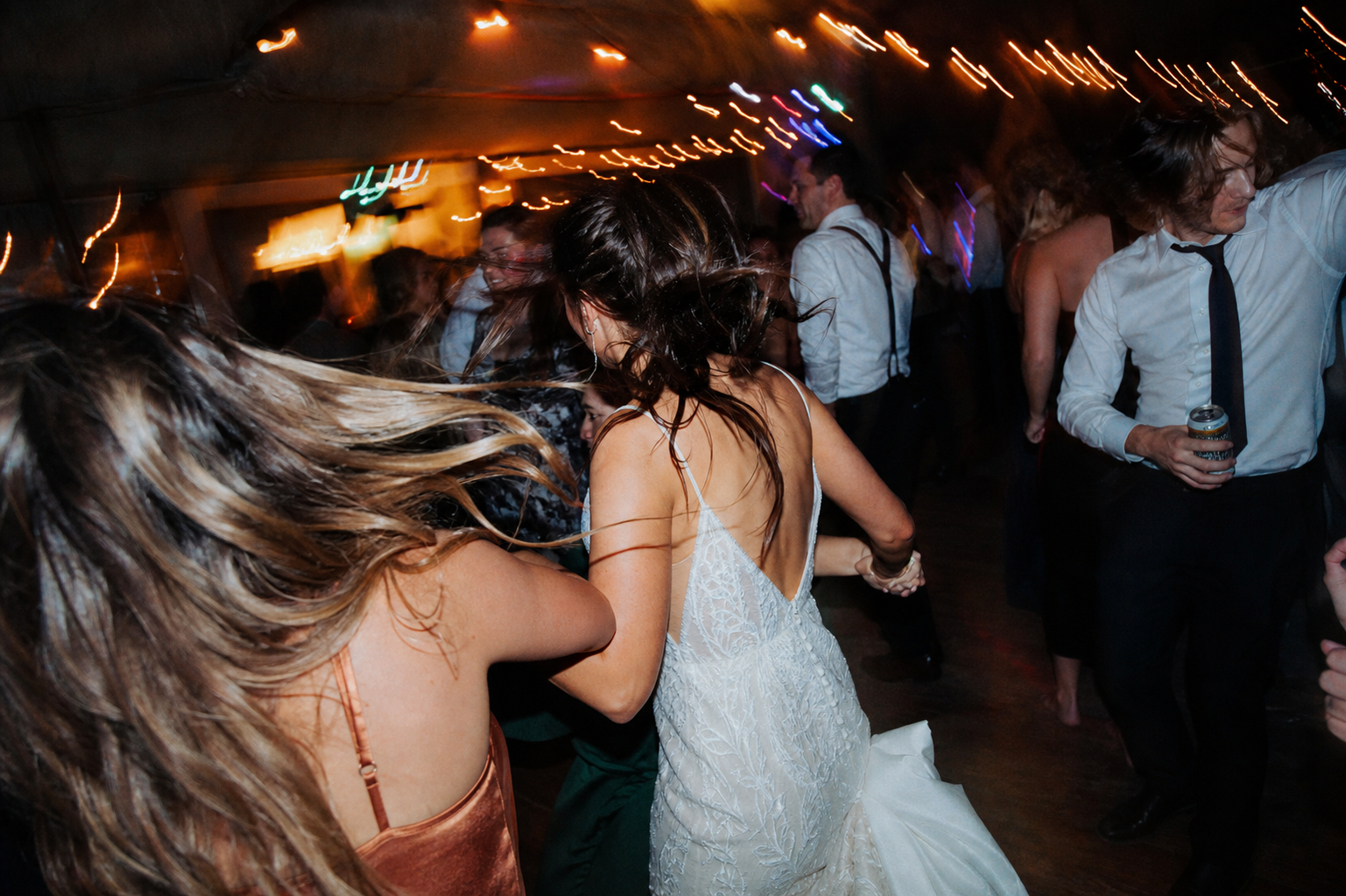
    What exactly is Blurred-Action photography? It’s the visual equivalent of a memory rush…that feeling of high-energy chaos, a spin on the dance floor, a genuine burst of laughter, or a quick movement across the room. Technically, it is the deliberate use of motion blur to convey speed and dynamism, making the image feel alive rather than frozen. In a Blurred-Action photo, the subject might be soft, the lights might streak, and the background might be a smear of color, but the story of the moment is crystal clear. It communicates: “This was fun. This was fast. This was real.”

    This style intentionally evokes the look of old, inexpensive point-and-shoot film cameras or the late-night flash photos from the early 2000s…the kind of spontaneous, high-contrast, often imperfect snapshots that were taken without any thought of social media approval. It’s raw, it’s rebellious, and it’s a direct counterpoint to the meticulously posed, sun-drenched shots that have clogged Instagram feeds for the last decade. The Anti-Bride and the celebration host who embraces this look wants their guests to move, dance, and celebrate freely, knowing that the camera’s job is not to stop the action, but to harness it.

    Analog film photograph of section 2 related to The

    The key to mastering this dynamic look is realizing that your standard camera app is actively working against you. Modern smartphone cameras, including the iPhone’s native app, are programmed for one thing: to eliminate blur, automatically increasing shutter speed and smoothing movement to deliver a perfectly sharp image. To capture true Blurred-Action, you need to wrest back control and instruct the camera to slow down , allowing light and movement to streak across the sensor.

    This is where dedicated, professional-grade camera applications like ZillaBooth become essential. ZillaBooth is designed for creators who want to prioritize energy and atmosphere over mere technical accuracy. It gives the photographer the ability to “weaponize” motion.

    Here is how any user, from a seasoned photographer to a junior writer documenting an event, can utilize ZillaBooth’s features to capture movement and energy that is impossible to achieve with a standard camera app, perfectly embodying the spirit of the Anti-Bride aesthetic:1. The Essential Setting: Manual Shutter Speed ControlThe foundation of the Blurred-Action aesthetic is a slow shutter speed. Shutter speed determines how long the camera’s sensor is exposed to light. A fast shutter (e.g., 1/1000th of a second) freezes action; a slow shutter (e.g., 1/15th of a second) captures movement as a blur.

    Analog film photograph of section 3 related to The

    ZillaBooth Pro unlocks this critical setting, which the native phone app locks down. – The Technique: Navigate to ZillaBooth’s manual controls and locate the Shutter Speed (often labeled as an ‘S’ or a time value).

    For moderate blur that still hints at the subject, try a shutter speed between 1/30 and 1/15 of a second. This range is excellent for capturing a fast spin on the dance floor or a subject walking quickly. For more dramatic, abstract blur, such as lights streaking into lines or a completely smeared background, experiment with speeds as slow as 1/8 or 1/4 of a second.

    • The Intent: By forcing the shutter open longer, you are literally telling the camera to record the duration of the action, not just a single instant. The goal is to see the subject’s path of motion within the frame.2. Focus on Panning: The Sharp-Blur ContrastTo create an image that feels incredibly dynamic but still has a clear point of focus, employ the panning technique…a classic photography trick made easier by ZillaBooth’s manual focus lock. Panning involves moving the camera with the subject while the shutter is open. – The Technique: Set a moderately slow shutter speed (1/30 to 1/60 is a good starting point). As your subject (a person walking, a dancer) moves past you, lock your focus on them using ZillaBooth’s manual focus lock feature. Then, move your phone to follow them smoothly as you press the shutter.
    • The Intent: The subject, because the camera is tracking their movement, will appear relatively sharp, but the background will be rendered as spectacular, horizontal streaks of color and light. This contrast creates an incredible sense of speed and forward momentum, isolating the energy of the subject against a blurred backdrop of the event.3. The Flash-Blur Combination (For Maximum Drama)Many photographers forget that the flash can also be used with a slow shutter speed, and this combination is a potent tool for the Blurred-Action aesthetic, especially in dimly lit venues. – The Technique: Set ZillaBooth to a slow shutter speed (e.g., 1/15) and manually force the flash ‘On’ (which ZillaBooth allows). When you take the photo, the flash will freeze the subject for an instant (creating a sharp ghost image) while the rest of the 1/15-second exposure records the subject’s movement after the flash fires.
    • The Intent: This technique, often called ‘rear-curtain sync’ in professional cameras, results in an image where the subject is distinct but the trails of movement follow behind them, suggesting they are moving out of the blurred energy, or captured mid-spin. This produces a dramatic, slightly surreal, and highly energetic party photo.4. Movement Priority Poses: Shoot the Transition, Not the StillThe Anti-Bride look is fundamentally about capturing movement over stiff poses. As a photographer or event documenter, your role is to encourage and anticipate this movement, not stop it. – The Subject: Tell people to do an action: spin, jump, hug, cheer, or walk down a flight of stairs quickly. Never ask them to stand still.
    • The Technique: With a slow shutter (1/30), deliberately take the photo as the action is happening…not before or after. Shoot the half-step, the mid-air jump, the moment the head is thrown back in laughter. This is when the camera’s slow shutter will maximize the motion blur, capturing the true physical expression of the energy. A photo of a couple walking towards the camera at 1/15 of a second will result in soft, smeared faces and streaking foregrounds…capturing the feeling of a grand, sweeping entrance better than any perfectly sharp shot ever could.5. Embrace the Grain and Edit for VibeOnce the image is captured with ZillaBooth’s manual controls, the final step is to emphasize the raw, analogue-like feel. – The Technique: ZillaBooth and many post-processing apps allow for the addition of film grain or noise. Don’t smooth the image; add intentional noise to give the high-energy, digitized film look of the late 90s.
    • The Intent: The final image should look like an artifact…a treasured snapshot that couldn’t possibly be a highly-edited, commercial photograph. The grain enhances the raw, unpolished honesty that the Anti-Bride aesthetic champions.The shift toward Blurred-Action photography is more than just a passing style; it’s a cultural declaration. It’s a rebellion against the pressure to be perfect and a celebration of authentic, unrepeatable moments of joy. Gen Z isn’t throwing out tradition; they are remixing it, insisting that a wedding or major celebration should be documented as it feels…fast, fun, and a little chaotic…rather than how a magazine or social media feed dictates it should look.

    By using ZillaBooth to take back the power of manual shutter control, any user can move past the limitations of the default camera app. You’re not just creating a blurry photo; you’re creating a story. You are moving from documenting a pose to capturing a movement, from recording a smile to immortalizing a moment of pure, unadulterated energy. Step away from the stifling perfection and embrace the beautiful, dynamic, and wonderfully imperfect chaos of the Anti-Bride’s real-life celebration. Use the blur to make your memories feel more real.

  • The “Vintage” Filter: Why We Hate It (And Why We Love Raw)

    The “Vintage” Filter: Why We Hate It (And Why We Love Raw)

    The modern aesthetic revolution is defined by one fundamental truth: we are filter-fatigued. The heavy-handed “vintage” filters of the early 2010s…sepia washes, aggressive vignetting, and manufactured scratches…have been soundly rejected, especially by Gen Z, who crave authenticity. They don’t want a digital representation of the past; they want the true characteristics of film photography. This distinction is everything. A filter adds a layer of artifice; true film characteristics are a function of light, chemistry, and optics. They are imperfections that tell a real story.

    Analog film photograph of section 1 related to The

    To replicate the coveted film look naturally in your ZillaBooth shots, you must stop thinking in terms of post-production layers and start thinking like a film photographer managing a constrained, chemical medium. The key is in manipulating light and contrast before you press the shutter.1. Embrace Imperfect Lighting and Underexposure: Film has a much more limited dynamic range than a modern digital sensor. When shooting, a film photographer had to choose what to sacrifice: highlights or shadows. The result is often a ‘moody’ look with deep, crushed blacks and perhaps slightly blown-out highlights.

    To mimic this: – Low-Key Setup: In ZillaBooth, intentionally use lighting that is slightly too dim for the scene, forcing the digital sensor to struggle and creating dramatic, inky shadows. – Manual Exposure Adjustment: Manually underexpose the shot by about -0.5 to -1 stop. This prevents the sensor from automatically lifting the shadows, which is what gives digital images their “clean” but often sterile look. By underexposing, you create a rich, heavy tonal range reminiscent of properly printed film that wasn’t trying to be perfectly balanced.2. The Warmth of Aged Emulsion: Many people associate “vintage” with a warm, slightly reddish tint. This is not a sepia filter; it’s the natural result of certain film stocks, print paper, or chemical shifts over time.

    Analog film photograph of section 2 related to The

    – Manual White Balance: Ignore the auto white balance. Manually shift your ZillaBooth white balance to a warmer Kelvin temperature (e.g., 5500K-6000K for a daylight-balanced shoot that wants a subtle, warm shift). This will naturally bathe the entire scene in a soft, golden cast that is far more nuanced and integrated than any overlaid filter. The subtle color shift feels organic and interacts realistically with the existing light sources in the shot.3. Soft Diffusion and Lens Glow: The lenses on old, inexpensive film cameras often weren’t perfectly sharp and lacked the sophisticated coatings of modern digital lenses.

    This resulted in a slight softness and a characteristic “glow” around bright highlights. – Simple Diffusion: For a natural glow, place a single layer of a very sheer material (like a thin stocking or a piece of plastic wrap) carefully over your ZillaBooth lens. This acts as an organic light diffuser, slightly softening the focus and creating a beautiful, subtle ‘bloom’ around light sources. This is a practical, in-camera effect that digital filters attempt to mimic poorly. – Avoid Over-Sharpening: Turn off any in-camera sharpening features to maintain that smooth, slightly fuzzy quality that film is known for.By focusing on these in-camera lighting, exposure, and lensing techniques within ZillaBooth, you are not applying a fake effect; you are engineering a high-quality digital image that inherently possesses the raw, imperfect, and beautiful characteristics that make true film photography timeless. It’s about light management, not filter application.

  • The “Privacy Era” Wedding: Why 2026 Couples Are Ditching the Hashtag

    The “Privacy Era” Wedding: Why 2026 Couples Are Ditching the Hashtag

    In the dynamic landscape of wedding trends, 2026 is poised to be defined by a significant, soul-searching shift: the ascendancy of the “Privacy Era” wedding. After years of performative celebrations meticulously curated for the feed, modern couples are staging a gentle rebellion, prioritizing profound intimacy and authentic presence over the widespread public consumption of their most personal day. This isn’t merely about setting phones aside; it’s a fundamental re-evaluation of who the wedding is for.

    For the last decade, the wedding industrial complex was intertwined with the social media machine. A successful wedding was often measured not just by the joy in the room, but by the engagement metrics online: the number of likes on the professionally shot sneak peek, the virality of a dance floor moment, and the proliferation of a unique, custom wedding hashtag.

    The expectation was that the event was a piece of content, meant to be broadcast, aggregated, and perpetually consumed by an audience stretching far beyond the immediate guest list…sometimes reaching thousands of passive followers. But what happens when the relentless spotlight begins to dim the very intimacy it’s supposed to celebrate?

    Analog film photograph of section 1 related to The

    Today’s couples, seasoned by a decade of living life online, are experiencing significant social media fatigue, especially concerning major life milestones. They recognize the inherent pressure to make their wedding a “show,” leading to decisions driven by aesthetic approval rather than personal meaning. More critically, they are acutely aware of the permanence and lack of control that comes with a globally broadcast digital footprint.

    Every photo, every video tagged with a unique hashtag, becomes a permanent, searchable artifact, a public domain record of a private, foundational moment. The ‘Privacy Era’ couple is saying ‘enough.’ They are choosing presence over performance, and memory over metrics. They want their day to be remembered by the people who were actually there, not by a scrolling audience. They are reclaiming the narrative of their own celebration.

    The most visible symbol of this reclamation is the deliberate decision to ditch the wedding hashtag. The hashtag served as the ultimate aggregator, an open invitation for every guest…and every curious outsider…to contribute to a public, searchable album. By removing it, couples are drawing a clear, intentional boundary.

    They are communicating that the precious moments captured that day are reserved for the “circle of trust”…the family and friends who have been invited to share the physical space and the emotional weight of the commitment. It’s a statement that their wedding photos are not marketing collateral for their relationship, nor are they fodder for an endless scroll. They are private heirlooms.

    Analog film photograph of section 2 related to The

    This is where the demand for privacy-first technology like ZillaBooth comes into sharp focus. The modern couple still wants to capture the fun, candid, and often hilarious moments that only a photo booth can provide, but they need a solution that respects their newly established privacy boundaries. ZillaBooth is designed not just as an entertainment feature, but as a commitment to the couple’s ethos. It operates on the principle of private, offline capture.

    Here’s how ZillaBooth effectively becomes the ideal partner for the Privacy Era wedding:

    First, it features a completely private, localized network. Unlike legacy photo booths or open-access digital sharing platforms that are inherently linked to the public internet, ZillaBooth’s capture process is offline. This immediately eliminates the risk of accidental or automatic broadcasting. The photos and GIFs created in the booth remain sequestered within the system until the couple determines the next step.

    Second, there is zero automatic social media integration. This is a non-negotiable feature for the privacy-minded couple. There is no button that immediately uploads a strip to Instagram or Facebook. Guests are encouraged to live in the moment and capture memories for the couple, not for their personal followers. This design choice powerfully reinforces the couple’s wish to maintain a tight “circle of trust” around their celebration’s imagery. The images are taken for the couple, not for the feed.

    Analog film photograph of section 3 related to The

    Third, ZillaBooth facilitates a curated, intentional sharing process. While the capture is offline, the final, high-resolution gallery of images is delivered directly and solely to the couple. This gives them complete, granular control over their memories.

    They, and only they, decide which images to share, when to share them, and with whom…if at all. They can choose to keep the entire collection completely private, share a curated, small gallery with their immediate family, or perhaps release a select few images a month later, long after the pressure of the wedding weekend has dissipated. The power returns to the proprietors of the memory.

    The Privacy Era wedding is more than a trend; it’s a necessary cultural correction. It reflects a growing collective desire to slow down, to be present, and to recognize that some of life’s most precious experiences are diminished by the act of being performed for an anonymous audience.

    By ditching the hashtag and embracing privacy-first technologies like ZillaBooth, 2026 couples are not being exclusionary…they are being protective. They are safeguarding the authenticity of their joy, ensuring that their wedding day is a moment shared deeply and intimately with the people they love most, resulting in a priceless collection of private memories untainted by the demands of public consumption.

  • The “Time Machine” Feature: Documenting Growth

    The “Time Machine” Feature: Documenting Growth

    For most of us, our relationship with time is fleeting. We understand it abstractly, marking it with major milestones: graduations, weddings, the purchase of a first home. But the subtle, continuous, magnificent process of growth…the slow, tectonic shifts in who we are, what we look like, and the world around us…often slips by unnoticed. We rely on random, scattered photo albums to patch together a narrative of our lives, leaving massive gaps between the moments we decided were “Instagram-worthy.” The result is a timeline full of peaks, but lacking the quiet, powerful valleys where real, lasting transformation happens.

    It’s time to move beyond the highlight reel. It’s time to build a personal ‘time machine,’ a reliable, ritualistic document that captures not just the events of your life, but the ongoing story of you.

    Analog film photograph of section 1 related to The

    This is the power of the Birthday ZillaBooth Strip.

    The concept is simple, yet profound in its long-term application: once a year, on your birthday, you open the ZillaBooth application and capture a single, four-panel photo strip. That’s it. One dedicated moment, one specific format, repeated annually for as long as you choose to document your life. This seemingly small commitment transforms over time into one of the most powerful self-reflection and documentation projects you can undertake, yielding a literal, year-by-year time lapse of your journey.

    The ritual itself is the engine of the project. A birthday is the natural and universal checkpoint…the one day guaranteed to be distinct and separate from all others on the calendar.

    Analog film photograph of section 2 related to The

    By tying the photography ritual to this annual marker, you eliminate the mental friction of choosing when to shoot and ensure near-perfect spacing between entries. It takes the project out of the realm of a fleeting hobby and elevates it to a tradition, a non-negotiable act of self-documentation. It’s a moment to pause, stand in front of the camera, and confront the person you’ve become in the last 365 days.

    Why a ZillaBooth strip, specifically? The photo booth strip format is the secret sauce. A single strip contains four distinct, sequential images taken mere seconds apart. This design is critical because it forces you to capture a micro-moment…a tiny, four-frame narrative of where you are right now. The first frame might be a default setting, the second a smile, the third a contemplative look, and the fourth a laugh.

    It’s an immediate, unposed sequence of genuine emotion that a single snapshot can never achieve. When you compile twenty of these strips, you don’t just have twenty pictures; you have twenty micro-stories , each a tiny window into your emotional state and physical self on that exact day. The consistency of the ZillaBooth app’s interface, framing, and signature filter (which often mimics the high-contrast, slightly grainy look of classic analog booths) is your greatest ally.

    Analog film photograph of section 3 related to The

    Unlike using your native phone camera, which constantly optimizes and adjusts settings based on environment, ZillaBooth maintains a predictable aesthetic. This uniformity is what allows the time lapse to work; your photo strip from 2026 will visually ‘match’ your strip from 2036, making the subtle changes in your face and environment all the more dramatic and noticeable when viewed together. You are removing the photographer’s variable and leaving only the subject’s variable: time.

    To truly master this long-term Time Machine project, consistency must become your mantra. This goes beyond the annual date. You need to standardize your process to maximize the visual impact of the eventual time lapse.

    Analog film photograph of section 4 related to The

    The Four Pillars of Consistency for the Time Machine Project1. The Background Anchor: Choose a consistent, simple background, if possible. A blank wall, a specific door frame, or even a recognizable piece of furniture in your home. While life changes and you may move houses or offices, try to keep the type of background the same…e.g., always a neutral, single-color wall. The human eye will focus on the most important variable (you), but a consistent backdrop creates a clean timeline.

    • The Consistent Frame: On the first year, decide on your framing…a headshot, a three-quarter body shot, or a full body shot. Then, never deviate. The ZillaBooth app is designed to help with this by having fixed templates, but manually try to maintain the same distance from the camera. This ensures that the scale remains the same year after year, allowing for easy, side-by-side comparison of physical changes.
    • The Lighting Standard: Try to take the photo at a similar time of day, ideally under the same type of light. This is where ZillaBooth is useful. If you use the app’s standard flash setting (which mimics the harsh, direct flash of a real booth), commit to using it every year. The flash eliminates the variable of ambient room lighting, providing a consistent, aggressive light source that showcases textures and features reliably.
    • The Pose and Expression Baseline: This is the hardest, but most rewarding, pillar. Decide on a simple expression for the first frame…perhaps a closed-mouth smile. Then, let the other three frames be spontaneous. The key is to see the raw state of your face before the effort of posing. The consistency allows you to visually track, over decades, the deepening lines around your eyes when you smile, the subtle changes in your jawline, or the shift in the intensity of your gaze as you mature.The real magic of the Time Machine feature begins after five years. Before then, the changes are often too subtle to register. But once you can scroll through a collection of five, ten, or even fifteen strips, the growth becomes undeniable and often overwhelming.

    What You Will See: The Payoff of Decades * The Unconscious Style Guide: Your annual ZillaBooth strip becomes a fascinating chronicle of personal fashion history. While you may not intentionally try to be fashionable, the strips will ruthlessly document the rise and fall of trends in your life…the different hairstyles, the jewelry that was in one decade and out the next, the evolving fit of your clothes. You are documenting a personal style arc, a history of self-expression.

    Analog film photograph of section 5 related to The
    • The Tectonic Shifts of the Face: This is the most emotional part. You will see the subtle, almost imperceptible signs of aging that happen so slowly you never notice them in the mirror. But the strips will line them up for you: the maturity that enters the eyes, the gray hairs that slowly accumulate, the softening or hardening of features. It’s a powerful, beautiful reminder of the passage of time, stripped of the daily anxieties of aging. You are charting the geography of your own face.
    • The Emotional Signature: Look at the four-frame story from the year you were married, the year you started a new career, or the year you went through a profound challenge. The flash and the consistent aesthetic cut through the polished performance we usually give the camera. You can see the lightness in your eyes during a happy period or the exhaustion and stress etched into your frame during a difficult one. The strip captures the raw mood of the moment.The ZillaBooth application, while primarily a photo-sharing tool, is perfectly suited to becoming a personal archival system. We recommend creating a dedicated, private album within the app, titled “Time Machine: [Your Name],” and setting it to the highest privacy level. This is where every annual strip is uploaded immediately after it’s taken. Some users even take an extra step, printing the physical strips (if the app offers this) and storing them in a dedicated album or shadow box…a tangible record that exists outside the digital realm.

    Pro-Level Time Machine Tips1. Embrace the Flaws: The core value of the ZillaBooth strip is its high-contrast, often unflattering honesty. Do not retouch, do not filter, and do not try to smooth out the inevitable lighting flaws. The red eye, the harsh shadows, the blown-out highlights…these are the aesthetic markers that tie the whole series together and lend it a sense of authenticity that a perfectly edited portrait lacks. The flaws are the proof of the timeline.

    • Add a Consistent Prop (Optional): For those who want an extra dimension of comparison, consider adding a single, small, unchanging object to the frame every year. This could be a favorite ring, a childhood stuffed animal, or even a book with the year written on it. This object acts as a visual measuring stick, emphasizing the growth or change in your own scale and providing a consistent focal point for the timeline.
    • The Before-and-After Review: On your birthday, before you take the new strip, scroll through your entire archive. This moment of self-reflection is the true purpose of the Time Machine. Spend five minutes looking at the first strip you took, and then slowly move forward to the last one. Notice the life that has been lived, the changes that have been made, and the person you’ve shed and become. This review is incredibly motivating and often provides clarity about the path you’ve walked and where you are headed.A life well-documented is a life well-examined. The ZillaBooth Birthday Strip is more than a creative photography project; it is a long-term commitment to self-awareness and a powerful hedge against the relentless blur of time. It requires minimal effort…five minutes, once a year…but yields a result that is priceless: a visual, empirical document of your personal journey. It’s not about capturing the best version of yourself, but the real version, year after year, documenting your beautiful, inevitable, and continuous growth. Don’t wait for a major life event to mark the start. Your next birthday is the perfect moment, but today is even better. Start your Time Machine now, and begin documenting the greatest story ever told: your own.
  • Guest Experience 2.0: Moving Beyond “Entertainment” to “Immersion”

    Guest Experience 2.0: Moving Beyond “Entertainment” to “Immersion”

    The shift in modern experience design…from theme parks and museums to corporate events and retail activations…can be summarized by a single, profound realization: Guests no longer simply want to be entertained; they demand to be delighted. Entertainment is passive; delight is personal. Entertainment is something that happens to them; delight is something they create and own. This difference is the foundation of what we call Guest Experience 2.0, a pivot from spectating to fully inhabiting a story or environment.

    For decades, the metric of a great attraction was the quality of its “props,” its stagecraft, and its spectacle. We built bigger rides, more detailed sets, and more elaborate shows. But today’s hyper-aware, social-first consumer has seen it all. They crave meaning, authenticity, and, most critically, a role. They don’t want to stand outside the velvet rope of a narrative; they want to be cast as the main character.

    This is the chasm between “entertainment” and “immersion.”

    The entertainment model operates on a principle of distraction: filling the guest’s time with stimulation to prevent boredom. It’s a consumption-based transaction: I pay money, you give me a show. But entertainment remains fundamentally separate from the individual. A magnificent firework display is entertaining, but it is an identical experience for everyone in the crowd. It leaves a memory of the event, but not necessarily a memory of self within that event.

    Immersion, conversely, is an active state. It is the successful dissolution of the boundary between the guest and the environment. True immersion doesn’t just look real; it feels consequential. It requires the guest to make a choice, perform an action, or receive an artifact that is unique to their personal journey through the story world. It makes them the indispensable protagonist. When a guest is immersed, they are no longer watching a movie; they are living a scene. And the artifacts they take home are not souvenirs; they are proof of their participation.

    This is where the traditional photo booth often falls short, functioning as a perfect example of a transitional-era prop…a tool that is almost, but not quite, fully integrated. In its standard form, a photo booth is entertainment. It’s a brightly lit box that offers a quick, silly diversion. The paper strip with the company logo on the bottom is a souvenir of the event, but the pictures themselves are generic: funny faces, plastic glasses, and neon wigs. The booth is a physical prop within the event; it is not yet an engine of the narrative.

    The challenge for Guest Experience 2.0 is to re-engineer every interactive element…from a queue line to a retail space…to serve the overarching narrative. The elements must stop being generic “props” and become essential “story artifacts” or “narrative stations.”

    Consider the ZillaBooth Party system, customized with branded overlays, as a case study in this narrative engineering. Its deployment transforms the simple act of taking a picture from a momentary distraction into a critical piece of the immersive experience.

    1. The Overlay is the Narrative Credential

    In a traditional photo booth, the digital overlay might be a generic “Happy Birthday” or a corporate logo placed carelessly in the corner. This is branding, not immersion.

    Analog film photograph of section 1 related to Guest Experience 2.0: Moving Beyond

    In an immersive context, the ZillaBooth Party overlay is meticulously designed to be a piece of the story’s UI (User Interface) or diegetic world. Imagine an experience themed as a space academy training mission.

    The photo booth is physically built to look like the “Graduation Photo Station.” When the guest steps in, the branded overlay isn’t a logo; it’s a “Space Academy Pilot License” or an “Official Galactic Federation ID Card.” The moment the picture is taken, the resulting image is not a snapshot of a guest having fun; it is a document certifying their completion of a mission. The photo booth is no longer a prop for a quick picture; it is the official in-world government-issue machine for printing their new ID.

    This subtle but crucial shift in framing…from generic fun to narrative certification…elevates the action. The guest doesn’t just look at the camera; they pose for their official ID photo, embodying the character they have just spent the last hour playing. The artifact is now a badge of honor, a piece of proof they successfully navigated the narrative.

    2. Physical Integration as Scene-Setting

    True immersion requires seamless integration. A traditional photo booth, dropped into a medieval fair, screams “modern object out of place.” It breaks the immersion.

    Analog film photograph of section 2 related to Guest Experience 2.0: Moving Beyond

    The ZillaBooth Party system allows for comprehensive customization of the physical structure and the environment around it. To fully integrate the booth into the narrative, the physical shell must be treated as a set piece. * In a secret agent experience, the booth should be clad in brushed aluminum, with a flashing “classified” warning sign.

    The act of entering becomes a biometric scan or a security clearance process. * In a fantasy world, it might be disguised as an ancient, rune-carved pillar. The interface on the screen uses an in-world language font.The booth itself is transformed from a freestanding unit into a fully functional “set dressing.” The lighting, the sounds, and the physical aesthetic all reinforce the narrative, ensuring the guest never has to mentally leave the story world to snap a picture. The interaction becomes a natural, expected scene in their adventure.

    3. The Digital Artifact as Narrative Extension

    The ultimate goal of immersion is narrative extension: ensuring the guest carries the story with them after they leave the premises. The ZillaBooth Party’s digital output facilitates this in a way a simple paper strip cannot.

    Analog film photograph of section 3 related to Guest Experience 2.0: Moving Beyond

    When the guest receives their Galactic Federation ID Card via email or text, that image is inherently shareable. But critically, they are not just sharing a picture of themselves; they are sharing a story. The caption is no longer “Fun at the Space Event!” it becomes, “Just got my pilot license! Reporting for duty, Sector 7.” The artifact acts as a powerful social media trigger, but it is a trigger for the narrative, not just the brand.

    This digital artifact is the ultimate form of “delight.” The guest is delighted not by the technology, but by the fact that the experience acknowledged and validated their participation. The ZillaBooth didn’t just take their picture; it confirmed their new identity as a character in the world, and gave them the shareable proof. This is infinitely more valuable than a generic souvenir because it is a deeply personal, non-replicable moment.

    4. The Feedback Loop: From Spectator to Contributor

    The final component of immersion that a tool like ZillaBooth provides is the creation of a closed feedback loop. By generating a unique, story-specific artifact, the experience subtly signals to the guest that their actions matter. They stepped into the narrative, and the narrative changed to accommodate them by issuing a personalized document. This validation is the core of delight.

    It moves the guest from the mentality of a spectator (“I hope the show is good”) to that of a contributor (“I created a moment within this world”). The picture they take is now a permanent record of their agency within the story. The ZillaBooth is simply the machine that validates their story moment, printing a piece of the fictional reality for them to take into the actual reality.

    In the era of Guest Experience 2.0, every touchpoint must be an opportunity for a personalized narrative intervention. We are no longer designing theme parks, museums, or events; we are designing temporary, participatory realities. The customized photo booth is far from a mere prop; it is a critical narrative station…the passport office, the mission control debrief, or the winner’s circle. It is the tool that formally integrates the guest into the story and prints the definitive, shareable proof of their personal journey, ensuring they leave not just entertained, but profoundly and personally delighted.

  • The Psychology of the Curtain: Why We Act Differently in Booths

    The Psychology of the Curtain: Why We Act Differently in Booths

    It’s a peculiar phenomenon, one almost universally experienced: the moment you step across the threshold into a small, enclosed space, your demeanor changes. Whether it was the classic strip-photo machine of the 1950s or the sleek, modern digital enclosure at a contemporary event, the photo booth has always served as a tiny, psychological theater where the rules of public decorum are momentarily suspended.

    Why is it that inside this temporary box, surrounded by vinyl or canvas, we feel permission to be goofy, to pose outrageously, to let loose with an unfiltered laugh that would feel awkward anywhere else? The answer lies in the deep-seated psychology of the barrier…the curtain…and the profound sense of privacy it guarantees.

    The earliest photo booths were fundamentally machines built around an act of disappearance. The heavy velvet or vinyl curtain was more than just a light seal; it was an impenetrable, temporary wall against the outside world. Stepping behind it was a deliberate, ceremonial act of separation. Once the curtain fell closed, the individual or group vanished from public view, entering a space of radical, albeit brief, autonomy. This physical act of exclusion is the psychological root of the phenomenon described in the prompt: it gives people license to “let their guard down.”

    In psychological terms, this is a controlled moment of deindividuation . In a large crowd, deindividuation can lead to regrettable behavior because the individual identity is lost. But in the photo booth, the effect is inverted. By removing the individual from the social contract of the public space, the small enclosure allows a positive, momentary loss of self-consciousness .

    Analog film photograph of section 1 related to The Psychology of the Curtain: Why We Act Differently in Booths

    You are no longer subject to the immediate, judging gaze of the audience outside the booth. This removal of external surveillance is what frees people to shed the carefully constructed mask they wear in public and express their genuine, often playful, personality. The camera, a machine without judgment or memory, becomes an accomplice rather than an observer. The curtain tells the brain: “What happens in the booth, stays in the booth.”

    This sense of a private sanctuary stands in stark opposition to the modern age of perpetual performance. Today, particularly at major social events, the camera is an instrument of the public domain.

    Every action, every outfit, and every reaction is potentially curated, captured, and instantly broadcast to a vast, invisible audience on social media. The shift from private memory to public content has introduced a pervasive sense of self-monitoring. We become acutely aware that the photos being taken are not just for us; they are for the ‘feed,’ for the metrics, for the thousands of passive followers we will never meet.

    This pressure is the enemy of authenticity. When a couple poses for a wedding photographer, for example, the image is often immaculate, perfectly lit, and composed to tell a specific, idealized story. But that image is also a performance . The photographer is an active participant in the staging, directing the pose, adjusting the angle, and maintaining an intimate, watchful eye.

    While the resulting photograph is beautiful, it captures a moment that is inherently aware of being captured. The self-consciousness of being watched…a mild form of the well-known Hawthorne effect …means the subject is acting for the camera, not simply reacting to the moment. The photographer, by their very presence, is a constant reminder of the public’s anticipated consumption of the image. They are the human embodiment of the external gaze.

    Analog film photograph of section 2 related to The Psychology of the Curtain: Why We Act Differently in Booths

    This is where the genius of modern, unattended photo technology, exemplified by ZillaBooth, comes into sharp focus. The traditional photo booth’s power came from its physical curtain; ZillaBooth’s power comes from its unattended, privacy-first design, which serves as the psychological equivalent of that barrier.

    ZillaBooth is not a prop or an accessory for the photographer; it is a discrete experience. The most critical factor is the absence of the human operator. In a traditional setting, even a casual photographer or booth attendant introduces a layer of public accountability. That person is another eye, a potential critic, and a proxy for the wider social audience. When a group steps into the ZillaBooth, they are not posing for anyone; they are posing with each other. The booth becomes a silent, automated confidante. The pressure is instantly off.

    The design emphasizes that the action inside the booth is a self-contained unit of fun. There is no instant, public-facing sharing mechanism; the focus is solely on the immediate, internal dynamic of the group. The sense of being unwatched, even when fully aware a camera is flashing, is what restores the psychological condition of the original, curtained space. The subject is freed from the social burden of producing content and allowed to simply produce memory.

    This is why the resulting images are invariably “goofier” and more “natural.” Goofiness is not an action you can successfully stage; it is the spontaneous overflow of genuine, uninhibited joy. It is a moment of shared, unselfconscious absurdity that only erupts when the participants feel completely secure and unjudged. The photographs capture the real, chaotic, and often hilarious essence of friendship and relationship dynamics.

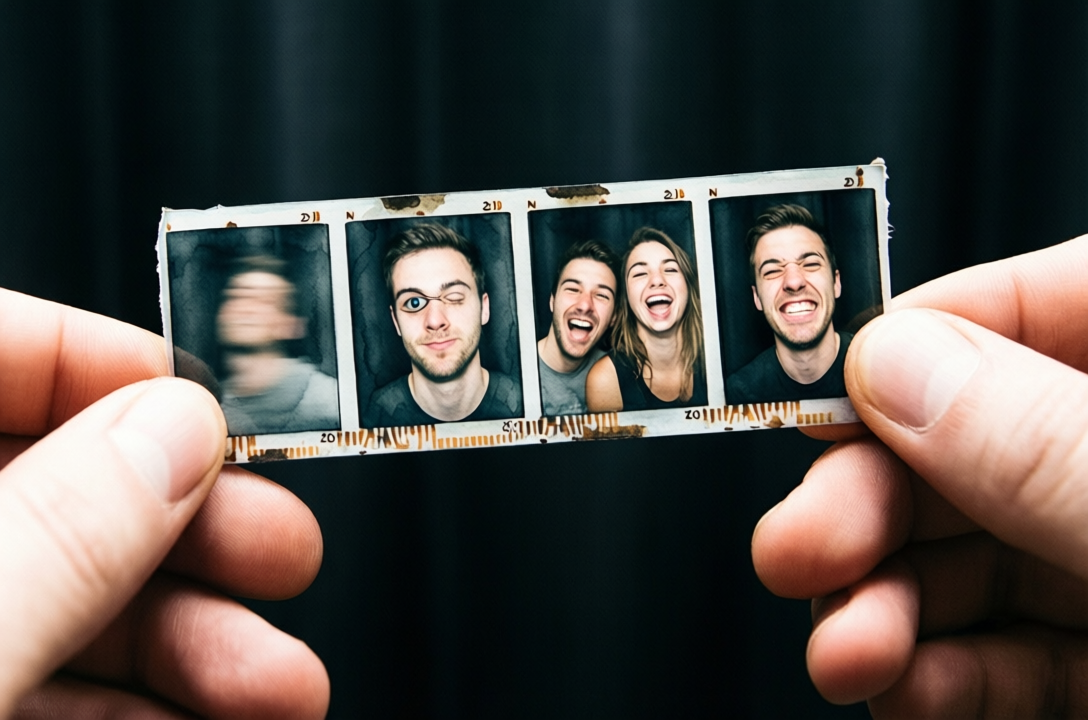
    Consider the typical photo booth strip:1. Frame One: Initial self-conscious pose, often a bit stiff.

    Analog film photograph of section 3 related to The Psychology of the Curtain: Why We Act Differently in Booths
    • Frame Two: The subjects realize they are truly alone, and the first hint of a real smile appears.
    • Frame Three: The group dynamic takes over, prompting a genuinely funny pose or a spontaneous, shared laugh.
    • Frame Four: Complete, joyous absurdity…a wild gesture, a silly face, an image that is deeply personal and truly captures a moment of connection.The transition from Frame One to Frame Four is the journey from performance to authenticity, facilitated entirely by the psychological safety of the private, unattended space. A photographer is often asked to capture the ideal version of the event; the photo booth captures the real version.

    This contrast is crucial for the discerning host or event planner. While professional photography captures the grandeur and the aesthetics, ZillaBooth captures the soul and the intimacy. The professional photographer is tasked with documenting the curated narrative; the unattended booth is allowed to document the spontaneous truth. The images produced are not merely complementary; they are two sides of the same psychological coin. One is the public face; the other is the private, shared joke.

    Ultimately, the power of the booth is the power of a temporary, communal blind spot. In a world saturated by surveillance…from CCTV to the omnipresent smartphone camera…the photo booth offers a small, defiant sanctuary. It is a declaration that for four quick flashes, you are exempt from the requirements of the stage. The attendant is gone, the social media link is severed, and the outside world is muted. All that remains is the interaction between the people in the frame.

    ZillaBooth’s successful recreation of the “Psychology of the Curtain” is not about nostalgia; it is about addressing a very modern need. It acknowledges that true, uninhibited connection is best captured when the subjects forget the camera exists, and the best way to make them forget the camera is to ensure they are only conscious of the company they keep.

    By removing the watchful, judging eye of the human operator and the immediate, judging audience of the internet, ZillaBooth facilitates the kind of natural, goofy, and profoundly human moments that become not just great photos, but true, unblemished private memories. It is where the human guard comes down, and the true picture emerges.

  • Taking Photos of Photos: The Meta-Trend

    Taking Photos of Photos: The Meta-Trend

    The irony is not lost on us: in a world where everything is captured, shared, and stored digitally…from your most recent brunch to your wildest night out…one of the most popular and evocative social media trends involves deliberately stepping away from the screen to embrace the tangible, only to capture it all over again.

    This is the heart of the “meta-trend”: taking a brand-new digital photograph of a physical photo, a printed artifact, a moment captured on paper. It’s a deliberate layer of visual storytelling that adds texture, history, and a potent dose of nostalgia to your feed, and right now, the ZillaBooth photo strip is the undisputed king of this aesthetic.

    The rise of the perfect digital image has created an aesthetic fatigue. We’ve spent a decade chasing golden hour, mastering portrait mode, and using sophisticated apps to erase every wrinkle, shadow, or imperfection. The ‘meta-trend’ is a cultural rebellion against this polished perfection. By introducing a physical print, you’re instantly layering imperfection, and that’s the point.

    The print itself is a historical object. It carries the crease from your pocket, the fingerprint smudge from your friend, the slightly blurry quality of a flash-fired moment. When you photograph that object, you are not just capturing the original moment; you are capturing the current moment in which you are holding that artifact, bridging the past and the present. It turns a simple social media post into an archaeological exercise…a story within a story.

    This is a movement powered by two main cultural forces: a craving for authenticity and an intense wave of visual nostalgia.

    Authenticity is the most valuable commodity online. In an era of deepfakes and AI-generated imagery, a photo of a photo acts as a verifiable physical proof of experience. It says: “I was here. I printed this. I physically touched this memory.” The light reflections on the glossy paper, the way the edges curl, the shadows cast by your fingers…all of these elements testify to the object’s reality. It’s an un-retouchable truth embedded within your feed’s flawless scroll, offering a visual sigh of relief to viewers tired of the digital artifice.

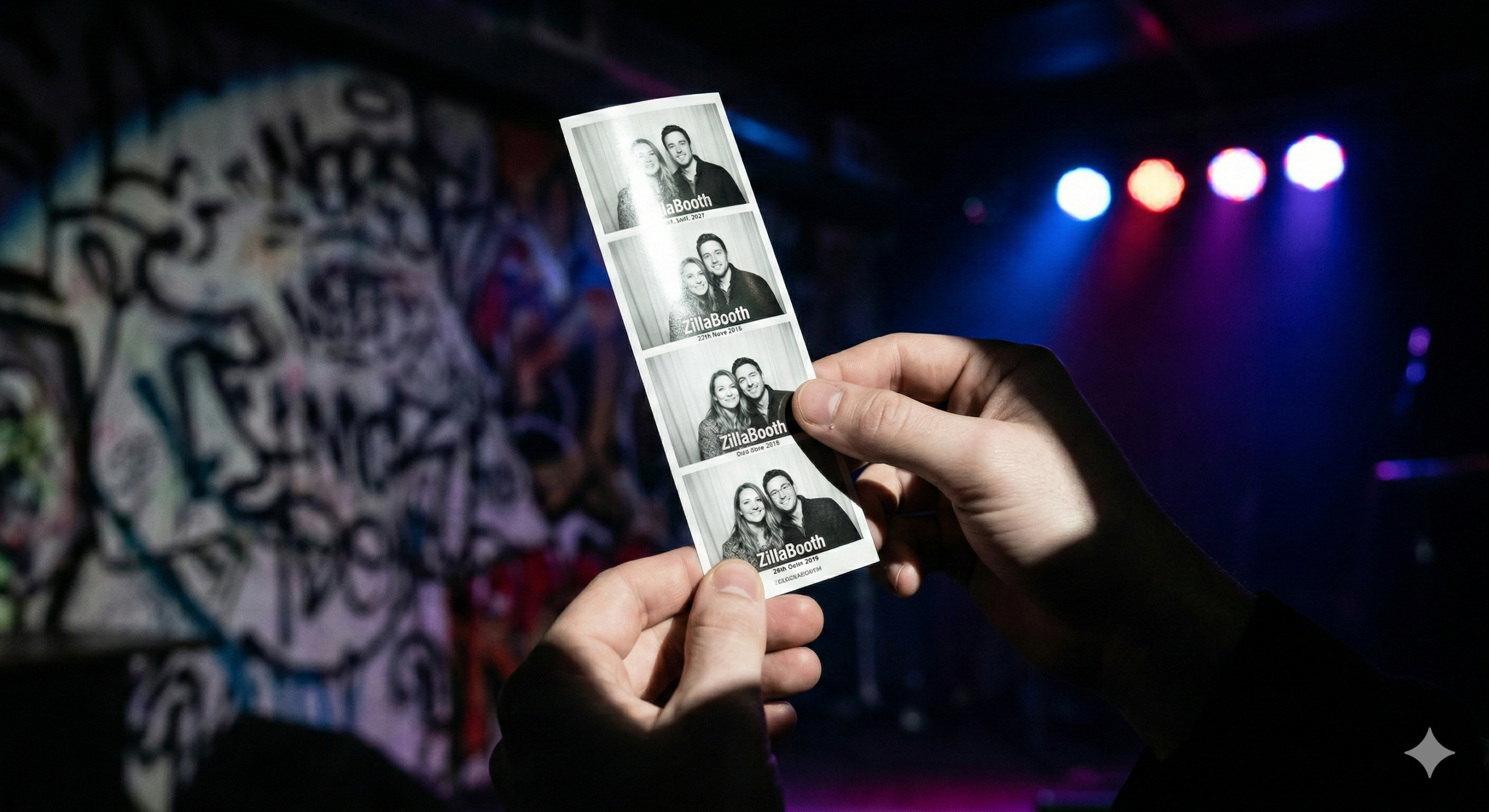
    Nostalgia, particularly for the late ’90s and early 2000s, is the aesthetic fuel. Photo booths, disposable cameras, and point-and-shoot digital cameras defined an era of spontaneous, low-fidelity photography. The vertical ZillaBooth photo strip, with its four iconic frames, instantly evokes that sense of carefree, low-stakes fun. By holding that strip up against the venue background…the very place it was taken…you are collapsing time, bringing the energy of the moment out of the past and into the now. You’re giving your digital followers a tangible, haptic reference point.


    The ZillaBooth Guide: Capturing the Photo-Within-A-Photo

    To truly master this meta-trend for Instagram, you need to think of your ZillaBooth photo strip not just as a picture, but as a lens through which you are framing a larger, ongoing story. Here is the definitive, step-by-step guide to transforming a physical print into a captivating digital post, using the venue as your essential backdrop.

    Analog film photograph of section 1 related to Taking Photos of Photos: The Meta-Trend

    Step 1: Secure Your Artifact (The ZillaBooth Strip)

    First, the obvious: you need the strip. The ZillaBooth is designed for high-quality, high-speed printing, making its vertical strip format the ideal canvas for this trend. After you take your strip, do not immediately flatten it or file it away. The most compelling meta-photos often have strips that are slightly bent, crinkled, or have the perforated edges still intact. These slight imperfections are the marks of authenticity that digital photography has tried so hard to eliminate. Embrace them.

    Analog film photograph of section 2 related to Taking Photos of Photos: The Meta-Trend

    Step 2: Scoping the Scene – The Venue Background is Key

    The description specifically calls for holding the strip up “against the venue background,” and this is the most critical compositional element. The goal is to provide contextual layering.

    Analog film photograph of section 3 related to Taking Photos of Photos: The Meta-Trend

    The Echo Effect: The most impactful posts photograph the print against a background that matches the environment within the print. Did you take the strip in front of the bar’s neon sign? Go stand in front of that sign and hold the strip up. The repetition of the location creates a dizzying, visually satisfying echo effect that emphasizes the “you are here” moment.

    The Contrast Shot: Alternatively, you can use the background to create a strong visual contrast. If the strip was taken in a dark, interior space, try holding it up against a brightly lit, exterior backdrop of the venue. For instance, holding the dark strip up against the venue’s brightly lit marquee or a busy street scene outside the door. The contrast draws the eye directly to the strip while still anchoring the photo in the physical location.

    The Atmosphere Shot: Use an environmental detail that screams ‘venue.’ This could be the pattern of a crowded dance floor, a distinctive piece of art on the wall, or a recognizable stage setup. Even if the detail isn’t in the original photo strip, it acts as a silent witness to the current moment.

    Step 3: Mastering the Hold and Composition

    The way you physically hold the print is where the magic happens and where the trend gets its “meta” designation. The inclusion of your hand or fingers is not a mistake…it is a mandatory compositional tool.

    Analog film photograph of section 4 related to Taking Photos of Photos: The Meta-Trend

    The Finger Frame: Hold the strip at the very top and bottom using your thumb and forefinger. This frames the vertical strip and instantly tells the viewer, “This is an object I am physically presenting to you.” The slight shadow your fingers cast adds depth and proof of the physical plane. Ensure your fingers are clean, but don’t worry about minor smudges on the print itself; the grime is part of the charm.

    Rule of Thirds Placement: When capturing the digital photo, don’t center the strip dead-on. Place the ZillaBooth strip along one of the vertical lines of the rule of thirds. This leaves two-thirds of the digital frame to showcase the venue’s background, creating a more dynamic and visually engaging composition than a simple straight-on shot. The eyes of the viewer will move from the background context to the framed print and back again.

    The Peek-Through: For an advanced shot, position the print so that one of the frames perfectly lines up with an element in the background. For example, if one frame shows a person laughing, position the print so that the top edge of the frame lines up with the natural horizon line of the background, making it seem as if the action in the print is happening in the background scene.

    Step 4: The Digital Capture Settings (Intentional Imperfection)

    Your phone’s camera is powerful, but for this trend, you need to use that power wisely. You are aiming for a high-quality capture of a low-fidelity object.

    Analog film photograph of section 5 related to Taking Photos of Photos: The Meta-Trend

    Focus is Paramount: This is the most crucial step. Use your phone’s manual focus (tap-to-focus) function and lock the focus directly on the ZillaBooth photo strip. Do not let the focus drift to the background. The text, the faces, and the glossy texture of the print need to be razor-sharp. If the background is slightly out of focus (shallow depth of field), that only enhances the print’s prominence.

    Embrace the Reflection: You will inevitably get reflections on the glossy paper, especially from ambient venue lights. Do not try to edit these out. A slight glare or reflection is another marker of the print’s physicality. It proves the image is being held in a real, live-action environment. The reflection is the “meta” light source.

    Use the Flash (The Power Move): For maximum effect, especially in dark venues, consider forcing your phone’s flash ON. The harsh, direct flash will brilliantly illuminate the photo strip while pushing the already dark background further into deep shadow. This mimics the low-fi aesthetic of a disposable camera shot, creating a dramatic, high-contrast image where the photo strip practically glows in your hand.

    Step 5: Minimal Editing and The Caption

    The beauty of the meta-trend is that the physical print is the “filter.” Keep your digital editing minimal to maintain the authenticity.

    Color and Contrast: A slight increase in contrast can help the photo strip stand out against the background. Avoid heavy-handed filters. If the photo strip itself is slightly desaturated, a simple black and white conversion of the entire digital image can create a cohesive and timeless editorial look.

    The Caption: The caption is where you provide the final layer of context. Use it to date the original event or to narrate the current situation. Instead of just “Last night was fun,” try: “Held onto this ZillaBooth proof of life from 2 AM and had to capture it against the neon one last time.” Use language that emphasizes the object and the memory. Popular hashtags include #PhotoOfAPhoto #AnalogMeetsDigital #MetaTrend #ZillaBoothStrip #PhysicalProof.


    Pro Tips: Elevating Your Meta-Game1

    . The Time-Travel Shot: Use an old ZillaBooth strip from a prior event…perhaps an entirely different venue or city…and hold it up in your current location. This is the advanced level of storytelling. The visual dislocation (a summer beach photo strip held up in a snowy city street) creates a powerful, dream-like contrast that viewers instantly engage with. It’s a literal representation of a memory being present in the now.

    • The Collage/Grid: Don’t just post the single meta-photo. Use Instagram’s carousel feature. The first photo should be the digital picture of the physical print. The second and third photos should be zoomed-in details of the print itself, showing the texture, the gloss, and the perforated edges. The final photo could be the environment without the print. This tells the complete story of the artifact and its surroundings.
    • The Photo-Frame: For a truly creative twist, use the ZillaBooth strip to frame an object other than the background. For example, hold the strip around a cocktail glass, a musician on stage, or a distinctive piece of furniture. You are using the nostalgia of the photo strip’s border to elevate a new subject, giving a mundane object the gravity of a preserved memory.
    • Backlight the Artifact: For the most dramatic effect, find a light source (like an emergency exit sign, a stage light, or a window) and hold the print slightly over it. The light will bleed through the thinner parts of the photo paper, creating a subtle, glowing edge that visually separates the print from the background and gives the entire image a surreal, luminous quality.The trend of “taking photos of photos” is more than just an aesthetic quirk; it’s a profound statement about how we value and curate our memories in the digital age. By turning your ZillaBooth print into a physical prop, holding it up against the very background that hosted the moment, and capturing the resultant composite with your phone, you are performing a small, personal act of resistance against the relentless flatness of the digital feed. You’re celebrating the crease, the reflection, and the sheer, physical reality of being there. It’s imperfect, it’s raw, and it is the most honest, authentic way to share a memory right now.
  • The “No Do-Over” Challenge

    The “No Do-Over” Challenge

    It was a simpler time. A time when a night out wasn’t complete until you and your friends crammed yourselves into a tiny, velvet-curtained box, frantically trying to strike a pose before the blinding flash stole four precious moments of your evening. This wasn’t just photography; it was a performance art of rushed expressions, accidental intimacy, and absolute, unchangeable finality.

    You paid your four quarters, you pressed the button, and whatever happened in the next thirty seconds…the hair falling across your face, the untimely blink, the awkward, half-formed smile, the friend who couldn’t fit in the frame…that was it . There were no screens to check, no “Delete and Retake” button, and certainly no gallery of 50 similar attempts to scroll through later. The resulting strip, still warm and damp, was a genuine, raw, unedited, four-panel portrait of a specific moment in time.

    That tangible artifact, that imperfect strip of memories, holds a lesson that has been utterly lost in our digital age.

    Today, we are all professional curators of our own existence. The average person takes dozens of photos to get “the one”…the perfect angle, the ideal lighting, the candid-but-staged moment that makes us look effortlessly flawless. Our camera rolls are graveyards of near-misses, a constant cycle of correction, refinement, and elimination.

    The philosophy of digital photography is simple: if it’s not perfect, it doesn’t exist. We are terrified of the flaw, the shadow, the unpolished glimpse of reality. We airbrush our lives, creating a grid of sun-drenched, wrinkle-free, perfectly composed moments that bear only a passing resemblance to our actual, messy, wonderful lives. We’ve replaced memory with myth, and spontaneity with a script.

    But what if we could bring back the high-stakes, authentic thrill of the original photo booth? What if we could celebrate the raw, unrehearsed shot? What if we declared war on the delete button?

    This is the inspiration behind the challenge, and it’s built on the principle that the most meaningful photos are the ones we don’t take 17 times.

    The Challenge is simple, but the mental hurdle is immense: You must use the ZillaBooth app for a session, and you are forbidden from retaking any of the photos. You take the shots, and you live with the strip. The “blinked eyes,” the “awkward smiles,” the wild, windblown hair, the strange glare from the streetlamp…these are not errors to be corrected; they are the essential elements that elevate the strip from a staged moment into a true piece of art.

    We know what you’re thinking: But what if it’s bad?

    That’s precisely the point. “Bad” is subjective, and in the context of authenticity, “bad” often means real. The reason we cherish those vintage photo booth strips isn’t because they are technically superior to a modern portrait. They are cherished because they are an immediate, unfiltered snapshot of personality and interaction. They carry the energy of the moment. The forced, unflattering nature of the flash, the tiny space, and the knowledge that this is your one and only chance all conspire to create a genuine vulnerability that a 30-minute photoshoot could never replicate.

    Analog film photograph of section 1 related to The

    Think about the psychological shift that occurs when the delete button is off the table. Suddenly, you stop trying to control the outcome. You stop posing and you start being.

    In the age of infinite digital storage and immediate preview, the delete function is both a blessing and a curse. It has allowed us to perfect our craft, but it has simultaneously eroded our confidence in the genuine. The moment you look at the screen after a snap and judge it, you’ve already broken the spell of spontaneity. You are no longer documenting; you are criticizing and reprocessing. The “No Do-Over” Challenge forces you to commit to the moment, trusting that the true magic happens when you let go of the reins.

    It’s an exercise in trusting your own life.

    We are specifically calling on the power of ZillaBooth to help enforce this radical shift. While most apps are designed for endless refinement, ZillaBooth’s intuitive interface and commitment to the classic photo strip format is the perfect vessel for this challenge. Its rapid-fire capture and layout mimic the pressure and pacing of the original booths, helping you to bypass your internal editor and simply react. The app becomes a tool for discipline, a digital velvet curtain forcing you to stay present.

    But this challenge is about more than just one app or one photo strip. It’s a cultural counter-movement. It’s a quiet rebellion against the curated perfection that has begun to exhaust an entire generation. We are all suffering from “Curation Fatigue”…the mental exhaustion that comes from maintaining a perpetually flawless facade. The desire for “authenticity” has become a massive, powerful trend because people are genuinely tired of the lie. They are tired of comparing their real, messy lives to the highlight reels of others.

    Analog film photograph of section 2 related to The

    The “No Do-Over” photo strip is a powerful antidote to this fatigue.

    It says, “Here I am. This is what I looked like at 11:37 PM, after two cups of coffee and a long talk with my friend. I’m blinking in the third frame, and my smile is lopsided, but this is the real memory.”

    When you share an imperfect photo that you know you could have deleted and retaken, you are making a profound statement. You are granting permission to others…and to yourself…to be less than perfect. You are declaring that the story encoded in the image is more valuable than its technical polish. The photo where you’re mid-laughter, blurry and out of focus, is often a more accurate representation of true joy than the one where you’re perfectly composed, staring placidly into the lens.

    Analog film photograph of section 3 related to The

    Embracing the Unflattering: A Practical Guide to Winning the Challenge

    To successfully complete the “No Do-Over” Challenge, you need to fundamentally change your approach to taking photos. It requires a shift from “posing for the camera” to “living in front of the camera.”1. Don’t Look at the Screen (Until the End): The core rule of the classic photo booth was delayed gratification.

    You didn’t see the results until the process was over. When using ZillaBooth for this challenge, resist the urge to peek at the camera preview. Focus on your friend, on the environment, on the feeling. Pretend the camera is a mystery box; your only job is to fill it with genuine reactions.

    1. Move Faster Than Your Internal Critic: The rapid-fire nature of the ZillaBooth strip is your friend. Don’t pause to adjust between shots. Change expressions quickly. Lean in, lean out, make a funny face, look serious, then burst into laughter. The speed prevents your brain from engaging in the pose-and-check cycle. The faster you move, the more authentic the results will be.

    2. Lean Into the “Flaw”: Specifically try to capture what you would normally avoid. Is the light source creating a harsh shadow? Great, use it to frame your face dramatically. Is a friend about to sneeze? Capture the sneeze! A “blinked eye” in a final photo is a timestamp, a clear signal that the shot was spontaneous and real. The mistake is the memory.

    3. Focus on Connection, Not Composition: Use the photo session as a chance to connect with your companion. Tell an inside joke. Whisper a secret. Make each click a reaction to something real happening between you, not a reaction to the camera itself. The strip will then become a document of your relationship, not just a document of your faces.

    4. Share the Strip as-is: Once the challenge is complete, share the entire strip. Do not crop. Do not filter. Do not use external editing apps. The power of the “No Do-Over” Challenge is in its raw presentation. Tag your post with #NoDoOverChallenge and #ZillaBooth and declare your commitment to the unfiltered reality.The beauty of the “No Do-Over” Challenge is that you cannot fail, because there is no perfect outcome to aim for. The goal is not to produce a technically beautiful photograph, but to produce an authentic, memorable moment. The success of the challenge is measured not in likes or comments, but in the moment you look at that final, imperfect strip and smile, knowing that every strange look and accidental gesture is a genuine piece of your life, captured with the brutal, beautiful honesty of a simpler time.

    We invite you to step away from the curated facade. Shut down your internal editor. Embrace the awkwardness. Get ready to blink, smile awkwardly, and reclaim the joy of the unrehearsed moment. Pay your quarters, press the button, and let your real life begin to show up in your feed. Join the “No Do-Over” Challenge today, and let’s make imperfection the new standard. Your most honest photo is waiting to be taken.

  • Messy Flatlays & Chaos: The New “Detail Shot”

    Messy Flatlays & Chaos: The New “Detail Shot”

    The era of the meticulously curated, perfectly lit, and utterly pristine flatlay is officially over. For years, the gold standard for any event recap or professional detail shot involved a sterile table setting, a pair of artfully arranged shoes, or a champagne flute positioned just-so to catch the perfect glint of sunlight. It was beautiful, yes, but it was also predictable, emotionally inert, and ultimately, a lie.

    Today, the most compelling visual stories of any great celebration are found not in the ‘before’ but in the glorious, messy ‘aftermath.’ We’re not talking about staging a prop to look slightly dishevelled; we’re talking about documenting the genuine, glorious chaos that is the indelible evidence of a party that truly succeeded. This is the new detail shot, and it is a powerful statement of authenticity that your followers and your clients are craving.

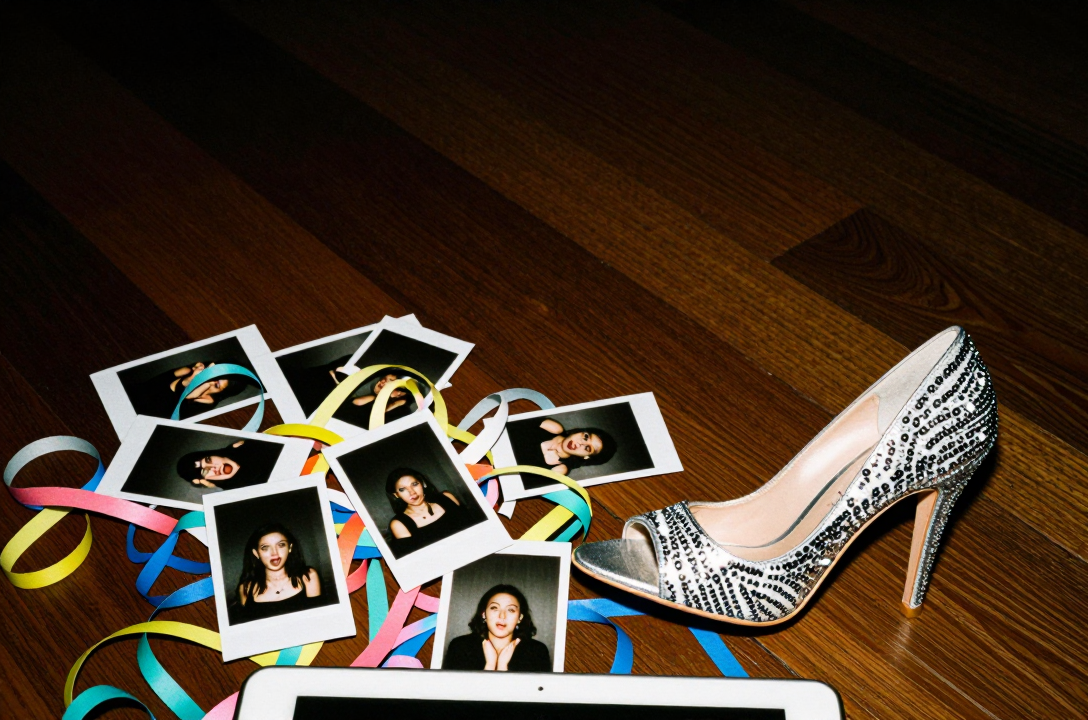
    It’s the half-eaten slice of cake abandoned on a cocktail napkin because the DJ dropped a banger and the guest ran to the dance floor. It’s the pile of discarded photo booth props, the scattering of confetti, and the shoes that were kicked off hours ago. These aren’t just pictures of debris; they are the visual transcripts of unadulterated joy.

    The Aesthetics of Aftermath: Why Mess is the Message

    Why has this shift occurred? Simple: audience fatigue. We’ve all scrolled past thousands of identical, hyper-edited images. They lack grit, vulnerability, and the sense of a real, lived moment. The messy detail shot, conversely, offers an instant injection of reality. It’s a raw, spontaneous energy that speaks volumes. When a photographer captures a perfectly untouched space, it says “We were here.” When you capture the beautiful debris, it shouts “WE HAD A BLAST HERE.”

    Analog film photograph of section 1 related to Messy Flatlays & Chaos: The New

    This aesthetic is deeply rooted in a contemporary craving for authenticity over perfection. The small, scattered elements…a smudge of lipstick on a glass, a crumpled thank-you note, the wilted flowers from a table centerpiece…become powerful storytelling devices. They are artifacts of a memory in progress.

    They possess a lo-fi, almost accidental quality that contrasts sharply with the high-production sheen of standard event photography. This contrast is what makes them arresting and magnetic. The chaos is a badge of honour, signaling to the viewer that the energy of the night was simply too good for anyone to stop and tidy up. To master this look is to stop documenting the staging and start documenting the story .

    The Game-Changer: Weaponizing the iPad Photo Booth

    Now, let’s talk about the secret weapon for capturing this beautiful disorder: your iPad photo booth. Typically, the booth is a stationary fixture, a magnet for smiling faces. But late in the evening, when the room is dark and the party is peaking or winding down, it needs to become a mobile, handheld instrument of photojournalism.

    Analog film photograph of section 2 related to Messy Flatlays & Chaos: The New

    The traditional detail photographer with a huge DSLR can often look out of place, breaking the spell of the late-night vibe. But the familiar, simple profile of an iPad is non-intrusive. It blends in, allowing you to capture moments that feel truly candid.

    This is the key instruction: encourage and train your users…whether they are junior staff or clients…to take the iPad booth off its stand. The goal is to liberate the camera and turn it into a dedicated tool for capturing the night’s aftermath.

    This should be an authorized move reserved for the final hour of the event when the dance floor is spent, the caterers are clearing out, and the lights are low. The iPad’s inherent limitations in low light, when combined with its internal flash (which you should force to fire if possible, or rely solely on ambient light), perfectly replicate that desirable, high-contrast, grainy, early-2000s disposable camera look.

    Analog film photograph of section 3 related to Messy Flatlays & Chaos: The New

    Tutorial: Capturing the Chaotic Debris in Grid Format

    Once you’ve liberated the booth, the most crucial tool in your composition arsenal is the Grid Format. You must always shoot with the 3×3 grid display activated on the screen. The grid provides a simple, structured method for organizing visual chaos, ensuring that your messy photo still reads as an intentional, aesthetically pleasing image, not just a haphazard snapshot. The grid is what turns clutter into composition.

    Analog film photograph of section 4 related to Messy Flatlays & Chaos: The New

    Step 1: Go Mobile and Hunt for Evidence Around 30 minutes before the end of the event, or after the main action has passed, remove the iPad from its stand. Move through the event space like an archaeologist. Ignore people for a moment; you are looking for evidence of their revelry. * The Half-Eaten Cake: Don’t focus on the remaining pristine slice. Zoom in on the area where the first slice was messily carved out. Look for the fork, the smear of frosting, the crumbs scattered on the linen. * Dance Floor Relics: A fallen tie, a single shoe, a discarded funny hat, or a handful of tangled streamers. Focus on a grouping of three or more items. * The Bar Aftermath: Piles of used cocktail napkins, a few abandoned glasses with condensation rings, a twist of lime rind, and a spilled drop of red wine. * The Booth’s Own Debris: A pile of photo booth printouts scattered haphazardly on a table, perhaps with a stray glass on top of them. This is the ultimate meta-shot.Step 2: Compose Using the Rule of Thirds The 3×3 grid should be your guiding principle. Instead of centering the mess, you must use the grid lines and their four intersection points (the ‘power points’) to compose the shot. * Subject Placement: Identify the single most interesting or telling element…the ‘hero’ of the mess (e.g., the bright red lipstick stain, the glint of a lost earring). Place this element directly on one of the four intersection points. This gives the photo an immediate focal point that anchors the surrounding chaos. * Framing the Debris: Use the grid lines to establish borders. For example, you can line up the edge of a table or a long, fallen streamer along one of the horizontal or vertical grid lines. This imposes intentional structure on the random elements. * Negative Space: A common mistake is filling the entire frame with clutter. To make the messy detail shot work, you need to use a clean section of the floor, a dark corner of a wall, or a solid tablecloth as negative space. Use one or two of the grid sections to contain the mess, leaving the remaining sections as purposeful negative space. This highlights the chaos, giving it room to breathe. For example, frame a pile of confetti in the bottom right corner (one grid square), allowing the empty, shadowed floor to take up the rest of the shot.Step 3: Embrace the Low-Light Grain and Flash Do not be afraid of the noise or graininess that comes from shooting late at night with low, ambient light. This is an essential part of the aesthetic. It adds texture and drama. If the venue lighting is too low to capture anything legible, turn the iPad’s flash on (manual on, not auto). The harsh, undiffused light from the iPad’s small flash will cast deep, dramatic shadows and blow out highlights on reflective surfaces (like sequins or metal), which is exactly the high-contrast, rebellious look we are after. This direct light aggressively isolates the debris, cutting it out from the shadowy background and emphasizing the drama.

    Why Grid Format is Essential to Chaotic Photography

    Analog film photograph of section 5 related to Messy Flatlays & Chaos: The New

    In traditional photography, the Rule of Thirds is used to place important elements in a balanced, visually pleasing way. In chaotic photography, the grid does something more powerful: it legitimizes the mess. Without the grid, the photo looks accidental…just a picture of trash.

    With the grid, the viewer understands that the mess has been chosen and framed . * Balancing Visual Weight: A pile of abandoned glow sticks might be visually ‘heavy.’ You can balance this weight by placing it in the bottom third of the frame, leaving the upper two-thirds for a clean, darker background like an empty wall. The grid helps you measure this balance instantly.

    • Leading the Eye: Scattered objects like streamers, spilled powder, or tracks on the dance floor can be used as leading lines. Align these natural lines of debris with a grid line to direct the viewer’s eye toward the main point of interest (the intersection point).
    • Creating Tension: Placing a solitary, significant object (like a single, lost key) in the center of one of the empty grid sections, surrounded by the mess, creates a powerful sense of isolation and dramatic tension.

    The Impact on Your Brand Story

    The final messy detail shots, composed using the grid format and captured with the inherent drama of late-night light, are the ultimate testimonial. They don’t just show that an event was beautiful; they prove it was alive.

    This new aesthetic shifts the narrative of your event photos from a cold portfolio of perfect styling to a warm, genuine scrapbook of shared experience. These are the images that get saved, shared, and talked about. They are relatable, honest, and far more memorable than any staged flatlay.

    The photo booth, liberated from its stand, becomes the ultimate storyteller, a documentary filmmaker capturing the authentic, unscripted moments that define the success of an event. Stop cleaning up your photos. Start embracing the glorious, beautifully composed chaos. Take your iPad off the stand, turn on that grid, and document the party’s beautiful, brilliant surrender.

  • Why “Authenticity” is the Buzzword of the Year

    Why “Authenticity” is the Buzzword of the Year

    The cultural pendulum has definitively swung. After nearly a decade defined by the relentless pursuit of digital perfection…the soft-focus portrait, the meticulously arranged flat lay, the sun-drenched, over-exposed travel shot…we have collectively reached a saturation point.

    The meticulously curated grid, once the gold standard of social media success, now registers as inauthentic, tiring, and even dishonest. The visual language of the internet is undergoing a seismic shift, and the single word dominating this new conversation, the one that serves as both a critique of the past and a blueprint for the future, is authenticity. It is more than a fleeting trend; it is a full-blown cultural mandate, a demand from consumers and creators alike to ditch the artifice and embrace the raw, the real, and the momentarily imperfect.

    This widespread craving for “realness” is a direct response to what can only be called ‘Digital Fatigue.’ We grew weary of the visual lie. The perfected image promised an unattainable lifestyle, fueling a low-grade, perpetual anxiety about presentation. The counter-movement began subtly…a return to grainy film simulations, the strategic use of phone camera ‘time stamps,’ and the celebration of images taken under difficult or unflattering lighting. This aesthetic revolution, however, has crystallized around a singular core principle: the preservation of true-to-life color and texture.

    For years, the goal of any casual picture-taker was the soft wash of light that erased blemishes, minimized shadows, and homogenized color into a single, pleasing, ‘golden hour’ palette. Technology bent over backward to deliver this; camera apps automatically smoothed skin, corrected for every possible lighting flaw, and defaulted to flattering, soft-focus portrait modes. But in striving for technical perfection, these tools stripped the image of its narrative power…the very details that make a moment feel real.

    Analog film photograph of section 1 related to Why

    Authenticity, in the current visual context, is defined by the integrity of the original detail. A photo is authentic when it registers the grit of the city street, the harsh reflection of fluorescent light, the true, undoctored color of a cocktail in a dimly lit bar, and the actual, imperfect texture of human skin. This is the visual equivalent of ‘lo-fi’ music…it deliberately eschews high-fidelity polish in favor of an imperfect, slightly messy, yet immediately evocative honesty.

    The shadows, the grain, the unforgiving color cast…these are no longer flaws to be edited out. They are essential characters in the story. They scream: This was taken right now, with no time for adjustments.

    This cultural moment demands a new type of tool…one that facilitates the trend of authenticity rather than fighting it. It requires a technology that gets out of the way, intentionally disabling the automated, ‘beautifying’ smart features that defined the last decade of phone photography. This is precisely where ZillaBooth Pro has emerged as the essential application for the authentic creator.

    ZillaBooth Pro’s defining feature is not a new filter or a groundbreaking editing tool; it is its revolutionary commitment to omission. The app is engineered with a purposeful lack of “beauty filters.” This is the anti-algorithm. While the native camera app on any modern smartphone uses incredibly complex artificial intelligence to automatically and preemptively soften skin, subtly adjust contours, and correct what it perceives as ‘flaws,’ ZillaBooth Pro provides a completely unvarnished feed. It hands the user the raw, high-contrast, technically ‘imperfect’ image that the culture is currently demanding.

    This intentional absence of automated enhancement is the key to unlocking the new aesthetic of truth. When the camera’s internal software is prevented from performing its automated smoothing, the lens is finally allowed to capture true-to-life texture.

    Analog film photograph of section 2 related to Why

    Consider the human subject. In the era of the beauty filter, every portrait was destined to look slightly airbrushed…skin tones were unnaturally uniform, pores were blurred, and the fine lines that tell a life story were digitally erased. ZillaBooth Pro throws this out entirely. Its lack of smoothing algorithms means that the texture of fabric…the heavy weave of denim, the sheen of silk, the glitter of sequins…is rendered with a brutal, almost hyper-real clarity.
    More importantly, it means that skin is captured with its true texture intact. A direct, harsh light source, like the forced flash ZillaBooth Pro so expertly controls, does not flatter; it magnifies. It highlights the pores, the natural oil of the skin, the delicate lines around the eyes. This unforgiving honesty is what audiences now equate with being ‘real,’ a defiant badge of authenticity worn by the subject.

    The effect is even more pronounced when it comes to true-to-life color. Modern camera algorithms are programmed to chase a specific color temperature, usually one that is warm, flattering, and consistent…a constant, soft-focus ‘golden hour.’ This results in an image where the colors of the environment are flattened and corrected to conform to an idealized vision. ZillaBooth Pro rejects this chromatic homogenization. By offering granular, manual control and intentionally avoiding automated white balance correction, the app allows the image to be saturated with the genuine color of the moment.

    The colors that were once aggressively ‘corrected’…the eerie blue of a late-night streetlamp, the intense green of an LED screen, the harsh yellow-orange glow of old-school incandescent bulbs…are now preserved. The result is a color profile that is chaotic, dynamic, and perfectly captures the feeling of being in that space, not the technically ‘correct’ version of it.

    Analog film photograph of section 3 related to Why

    The lack of an intervening filter means a subject’s true-to-life skin color is not warped by an attempt to make the whole scene uniformly ‘pretty.’ When you look at an image captured with ZillaBooth Pro, you are not seeing a post-processed interpretation; you are seeing the moment’s raw, unedited light signature. This is why the aesthetic is so compelling: it is visual proof that you were there, experiencing the moment as it truly appeared, not as an algorithm wished it had appeared.

    ZillaBooth Pro is, therefore, not just a camera app; it is a statement of philosophical intent. It operates on the principle that the most engaging image is the one that is the least filtered. It empowers the user to reject the soft-focus fantasy and embrace the high-contrast, hyper-textured reality. It’s a move that feels rebellious in a digital landscape still largely dominated by polished perfection.

    The tools ZillaBooth Pro does offer…manual control over flash, exposure, and focus…are designed to enhance the chaos and truth, not tame it. Forcing the flash to fire at maximum intensity, even in bright sunlight, is the ultimate power move of the authenticity trend. This technique, which instantly separates the subject from the background with aggressive shadows and blinding highlights, ruthlessly exposes texture and preserves the most chaotic, true colors of the scene, creating a sense of raw, unmediated drama.

    In this new visual economy, authenticity is the currency, and the preservation of true-to-life color and texture is the gold standard. ZillaBooth Pro is the definitive tool because its very function is a rejection of the artifice that came before.

    It is built for a generation that has seen through the digital veil and is now demanding the real, the raw, and the unedited truth in every frame. To capture an image with ZillaBooth Pro is to participate in this cultural moment, transforming a simple picture into an unflinching document of reality. By choosing an app defined by its lack of automated enhancements, the modern creator is making a powerful statement: that reality, in all its high-contrast, textured, and colorful glory, is far more compelling than any manufactured fantasy.

  • Gen Z Has Entered the Chat: What the New Generation Wants in a Photo Booth

    Gen Z Has Entered the Chat: What the New Generation Wants in a Photo Booth

    The wedding industry has officially entered the era of Gen Z. This generation, now forming the majority of newly engaged couples, is not just changing décor and menus; they are fundamentally reshaping the way memories are captured. Having grown up navigating the hyper-curated, filter-heavy landscape of social media’s adolescence, Gen Z has developed a powerful cultural counter-movement: a demand for authenticity and imagery that is definitively “raw and unfiltered.” This cultural shift explains exactly why they are walking past the traditional, overly-processed photo booths and flocking toward streamlined, simple-interface solutions like ZillaBooth.

    For the modern couple, a wedding is no longer a performance staged for the social media feed; it is an intimate, authentic gathering. This generational pivot is a direct reaction to the intense pressure of the mid-2010s aesthetic, where digital perfection was the unattainable standard. Gen Z watched as Millennials chased the elusive “Instagram Face” and polished every photo until it lacked any sense of realness. They experienced the mental fatigue of constant curation. Their response is a powerful aesthetic rebellion, prioritizing genuine connection and imperfect, candid moments over sterile, airbrushed visuals.

    This rejection of the digital veneer is most visible in their photography choices. They romanticize the aesthetic of disposable cameras, vintage film, and high-flash point-and-shoots…not because the images are flawless, but because they carry the weight and warmth of genuine, unmanipulated moments. They understand that a beautifully lit, slightly-off-center, candid shot is infinitely more valuable as a memory than an image scrubbed clean of all personality by a heavy smoothing filter.

    This deep-seated value system has created a significant problem for the traditional photo booth. For years, photo booths were defined by their excessive digital enhancements: cartoon filters, aggressive skin-smoothing effects, heavy color overlays, and digital props that looked tacked-on and cheap. While this “more is more” approach was initially fun, it now feels jarringly dated and, crucially, completely inauthentic to the Gen Z couple. They don’t want a memory that is obscured by a digital mask. They want the real, unvarnished emotion of their reception, captured brilliantly.

    The traditional photo booth’s greatest sin, in the eyes of this new generation, is complexity born from over-processing. A typical legacy system forces guests through a bewildering labyrinth of on-screen choices, demanding they select a frame, a filter, a digital prop, and an effect…all in the span of a few hurried seconds. This selection process distracts from the moment itself.

    The spontaneity is lost as a group of friends stares at the screen, arguing over which shade of sepia works best. The resulting images, laden with heavy digital manipulation, fail to capture the true atmosphere and genuine emotion of the evening. They look generic, temporary, and easily discardable.

    ZillaBooth: The Champion of the Anti-Filter Aesthetic

    ZillaBooth has successfully disrupted this outdated model by operating on a completely different principle: the technology must serve the moment, not dominate it. Its success lies not in the features it offers, but in its deliberate subtraction of unnecessary digital noise.

    Analog film photograph of section 1 related to Gen Z Has Entered the Chat: What the New Generation Wants in a Photo Booth

    The core appeal is the simple interface .1. Minimalist, Intuitive Design: When a guest steps up to a ZillaBooth, the interface is clean, fast, and intuitive. There is no overwhelming menu of filters and digital junk.

    Analog film photograph of section 2 related to Gen Z Has Entered the Chat: What the New Generation Wants in a Photo Booth

    The screen presents only the essentials: the clean camera feed and a large, clear start button. This minimalist design cuts down on the decision fatigue that Gen Z actively seeks to avoid. Guests spend less time scrolling through digital options and more time being fully present, spontaneous, and silly. The focus is immediately placed on the people in the frame and the fun being had, not the machine itself.

    Analog film photograph of section 3 related to Gen Z Has Entered the Chat: What the New Generation Wants in a Photo Booth
    1. A Focus on Foundational Quality: ZillaBooth trusts the quality of its underlying technology. Instead of compensating for poor lighting and camera quality with digital smoothing, it invests in professional-grade components. The images are captured with brilliant, flattering, high-end flash and excellent resolution. This foundational quality means that the resulting photo is already high-end, crisp, and beautifully lit, requiring no heavy-handed digital ‘corrections.’ It delivers the authentic, natural look that Gen Z finds editorial and timeless.

    2. The Editorial Look vs. The Social Filter Look: The final output from a ZillaBooth image looks like a professional, high-quality, candid photograph…the kind of flash-lit, high-contrast, beautiful moment one would expect from a talented editorial photographer. This look aligns perfectly with the current Gen Z aesthetic that embraces the “unfiltered” yet high-quality analog feel. The image preserves the texture, the expressions, and the real colors of the moment. In contrast, traditional filters flatten the image, smear the skin texture, and apply artificial colors that instantly date the photograph. For Gen Z, an image that respects reality is an image worth keeping.

    3. A Cultural Alignment with Authenticity: By defaulting to a clean, filter-free capture, ZillaBooth makes a powerful cultural statement that resonates with the new generation: “You don’t need digital alteration to be beautiful or to capture a great memory.” This message of radical acceptance and anti-perfectionism is precisely what Gen Z is championing in every corner of their lives. The simple interface is a facilitator of realness; it gives guests permission to be their true, silly, un-airbrushed selves, knowing the resulting image will be a true record of that spontaneous moment.For the Gen Z couple planning a wedding, every vendor choice is a reflection of their values. Choosing ZillaBooth is not just about entertainment; it is a statement against the performative culture of the past. It’s a commitment to safeguarding the authenticity of their celebration. The simple interface is the gatekeeper of this authenticity, removing the temptation and the friction of over-processing, and ensuring that the memories captured are genuine, high-quality, and completely unfiltered…perfect for the generation that is finally ready to embrace the truth behind the lens.

  • Reclaiming the “First Look”: Private Moments Before the Party

    Reclaiming the “First Look”: Private Moments Before the Party

    The wedding planning conversation has fundamentally changed. No longer is the proposal the starting pistol; for a growing number of couples, it’s merely a checkpoint. The data is clear: an astonishing one in five couples are now diving into the demanding world of vendor quotes, date confirmations, and venue scouting before the ring is even on the finger. This reality…the rise of the ‘pre-proposal planner’…signals a profound cultural shift. It’s not just about efficiency; it’s about control, certainty, and a deep-seated desire to ensure the most important day of their lives is not left to chance.

    But amidst this early, high-stakes planning, something vital can be lost: the intimate, low-pressure joy of the journey itself. The focus shifts too quickly to the event, overlooking the emotional transition into a forever partnership.

    This is where modern couples are finding ingenious ways to reclaim their time and their authenticity, particularly through a fresh interpretation of one of the wedding day’s most sacred rituals: the First Look. They are recognizing that the true magic lies not in the performance for others, but in the private moments of connection, and they are leveraging sophisticated tools to practice, personalize, and perfect these interactions long before the big day arrives. This conscious effort is about injecting genuine, unscripted emotion back into a process that can often feel excessively curated.

    The modern couple is not rejecting tradition; they are simply de-risking their experience. The pressure to produce a flawless, social-media-ready wedding has never been higher, and this pressure trickles down directly into the photography. For most people, being the center of attention under the scrutiny of a professional photographer’s lens is inherently uncomfortable. The wedding day’s ‘First Look’…traditionally the moment a groom sees his bride in her gown for the first time…is supposed to be a peak emotional moment, but it’s often plagued by performance anxiety. Am I smiling right? Should I be crying?

    Analog film photograph of section 1 related to Reclaiming the

    Where do I put my hands? The pressure to produce a viral, frame-worthy photograph can completely eclipse the genuine emotion. This is precisely why the pre-planning couples are ahead of the curve.

    They understand that a beautiful moment must be built on comfort, and comfort is born from practice. They are embracing the idea of ‘photo rehearsal’ as a core part of their planning, not just to look good, but to feel natural and present when it truly matters. They are separating the action (seeing each other) from the performance (being photographed doing it). This separation is the foundation of the reclaimed “First Look.”

    The ZillaBooth system, a professional-grade self-service photography solution, is proving to be an indispensable tool for these modern, proactive couples. Its versatility allows it to seamlessly integrate into two critical pre-wedding moments: the engagement party and private pre-sessions. At the engagement party, ZillaBooth offers a relaxed, uninhibited capture experience far beyond a standard photo booth. It’s a dedicated, professional-quality station that couples and their guests can control themselves, often featuring proprietary software that provides gentle guidance.

    Instead of a stiff, forced smile in a traditional portrait, the booth encourages playful interactions, quick video snippets, and candid group shots, normalizing the feeling of being photographed together in a celebratory environment. Crucially, the quality of the ZillaBooth’s output is high enough to generate authentic, beautiful images that can be immediately shared, building the couple’s visual narrative in a way that feels organic and fun, rather than staged.

    Analog film photograph of section 2 related to Reclaiming the

    This low-stakes exposure is the first step in conditioning the couple for the constant camera presence of the wedding day, providing a comfortable visual warm-up for both themselves and their inner circle. The memories captured here are lively, spontaneous, and stand in sharp contrast to the more formal portraits to come, serving as a genuine celebration of their new status.

    However, the true genius of utilizing ZillaBooth lies in the dedicated, private “First Look” practice session. This is where couples deliberately use the platform to work through their visual insecurities, transforming a necessary, stressful photography moment into a relaxed, intimate ritual of their own design. These private sessions, conducted weeks or months before the wedding, are essentially posing boot camps wrapped in an intimate date night. The couple can practice key poses: the embrace, the walk, the simple hand-hold, and the meaningful gaze.

    They can do this in a low-pressure environment, wearing simple clothing or even their chosen reception attire, and they can review the results instantly on the ZillaBooth’s connected screen. The system can be programmed to offer gentle, non-intrusive coaching cues, such as “Try shifting your weight to the back foot” or “Slightly drop the shoulder,” acting as an invisible third-party photography coach. The self-guided nature of the session allows for endless experimentation without the time clock or the pressure of a photographer watching their every move. They can look awkward, laugh, and try again until the movements feel intuitive.

    This practice session accomplishes several crucial goals. First, it identifies and corrects the specific, awkward habits (like the dreaded ‘T-Rex arm’ or the uncomfortable neck tilt) that often sabotage wedding photos. By immediately seeing the results, the couple develops a visual awareness of what works best for their body language and relationship dynamic. Second, and most importantly, it builds muscle memory for comfort and genuine connection.

    Analog film photograph of section 3 related to Reclaiming the

    By the time the wedding day photographer steps in, the couple is no longer thinking about how to stand; they are simply reacting to each other. The practice has transformed a potential moment of performance anxiety into a genuine, relaxed, and deeply felt emotional experience.

    The stress about the camera is gone; it has been neutralized by repetition. What remains is a pure, unadulterated emotional reaction…the tear, the gasp, the silent moment of awe…that the professional photographer can capture effortlessly, because the couple is truly present. They have essentially moved the ‘technical rehearsal’ out of the way of the ‘opening night performance.’

    Furthermore, this concept extends beyond just the First Look. It applies to all key photography moments, from the staged family portraits to the candid shots during the reception. A couple comfortable in their shared visual space moves through the day with an effortless grace that translates directly into stunning, natural-looking imagery. The forced, ‘Pinterest-perfect’ poses are replaced by gestures that are authentic to the couple’s relationship. By outsourcing the stress of posing to ZillaBooth in a private setting, couples are actively protecting the spontaneity of their big day.

    They are not chasing a curated image; they are simply being themselves, having perfected the art of being unposed. This approach is the ultimate form of modern wedding preparation, honoring both the need for flawless execution and the non-negotiable requirement for genuine emotional connection.

    The investment in these private, pre-wedding sessions is an investment in the emotional integrity of the wedding day itself, ensuring that the visual story of their wedding is not just beautiful, but profoundly real. This is how the one in five pre-planning couples truly reclaims their narrative, turning what could be a high-pressure photoshoot into a deeply personal, cherished memory. The wedding is the party; the moments before it, refined in private, are the true treasures.