Tag: Gen Z Trends

  • Capturing “The Real You”: Identity in the Booth

    Capturing “The Real You”: Identity in the Booth

    The modern landscape of digital identity is a minefield of comparison, performance, and external validation. Every uploaded image is a negotiation, a highly-edited statement designed to navigate the fickle currents of social approval. In this hyper-visible, public arena, where does one go to simply be? Where is the space to explore the messy, beautiful, contradictory reality of the self without the immediate pressure of a thousand judging eyes and an algorithmic thumbs-up or thumbs-down?

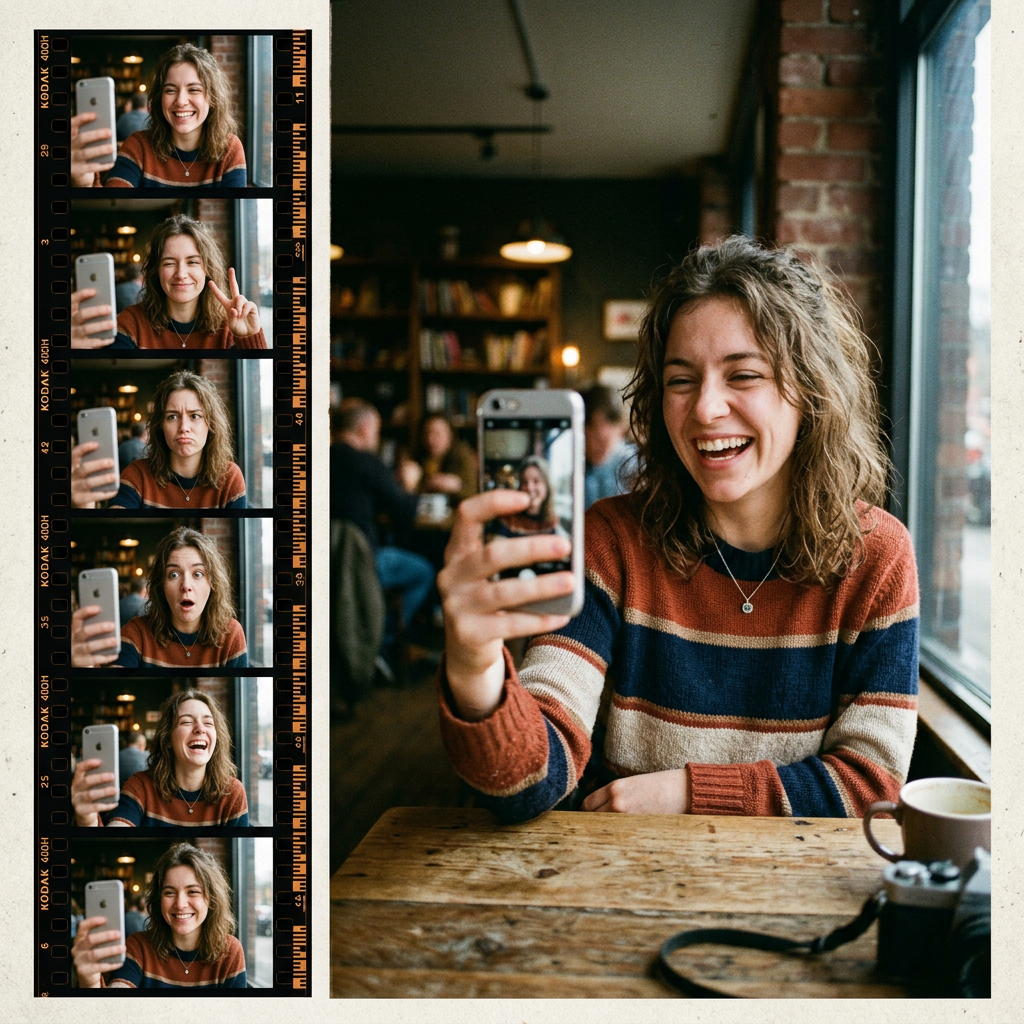
    The answer lies not in turning off the camera, but in stepping into a designated digital sanctuary: the booth. This feature transforms your phone from a public broadcasting device into a private creative studio, a darkroom for the soul. It provides a unique, safe space where the act of capturing “The Real You” is divorced from the expectation of public consumption. It is, fundamentally, a tool for introspection, enabling a profound form of identity exploration through the lens of the self-portrait.

    The genius of the booth is its enforced privacy. When you enter the space, the digital doors close. The usual metrics of social media…the like counts, the comments, the shares…vanish entirely. What remains is a pure, unadulterated relationship between you, your camera, and the vast, unmapped territory of your own face and persona. This lack of an immediate, critical audience is the key to unlocking true creative freedom. It permits experimentation with the self that would feel too vulnerable or too “off-brand” for public sharing.

    In the booth, the camera is no longer a documentarian of social moments but a mirror for the mind. It allows the user to consciously shed the “curated self,” the polished avatar maintained for the outside world, and experiment with the myriad other selves that constitute a genuine, complex identity. Are you the serious intellectual, the goofy friend, the melancholic artist, the defiant rebel? In the booth, you can be all of them, serially, without commitment. Each click of the shutter is an attempt to capture a fleeting facet of the truth, a momentary expression of an internal state. This is not about narcissism; it is about necessary self-inventory. It’s a visual diary where the images are less about aesthetics and more about information…data points on the trajectory of one’s becoming.

    To understand the profound potential of this simple, private act, we must look back to a master of self-image manipulation and serial identity: Andy Warhol. Warhol’s prolific output of self-portraits, particularly those utilizing the immediacy of the Polaroid camera, provides the perfect artistic and philosophical context for the modern digital self-portrait in the booth.

    Warhol understood that the self is inherently performative, a commodity to be replicated, scrutinized, and eventually, consumed. His self-portraits…from the early, starkly honest photo-booth strips to the later, garishly wigged and highly stylized silk-screen canvases…weren’t about finding the real Andy. They were about exploring the idea of Andy, the famous artist, the detached observer, the mutable icon. He used repetition and slight variation to deconstruct his own image, turning his face into an object of study, a Pop Art emblem.

    The booth allows users to follow in Warhol’s footsteps, democratizing his process for the digital age. Like the early, often unflattering photo-booth strips Warhol collected, the booth captures the raw, instantaneous moment. The user can take a dozen, two dozen, or a hundred self-portraits in a single session. This high-volume, serial approach is critical.

    When you take one self-portrait, you are trying to capture perfection. When you take fifty, the goal shifts. You are no longer chasing the “best” photo, but exploring a sequence, a range, and the subtle variations of light, mood, and expression that flicker across the face over time. This sequence becomes a personal gallery, a time-lapse of the self. This serialization allows a user to explore their identity as a fluid, rather than fixed, entity…the Warholian realization that the performance is the reality.

    In the safety of the booth, the user can consciously try on personas. They can adopt an aesthetic or a mood that feels true internally but might not align with their established public identity. This is more than just dressing up; it’s a psychological exercise. By projecting a new self into the camera’s lens…the ‘rockstar self,’ the ‘vulnerable self,’ the ‘unfazed self’…the user gets to witness how that persona looks and feels. The resulting images become prototypes for future public identities or simply private acknowledgments of hidden facets. This act of “trying on” different selves in a non-judgemental space is a critical step in maturation and self-understanding.

    The power of the booth’s privacy also encourages a return to authenticity that social media often erodes. Where the main feed demands soft focus, perfect lighting, and subtle filters, the booth allows for the raw, the unflattering, and the immediate. Users are encouraged to capture the moments of genuine vulnerability: the tired eyes, the messy hair, the quiet sadness, the uninhibited joy. These “imperfect” images are, paradoxically, the most truthful. They are the data points that validate the user’s lived experience, providing a grounding counterpoint to the glossy fiction of the online world.

    Furthermore, the booth fosters a relationship with the self over time. By returning to the private space repeatedly, users build an archive of their own evolution. A collection of self-portraits taken over weeks, months, or years forms an unprecedented visual autobiography. This archive is immune to the editing and deletion cycles of public platforms; it’s a record for the self, by the self. Looking back at this collection allows for a powerful form of reflective self-knowledge: seeing how sadness turned into determination, or how a tentative new style became a confident statement. The images become a tool for tracking personal growth, resilience, and transformation.

    The digital self-portrait, when created in this safe, private environment, reclaims the power of the image from the public algorithm. It asserts that the most important audience for an image of the self is the self. This is the difference between performing for the world and simply experimenting for yourself. The booth is the modern darkroom where the negatives of the self…the doubts, the conflicts, the unpolished truths…are allowed to develop into fully realized, complex, and beautiful positive images.

    Ultimately, the self-portrait taken in the booth is not intended as a final product for exhibition. It is an artifact of a process…the process of actively, consciously, and privately investigating one’s own identity. It is a rebellion against the pressure to be instantly understandable, perfectly branded, and universally appealing. By offering a safe private space akin to Warhol’s studio, the booth doesn’t just enable picture-taking; it facilitates the essential work of self-discovery, allowing every individual to become the sole curator and subject of their most important masterpiece: their own evolving, complex, and real identity. In a world that constantly demands we look outward for validation, the booth provides a crucial, private mirror, turning the gaze inward, where true self-possession begins. It is a digital space of genuine freedom, where the only validation that matters is your own, and “The Real You” is finally allowed to emerge from the shadows, one self-portrait at a time.

  • The “Mall Mall” Aesthetic: 90s Nostalgia

    The “Mall Mall” Aesthetic: 90s Nostalgia

    The Vibe Check: Why the 90s Mall is Back

    The late 1990s mall was more than just a place to shop; it was the air-conditioned, neon-lit social epicenter for an entire generation. It was the smell of soft pretzels mixing with cheap cologne, the thumping soundtrack of pop-punk, and the satisfying clack of chunky platform sneakers on the tiled floor. This is the feeling the “Mall Mall” aesthetic captures…a deliberate, stylized flashback to that golden era of casual consumerism and teenage autonomy.

    Analog film photograph of section 1 related to The

    In a world saturated with highly curated, minimalist feeds, the maximalist, slightly chaotic, and utterly human energy of the 90s mall photo booth is hitting differently. We’re craving the low-stakes, high-fun authenticity of a time before smartphones, when photo booths were the only place you could get a truly instant, physical memory with your friends.

    This trend isn’t just about fashion; it’s about recreating a feeling of freedom, an “after school” vibe where the only thing on the agenda was hanging out and making a memory. It’s a nostalgic rebellion against the curated perfection of today, and it starts with your outfit and ends with the perfect 2×2 grid.

    Styling for the “Mall Mall” Vibe

    To fully embody this aesthetic, your clothing needs to scream “just got off the bus and have three hours to kill.” It’s less about high fashion and more about mixing textures, embracing bold colors, and piling on accessories from your favorite mall kiosk.1. Denim, Everywhere: Forget form-fitting silhouettes; the foundation of this look is relaxed, light-wash, and probably a little baggy. The denim of the 90s had a specific weight and wash that felt effortlessly cool.

    Analog film photograph of section 2 related to The

    * The Overalls: The easiest entry point. Wear them with one strap unhooked…it was the universal symbol for casual cool…and a brightly colored tee underneath. Cuffed hems are a must.<br /> * High-Rise Mom or Carpenter Jeans: Look for a fit that is loose through the hip and leg.

    Cuffed at the ankle is essential to show off a pair of classic white crew socks and your chosen footwear. These pants are all about comfort and function, perfect for sitting on a bench for hours.<br /> * Denim Jackets: Oversized, faded, and potentially covered in patches or enamel pins. For the perfect slouch, throw it over one shoulder or tie it around your waist. The faded wash is critical; it should look like it’s been through a thousand washes.

    1. Neon Pop: The 90s didn’t do subtle, especially under the fluorescent lights of the food court. Layering neon pieces brings that classic, synthetic mall lighting to life.
      • Turtlenecks and T-Shirts: Use neon green, hot pink, or electric blue tees or turtlenecks under your denim or mesh tops. The key is strategic layering. A bright mock-neck under a chunky cardigan or a neon stripe peeking out from under a graphic tee provides that necessary pop.
      • Windbreakers and Anoraks: These are essential outer layers, even when it’s not windy. Choose one with bold, geometric color blocking. The crinkly texture adds another layer to the aesthetic. Roll the sleeves up to the elbow for maximum attitude.
      • Chunky Footwear is Non-Negotiable: You need shoes built for pacing the mall for hours.
        • Platform Sneakers: The undisputed champion of the 90s mall floor. Think thick white soles, a slightly beat-up look, and perhaps a Velcro strap. Brands with an athletic or skate heritage are perfect. They literally elevate your style.
        • Combat Boots: The grunge edge to the aesthetic. Pair them with floral mini-dresses or skirts for a softer contrast. The lacing should look slightly undone.
        • Jelly Sandals: For a more playful, early-90s look, or colorful athletic slides with branded socks. The key is visible, bold footwear.
        • Accessorize Like It’s 1999: This is where you finalize the look and add personality. The accessories of the “Mall Mall” aesthetic are often plastic, playful, and layered on.
          • Scrunchies: Mandatory. Use a velvet scrunchie in a high ponytail, a messy bun, or piled up on your wrist. The bigger the bow or flower, the better.
          • Mini Backpacks: The smaller and more impractical, the better. Bonus points if it’s metallic, velvet, or clear plastic. It’s for carrying your Lip Smackers and quarters for the arcade.
          • Chokers: Specifically the black velvet band or the stretchy, plastic “tattoo” variety that everyone bought at the same kiosk. Layer them with a long, thin necklace featuring a yin-yang or a sun/moon pendant.
          • Lip Gloss and Hair Clips: Not just makeup, but critical accessories. The shinier the lip gloss (bonus for flavored), the more on-brand. Snap or butterfly clips should be liberally applied to frame the face.The ZillaBooth 2×2 Grid: Replicating the Photo Booth Moment
    Analog film photograph of section 3 related to The

    The physical photo booth…that cramped, curtained-off machine…was the original social media. It was where you captured true friendship and immediate, unedited joy. The key feature was the strip of four sequential, tightly framed images. This is where the ZillaBooth app, with its specific 2×2 grid feature, becomes the perfect digital vehicle for the “Mall Mall” aesthetic. It simulates the constraints and spontaneity of the original.1. Frame It Tight: The magic of the photo booth was the close crop. To nail the look, you must fill the frame.

      * Get Close: The 2x2 grid format naturally demands you fill the frame. Gather your friends tightly, shoulders touching and faces near the lens. Your expression should dominate the individual squares.<br /> * Use the ZillaBooth Timer: The actual photo booth worked on a timed delay, often catching people mid-pose or with a spontaneous, slightly surprised reaction. Use the app's delay function so you can't see the exact moment the photo snaps, guaranteeing a more candid, less posed expression. 

    1. Master the Four Poses: The 2×2 grid is a micro-story in four parts. Plan your progression to capture the true mall energy: a moment of shared, uninhibited fun.
      • Pose 1: The Serious Stare. Start by looking directly into the camera with a neutral, slightly moody expression. A head tilt is optional. This sets up the tension, mimicking the typical “let’s look cool” first shot.
      • Pose 2: The Sudden Silly. The first spontaneous burst of energy. Maybe a tongue-out, a ridiculous hand gesture, a sudden peace sign, or a fake gasp. This breaks the mood and injects the casual fun.
      • Pose 3: The Friendship Cuddle. Get even closer, lean heads together, maybe a playful pinch of the cheek, or a dramatic hand-on-hip pose. This is the warmth and intimacy of the “after school” hangout, a testament to your bond.
      • Pose 4: The Shared Laugh. The perfect finale. Something in the middle squares made everyone genuinely crack up. This shot captures the uninhibited, authentic laughter that defines the whole era.
      • Lighting and Contrast: The booth photos were never technically perfect. They were often washed out, slightly too dark, or had weird color shifts. This imperfection is the goal.
        • Flash is Your Friend: The single most important step. Turn on the ZillaBooth flash function to mimic the booth’s harsh, direct, and non-diffused light source. This will flatten the image, create distinct, deep shadows behind you, and bring out the texture in your denim and the shine of your accessories…just like the original.
        • Vintage Presets: Use a low-saturation filter to give the photo a slightly faded, film-like quality. The original prints weren’t high-definition, and yours shouldn’t be either. Aim for a slightly green or magenta tint around the edges, adding to the synthetic glow.The “Mall Mall” aesthetic is a rebellion against the pressure to be perfectly polished online. It’s a return to an era where fun was analog, fashion was loud, and your greatest concern was whether you had enough quarters for a soft drink and the arcade. By combining the unmistakable style cues of 90s denim and neon with the specific, unpolished, and sequential framing of the ZillaBooth 2×2 grid, you don’t just take a photo…you capture a pure, concentrated hit of after-school nostalgia. It’s more than a trend; it’s a love letter to the last great era of genuine teenage hangouts, perfectly packaged for a new generation.
  • The “Purikura” Effect: How Japanese Booths Changed the Game

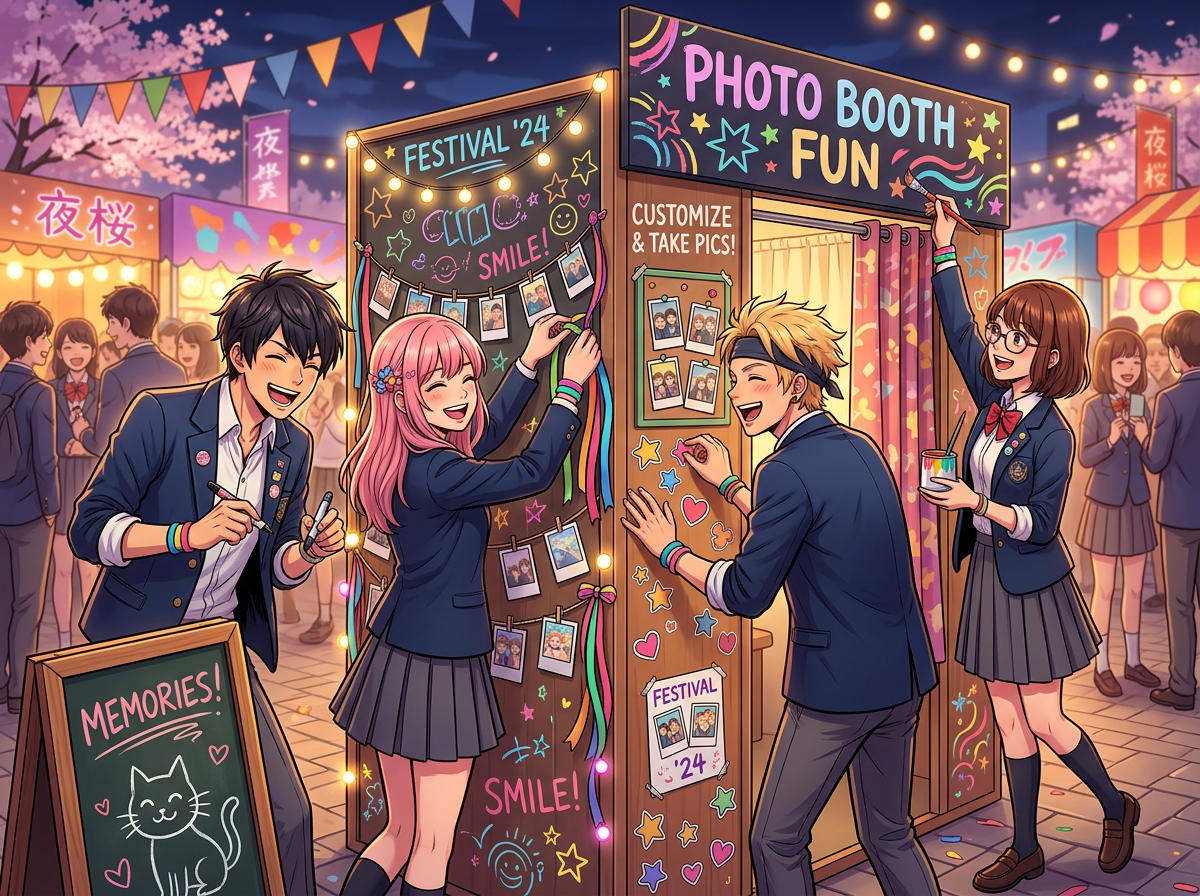
    The “Purikura” Effect: How Japanese Booths Changed the Game

    The air was thick with pop music and the metallic scent of fresh prints. Inside the brightly lit arcade in late 1990s Tokyo, a line snaked out the door for a machine that wasn’t a video game, wasn’t a crane machine, but a simple, oversized photo booth. This was the birthplace of Purikura , a contraction of “print club,” and it was here that one of the most powerful and enduring trends in digital graphic personalization was born.

    Analog film photograph of section 1 related to The

    Long before Snapchat filters, Instagram Stories, or branded digital frames, the Purikura machine established the fundamental human desire to not just take a photo, but to remake it, to cover it in decorative graphics, and to claim ownership of the image through digital customization. The history of photo booths is global, but the history of the decorated photo booth is uniquely Japanese. Developed by Atlus and Sega and first released in 1995, Purikura was an immediate sensation.

    Analog film photograph of section 2 related to The

    It took the basic concept of a self-portrait booth and added two revolutionary elements: digital capture and a dedicated decoration station. Users didn’t just get four passport-style photos; they got a sheet of small, adhesive, highly personalized stickers…a physical, tangible product of their creativity.The Original Sticker Shock: An Explosion of Kawaii Culture The ’90s Purikura experience was a creative explosion centered entirely on the act of decoration, or rakugaki (doodling). After the photo was snapped, users would move to a separate terminal equipped with a stylus and a touchscreen.

    Analog film photograph of section 3 related to The

    The interface, though primitive by today’s standards, offered an overwhelming array of options that were unheard of for consumer photography:1. Stickers and Stamps: Hundreds of digital clip-art graphics…stars, hearts, sparkles, speech bubbles, animals, and stylized kawaii characters…could be dragged and dropped onto the photo. This wasn’t merely a small border; the pictures were often dominated by these graphics.

    • Handwritten Text: Users could write directly onto the image with the stylus, adding messages, dates, inside jokes, or phonetic transcriptions of English words. This was the most personal and intimate layer of customization.
    • Digital Makeup and Enhancement: Early versions allowed for primitive skin smoothing, widening of the eyes (a feature that would evolve into the de rigueur ‘big eye’ effect), and applying digital blush or hair streaks.
    • Borders and Backgrounds: Frames, colorful backgrounds, and themed overlays transformed the simple snapshot into a scene.The entire process was fast, frenetic, and social. Girls, often in groups of two to five, would race against a timer to cram as much personality and decoration onto the screen as possible. The resulting sticker sheets were then meticulously cut, kept in wallets, traded with friends, or plastered onto notebooks. The purpose was clear: the decoration was not an afterthought; it was the photograph. It transformed a generic image into a personalized piece of cultural currency, a tiny, physical, shareable memory artifact that was intrinsically linked to the relationship between the people in the photo.

      The Purikura boom was foundational because it tapped into two powerful human instincts: the desire for personalized expression and the urge to create a unique, shareable social object. By allowing the user to become the editor, the artist, and the distributor, the machine gave them creative control over their own narrative. It was the first true step in moving photography from an objective record of reality to a highly subjective, decorative, and performance-based medium.The Digital Evolution: From Physical Sticker to Virtual Overlay

      Fast forward two decades, and the core psychological engine of the Purikura phenomenon is more relevant than ever…it has simply changed its form and purpose. The tiny, physical sticker has been replaced by the “Branded Graphic Overlay,” and the analog process of trading physical sheets has been supersized into the hyper-efficient, instantaneous sharing of a branded digital asset on social media.

      This is where platforms like ZillaBooth Party step into the modern narrative. A modern photo booth at an event…whether a wedding, a corporate gala, or a product launch…is fundamentally the same as a Purikura booth: it is a machine for capturing social memories. But in the 2020s, the decoration function has been co-opted and perfected by the marketing world.Modern Desire: The Power of Branded Graphic Overlays

      A Branded Graphic Overlay is the contemporary, corporate-friendly evolution of the Purikura sticker. It is a customizable, semi-transparent graphic layer applied to a user’s photo or GIF before it is shared. These overlays are no longer just kawaii hearts and stars; they are precision-engineered marketing tools designed to accomplish specific goals:1. Brand Consistency and Logo Placement: The most basic function is ensuring every shared piece of user-generated content (UGC) carries the brand identity. This could be a corporate logo, a specific event hashtag, or a call-to-action placed subtly in a corner or boldly as a frame.

    • Event Specificity: Overlays instantly communicate the context of the photo. “Sarah & Tom’s Wedding – July 2026” or “Tech Summit – Day 1” turns a generic photo into a memento of a specific time and place.
    • Aesthetic and Theme Reinforcement: Just as the Purikura frames reinforced the kawaii aesthetic, modern overlays enforce the event’s visual theme. A rustic wedding might use a watercolor floral frame; a futuristic launch party might use geometric, neon lines. This instantly makes the photo feel polished and professional.
    • Digital Virality: The most important function. By including a hashtag, website, or social media handle directly on the photo, the overlay transforms the image into a self-replicating advertisement. When a guest shares the photo to Instagram, they aren’t just sharing a memory; they are sharing a beautifully designed, personalized ad for the host or brand.The Unbroken Line: Purikura’s DNA in ZillaBooth Party

      The connection between the 1990s Japanese phenomenon and the sophisticated technology of ZillaBooth Party is not accidental; it is a direct, cultural inheritance. The “Purikura Effect” proves that given the choice, users will always prefer a decorated, personalized, and visually embellished photo over a plain one. Here is how the ’90s tradition directly informs the modern function: * The Customization Imperative: Purikura taught a generation that a photo booth experience requires user input beyond just posing. ZillaBooth Party capitalizes on this by offering options for digital props, dynamic backgrounds (green screen), and, crucially, a choice of various overlays. The choice itself is part of the experience.

    • The Social Artifact: The Purikura sticker was a physical social artifact…a tradeable token of friendship. The Branded Graphic Overlay is the digital social artifact…an instantaneously shareable token of event attendance. Both are intrinsically linked to social bonding and sharing with a network.
    • Aesthetic Enhancement as Core Value: The fundamental value proposition of Purikura was not the photo quality (it was often grainy and harsh) but the sheer volume and joy of the decoration. Similarly, the value of a ZillaBooth photo is often measured less by the photographic technical specs and more by the distinct, branded, and polished look provided by the overlay. The decoration is the value-add.
    • The Democratization of Editing: In the 90s, the Purikura booth was the only place a non-professional could easily add graphics to a photo. Today, while everyone has editing apps, a high-quality, pre-designed Branded Graphic Overlay from ZillaBooth offers a level of design polish and corporate consistency that is simple, instant, and superior to what a user would achieve manually on their phone. It’s professional-grade customization handed to the user on a silver platter.The Future is Custom and Branded

      The journey from the chaotic, colorful, and highly personal Purikura sticker to the sleek, strategically designed Branded Graphic Overlay is a microcosm of the evolution of social sharing itself. It is the story of how a powerful psychological need…the need to customize and share personalized narratives…was first expressed through physical media in Japan, and is now perfectly integrated into global digital marketing platforms.

      For a junior writer engaging with the ZillaBooth Party platform, understanding the “Purikura Effect” is key to writing compelling copy. You are not selling a photo booth; you are selling the power of personalization for brand goals. You are selling the ability to convert a fun social moment into a polished, branded piece of digital content that guests are eager to share.

      The key takeaway is this: the modern consumer, raised on the gospel of customization preached first by Purikura, doesn’t just want a photo, they want a story. ZillaBooth Party’s Branded Graphic Overlays are the new digital stickers, providing the frame, the context, and the brand identity that allows that story to spread virally. It transforms a simple event photo from an ephemeral memory into an effective, measurable, and highly shareable piece of marketing collateral. The sticker boom of the 90s didn’t end; it simply went digital, grew up, and became the backbone of modern experiential marketing. And thanks to platforms like ZillaBooth Party, the legacy of a simple Japanese photo booth continues to shape how we create, customize, and share our visual lives.

  • Taking Photos of Photos: The Meta-Trend

    Taking Photos of Photos: The Meta-Trend

    The irony is not lost on us: in a world where everything is captured, shared, and stored digitally…from your most recent brunch to your wildest night out…one of the most popular and evocative social media trends involves deliberately stepping away from the screen to embrace the tangible, only to capture it all over again.

    This is the heart of the “meta-trend”: taking a brand-new digital photograph of a physical photo, a printed artifact, a moment captured on paper. It’s a deliberate layer of visual storytelling that adds texture, history, and a potent dose of nostalgia to your feed, and right now, the ZillaBooth photo strip is the undisputed king of this aesthetic.

    The rise of the perfect digital image has created an aesthetic fatigue. We’ve spent a decade chasing golden hour, mastering portrait mode, and using sophisticated apps to erase every wrinkle, shadow, or imperfection. The ‘meta-trend’ is a cultural rebellion against this polished perfection. By introducing a physical print, you’re instantly layering imperfection, and that’s the point.

    The print itself is a historical object. It carries the crease from your pocket, the fingerprint smudge from your friend, the slightly blurry quality of a flash-fired moment. When you photograph that object, you are not just capturing the original moment; you are capturing the current moment in which you are holding that artifact, bridging the past and the present. It turns a simple social media post into an archaeological exercise…a story within a story.

    This is a movement powered by two main cultural forces: a craving for authenticity and an intense wave of visual nostalgia.

    Authenticity is the most valuable commodity online. In an era of deepfakes and AI-generated imagery, a photo of a photo acts as a verifiable physical proof of experience. It says: “I was here. I printed this. I physically touched this memory.” The light reflections on the glossy paper, the way the edges curl, the shadows cast by your fingers…all of these elements testify to the object’s reality. It’s an un-retouchable truth embedded within your feed’s flawless scroll, offering a visual sigh of relief to viewers tired of the digital artifice.

    Nostalgia, particularly for the late ’90s and early 2000s, is the aesthetic fuel. Photo booths, disposable cameras, and point-and-shoot digital cameras defined an era of spontaneous, low-fidelity photography. The vertical ZillaBooth photo strip, with its four iconic frames, instantly evokes that sense of carefree, low-stakes fun. By holding that strip up against the venue background…the very place it was taken…you are collapsing time, bringing the energy of the moment out of the past and into the now. You’re giving your digital followers a tangible, haptic reference point.


    The ZillaBooth Guide: Capturing the Photo-Within-A-Photo

    To truly master this meta-trend for Instagram, you need to think of your ZillaBooth photo strip not just as a picture, but as a lens through which you are framing a larger, ongoing story. Here is the definitive, step-by-step guide to transforming a physical print into a captivating digital post, using the venue as your essential backdrop.

    Analog film photograph of section 1 related to Taking Photos of Photos: The Meta-Trend

    Step 1: Secure Your Artifact (The ZillaBooth Strip)

    First, the obvious: you need the strip. The ZillaBooth is designed for high-quality, high-speed printing, making its vertical strip format the ideal canvas for this trend. After you take your strip, do not immediately flatten it or file it away. The most compelling meta-photos often have strips that are slightly bent, crinkled, or have the perforated edges still intact. These slight imperfections are the marks of authenticity that digital photography has tried so hard to eliminate. Embrace them.

    Analog film photograph of section 2 related to Taking Photos of Photos: The Meta-Trend

    Step 2: Scoping the Scene – The Venue Background is Key

    The description specifically calls for holding the strip up “against the venue background,” and this is the most critical compositional element. The goal is to provide contextual layering.

    Analog film photograph of section 3 related to Taking Photos of Photos: The Meta-Trend

    The Echo Effect: The most impactful posts photograph the print against a background that matches the environment within the print. Did you take the strip in front of the bar’s neon sign? Go stand in front of that sign and hold the strip up. The repetition of the location creates a dizzying, visually satisfying echo effect that emphasizes the “you are here” moment.

    The Contrast Shot: Alternatively, you can use the background to create a strong visual contrast. If the strip was taken in a dark, interior space, try holding it up against a brightly lit, exterior backdrop of the venue. For instance, holding the dark strip up against the venue’s brightly lit marquee or a busy street scene outside the door. The contrast draws the eye directly to the strip while still anchoring the photo in the physical location.

    The Atmosphere Shot: Use an environmental detail that screams ‘venue.’ This could be the pattern of a crowded dance floor, a distinctive piece of art on the wall, or a recognizable stage setup. Even if the detail isn’t in the original photo strip, it acts as a silent witness to the current moment.

    Step 3: Mastering the Hold and Composition

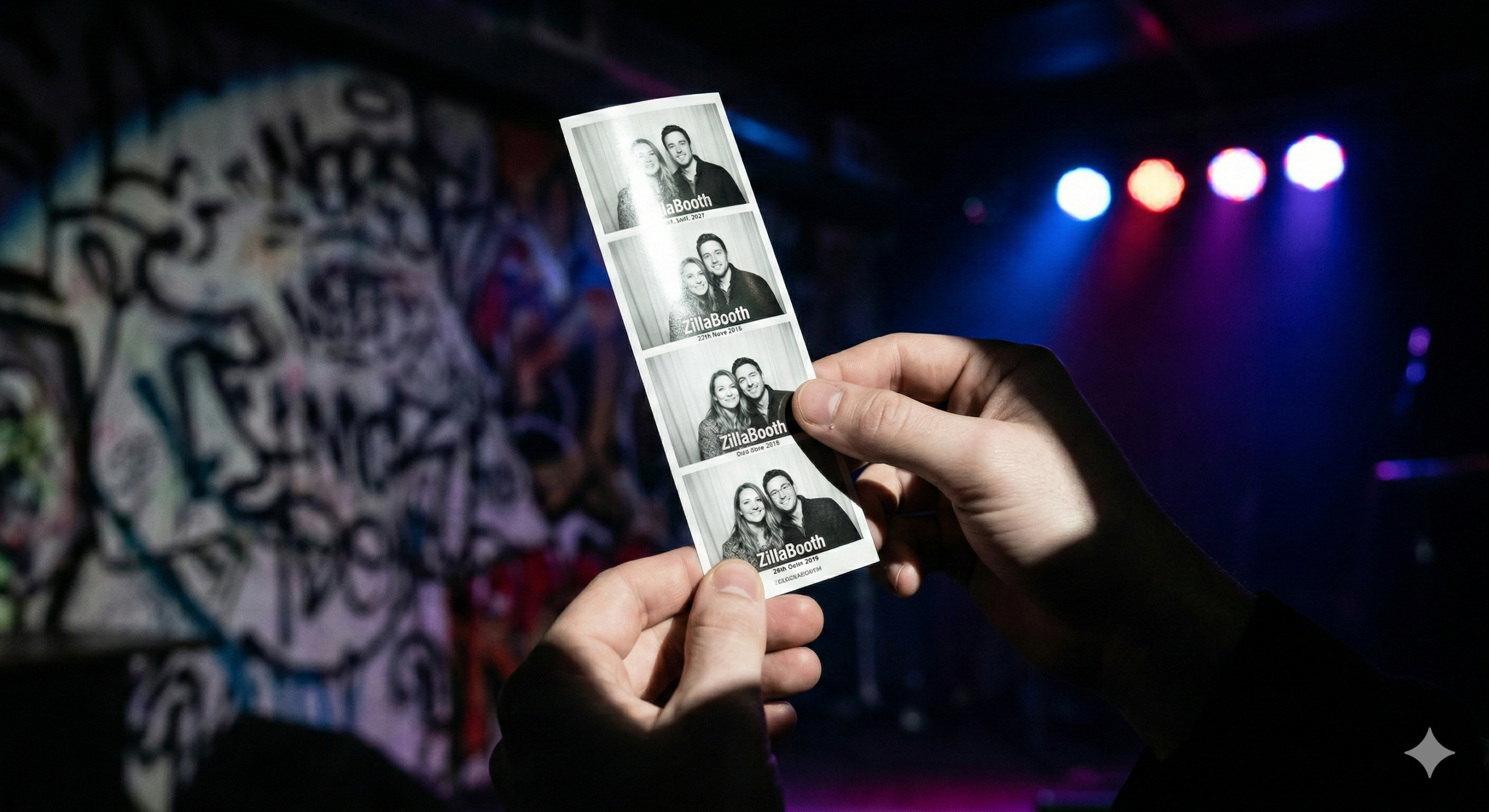
    The way you physically hold the print is where the magic happens and where the trend gets its “meta” designation. The inclusion of your hand or fingers is not a mistake…it is a mandatory compositional tool.

    Analog film photograph of section 4 related to Taking Photos of Photos: The Meta-Trend

    The Finger Frame: Hold the strip at the very top and bottom using your thumb and forefinger. This frames the vertical strip and instantly tells the viewer, “This is an object I am physically presenting to you.” The slight shadow your fingers cast adds depth and proof of the physical plane. Ensure your fingers are clean, but don’t worry about minor smudges on the print itself; the grime is part of the charm.

    Rule of Thirds Placement: When capturing the digital photo, don’t center the strip dead-on. Place the ZillaBooth strip along one of the vertical lines of the rule of thirds. This leaves two-thirds of the digital frame to showcase the venue’s background, creating a more dynamic and visually engaging composition than a simple straight-on shot. The eyes of the viewer will move from the background context to the framed print and back again.

    The Peek-Through: For an advanced shot, position the print so that one of the frames perfectly lines up with an element in the background. For example, if one frame shows a person laughing, position the print so that the top edge of the frame lines up with the natural horizon line of the background, making it seem as if the action in the print is happening in the background scene.

    Step 4: The Digital Capture Settings (Intentional Imperfection)

    Your phone’s camera is powerful, but for this trend, you need to use that power wisely. You are aiming for a high-quality capture of a low-fidelity object.

    Analog film photograph of section 5 related to Taking Photos of Photos: The Meta-Trend

    Focus is Paramount: This is the most crucial step. Use your phone’s manual focus (tap-to-focus) function and lock the focus directly on the ZillaBooth photo strip. Do not let the focus drift to the background. The text, the faces, and the glossy texture of the print need to be razor-sharp. If the background is slightly out of focus (shallow depth of field), that only enhances the print’s prominence.

    Embrace the Reflection: You will inevitably get reflections on the glossy paper, especially from ambient venue lights. Do not try to edit these out. A slight glare or reflection is another marker of the print’s physicality. It proves the image is being held in a real, live-action environment. The reflection is the “meta” light source.

    Use the Flash (The Power Move): For maximum effect, especially in dark venues, consider forcing your phone’s flash ON. The harsh, direct flash will brilliantly illuminate the photo strip while pushing the already dark background further into deep shadow. This mimics the low-fi aesthetic of a disposable camera shot, creating a dramatic, high-contrast image where the photo strip practically glows in your hand.

    Step 5: Minimal Editing and The Caption

    The beauty of the meta-trend is that the physical print is the “filter.” Keep your digital editing minimal to maintain the authenticity.

    Color and Contrast: A slight increase in contrast can help the photo strip stand out against the background. Avoid heavy-handed filters. If the photo strip itself is slightly desaturated, a simple black and white conversion of the entire digital image can create a cohesive and timeless editorial look.

    The Caption: The caption is where you provide the final layer of context. Use it to date the original event or to narrate the current situation. Instead of just “Last night was fun,” try: “Held onto this ZillaBooth proof of life from 2 AM and had to capture it against the neon one last time.” Use language that emphasizes the object and the memory. Popular hashtags include #PhotoOfAPhoto #AnalogMeetsDigital #MetaTrend #ZillaBoothStrip #PhysicalProof.


    Pro Tips: Elevating Your Meta-Game1

    . The Time-Travel Shot: Use an old ZillaBooth strip from a prior event…perhaps an entirely different venue or city…and hold it up in your current location. This is the advanced level of storytelling. The visual dislocation (a summer beach photo strip held up in a snowy city street) creates a powerful, dream-like contrast that viewers instantly engage with. It’s a literal representation of a memory being present in the now.

    • The Collage/Grid: Don’t just post the single meta-photo. Use Instagram’s carousel feature. The first photo should be the digital picture of the physical print. The second and third photos should be zoomed-in details of the print itself, showing the texture, the gloss, and the perforated edges. The final photo could be the environment without the print. This tells the complete story of the artifact and its surroundings.
    • The Photo-Frame: For a truly creative twist, use the ZillaBooth strip to frame an object other than the background. For example, hold the strip around a cocktail glass, a musician on stage, or a distinctive piece of furniture. You are using the nostalgia of the photo strip’s border to elevate a new subject, giving a mundane object the gravity of a preserved memory.
    • Backlight the Artifact: For the most dramatic effect, find a light source (like an emergency exit sign, a stage light, or a window) and hold the print slightly over it. The light will bleed through the thinner parts of the photo paper, creating a subtle, glowing edge that visually separates the print from the background and gives the entire image a surreal, luminous quality.The trend of “taking photos of photos” is more than just an aesthetic quirk; it’s a profound statement about how we value and curate our memories in the digital age. By turning your ZillaBooth print into a physical prop, holding it up against the very background that hosted the moment, and capturing the resultant composite with your phone, you are performing a small, personal act of resistance against the relentless flatness of the digital feed. You’re celebrating the crease, the reflection, and the sheer, physical reality of being there. It’s imperfect, it’s raw, and it is the most honest, authentic way to share a memory right now.
  • Why “Authenticity” is the Buzzword of the Year

    Why “Authenticity” is the Buzzword of the Year

    The cultural pendulum has definitively swung. After nearly a decade defined by the relentless pursuit of digital perfection…the soft-focus portrait, the meticulously arranged flat lay, the sun-drenched, over-exposed travel shot…we have collectively reached a saturation point.

    The meticulously curated grid, once the gold standard of social media success, now registers as inauthentic, tiring, and even dishonest. The visual language of the internet is undergoing a seismic shift, and the single word dominating this new conversation, the one that serves as both a critique of the past and a blueprint for the future, is authenticity. It is more than a fleeting trend; it is a full-blown cultural mandate, a demand from consumers and creators alike to ditch the artifice and embrace the raw, the real, and the momentarily imperfect.

    This widespread craving for “realness” is a direct response to what can only be called ‘Digital Fatigue.’ We grew weary of the visual lie. The perfected image promised an unattainable lifestyle, fueling a low-grade, perpetual anxiety about presentation. The counter-movement began subtly…a return to grainy film simulations, the strategic use of phone camera ‘time stamps,’ and the celebration of images taken under difficult or unflattering lighting. This aesthetic revolution, however, has crystallized around a singular core principle: the preservation of true-to-life color and texture.

    For years, the goal of any casual picture-taker was the soft wash of light that erased blemishes, minimized shadows, and homogenized color into a single, pleasing, ‘golden hour’ palette. Technology bent over backward to deliver this; camera apps automatically smoothed skin, corrected for every possible lighting flaw, and defaulted to flattering, soft-focus portrait modes. But in striving for technical perfection, these tools stripped the image of its narrative power…the very details that make a moment feel real.

    Analog film photograph of section 1 related to Why

    Authenticity, in the current visual context, is defined by the integrity of the original detail. A photo is authentic when it registers the grit of the city street, the harsh reflection of fluorescent light, the true, undoctored color of a cocktail in a dimly lit bar, and the actual, imperfect texture of human skin. This is the visual equivalent of ‘lo-fi’ music…it deliberately eschews high-fidelity polish in favor of an imperfect, slightly messy, yet immediately evocative honesty.

    The shadows, the grain, the unforgiving color cast…these are no longer flaws to be edited out. They are essential characters in the story. They scream: This was taken right now, with no time for adjustments.

    This cultural moment demands a new type of tool…one that facilitates the trend of authenticity rather than fighting it. It requires a technology that gets out of the way, intentionally disabling the automated, ‘beautifying’ smart features that defined the last decade of phone photography. This is precisely where ZillaBooth Pro has emerged as the essential application for the authentic creator.

    ZillaBooth Pro’s defining feature is not a new filter or a groundbreaking editing tool; it is its revolutionary commitment to omission. The app is engineered with a purposeful lack of “beauty filters.” This is the anti-algorithm. While the native camera app on any modern smartphone uses incredibly complex artificial intelligence to automatically and preemptively soften skin, subtly adjust contours, and correct what it perceives as ‘flaws,’ ZillaBooth Pro provides a completely unvarnished feed. It hands the user the raw, high-contrast, technically ‘imperfect’ image that the culture is currently demanding.

    This intentional absence of automated enhancement is the key to unlocking the new aesthetic of truth. When the camera’s internal software is prevented from performing its automated smoothing, the lens is finally allowed to capture true-to-life texture.

    Analog film photograph of section 2 related to Why

    Consider the human subject. In the era of the beauty filter, every portrait was destined to look slightly airbrushed…skin tones were unnaturally uniform, pores were blurred, and the fine lines that tell a life story were digitally erased. ZillaBooth Pro throws this out entirely. Its lack of smoothing algorithms means that the texture of fabric…the heavy weave of denim, the sheen of silk, the glitter of sequins…is rendered with a brutal, almost hyper-real clarity.

    More importantly, it means that skin is captured with its true texture intact. A direct, harsh light source, like the forced flash ZillaBooth Pro so expertly controls, does not flatter; it magnifies. It highlights the pores, the natural oil of the skin, the delicate lines around the eyes. This unforgiving honesty is what audiences now equate with being ‘real,’ a defiant badge of authenticity worn by the subject.

    The effect is even more pronounced when it comes to true-to-life color. Modern camera algorithms are programmed to chase a specific color temperature, usually one that is warm, flattering, and consistent…a constant, soft-focus ‘golden hour.’ This results in an image where the colors of the environment are flattened and corrected to conform to an idealized vision. ZillaBooth Pro rejects this chromatic homogenization. By offering granular, manual control and intentionally avoiding automated white balance correction, the app allows the image to be saturated with the genuine color of the moment.

    The colors that were once aggressively ‘corrected’…the eerie blue of a late-night streetlamp, the intense green of an LED screen, the harsh yellow-orange glow of old-school incandescent bulbs…are now preserved. The result is a color profile that is chaotic, dynamic, and perfectly captures the feeling of being in that space, not the technically ‘correct’ version of it.

    Analog film photograph of section 3 related to Why

    The lack of an intervening filter means a subject’s true-to-life skin color is not warped by an attempt to make the whole scene uniformly ‘pretty.’ When you look at an image captured with ZillaBooth Pro, you are not seeing a post-processed interpretation; you are seeing the moment’s raw, unedited light signature. This is why the aesthetic is so compelling: it is visual proof that you were there, experiencing the moment as it truly appeared, not as an algorithm wished it had appeared.

    ZillaBooth Pro is, therefore, not just a camera app; it is a statement of philosophical intent. It operates on the principle that the most engaging image is the one that is the least filtered. It empowers the user to reject the soft-focus fantasy and embrace the high-contrast, hyper-textured reality. It’s a move that feels rebellious in a digital landscape still largely dominated by polished perfection.

    The tools ZillaBooth Pro does offer…manual control over flash, exposure, and focus…are designed to enhance the chaos and truth, not tame it. Forcing the flash to fire at maximum intensity, even in bright sunlight, is the ultimate power move of the authenticity trend. This technique, which instantly separates the subject from the background with aggressive shadows and blinding highlights, ruthlessly exposes texture and preserves the most chaotic, true colors of the scene, creating a sense of raw, unmediated drama.

    In this new visual economy, authenticity is the currency, and the preservation of true-to-life color and texture is the gold standard. ZillaBooth Pro is the definitive tool because its very function is a rejection of the artifice that came before.

    It is built for a generation that has seen through the digital veil and is now demanding the real, the raw, and the unedited truth in every frame. To capture an image with ZillaBooth Pro is to participate in this cultural moment, transforming a simple picture into an unflinching document of reality. By choosing an app defined by its lack of automated enhancements, the modern creator is making a powerful statement: that reality, in all its high-contrast, textured, and colorful glory, is far more compelling than any manufactured fantasy.

  • Gen Z Has Entered the Chat: What the New Generation Wants in a Photo Booth

    Gen Z Has Entered the Chat: What the New Generation Wants in a Photo Booth

    The wedding industry has officially entered the era of Gen Z. This generation, now forming the majority of newly engaged couples, is not just changing décor and menus; they are fundamentally reshaping the way memories are captured. Having grown up navigating the hyper-curated, filter-heavy landscape of social media’s adolescence, Gen Z has developed a powerful cultural counter-movement: a demand for authenticity and imagery that is definitively “raw and unfiltered.” This cultural shift explains exactly why they are walking past the traditional, overly-processed photo booths and flocking toward streamlined, simple-interface solutions like ZillaBooth.

    For the modern couple, a wedding is no longer a performance staged for the social media feed; it is an intimate, authentic gathering. This generational pivot is a direct reaction to the intense pressure of the mid-2010s aesthetic, where digital perfection was the unattainable standard. Gen Z watched as Millennials chased the elusive “Instagram Face” and polished every photo until it lacked any sense of realness. They experienced the mental fatigue of constant curation. Their response is a powerful aesthetic rebellion, prioritizing genuine connection and imperfect, candid moments over sterile, airbrushed visuals.

    This rejection of the digital veneer is most visible in their photography choices. They romanticize the aesthetic of disposable cameras, vintage film, and high-flash point-and-shoots…not because the images are flawless, but because they carry the weight and warmth of genuine, unmanipulated moments. They understand that a beautifully lit, slightly-off-center, candid shot is infinitely more valuable as a memory than an image scrubbed clean of all personality by a heavy smoothing filter.

    This deep-seated value system has created a significant problem for the traditional photo booth. For years, photo booths were defined by their excessive digital enhancements: cartoon filters, aggressive skin-smoothing effects, heavy color overlays, and digital props that looked tacked-on and cheap. While this “more is more” approach was initially fun, it now feels jarringly dated and, crucially, completely inauthentic to the Gen Z couple. They don’t want a memory that is obscured by a digital mask. They want the real, unvarnished emotion of their reception, captured brilliantly.

    The traditional photo booth’s greatest sin, in the eyes of this new generation, is complexity born from over-processing. A typical legacy system forces guests through a bewildering labyrinth of on-screen choices, demanding they select a frame, a filter, a digital prop, and an effect…all in the span of a few hurried seconds. This selection process distracts from the moment itself.

    The spontaneity is lost as a group of friends stares at the screen, arguing over which shade of sepia works best. The resulting images, laden with heavy digital manipulation, fail to capture the true atmosphere and genuine emotion of the evening. They look generic, temporary, and easily discardable.

    ZillaBooth: The Champion of the Anti-Filter Aesthetic

    ZillaBooth has successfully disrupted this outdated model by operating on a completely different principle: the technology must serve the moment, not dominate it. Its success lies not in the features it offers, but in its deliberate subtraction of unnecessary digital noise.

    Analog film photograph of section 1 related to Gen Z Has Entered the Chat: What the New Generation Wants in a Photo Booth

    The core appeal is the simple interface .1. Minimalist, Intuitive Design: When a guest steps up to a ZillaBooth, the interface is clean, fast, and intuitive. There is no overwhelming menu of filters and digital junk.

    Analog film photograph of section 2 related to Gen Z Has Entered the Chat: What the New Generation Wants in a Photo Booth

    The screen presents only the essentials: the clean camera feed and a large, clear start button. This minimalist design cuts down on the decision fatigue that Gen Z actively seeks to avoid. Guests spend less time scrolling through digital options and more time being fully present, spontaneous, and silly. The focus is immediately placed on the people in the frame and the fun being had, not the machine itself.

    Analog film photograph of section 3 related to Gen Z Has Entered the Chat: What the New Generation Wants in a Photo Booth
    1. A Focus on Foundational Quality: ZillaBooth trusts the quality of its underlying technology. Instead of compensating for poor lighting and camera quality with digital smoothing, it invests in professional-grade components. The images are captured with brilliant, flattering, high-end flash and excellent resolution. This foundational quality means that the resulting photo is already high-end, crisp, and beautifully lit, requiring no heavy-handed digital ‘corrections.’ It delivers the authentic, natural look that Gen Z finds editorial and timeless.

    2. The Editorial Look vs. The Social Filter Look: The final output from a ZillaBooth image looks like a professional, high-quality, candid photograph…the kind of flash-lit, high-contrast, beautiful moment one would expect from a talented editorial photographer. This look aligns perfectly with the current Gen Z aesthetic that embraces the “unfiltered” yet high-quality analog feel. The image preserves the texture, the expressions, and the real colors of the moment. In contrast, traditional filters flatten the image, smear the skin texture, and apply artificial colors that instantly date the photograph. For Gen Z, an image that respects reality is an image worth keeping.

    3. A Cultural Alignment with Authenticity: By defaulting to a clean, filter-free capture, ZillaBooth makes a powerful cultural statement that resonates with the new generation: “You don’t need digital alteration to be beautiful or to capture a great memory.” This message of radical acceptance and anti-perfectionism is precisely what Gen Z is championing in every corner of their lives. The simple interface is a facilitator of realness; it gives guests permission to be their true, silly, un-airbrushed selves, knowing the resulting image will be a true record of that spontaneous moment.For the Gen Z couple planning a wedding, every vendor choice is a reflection of their values. Choosing ZillaBooth is not just about entertainment; it is a statement against the performative culture of the past. It’s a commitment to safeguarding the authenticity of their celebration. The simple interface is the gatekeeper of this authenticity, removing the temptation and the friction of over-processing, and ensuring that the memories captured are genuine, high-quality, and completely unfiltered…perfect for the generation that is finally ready to embrace the truth behind the lens.

  • The Future of the Photo Booth: AI and Beyond

    The Future of the Photo Booth: AI and Beyond

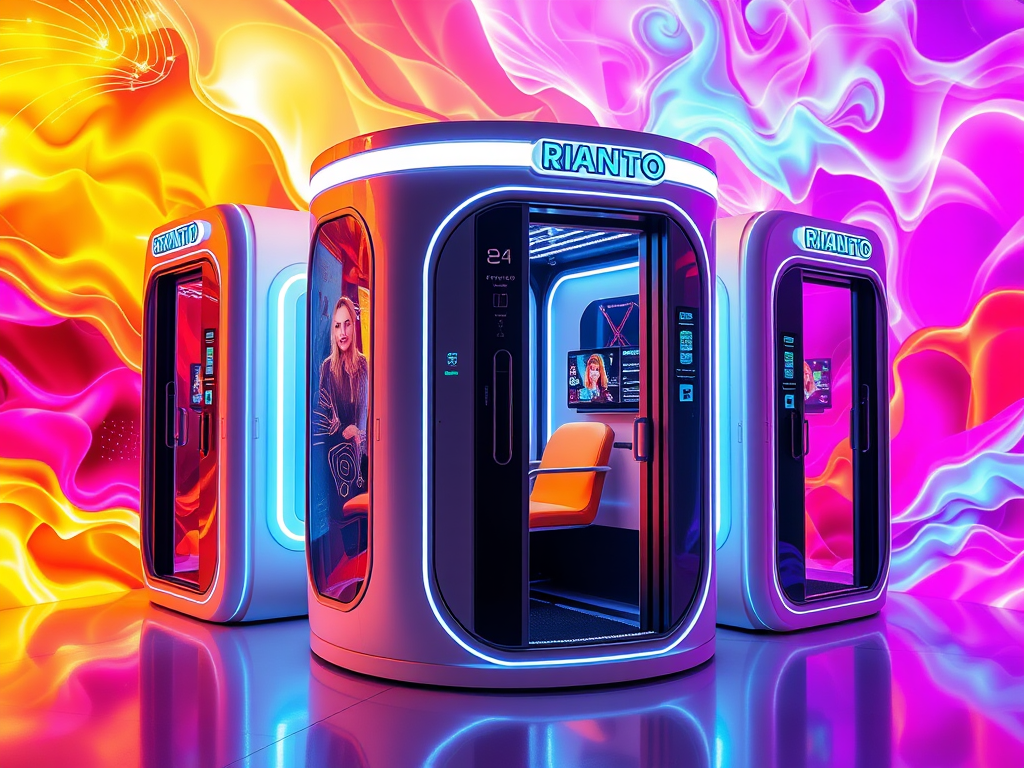
    The evolution of the simple photo booth is at a critical juncture. For decades, the charm of the booth lay in its immediacy, its small-box intimacy, and the raw, often hilarious, imperfection of the strip of four photos it spat out. It was an analog anchor in a digitally accelerating world, a machine dedicated to capturing candid, unfiltered human connection. But as Artificial Intelligence (AI) permeates every layer of the digital ecosystem, the photo booth industry is bracing for a transformation that promises…or threatens…to completely redefine the experience.

    The future, as projected by many tech optimists, is one where the photo booth becomes a highly sophisticated, predictive, and generative tool. At the forefront of this shift is the deployment of advanced AI imaging and facial recognition technologies. Imagine a booth that doesn’t just take a picture, but instantly analyzes the composition, light, and subjects’ expressions.

    This next-generation system would employ AI to automatically perfect the image, going far beyond simple digital flash. It could correct for bad lighting in real-time, instantly smooth out skin texture, adjust color balance to match a high-end photographer’s signature look, and even subtly alter facial symmetry to conform to prevailing aesthetic ideals. The output would be a product of machine-generated perfection…an image that is technically flawless but perhaps emotionally sterile.

    Beyond mere correction, the predictive capabilities of AI promise an era of hyper-customization. Facial recognition, a technology that has already sparked widespread debate in public safety and social media, is poised to enter the booth. An AI-powered booth could recognize a returning customer, recall their preferred filters, and instantly generate backgrounds tailored to their past choices or, more invasively, to data pulled from their public social profiles. Planning a trip to Paris?

    Analog film photograph of section 1 related to The Future of the Photo Booth: AI and Beyond

    The AI might instantly render a dynamic Eiffel Tower background. The process moves from capture to generation , where the photo booth is less a camera and more a content factory. Furthermore, generative AI could be used to remix the subjects entirely, placing them into a completely different artistic style, turning a simple photo strip into a Van Gogh-esque painting or a comic book panel on demand. This shift represents a move toward content that is highly consumable, shareable, and optimized for virality…but it fundamentally alters the relationship between the subject and their memory.

    This wholesale embrace of ‘over-AI’d photos,’ however, introduces a critical and often overlooked set of trade-offs. The first casualty is authenticity. The very charm of the classic photo booth was its commitment to the moment: the awkward, spur-of-the-moment pose, the goofy face, the genuine, unforced laughter. When AI intervenes to “perfect” an image…smoothing, correcting, and stylizing…it erodes the candid truth of the moment.

    The output becomes a manufactured, idealized version of reality, indistinguishable from a dozen other heavily filtered selfies. As consumers, we are already experiencing significant fatigue with this aesthetic uniformity. When every image is polished to the same sheen of perfection, the emotional resonance of the photograph declines. We want to see the real moment, not its improved avatar.

    The second, and far more serious, concern revolves around privacy and control. The integration of facial recognition, while convenient for instant sharing and personalization, represents a massive step toward surveillance and data collection. When a photo booth uses facial recognition, it’s not just recognizing a face for a moment; it’s potentially creating a permanent biometric profile linked to a unique piece of personalized, private data. Furthermore, the push for instant, automated social sharing, often touted as a feature of these AI-powered systems, transforms a private moment of fun among friends into public marketing collateral.

    Analog film photograph of section 2 related to The Future of the Photo Booth: AI and Beyond

    The couple or event host loses control the moment the photo is taken, as the data is instantly beamed into a cloud governed by the photo booth operator and its AI vendors. This trade-off of convenience for personal data and control is the core issue defining the “over-AI’d” future. The consumer’s memory becomes another input for a machine’s data model. The moment is sacrificed to the metric.

    In this context of accelerating digital perfection and eroding privacy, ZillaBooth is staking a firm and necessary claim as the streamlined, “human-centric” alternative. It is not an anti-technology stance, but a purposeful rejection of unnecessary complexity and data-hungry AI. ZillaBooth’s philosophy recognizes that the true value of a photo booth is not in its computational power, but in its ability to facilitate authentic, spontaneous human interaction.

    ZillaBooth’s design is intentionally streamlined, serving as a clean, high-quality capture tool rather than a complex AI engine. The focus is on exceptional hardware…professional-grade cameras, lighting, and printing…that ensures a stunning image without resorting to deep-learning algorithms for correction. This commitment to ‘streamlined’ operation translates to a user experience that is simple, instantaneous, and focused on the interaction happening inside the booth, not the processing happening behind the screen. The machine steps back, allowing the human element to dominate. The memories are genuine, crisp, and true to the moment they were captured, celebrated for their spontaneity, not their digital polish.

    The “human-centric” core of ZillaBooth manifests most powerfully in its privacy-by-design approach. In a world where photo booths are becoming data collectors, ZillaBooth operates on a principle of trust and absolute user control. The system is designed to be self-contained and locally managed, minimizing the inherent risks associated with cloud-based, automated sharing and facial recognition. The images and data are sequestered and placed directly in the hands of the event organizer or host, not automatically broadcast to the world.

    Analog film photograph of section 3 related to The Future of the Photo Booth: AI and Beyond

    This model rejects the modern impulse for instantaneous, uncurated public sharing. There is no automated social media integration, no “upload to Instagram” button presented to the user inside the booth.

    Guests are encouraged to capture the memory for the host …for the shared experience…not for their own personal social feed. This design choice powerfully reinforces the notion of a “circle of trust” around an event, ensuring that the precious, candid moments remain the private property of the people who created them. This is the antidote to social media fatigue; it is a commitment to the memory as a private heirloom, not a public piece of content.

    Furthermore, ZillaBooth’s rejection of excessive AI-driven personalization is a deliberate choice to maintain accessibility and authentic fun. While AI-booths might generate 100 different digital backgrounds, ZillaBooth prioritizes physical, tangible props and backdrops that encourage real-world play and interaction. The memories created are not composites of algorithms and digital overlays; they are high-quality records of genuine human expression and interaction…the goofy prop combinations, the spontaneous huddle of friends, the simple, honest fun of being present. The focus remains on the people and the party, not the processing power.

    The future of the photo booth is thus a fork in the road: the path of the AI-driven system, which prioritizes technical perfection, data collection, and viral shareability at the cost of authenticity and privacy; or the path championed by ZillaBooth, which doubles down on the core, timeless appeal of the photo booth…simplicity, quality, and human connection. In an era where digital noise and algorithmic perfection are the defaults, ZillaBooth stands as a necessary, refreshing counterpoint…a technology designed to capture real life, not to refine or replace it.

    It ensures that the memories made remain just that: memories, not metrics. And in the long run, it is the genuine, human-centric memory that truly endures.

  • Streetwear Drops: The Hype Beast Booth

    Streetwear Drops: The Hype Beast Booth

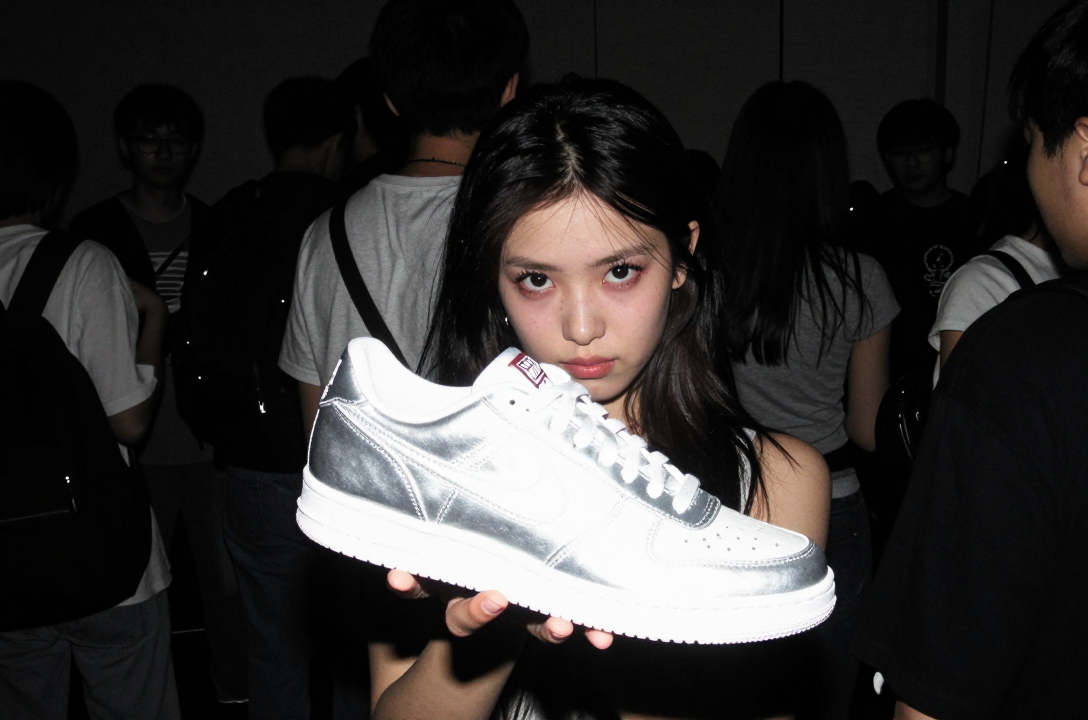
    The era of the perfectly curated, softly-lit product reveal is dead. In the world of high-end streetwear and limited-edition drops, authenticity is the ultimate currency, and nothing screams “real” and “right now” like a photograph that looks like it was yanked from a 2003 tabloid or a grainy disposable camera roll.

    This is the phenomenon of the ‘Hype Beast Booth,’ and it represents a profound pivot in how clothing brands are choosing to launch their most coveted items. It is a calculated embrace of the “Anti-Trend”…a raw, often unflattering, and aggressively honest visual aesthetic…that is fundamentally redefining the product launch party from a polished press event into a spontaneous, high-energy, and slightly chaotic cultural moment.

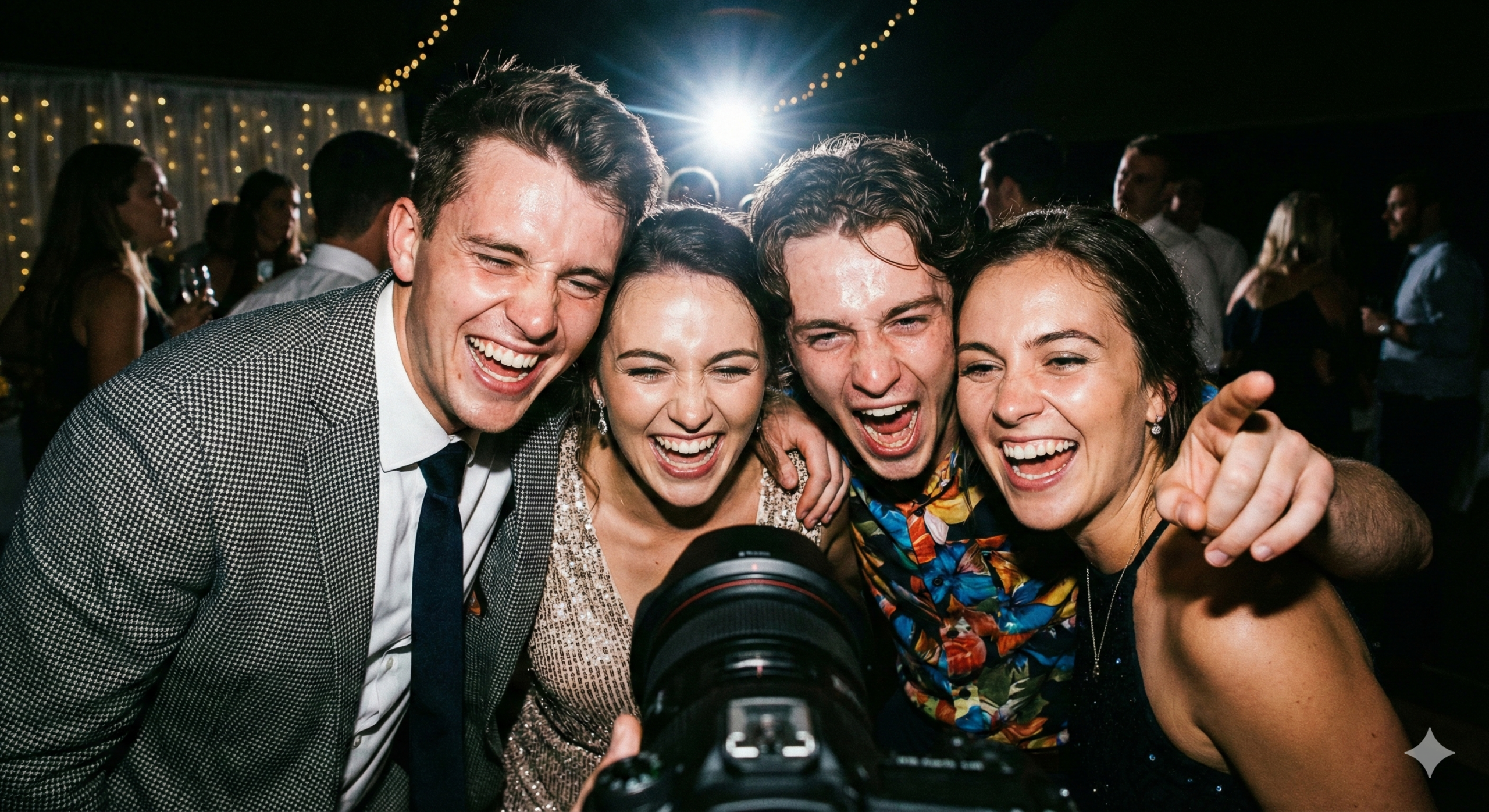
    For years, brands chased the unattainable perfection of the Instagram grid: soft natural light, meticulous color grading, and models posed just-so against minimalist backdrops. But perfection has become monotonous. In a digital landscape saturated with images that feel machine-made, the discerning consumer…the true hype beast…is craving grit. They want evidence that they were there, or that the product is so hot it literally broke the camera. This is where the direct flash, or “paparazzi aesthetic,” takes center stage. It’s a deliberate rejection of digital artifice, a visual statement that cuts through the noise of over-edited content.

    The appeal of this “Anti-Trend” aesthetic is rooted in two powerful cultural forces: deep nostalgia and a contemporary yearning for unvarnished reality. The Nostalgia Hook: It’s the visual language of the late 1990s and early 2000s, an era when the only cameras most people owned were cheap, plastic point-and-shoots with a notoriously unforgiving, front-facing flash.

    Analog film photograph of section 1 related to Streetwear Drops: The Hype Beast Booth

    This non-diffused light source was a savage tool, casting deep, dramatic shadows, frequently blowing out skin tones, and creating bright, unmistakable highlights. When a brand adopts this look, they are tapping into a potent reservoir of cultural memory: grainy red-carpet photos, blurred club snaps, and the raw energy of celebrity street style before it was managed by stylists and publicists.

    It carries the weight of history and an implied narrative of secret, high-octane happenings. The Authenticity Craving: In the current digital climate…where AI photo-editing is ubiquitous and every image is suspect…the harshness of direct flash is a badge of honesty.

    It shouts, “This was taken right now with zero time for setup or adjustment.” It feels spontaneous and unposed, a deliberate contrast to the immaculate, sun-drenched images that have dominated feeds for the last decade. The deep shadows are part of the story, the blown-out fabric is a trophy of authenticity, and the intense focus on the subject creates an undeniable sense of drama. The aesthetic is the visual equivalent of a lo-fi track: imperfect, rebellious, and immediately evocative, making the event feel less like a brand activation and more like a document of real life unfolding.

    For a brand launching a new collection…especially in the streetwear and sneaker space where product scarcity and urgency drive demand…the ‘Hype Beast Booth’ serves a dual purpose. First, it acts as a high-impact, in-event engagement tool. Second, and more importantly, it generates a torrent of raw, brand-aligned User Generated Content (UGC) that effortlessly circulates online.

    Analog film photograph of section 2 related to Streetwear Drops: The Hype Beast Booth

    The Flash Aesthetic as a Marketing Weapon: Creating Controlled Chaos: The core mechanism of the Hype Beast Booth is the forced flash. Brands set up photo areas…not a traditional step-and-repeat with soft box lighting…but a compact, often dark, space designed to replicate a chaotic, paparazzi-style ambush. The setup uses a camera or phone rigged with an app that forces the flash to fire at maximum intensity for every shot, even in a moderately lit environment.

    The goal is to aggressively overpower the ambient light, resulting in signature deep, black shadows and the dramatic, stark illumination of the subject. Highlighting the Product as a Star: Direct flash is unforgiving, but that is its true strength in a product launch scenario. It aggressively magnifies texture. Brands encourage attendees to shoot the pieces…a new jacket, a rare sneaker, or a vinyl logo…under the booth’s harsh light.

    This light will bounce off specific materials like sequins, metallic finishes, heavy glitter, or high-gloss leather, creating an explosive, dynamic effect. It’s an almost cinematic spotlight, ensuring the product itself is razor-sharp and dramatically rendered, elevating the drama and making the texture of the garment the focal point of the image. The product is not just seen; it is spotlit and examined. The ‘Caught in the Act’ Effect: The close proximity of the subject to the camera is key.

    Due to the inverse square law of light, the light from the small, harsh flash falls off rapidly. This means the model or attendee wearing the product is brilliantly illuminated while everything a few feet behind them dissolves into a deep shadow. This enhances the “spotlight” or “caught in the act” effect, isolating the subject and reinforcing the idea of a high-energy, secretive moment. When this image hits social media, it doesn’t look like a staged promo photo; it looks like a genuine, high-value moment captured in a secretive club or late-night street encounter.

    Analog film photograph of section 3 related to Streetwear Drops: The Hype Beast Booth

    Implementing the ‘Hype Beast Booth’: A Brand’s Toolkit Beyond the basic forced flash, successful implementation of the Hype Beast Booth requires a series of deliberate, “Anti-Trend” decisions that maximize the raw effect:1. Embrace the Red Eye and Imperfection: In conventional product photography, red-eye is a flaw to be corrected. In the “paparazzi aesthetic,” it is a feature. It adds to the raw, uncontrolled, and nostalgic feel of a genuinely spontaneous late-night flash photo. Brands should explicitly instruct their event photographers or the booth software not to correct this. This deliberate inclusion of technical “flaws” reinforces the authenticity narrative.

    • Strategic Underexposure: Even with the flash firing, savvy brands slightly underexpose the shot using manual camera controls. This makes the shadows even deeper and the highlights of the flash pop even more aggressively. It creates a hyper-contrast that reinforces the “spotlight” effect and gives the final image the aggressive, saturated look of a cheap 2000s-era digital camera.
    • Use Flash in Broad Daylight: The ultimate power move for this aesthetic is to not reserve the flash for dark party environments. For the most aggressively contrasting and fashion-forward look, the forced flash is used during the day or under bright overhead venue lights. This technique creates a surreal, hyper-real look where the ambient light and the flash compete, resulting in ultra-deep black shadows and perfectly lit faces. It’s a signature editorial fashion style that gives the image a sense of heightened, almost unnerving reality. This is particularly effective for outdoor or brightly-lit daytime drops.
    • Black and White Conversion as an Afterthought: While shooting in color, many brands find that the high-contrast black and white conversion afterward is highly impactful. The harsh tonal separation created by the direct flash translates beautifully into dramatic monochrome, mimicking the look of classic tabloid photography that had to be printed quickly and cheaply in print media. This gives the content a journalistic, historical feel.The resulting content is a powerful driver of hype. When an attendee posts a ‘Hype Beast Booth’ photo, they are not just sharing an image; they are sharing a piece of perceived, unadulterated reality. The brand is essentially crowdsourcing the raw documentation of its own success. This unfiltered UGC holds more weight and trust with the community than any polished studio campaign could. It’s a rebellion against the carefully manicured, a statement in favor of the real, the raw, and the dramatically lit.

    In essence, the ‘Hype Beast Booth’ strategy is a masterclass in leveraging visual imperfection for maximum cultural impact. It’s a calculated decision to step away from the polished grid and embrace a visual language that feels spontaneous, rebellious, and immediately evocative. It is not about taking better photos in the traditional, technically perfect sense; it’s about taking photos with more personality and more story.

    For streetwear brands, which thrive on an image of exclusivity and authentic street credibility, this visual aesthetic is perfectly right on time. By manually forcing the flash and creating a purposefully harsh environment, brands are capturing a mood, a moment, and a potent hit of digital nostalgia that feels utterly real, cementing the product drop not just as a release, but as an underground, unforgettable experience. The future of hype is unfiltered, and it’s lit by a tiny, aggressive flash.