Tag: Booth Heritage

  • The “Photomaton”: The Machine That Started It All

    The “Photomaton”: The Machine That Started It All

    We live in an age of instant gratification, particularly when it comes to images. The photos we take on our phones are reviewed, edited, and uploaded before the shutter click echo has faded. In a world defined by this speed…where a modern service like ZillaBooth processes and sends your eight-shot digital strip straight to your email in less than a second…it’s easy to forget that the very concept of automated, self-service photography started with a patient, 8-minute wait.

    This is the origin story of the photo booth, a tale that begins not with a flash drive or a high-resolution sensor, but with a complex chemical process bubbling in the dark, and a Russian immigrant inventor named Anatol Josepho.

    The year was 1925, and the location was a bustling New York City street. The world was still amazed by the automobile, jazz was sweeping the nation, and having a personal photograph taken was still a formal, expensive endeavor, typically requiring a trip to a professional studio, careful posing, and a wait of several days for development. Josepho’s invention, which he dubbed the “Photomaton,” changed all of that forever. It was a revolutionary machine that promised to turn a private, spontaneous moment into a tangible photographic memory…all without a human operator.

    The Photomaton was an instant sensation because it democratized photography. For the price of a single quarter…25 cents, a remarkably accessible sum at the time…the machine would take a series of eight photos. Imagine the scene: a person would step inside the curtained booth, sit on a small stool, compose themselves in front of a lens, and begin the process. The flash would fire, the mechanism would whir, and the user would be left to ponder the results, perhaps nervously smoothing their hair or straightening their tie.

    And then came the wait. Eight minutes.

    In 1925, eight minutes was a miracle of speed. This seemingly brief interval was the time required for a fully automated, intricate dance of photographic chemistry to take place inside the machine. After the negative was exposed, it had to be automatically transported through a series of chemical baths: developer, stop bath, fixer, and wash, before finally being dried and cut into the finished strip of eight portraits. It was a darkroom miniaturized and mechanized…a fully automated photographic laboratory in a box.

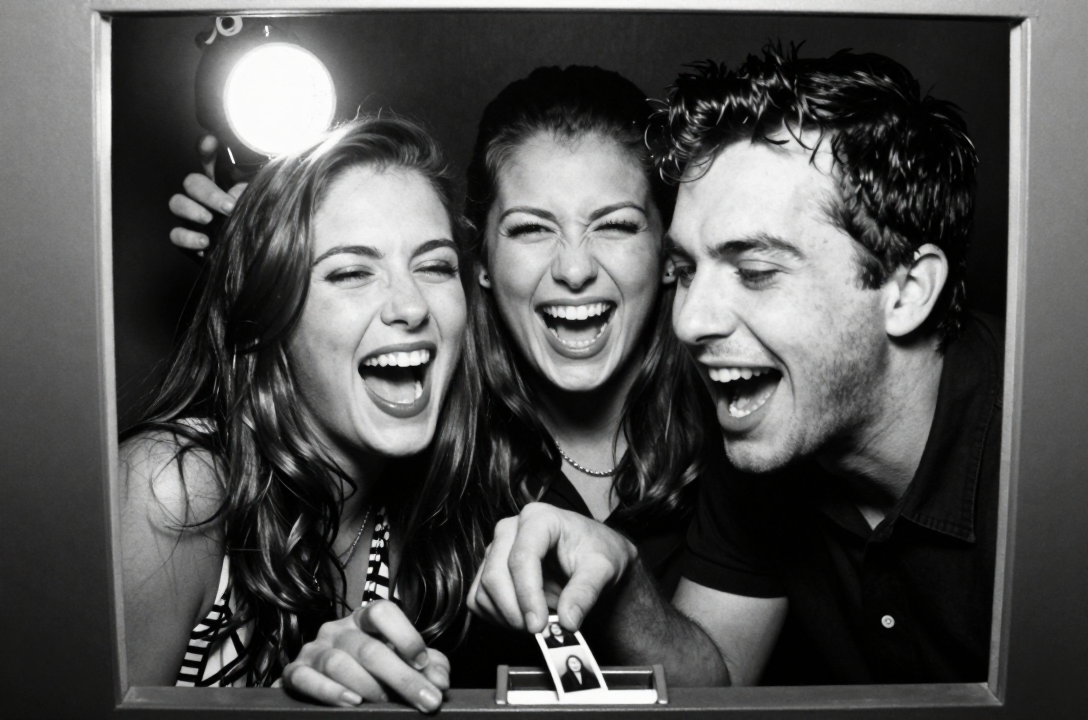
    The experience of those eight minutes became part of the ritual. It was a period of anticipation, a small, shared tension with the unknown outcome. Patrons would stand just outside the booth, perhaps chatting with friends or reading a newspaper, waiting for the heavy machine to dispense their paper strip. When the photo strip finally dropped into the collection tray, it was a moment of genuine excitement. The resulting strip, often slightly imperfect, with the subject’s expression changing over the eight exposures, captured a slice of life unlike any other form of photography. It was raw, unposed, and deeply personal.

    The popularity of the Photomaton was staggering. Within six months of its debut, over 280,000 people had used the machine in its original location alone. By 1927, Josepho sold the rights to the Photomaton to a group of investors for a cool million dollars (the equivalent of over $17 million today), cementing the photo booth as a global cultural icon that quickly spread across Europe and the rest of the world. The Photomaton didn’t just take pictures; it created a new social activity and provided the first truly instant visual record for the common person.

    It is only when we step back into the era of the Photomaton that the true marvel of modern technology becomes apparent. The photo booth experience today, exemplified by digital leaders like ZillaBooth, is essentially the same magical ritual, but stripped entirely of the physical and chemical constraints of time.

    Consider the modern experience. The user steps into the booth…still a private, curtained space…and the session begins. They choose their filter, maybe a background, and the countdown starts. In a blur of flashes, eight digital images are captured. But there is no subsequent eight-minute wait. Instead, the images are instantly processed, stitched into a digital strip or GIF, and transmitted via WiFi to a dedicated gallery or directly to the user’s phone in a fraction of a second.

    This instantaneous processing transforms the entire experience from an act of patient retrieval into an opportunity for immediate sharing and creative iteration.

    The modern ZillaBooth is a direct descendant of the 1925 Photomaton, but its fundamental difference is the elimination of the darkroom. The magic no longer happens via developer and fixer baths, but through software algorithms and high-speed memory. The 8-minute wait…the core technical bottleneck of Josepho’s original invention…has been reduced to a non-existent latency. The ratio of time is astonishing: a single ZillaBooth session is 480 times faster than the original Photomaton.

    The evolution from the Photomaton’s chemical delay to ZillaBooth’s digital immediacy showcases a profound shift in consumer culture. In 1925, the novelty was the automation; today, the expectation is the speed. The physical print is often secondary to the digital file, which can be instantly shared across social media platforms, turning a private moment in the booth into a public broadcast.

    Yet, despite the technological gulf, the enduring appeal of the photo booth remains exactly what Anatol Josepho established a century ago. It is still about the four walls, the curtain, and the sense of freedom that comes with a brief, unobserved moment to be silly, intimate, or reflective. It’s a space where people intentionally drop their guard for the camera…something we rarely do in an age of constant surveillance and casual photography.

    The Photomaton was a mechanical wonder that gave people 8 photos for 25 cents after an 8-minute wait. The ZillaBooth is a digital marvel that gives people instant, shareable, high-quality images. The former laid the foundation for accessible portraiture; the latter perfected the speed and shareability of the experience.

    As we stand in a ZillaBooth today, laughing at the instant, perfectly framed digital strip that appears on our screen, we are participating in a tradition started by a visionary inventor nearly a hundred years ago. We no longer have to wait eight minutes, but the essential, spontaneous human desire to capture a moment in time, cheaply and privately, remains the heart of the invention…a legacy we owe entirely to the quiet, chemical genius of the 1925 Photomaton.

  • The 2×2 Grid: Why the Classic Layout Never Dies

    The 2×2 Grid: Why the Classic Layout Never Dies

    The human brain is wired for story. We seek structure, we crave progression, and we find satisfaction in a complete arc, no matter how small. This fundamental truth is the secret sauce behind the enduring success of the 2×2 photo grid…the layout that sits at the very heart of the ZillaBooth experience. It’s more than just a template; it’s a canvas for a four-act play, a psychological framework that transforms spontaneous laughter into a carefully constructed, unforgettable micro-narrative.

    Why does the 2×2 format feel so right, so classic, and so consistently engaging? The answer lies in its perfect balance of constraint and freedom. By restricting users to just four frames, the 2×2 grid forces a sense of deliberate, though often unconscious, storytelling. It asks you, and your friends, to engage in a rapid-fire sequence of emotional shifts that capture a dynamic moment rather than a static pose. It’s the difference between a single portrait and a complete short film.

    The Psychology of the Four-Shot Sequence

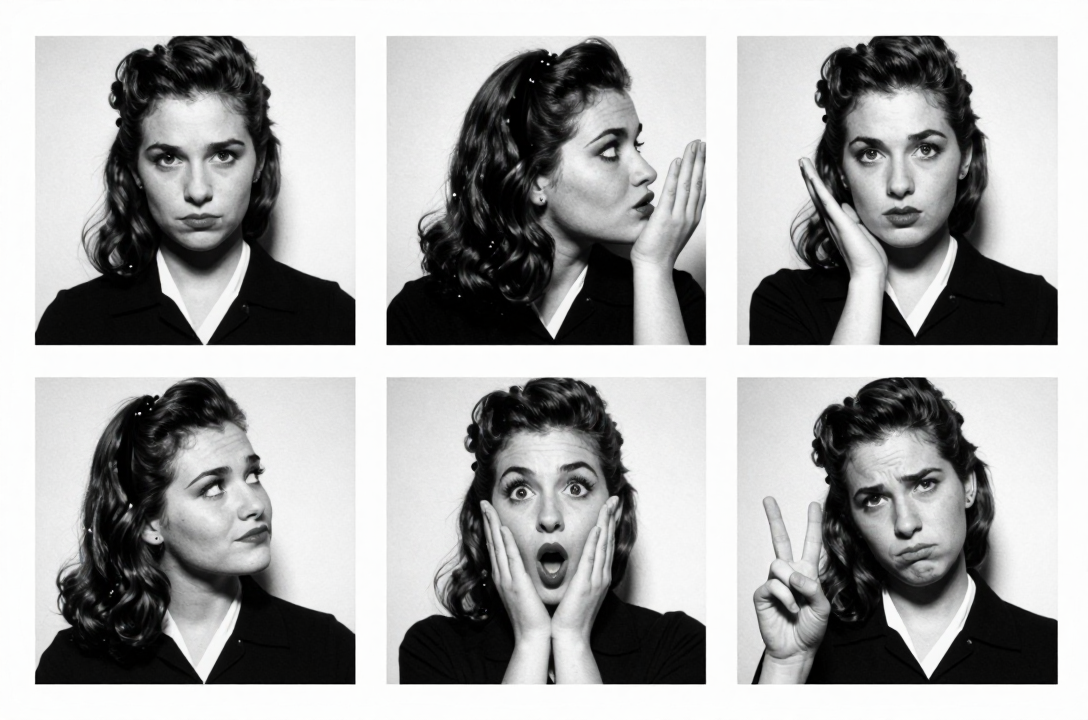
    The magic of the 2×2 is the inherent rhythm it establishes, a rhythm that guides users through a natural psychological progression of expression. The sequence is not random; it’s a journey from initial self-consciousness to uninhibited joy, a quick, safe space to shed social filters.

    Act I: The Setup (Pose 1: The Smile)
    The first frame is the moment of calibration. The red light blinks, the flash is imminent, and users typically default to their “camera-ready” face. This is the pose designed for public consumption, the one you might use for a professional headshot or a polite social media post. As suggested, Pose 1 is almost always a “Smile.” It’s the initial, slightly formal, and conscious acknowledgment of the camera. Psychologically, this pose serves as the setup. It establishes the characters (the people in the booth) and the setting (the start of the experience). It’s the baseline from which all subsequent spontaneity will be measured. It says, “We are here, and we are ready.” It is the moment where the guard is highest, and the expression is most curated.

    Act II: The Transition (Pose 2: The Idea)
    The second shot is critical. Having established the baseline, the internal pressure to “do something different” mounts, and the creative collaboration begins. This is where the first idea is tested. Perhaps it’s a quick head tilt, a funny hand gesture, or the introduction of a prop. This pose marks the transition from formality to engagement. It’s often the shot of collaboration…a glance shared, a whisper exchanged, or a synchronized movement that shows the group is beginning to loosen up and play off each other. The constraint of the timer accelerates this process; there’s no time for deliberation, only instinctive reaction. This shot is generally less polished than Pose 1 but is still somewhat intentional.

    Act III: The Peak (Pose 3: The Wacky)
    The third frame is the emotional and expressive climax of the 2×2 narrative. By this point, the initial stiffness is gone. The laughter from the silliness of Pose 2 often bleeds directly into this shot, resulting in genuine, unforced expressions. This is the point of no return…the moment when the conscious effort to “look good” is completely abandoned in favor of pure, unadulterated fun. It’s often the wackiest pose…a shout, a surprised face, an over-the-top expression of joy or mock terror. Psychologically, the rapid succession of flashes has acted like a mini-meditation, pushing the rational mind aside and allowing the subconscious, playful self to emerge. It’s a shot of catharsis, the release of pent-up inhibition that the entire booth experience is designed to facilitate.

    Act IV: The Punchline (Pose 4: The Silly)
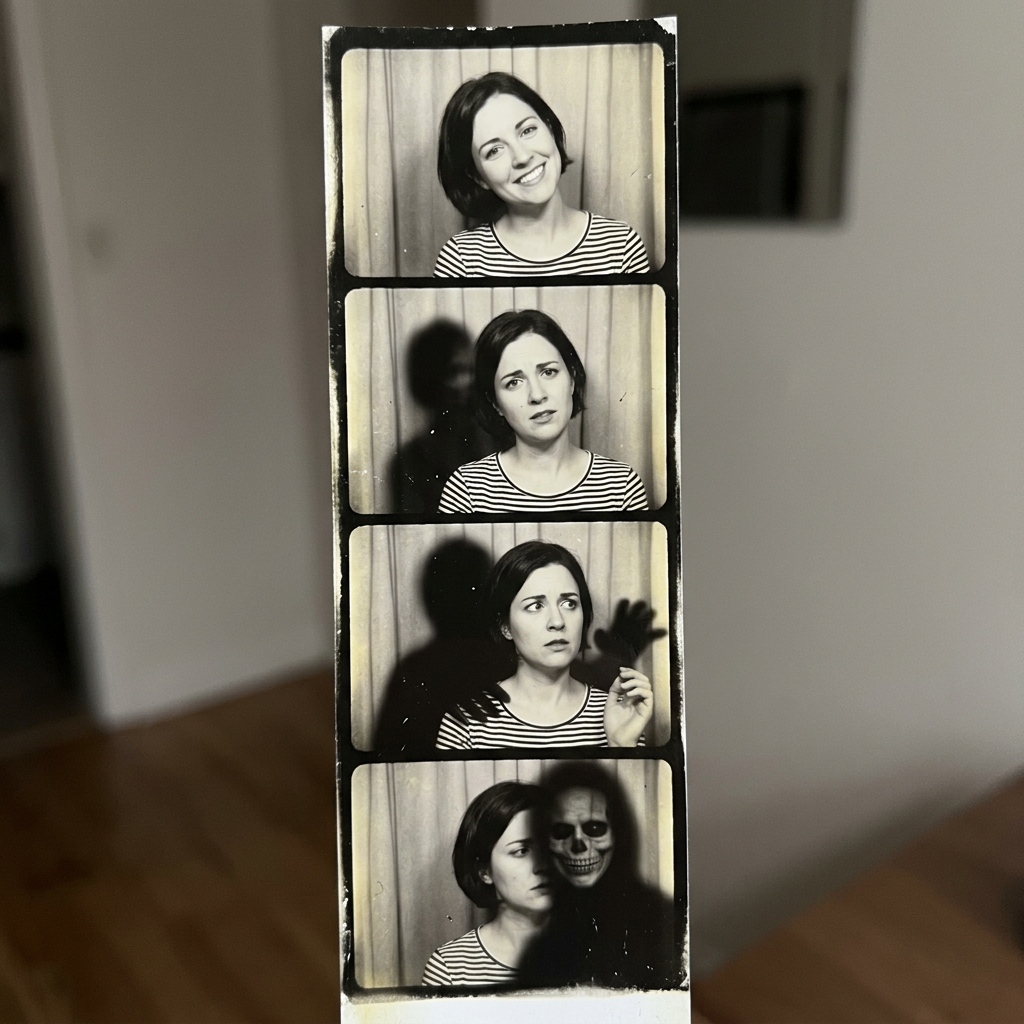
    The final frame, the “Silly” pose, is the resolution, the punchline that completes the arc. It serves as a bookend to the formal Smile of Pose 1. The contrast between the two is the entire story. If Pose 1 was the polite introduction, Pose 4 is the ridiculous, intimate farewell. Often, this pose is a reflection of the group’s final, exhausted burst of collective humor. It might be a collective slump, a final exaggerated cross-eye, or the ultimate non-sequitur…a totally random, unexpected gesture. The transition from Pose 1 (Smile/Controlled) to Pose 4 (Silly/Uncontrolled) is the entire narrative tension and release. This shot locks in the memory of the experience as one that started well and ended with a bang of unforgettable silliness. It ensures that the final take-away is one of genuine, shared happiness.

    The Geometry of Enduring Design

    The 2×2 grid also works because of its inherent visual stability. In design, symmetry and structure are profoundly comforting. The perfect square format, with its four equal quadrants, is inherently balanced and aesthetically pleasing. * Balance: The four shots offer immediate visual symmetry, making the final strip easy to scan, share, and appreciate.
    * Containment: The grid acts as a clear frame for the mini-story, ensuring that the four disparate moments are unified as a single, coherent whole.
    * Readability: Unlike a single long strip of four vertical photos, the 2×2 provides a compact, square artifact that maximizes visual information in a small space, perfect for printing, sharing online, or tucking into a wallet.The cultural resonance of the 2×2 also plays a major part. While many modern photo booths default to long strips, the 2×2 square often evokes the vintage, passport-style photos of a bygone era. It has a slightly more “editorial” feel, like a contact sheet or a storyboard, lending an air of importance to the captured moments. It is a nod to the past, modernized for the instant sharing of the present.

    ZillaBooth’s Commitment to Narrative

    For ZillaBooth, the 2×2 grid is non-negotiable…it is the company’s core mechanical and philosophical difference. We understand that in a world saturated with digital photos, what people truly value is not just a picture, but an experience that yields a story. The 2×2 layout is the primary tool for encouraging that story. We don’t just sell technology; we facilitate the creation of those four-frame narratives.

    By building our interface and timing around this format, ZillaBooth intentionally engineers moments of genuine human connection. The rapid pace and the limited number of frames are designed to bypass the ‘perfect pose’ instinct that dominates smartphone photography. In a ZillaBooth, you don’t have time to review, delete, and retake a hundred shots. You have four chances to capture the arc of the moment, and that creative constraint is the source of the magic. It ensures that the resulting artifact is authentic, slightly chaotic, and utterly unique to the people in the frame.

    The 2×2 grid is a masterclass in behavioral design. It uses a simple, geometric structure to elicit a complex, yet predictable, emotional journey. It takes users from a self-aware “Smile” to a celebratory “Silly” pose, and in doing so, it captures the complete, beautiful spectrum of a few seconds of human interaction. This is why the classic layout never dies: it perfectly mirrors our fundamental need to tell a story and to experience a full range of emotion, all contained within the neat, perfect boundaries of four little squares. It’s an exercise in spontaneity, a document of joy, and the most compelling storytelling format we have.

  • Andy Warhol and the Art of the Selfie

    Andy Warhol and the Art of the Selfie

    The quest for the perfect self-image is not a modern phenomenon invented by the front-facing camera. Long before the term “selfie” entered the cultural lexicon, an artist was already obsessed with the automated, reproducible, and endlessly fascinating self-portrait: Andy Warhol. The king of Pop Art didn’t just pose for the camera; he weaponized the coin-operated photo booth, or photomaton, turning a novelty machine found in bus stations and dime stores into a revolutionary artistic tool. If you want to understand the modern digital self-portrait…its vanity, its democracy, and its sheer reproducibility…you have to step back into the dark curtain of a 1960s photo booth and look through the lens of Warhol’s high-contrast, black-and-white gaze. He wasn’t just taking pictures; he was inventing the aesthetic of mechanical fame and providing the original blueprint for the self-aware, performative self-capture that defines our social media age. This is the origin story of the artistic selfie, and it’s all about flash, shadow, and repetition.

    Warhol’s fascination with the photo booth began in the early 1960s, a decade when Pop Art was exploding, challenging the traditional hierarchy of fine art by embracing commercial culture and mass production. For Warhol, the photo booth was the ultimate democratic portrait studio. For twenty-five cents (or sometimes fifty), anyone could receive a strip of four perfectly uniform, machine-made portraits. This process perfectly mirrored his artistic philosophy: it was fast, mechanical, impersonal, and infinitely repeatable. It removed the hand of the artist, replacing it with the efficient, cold gaze of a machine. The act of taking the photo…inserting the coin, waiting for the flash, receiving the strip…was a public performance and a private moment of self-scrutiny, all rolled into one. It was art stripped of its preciousness.

    He didn’t just use the photo booth for his own self-portraits, though those are some of his most iconic works…the famous sequences of him looking vacant, pensive, or masked by shadow. He employed the photo booth as a central component of his portrait commission business. When high-society patrons like art dealers, socialites, and celebrities wanted their portrait done by the most famous artist in the world, Warhol didn’t pick up a brush or a conventional camera. He sent them to the photo booth. He’d accompany them, perhaps give them a few basic instructions…a change of expression, a tilt of the head…but he let the machine do the heavy lifting. The resulting four-panel strips, often featuring a range of poses or emotional states, became the source material. He would select the best frame, enlarge it, and use it as the template for his signature silkscreen paintings.

    This mechanical source material defined the resulting aesthetic. The photo booths of that era used a very specific kind of direct, front-facing flash and low-grade, high-speed black-and-white film. The lighting was harsh, unflattering, and completely undiffused. It was the visual opposite of the soft, carefully sculpted light of a traditional portrait studio. This lighting created a hyper-dramatic effect, a raw visual energy that is the secret key to the “Warhol look.”

    Let’s dissect this specific B&W aesthetic. The direct flash would obliterate skin texture, blowing out the highlights on the forehead, cheekbones, and nose, turning them into pure white fields. Simultaneously, the un-sculpted, brutal light source would cast deep, unmistakable shadows…often black pools beneath the chin, around the eye sockets, and forming a hard line behind the subject’s head. The mid-tones were minimal. This was a binary aesthetic: high contrast, pure black against pure white. When these strips were enlarged for the silkscreen process, this stark contrast was further emphasized. The photograph was reduced to its bare essentials…a graphic map of light and shadow, perfect for the technical requirements of the silkscreen process, which required easily separable areas of tone to apply different blocks of color. The final prints…the repetitive celebrity faces with garish pink, yellow, and blue overlays…all started as these harsh, black-and-white, machine-made moments. The raw, emotional truth of the photo booth image was then filtered through a commercial color palette, a final commentary on the artificiality of fame.

    For us, the contemporary artist, photographer, or social media enthusiast, the goal is to capture that initial, raw, high-contrast black-and-white source image…the blueprint of the lithograph. This is where modern digital tools, specifically an app with manual control over the camera like ZillaBooth, become the perfect conduit for Warhol’s vision. We must force the modern, technologically sophisticated camera to behave like its primitive 1960s counterpart. The key is in overriding the camera’s natural tendency to produce soft, perfectly exposed images and embracing the mechanical brutality of the flash.

    Tutorial: Recreating the Warhol Photo Booth Lithograph Look with ZillaBooth

    To achieve the iconic Warhol aesthetic, you must master two core components: the pose (the performance) and the technical setup (the machine).

    Step 1: The Performance of the Pose
    Warhol’s photo booth subjects were often caught in a moment of transition…a moment between expressions, or looking directly into the lens with an unnerving, almost confrontational blankness. Your pose should reflect this: – Direct Confrontation: Look straight into the lens, chin slightly down. Avoid a wide, happy smile; a neutral, slightly bored, or intensely pensive expression is far more authentic to the Pop Art era’s detachment.
    The Prop/Transformation: Warhol often used props (sunglasses, mustaches) or transformed his appearance. Consider a wig, heavy black eyeliner, or holding an object close to your face. This creates visual interest and further abstracts the self.
    The Sequence: Remember, the photo booth gives you a sequence of four. Plan out four distinct but related expressions or poses to be captured in rapid succession. Think of it as a four-panel comic strip of the self.Step 2: Technical Setup – Forcing the 60s Aesthetic with ZillaBooth
    Modern phone cameras, even in their standard B&W mode, are designed to produce beautiful, subtle grayscale images with smooth tonal transitions. This is the opposite of the Warhol look. We need the aggressive, overexposed, high-contrast B&W of the 1960s photo booth. – Download ZillaBooth and Select the Photo Booth Template: Ensure you are using a dedicated professional camera app like ZillaBooth. Go beyond the standard camera settings and select the ‘Classic Photomaton’ or ‘High-Contrast B&W Strip’ template, which is pre-configured to simulate the hardware sequencing. If a template is unavailable, you must manually control the flash and conversion.
    Activate Manual “Forced Flash On”: This is the single most crucial step. Set the flash to Manual “On” regardless of the ambient lighting. The flash must fire at full power. Even if you are in a brightly lit room, you want the flash to overpower the available light. This is what creates those signature deep, black shadows and the blown-out highlights.
    Manual Exposure Adjustment (Underexpose): Once the flash is forced on, slightly underexpose the shot using ZillaBooth’s manual exposure (EV) slider. This might seem counterintuitive since the flash is firing, but slightly reducing the exposure forces the mid-tones to darken, enhancing the “pure black” of the shadows and making the flash-hit areas (the highlights) pop even more aggressively against the darkness. Aim for an EV of -0.5 to -1.0.
    Apply a Hard B&W Filter: Apply ZillaBooth’s highest contrast Black and White filter or mode. The filter should eliminate all gray tones, pushing the image data toward either 100% black or 100% white. The goal is a stark, graphic look that resembles a simple print, not a smooth photograph.Step 3: Simulating the Silkscreen Lithograph Effect
    The high-contrast photo booth strip was merely the starting point; the final artwork was the iconic, color-blocked silkscreen. We can use ZillaBooth’s editing features (or a secondary editing app) to simulate this final stage, turning your raw B&W digital photo strip into a Pop Art masterpiece. – The Repetition: The essence of Pop Art is repetition. Take multiple photo booth strips (3-4 separate sequences).
    Post-Capture Color Blocking: Import your best B&W strip. Use ZillaBooth’s selective color tools or a separate app to apply unnatural, flat blocks of color over specific areas.
    Skin Tones: Select the skin area (the blown-out highlight areas are best) and apply a flat, unnatural color like bright green, hot pink, or cyan.
    Hair/Lips: Use a contrasting, equally unnatural flat color for key features like lips or hair.
    The Background: The background, which should be pure black due to the harsh flash, can be left black or completely replaced with a flat primary color like Warhol often did. The key is to use colors that clash, not harmonize.
    The Grid: Arrange the resulting four-panel image with its bizarre color scheme into a repetitive grid pattern, such as a 2×2 or 3×3 array, leaving clear white space between the squares to mimic the canvas grid of a silkscreen painting. The final result should be a sequence of the self, mechanically captured and commercially colored…a true digital heir to the Warhol silkscreen.By carefully controlling the flash and contrast through ZillaBooth, you are not just taking a vintage-style picture; you are engaging in the same conceptual act as Warhol. You are submitting your identity to the automation and unforgiving aesthetic of the machine. The harsh light strips away the pretense of “good” photography, leaving behind only the raw data of your face, ready for mass production and commercial abstraction. Your ZillaBooth-made photo strip becomes a modern statement on digital identity…a reproducible, high-contrast, perfectly impersonal vision of the self, just as Warhol intended when he first dropped a quarter into the slot of a photo booth sixty years ago. The selfie has evolved from a narcissistic impulse to a powerful form of artistic commentary, and its original master is still teaching us how to look better by looking worse. The beauty is in the brutality. Go make your own lithograph.

  • Happy Birthday, Photo Booth! Celebrating 100 Years of the Automaton

    Happy Birthday, Photo Booth! Celebrating 100 Years of the Automaton

    The year is 1925. In the bustling, electric heart of New York City, a quiet revolution is taking place, not in politics or industry, but in the simple, ephemeral act of recording oneself. A Russian immigrant named Anatol Josepho, driven by a vision of accessible, instant self-portraiture, introduces his invention to the world: the Photomaton.

    The concept was simple, yet utterly transformative: step inside a small booth, drop 25 cents into the slot, and moments later, emerge with a strip of eight photographic portraits. No professional photographer, no long waits for developing, no technical skill required…just you, a curtain, and the machine. Josepho’s invention was an instant, overwhelming sensation. Within six months, over 280,000 people lined up to experience this new automaton, propelling the photo booth from novelty to cultural cornerstone.

    As we stand on the cusp of celebrating the photo booth’s centennial, it’s not just a time for nostalgia, but for appreciating one of the greatest stories of technological survival and adaptation. What Josepho invented was not merely a mechanical box that took pictures; he codified an experience…the act of creating an instant, intimate, and often silly self-portrait…that has survived wars, technological leaps, and the complete transformation of human communication to find its ultimate form right where Josepho may have least expected it: living in your pocket.

    Act I: The Birth of Instant Self-Portraiture (1925–1950s)

    To understand the genius of the Photomaton, you must first understand the context of 1925. Photography was still a relatively formal, expensive, and time-consuming process. Getting a portrait meant scheduling an appointment with a studio photographer, enduring long exposures under bright, hot lights, and then waiting days or weeks for prints to be developed.

    Josepho’s machine blew all those barriers away. The Photomaton offered an unprecedented combination of speed, privacy, and affordability. For a quarter, anyone could get a photographic souvenir. The act of entering the booth and drawing the curtain was a radical moment of personal freedom. Behind that felt curtain, the typical formality of the photograph dissolved, replaced by playfulness.

    The original Photomaton was a marvel of mechanical engineering. It was a darkroom in a box, a complex machine that took and developed the photographs on a single continuous roll of film and photographic paper. The multi-step process…exposing the film, developing it in a series of chemical baths, washing, and drying…all happened autonomously within the machine, culminating in the strip of finished photos sliding out a chute. This mechanical complexity was Josepho’s stroke of genius, earning him over a million dollars for the American rights to his invention…a staggering sum at the time…and sparking a global craze.

    The photo booth quickly became a fixture in train stations, boardwalks, dime stores, and arcades. It was the place where people took passport photos, but more importantly, it was the location for a first date’s stolen kiss, a group of friends making funny faces, or a soldier capturing a final memory before deployment. The photo booth created a new, vital visual artifact: the photo strip, a sequential narrative of four or eight images that told a micro-story.

    Act II: Pop Culture and the Icon Strip (1960s–1990s)

    While the technology slowly changed…color processing arrived, and the chemistry became a little cleaner…the core photo booth experience remained static, allowing its cultural significance to deepen.

    By the mid-20th century, the photo booth was no longer just a machine; it was an icon. It became indelibly associated with youth culture, rebellion, and a specific kind of urban grittiness. Its raw, direct lighting and the inherent sequential nature of the strip were perfect for capturing candid, unpolished moments, a sharp contrast to the staged photos of family albums.

    Perhaps the greatest artistic endorsement came from Andy Warhol, who, in the 1960s, embraced the photo booth aesthetic. Warhol saw the booth’s capacity for creating instant, cheap, reproducible portraits as an extension of his own Pop Art philosophy. He would use photo booth strips as source material for his iconic silkscreen portraits, or simply present the strips themselves as art. In his hands, the humble photo booth strip was elevated from a novelty souvenir to a meditation on identity, celebrity, and mass production.

    For generations of teenagers in the 70s, 80s, and 90s, the photo booth was the ultimate analog social media. It was where you cemented a friendship with a strip of four identical, often goofy, poses, trading them with friends to keep in wallets or tape on lockers. The limited space forced intimacy, and the rapid-fire camera encouraged spontaneity, a shared performance under the brief spotlight of the flash. This physical strip, a tangible, slightly fragile piece of evidence, was a testament to “we were here.”

    Act III: The Digital Metamorphosis (2000s–Present)

    As the digital camera emerged in the early 2000s, the physical photo booth faced a crisis. Why pay for a paper strip when you could take an unlimited number of high-resolution digital photos for free? The number of traditional, chemical-processing booths plummeted, and it looked for a time as though Josepho’s invention would be relegated to museum exhibits and vintage arcade corners.

    But Josepho’s true invention…the concept of the instant, fun, disposable self-portrait…was not dead; it was merely preparing for its greatest evolution: it was about to move into your pocket.

    The rise of the smartphone was the photo booth’s ultimate salvation. The modern smartphone is, in essence, the perfect digital Photomaton. It provides the privacy (or lack thereof, if you’re using the front-facing camera) of the original booth, the instant gratification of an immediate result, and the capability to print (or share) the results instantly.

    Every time a user snaps a selfie and applies a filter, they are engaging in a digitized version of the photo booth ritual. When a group of friends takes four sequential pictures in an app to create an animated GIF, they are recreating the photo strip…the digital frames are the new physical paper. When they use an app that mimics the aesthetic of the 90s booth (harsh flash, blown-out highlights), they are consciously engaging in the nostalgic legacy of the original machine.

    The photo booth’s survival in the digital age is a case study in technological abstraction. The mechanics are gone…no chemicals, no gears, no paper roll. But the core functional elements have been translated directly to software: * The Curtain: Replaced by the front-facing camera, a mirror, and the personal space of the user.
    * The Quarter: Replaced by the “cost” of data or the subscription fee of a premium filter.
    * The Strip: Replaced by the multi-shot GIF, the collage feature, or the album of sequential selfies.The photo booth concept survived because it taps into a fundamental human desire for accessible, non-professional self-documentation that prioritizes fun and memory over technical perfection. It offered a middle ground between the perfect studio portrait and the fleeting memory of a moment.

    Act IV: Nostalgia, Events, and the Next 100 Years

    Today, the photo booth concept thrives in two parallel worlds.

    First, there is the nostalgic revival. High-end digital photo booths are a mandatory feature at weddings, parties, and corporate events. These modern booths offer the enclosed space, the instant print (now a digital thermal print), and the props, but they also integrate green screens, digital sharing options, and social media connectivity. They are physical, premium experiences that channel the intimacy and fun of the original machine. This market demonstrates that the appetite for the physical ritual remains powerful, even in a digital world.

    Second, and more universally, is the digital ubiquity. The photo booth now lives in the pocket of billions of people. From Snapchat filters that encourage playful transformation to Instagram’s Stories that prioritize immediate, unpolished visual updates, the principle of the quick, disposable self-portrait has become the dominant mode of visual communication.

    As the photo booth concept approaches its official centennial in 2025, we celebrate not just an invention of metal and chemicals, but a powerful idea. Anatol Josepho was not just an inventor; he was a visionary who understood the human desire for a quick, unfiltered look at themselves. He created a moment that broke through the formality of a bygone era and paved the way for the age of the selfie.

    From the complex machinery of 1925 to the sleek software running on the chips inside our phones today, the photo booth has completed a perfect century-long circle. It began as a mechanical marvel in a public space, and it has found its future as a digital marvel…powerful, instant, and ready to capture a moment…permanently nestled in the hands of its users. Happy centennial, old friend. The concept you created has never been more alive.

  • The “Purikura” Effect: How Japanese Booths Changed the Game

    The “Purikura” Effect: How Japanese Booths Changed the Game

    Purikura, the Japanese photo booth introduced in 1995, turned simple self-portraits into decorated sticker sheets through digital capture and user-added graphics. Its popularity came from making customization, sharing, and social expression part of the photo experience.

    The post connects that model to modern branded graphic overlays used in event photo booths and social media sharing. It argues that the same desire for personalized, shareable images now supports experiential marketing and branded user-generated content.

    The air was thick with pop music and the metallic scent of fresh prints. Inside the brightly lit arcade in late 1990s Tokyo, a line snaked out the door for a machine that wasn’t a video game, wasn’t a crane machine, but a simple, oversized photo booth. This was the birthplace of Purikura, a contraction of “print club,” and it was here that one of the most powerful and enduring trends in digital graphic personalization was born. Long before Snapchat filters, Instagram Stories, or branded digital frames, the Purikura machine established the fundamental human desire to not just take a photo, but to remake it, to cover it in decorative graphics, and to claim ownership of the image through digital customization.

    The history of photo booths is global, but the history of the decorated photo booth is uniquely Japanese. Developed by Atlus and Sega and first released in 1995, Purikura was an immediate sensation. It took the basic concept of a self-portrait booth and added two revolutionary elements: digital capture and a dedicated decoration station. Users didn’t just get four passport-style photos; they got a sheet of small, adhesive, highly personalized stickers…a physical, tangible product of their creativity.The Original Sticker Shock: An Explosion of Kawaii Culture

    The ’90s Purikura experience was a creative explosion centered entirely on the act of decoration, or rakugaki (doodling). After the photo was snapped, users would move to a separate terminal equipped with a stylus and a touchscreen. The interface, though primitive by today’s standards, offered an overwhelming array of options that were unheard of for consumer photography:1. Stickers and Stamps: Hundreds of digital clip-art graphics…stars, hearts, sparkles, speech bubbles, animals, and stylized kawaii characters…could be dragged and dropped onto the photo. This wasn’t merely a small border; the pictures were often dominated by these graphics.
    2. Handwritten Text: Users could write directly onto the image with the stylus, adding messages, dates, inside jokes, or phonetic transcriptions of English words. This was the most personal and intimate layer of customization.
    3. Digital Makeup and Enhancement: Early versions allowed for primitive skin smoothing, widening of the eyes (a feature that would evolve into the de rigueur ‘big eye’ effect), and applying digital blush or hair streaks.
    4. Borders and Backgrounds: Frames, colorful backgrounds, and themed overlays transformed the simple snapshot into a scene.The entire process was fast, frenetic, and social. Girls, often in groups of two to five, would race against a timer to cram as much personality and decoration onto the screen as possible. The resulting sticker sheets were then meticulously cut, kept in wallets, traded with friends, or plastered onto notebooks. The purpose was clear: the decoration was not an afterthought; it was the photograph. It transformed a generic image into a personalized piece of cultural currency, a tiny, physical, shareable memory artifact that was intrinsically linked to the relationship between the people in the photo.

    The Purikura boom was foundational because it tapped into two powerful human instincts: the desire for personalized expression and the urge to create a unique, shareable social object. By allowing the user to become the editor, the artist, and the distributor, the machine gave them creative control over their own narrative. It was the first true step in moving photography from an objective record of reality to a highly subjective, decorative, and performance-based medium.The Digital Evolution: From Physical Sticker to Virtual Overlay

    Fast forward two decades, and the core psychological engine of the Purikura phenomenon is more relevant than ever…it has simply changed its form and purpose. The tiny, physical sticker has been replaced by the “Branded Graphic Overlay,” and the analog process of trading physical sheets has been supersized into the hyper-efficient, instantaneous sharing of a branded digital asset on social media.

    This is where platforms like ZillaBooth Party step into the modern narrative. A modern photo booth at an event…whether a wedding, a corporate gala, or a product launch…is fundamentally the same as a Purikura booth: it is a machine for capturing social memories. But in the 2020s, the decoration function has been co-opted and perfected by the marketing world.Modern Desire: The Power of Branded Graphic Overlays

    A Branded Graphic Overlay is the contemporary, corporate-friendly evolution of the Purikura sticker. It is a customizable, semi-transparent graphic layer applied to a user’s photo or GIF before it is shared. These overlays are no longer just kawaii hearts and stars; they are precision-engineered marketing tools designed to accomplish specific goals:1. Brand Consistency and Logo Placement: The most basic function is ensuring every shared piece of user-generated content (UGC) carries the brand identity. This could be a corporate logo, a specific event hashtag, or a call-to-action placed subtly in a corner or boldly as a frame.
    2. Event Specificity: Overlays instantly communicate the context of the photo. “Sarah & Tom’s Wedding – July 2026” or “Tech Summit – Day 1” turns a generic photo into a memento of a specific time and place.
    3. Aesthetic and Theme Reinforcement: Just as the Purikura frames reinforced the kawaii aesthetic, modern overlays enforce the event’s visual theme. A rustic wedding might use a watercolor floral frame; a futuristic launch party might use geometric, neon lines. This instantly makes the photo feel polished and professional.
    4. Digital Virality: The most important function. By including a hashtag, website, or social media handle directly on the photo, the overlay transforms the image into a self-replicating advertisement. When a guest shares the photo to Instagram, they aren’t just sharing a memory; they are sharing a beautifully designed, personalized ad for the host or brand.The Unbroken Line: Purikura’s DNA in ZillaBooth Party

    The connection between the 1990s Japanese phenomenon and the sophisticated technology of ZillaBooth Party is not accidental; it is a direct, cultural inheritance. The “Purikura Effect” proves that given the choice, users will always prefer a decorated, personalized, and visually embellished photo over a plain one. Here is how the ’90s tradition directly informs the modern function: * The Customization Imperative: Purikura taught a generation that a photo booth experience requires user input beyond just posing. ZillaBooth Party capitalizes on this by offering options for digital props, dynamic backgrounds (green screen), and, crucially, a choice of various overlays. The choice itself is part of the experience.
    * The Social Artifact: The Purikura sticker was a physical social artifact…a tradeable token of friendship. The Branded Graphic Overlay is the digital social artifact…an instantaneously shareable token of event attendance. Both are intrinsically linked to social bonding and sharing with a network.
    * Aesthetic Enhancement as Core Value: The fundamental value proposition of Purikura was not the photo quality (it was often grainy and harsh) but the sheer volume and joy of the decoration. Similarly, the value of a ZillaBooth photo is often measured less by the photographic technical specs and more by the distinct, branded, and polished look provided by the overlay. The decoration is the value-add.
    * The Democratization of Editing: In the 90s, the Purikura booth was the only place a non-professional could easily add graphics to a photo. Today, while everyone has editing apps, a high-quality, pre-designed Branded Graphic Overlay from ZillaBooth offers a level of design polish and corporate consistency that is simple, instant, and superior to what a user would achieve manually on their phone. It’s professional-grade customization handed to the user on a silver platter.The Future is Custom and Branded

    The journey from the chaotic, colorful, and highly personal Purikura sticker to the sleek, strategically designed Branded Graphic Overlay is a microcosm of the evolution of social sharing itself. It is the story of how a powerful psychological need…the need to customize and share personalized narratives…was first expressed through physical media in Japan, and is now perfectly integrated into global digital marketing platforms.

    For a junior writer engaging with the ZillaBooth Party platform, understanding the “Purikura Effect” is key to writing compelling copy. You are not selling a photo booth; you are selling the power of personalization for brand goals. You are selling the ability to convert a fun social moment into a polished, branded piece of digital content that guests are eager to share.

    The key takeaway is this: the modern consumer, raised on the gospel of customization preached first by Purikura, doesn’t just want a photo, they want a story. ZillaBooth Party’s Branded Graphic Overlays are the new digital stickers, providing the frame, the context, and the brand identity that allows that story to spread virally. It transforms a simple event photo from an ephemeral memory into an effective, measurable, and highly shareable piece of marketing collateral. The sticker boom of the 90s didn’t end; it simply went digital, grew up, and became the backbone of modern experiential marketing. And thanks to platforms like ZillaBooth Party, the legacy of a simple Japanese photo booth continues to shape how we create, customize, and share our visual lives.

  • The Surrealists & The Strip: Dalí to Bunuel

    The Surrealists & The Strip: Dalí to Bunuel

    The moment the velvet curtain is drawn shut, a transformation occurs. The typical photo booth, usually a space for spontaneous laughter, drunken camaraderie, and the pursuit of a fleeting, perfect smile, becomes a laboratory. It is a four-second, four-frame stage where the constraints of polite society, of the perfectly curated digital identity, and of rational thought are not just optional…they are an obstacle. This tiny, light-controlled box, this simple machine of automated capture, is not merely a novelty prop at a party. It is, perhaps, the most accessible and potent device for practicing what the twentieth century’s most electrifying and disruptive art movement demanded: Surrealism.

    The Surrealists, the movement crystallized by André Breton in the 1920s, dedicated their lives to mining the gold of the subconscious mind. They were the philosophers of the dream state, the poets of the bizarre juxtaposition, and the painters who understood that the true, unsettling reality lay not in the visible world, but in the places where logic dissolved…the uncanny, the erotic, the violently strange. For this fraternity of disruption…including masters of the bizarre like Salvador Dalí, the cinema radical Luis Buñuel, and the poet Paul Éluard…the idea of an automated, instantaneous, unedited photographic record of a moment of unconscious action would have been an irresistible tool. It is no accident that early forms of instantaneous, automated photography fascinated the avant-garde. The photo booth, or ‘strip,’ is Surrealism distilled: a spontaneous, almost violent act of image-making, devoid of the artist’s conscious hand in the timing, framing, or developing. It forces the subject to confront the rapid-fire reality of their own presence without the vanity of multiple takes.

    The fundamental objective of the photo booth, in its cultural context, is often to create a ‘pretty’ photo. We smooth our hair, we angle our faces to the best light, we offer a charming, socially acceptable version of the self. This is a direct affront to the Surrealist ideal. Dalí, the great showman, was obsessed with dissolving the boundaries between reality and illusion, between the ‘normal’ and the ‘paranoiac.’ His work, like Buñuel’s unsettling films such as Un Chien Andalou, aimed not to please the eye, but to rupture the viewer’s rational comfort.

    To truly engage with the photo booth through a Surrealist lens is to move away from the ‘pretty’ photo toward the ‘artistic’ one…which, in this context, means the unfiltered, subconscious, and unsettling one. The goal is to reject the conscious mind, to turn the gaze inward, and to let the primitive, instinctual self operate the machinery of expression. This is where the true power of the photo booth’s automatic four-frame sequence comes into play. It is a forced exercise in automatism. Unlike a planned, single-frame portrait, the photo booth strip requires four distinct, rapid-fire actions. The key is to never plan the next frame, but to allow the split-second of darkness between the flashes to be a space for pure, unadulterated, automatic movement…the photographic equivalent of ‘automatic writing.’

    How, then, does the modern photo booth enthusiast become a Surrealist agent, transforming a disposable keepsake into an unsettling piece of automatic art? It begins by embracing Props and Juxtaposition. Forget the oversized sunglasses, the feather boas, and the plastic mustaches. These are props of conscious comedy; the Surrealist demands props of subconscious poetry. The perfect Surrealist prop is not found in a pre-packaged box, but in the unexpected detritus of your immediate environment…a crumpled napkin, a lone key, a fork, a book held upside down, or a piece of tape used to momentarily distort your own facial features.

    The power lies in the juxtaposition. When a wine glass appears to be growing out of your ear, or when your hand, held rigid and flat, appears to be an object looking at you, the image begins to break the contract with reality. It ceases to be ‘you having fun’ and becomes an ‘object study’ or a ‘visual poem.’ The object should not complement your pose; it should actively interfere with, violate, or contradict the natural order of your face or body. This is the paranoiac-critical method in miniature: Dalí’s technique for reproducing images that reveal the obsessions of the subconscious. The humble photo booth becomes the perfect engine for the paranoiac, instantly validating the bizarre internal world by manifesting it as an objective, shared photographic strip.

    Next, we must consider Perspective and the Bizarre Body. In conventional photography, the goal is clarity and a flattering angle. In Surrealist photo booth art, the goal is distortion and obstruction. The lighting of a photo booth is often harsh and unforgiving…a feature to be exploited, not corrected. * The Partial Face: Instead of framing the whole face, challenge the camera. Fill the frame entirely with a single eye, the nape of a neck, the curve of a distorted chin, or a hand aggressively blocking out a portion of your nose. The image is more unsettling and therefore more Surrealist when the viewer must complete the form in their mind. The body ceases to be a portrait subject and becomes a series of disconnected, erotic, or alarming physical fragments.
    * Contortion and Gesture: The hands are crucial. They should not be merely resting. Hands should be active, sculptural, and expressive of anxiety, desire, or profound confusion. Place a hand over your mouth as if stifling a primal scream, or contort a finger to look like an animal’s claw. Use the small space not to sit comfortably, but to push your body against the glass or the curtain, creating unnatural angles that visually imply discomfort or constraint. Your body, confined in the strip, should look like a captured specimen.
    * The Gaze: Do not smile at the camera. The camera is not a friendly lens; it is an interrogator. Your gaze should be either aggressively confrontational, intensely distracted (looking far off to the side), or, ideally, entirely absent. Close your eyes, look at the floor, or cover them with your hands. The lack of a direct, conscious connection with the lens allows the subconscious action of the body to take over.The four-frame strip, when approached with this mindset, is no longer a sequence of poses but a Mini-Narrative of the Unconscious. Consider it a cinematic fragment, akin to Buñuel’s jarring, illogical cuts. * Frame One: The Setup: The world appears normal, but there is a strange object present (the prop, the gesture). The seed of the bizarre is planted.
    * Frame Two: The Rupture: In the split-second between the first and second flash, a violent, automatic, or illogical change occurs. The object moves from hand to eye, the head is violently thrown back, or the body begins to contort into an unrecognizable shape.
    * Frame Three: The Plateau of the Dream: This is the most profound, unsettling moment. The pose is held. The image should be impossible, a frozen moment from a nightmare or a hallucination. The lighting should reveal the fear or the obsession.
    * Frame Four: The Return/The Disappearance: The subject either vanishes (crawls off-frame, covers their face completely) or returns to a state of unsettling normalcy, leaving the viewer to wonder if the previous two frames were merely a hallucination projected by the subject.The final, crucial step in photo booth Surrealism is to Redefine the Artifact. The printed strip is often immediately shared, digitized, and posted. The Surrealist treats the strip not as a finished product, but as raw, unstable material. The strip is a ready-made sculpture. * The Exquisite Corpse (Cadàvre Exquis): This classic Surrealist game involves multiple participants contributing to a creation without seeing what the others have done. If you are in the booth with others, encourage them to follow the same automatic rules. However, the most advanced use of the strip is to treat it as an internal exquisite corpse. Take four separate strips over four separate visits to the booth, focusing on a different part of the body each time. Then, cut them up and reassemble them. Juxtapose a bizarre gesture from Strip A with a distorted prop from Strip D. The resulting, collaged strip will be a truly unsettling, unpredictable piece of new reality.
    * The Collage and Assemblage: Do not laminate or preserve the strip in a conventional way. Write on it. Cross out faces. Draw new features…mustaches, extra eyes, arrows pointing to the void. Glue it to a piece of driftwood, or set it against a bizarre background and re-photograph it. Make it part of a larger, non-sensical assemblage of found objects. It is only when the pristine, consumable image is vandalized that it achieves its full Surrealist potential.The photo booth, therefore, is not merely a machine for making photographs. It is an automatized mechanism for manifesting the subconscious mind, a velvet-draped confessional where the user is encouraged to abandon the tiresome pursuit of social acceptance and embrace the strange, wonderful, and disturbing landscape of their own inner life. It is the cheapest, quickest way to join the ranks of Dalí, Buñuel, and the other great disruptors. The camera is waiting. The curtain is drawn. Now, get weird. Let the subconscious take the wheel. The world has enough pretty pictures. It needs your artistic, absurd truth.

  • Global Booth Culture: London, Berlin, Tokyo

    Global Booth Culture: London, Berlin, Tokyo

    The modern “booth” is no longer just a small wooden box where you snap a passport photo. It has evolved into a micro-cultural landscape, a globally recognized vessel for self-expression, social documentation, and performance art. Today, booth culture encompasses everything from the last surviving chemical photo machines to hyper-edited Japanese Purikura studios and sophisticated 360-degree video installations. What remains constant is the booth’s unique ability to temporarily isolate us from the world and capture a moment…raw or refined…that instantly becomes a memory stamp.

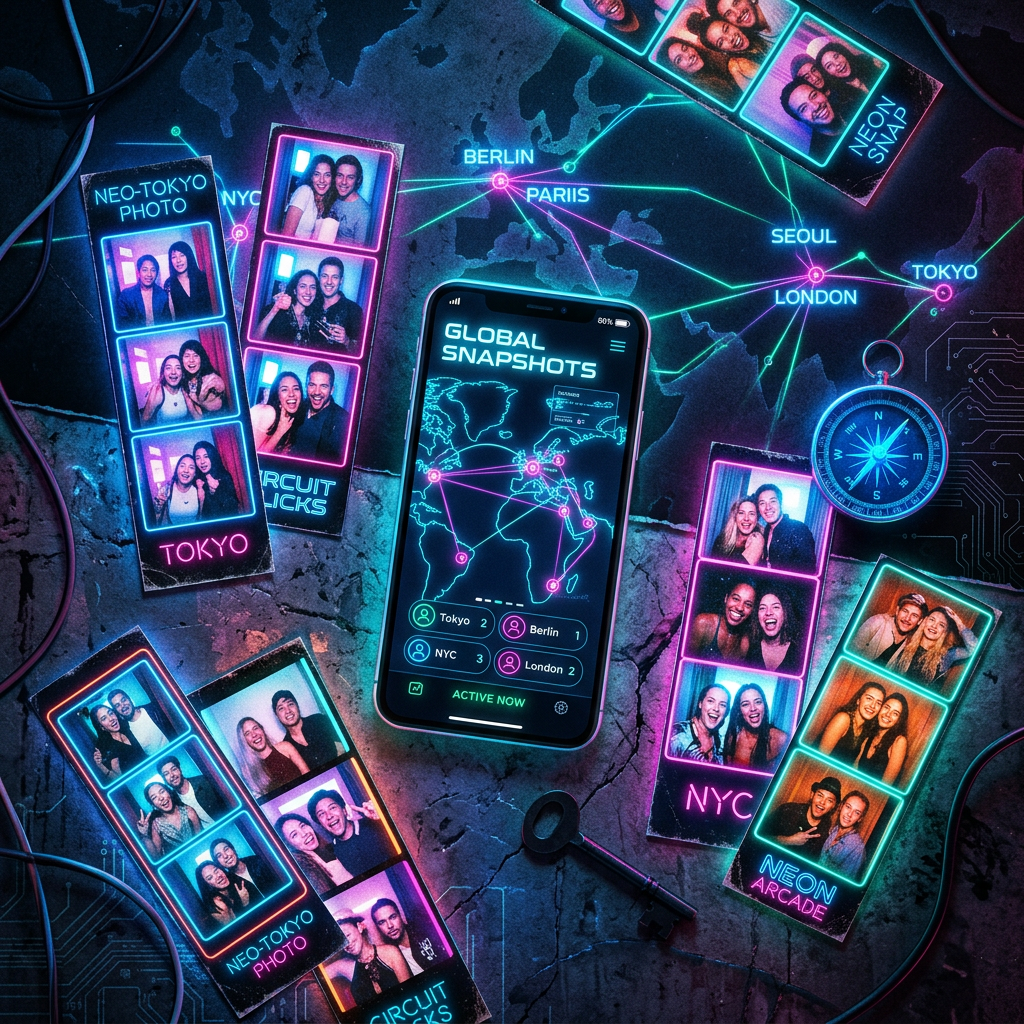
    Yet, despite this universal function, the aesthetic, social purpose, and even the technology of the booth experience shift dramatically when crossing international borders. For the contemporary traveler, navigating this diverse cultural geography of spontaneous portraiture is one of the most rewarding ways to understand a city’s heart. And for those who want to do more than just collect scattered strips of paper, a tool like ZillaBooth’s geotagging feature becomes essential…it turns a collection of disparate photographs into a curated, geographically organized memoir of a trip. By analyzing the booth cultures of London, Berlin, and Tokyo, we discover not only varying visual styles but profound differences in how these societies view public and private image-making.

    London: The Architect of Nostalgia and the Quick Snap

    London’s booth culture is characterized by its deep-rooted nostalgia and an almost reverent respect for the traditional photo machine. The city is a patchwork of the old and the new, a fact perfectly mirrored in its approach to the quick, public portrait. On one hand, you have the iconic black-and-white photobooths…often tucked into tube stations or cinema lobbies…which are fiercely protected by artists and heritage groups. These machines use authentic chemical development, producing strips of four classic, highly-contrasted portraits that instantly evoke 20th-century espionage and cinematic romance. For a Londoner, these images are less about vanity and more about a simple, honest document of a day, a state of mind, or a necessary official photograph.

    This heritage is juxtaposed with the booming, high-street interactive booth scene. Fashion brands and large concept stores have embraced selfie booths and elaborate video-recording stations as ephemeral marketing tools. These are digital, highly lit, and designed for immediate social sharing. They allow for overlays, GIFs, and brand-specific filters, transforming the quiet act of self-portraiture into a loud, public declaration of association. The London booth-goer often moves between these two extremes, treating the chemical booth as a private time capsule and the digital booth as a temporary, public installation.

    For a traveler documenting their London experience, this duality presents a unique challenge: how do you tie together the grainy, matte black-and-white strip from a Soho back alley with the neon-drenched, shareable GIF taken at a Shoreditch pop-up? This is where ZillaBooth’s geotagging provides a critical connective tissue. By using ZillaBooth to log both the physical location of the hidden, chemical machine and the digital address of the modern installation, the traveler creates a map that charts London’s historical and contemporary visual identity. The geotagging doesn’t just record “where” the photo was taken; it documents the kind of experience it was, linking a moment of quiet, analog introspection to a location, and a moment of loud, digital exhibitionism to another. The resulting geotagged portfolio becomes a genuine photographic essay on the contrast that defines the city itself.

    Berlin: The Gritty, Anti-Perfect Fotoautomat

    Booth culture in Berlin is perhaps the most fiercely anti-establishment and artistically pure of the three. Here, the photo booth is overwhelmingly dominated by the Fotoautomat, the quintessential 20th-century machine, often housed in a repurposed metal shipping container or a standalone, graffitied box on a street corner. In Berlin, these booths are not glossy novelties…they are a cultural fixture, an intrinsic part of the city’s rough, unpolished aesthetic.

    The appeal of the Berlin booth is its absolute lack of pretense or digital manipulation. The lighting is harsh, the lens is fixed, and the chemical process is unforgiving. The resulting four images are raw, unedited, and often slightly flawed…a reflection of Berlin’s enduring counter-cultural spirit. People use them spontaneously: stumbling out of a smoky bar at 3 AM, marking a new friendship, or simply creating a piece of spontaneous, affordable art. There is no “pretty” filter; there is only the authentic self, captured in a burst of light that rejects the curated perfection of social media.

    The Fotoautomat is deeply integrated into the Kiez (neighborhood) identity. Finding a machine in Kreuzberg yields a different visual energy than one in Mitte. For the traveler, collecting these strips is a quest for authentic Berlin grit. ZillaBooth’s geotagging feature elevates this quest into a genuine documentary project. Instead of just having a pile of strips, the traveler can use the geotags to map a ‘Fotoautomat’ tour of the city. The geotags provide the context that the strips themselves lack…the time, the street noise, the atmosphere of the Kiez where the photo was taken. The resulting digital map tells the story of the traveler’s nocturnal wanderings and spontaneous encounters, grounding the raw, intimate nature of the photos in the exact, unpolished reality of the city’s locations. For a place obsessed with historical memory and unvarnished reality, ZillaBooth allows the traveler to prove, through location data, the exact spontaneity and truth of their photographic captures.

    Tokyo: The Hyper-Edited Fantasy of Purikura

    If London offers nostalgia and Berlin offers grit, Tokyo delivers pure, hyper-edited fantasy through its Purikura (print club) culture. Purikura booths are an extreme contrast to the Western concept. They are large, multi-person studios, often located in dedicated Purikura arcades, and they are inherently social. The entire experience is geared toward group bonding and the creation of a perfected, ‘kawaii’ (cute) version of reality.

    The process is long and elaborate: first, the large-format photos are taken, often with extremely flattering, high-key lighting. Then comes the mandatory editing session, which is the heart of the experience. Users manipulate their images, digitally enlarging eyes, slimming faces, smoothing skin, adding glitter, custom borders, thematic backgrounds, and anime-style accessories. The focus is entirely on creating a shared, highly stylized, and often digitally unreal memory that adheres to a specific aesthetic ideal. These booths are primarily used by friends, couples, and social groups, with the resulting prints being immediately split and exchanged as tokens of the shared experience.

    For the international visitor, engaging with Purikura is a deep dive into Japanese youth culture. The challenge is that the photos themselves are a delightful lie, a beautifully crafted unreality. How does the traveler document their trip honestly when their own photos are so heavily filtered?

    ZillaBooth’s geotagging provides the perfect counterpoint to the Purikura aesthetic. The app captures the real-world, time-stamped coordinates of the Purikura arcade in Shibuya or Harajuku. The geotag becomes the anchor of reality for the filtered image. By juxtaposing the highly stylized, cartoonish Purikura print with the geotag that places the photo firmly on a street corner in the real world, the traveler documents the cultural act of filtering and shared fantasy, not just the fantasy itself. It allows the travel narrative to acknowledge the fun, creative unreality of the booth while still authenticating the time and place of the cultural immersion. The traveler uses ZillaBooth to document the journey to the Purikura studio, the moment of entry, and the shared excitement of the editing process, all of which are grounded by location data, turning a fantasy print into an authenticated cultural snapshot.
    ZillaBooth: The Universal Translator for Global Booth Culture

    The global traveler today is a curator, and their images are their data points. Across London, Berlin, and Tokyo, the booth functions as a cultural mirror, reflecting each city’s unique relationship with privacy, art, and aesthetic perfection. London values its heritage and its commercial immediacy. Berlin values an unvarnished, authentic grit. Tokyo values a shared, high-tech fantasy.

    ZillaBooth’s geotagging feature provides the unifying technology required to document this diversity cohesively. It addresses the core dilemma of modern travel documentation: how to preserve the spontaneity of a moment while providing the context that digital images often lack. – For the analog strips of London and Berlin, the geotag ensures the photograph’s location history is not lost, providing crucial context that a loose paper strip cannot carry.
    – For the hyper-edited digital photos of Tokyo, the geotag acts as the essential anchor of reality, authenticating the cultural experience and location despite the image’s lack of realism.By creating a chronological, location-aware feed of these varied booth experiences, ZillaBooth enables a traveler to build a dynamic, interactive map of their journey…a photographic memoir where every snap, whether a serious black-and-white portrait or a glitter-soaked Purikura fantasy, is tied back to the exact pulse point of the city where it was captured. It transforms a simple collection of souvenir photos into a powerful, geographically-driven narrative, proving that in the digital age, the location of a self-portrait is just as important as the image itself. The journey to the booth is, after all, the entire point.

  • Restoring the Past: The Community Keeping Analog Alive

    Restoring the Past: The Community Keeping Analog Alive

    In an age where the newest phone is obsolete in eighteen months and software updates feel more like forced obsolescence than improvement, there exists a vibrant, dedicated community operating on a completely different timeline. They are the keepers of the past, the engineers and artists who refuse to let the incredible craftsmanship of analog technology fade away.

    This is the community of restorers…a global network of passionate individuals breathing new life into vintage electronics, from a 1970s slide projector to an early 2000s professional film scanner, from reel-to-reel audio decks to classic video editing suites. Their mission is a silent, ongoing act of cultural preservation. They don’t just fix things; they resurrect mechanical souls.

    The devotion these restorers show to the hardware is nothing short of inspirational. They scour online marketplaces for obsolete capacitor kits, patiently trace frayed wiring diagrams, 3D-print irreplaceable gears, and spend countless hours debugging decades-old firmware. For them, a piece of equipment is not just a tool; it’s a testament to industrial design, a marvel of engineering that was built to last. They appreciate the weight of the optics, the satisfying click of a well-made mechanism, and the superior, non-compressed quality of the data captured on the original medium.

    There is a profound respect for the lineage of these machines. When a restorer brings a classic drum scanner back online, they aren’t just saving an expensive device; they are preserving the integrity of the image. They understand that the subtle color depth and massive dynamic range captured by a large-format CCD in a 1990s scanner cannot be perfectly replicated by modern sensors, which often prioritize speed over raw fidelity. They know that a vintage film camera’s lens is a unique optical fingerprint. Their meticulous work ensures that the original, rich, and unfiltered capture medium remains accessible and fully functional. This community is a bulwark against the throw-away culture, valuing longevity and quality above all else.

    However, the dedication of the community runs into a seemingly insurmountable wall: software obsolescence. The hardware itself can often be fixed…a broken motor replaced, a sensor cleaned, a power supply recapped. But the custom, proprietary software written for Windows 95, Windows XP, or macOS 9 that drove these specific devices? That is a relic that cannot be physically repaired. Drivers fail on modern operating systems. Calibration utilities crash. Crucial features are locked behind defunct company servers or rely on Java runtimes that are now security risks. The restorer is left with a museum-quality piece of perfectly functional equipment that is effectively a beautiful, expensive brick because the digital bridge…the software control…has completely collapsed.

    This is the chasm where the legacy of the restorers meets the future…and this is precisely why ZillaBooth was created.

    ZillaBooth is not here to replace the irreplaceable hardware. We are here to liberate it. We are the “next generation” software alternative designed from the ground up to solve the single greatest problem facing the analog restoration community: connectivity, control, and modernization.

    Our team is full of people who spent years fighting with TWAIN drivers, SCSI interfaces, and cryptic error codes while trying to digitize their own archives. We understand that the real magic is in the analog capture…the lens, the film, the CCD…and that the software should merely be the best possible conduit to the digital world, not a frustrating bottleneck.

    ZillaBooth is built to be the universal, modern command center for the restored analog device.

    Imagine finally sourcing that incredibly rare professional flatbed scanner from the early 2000s, spending weeks getting the mechanics perfect, and then bypassing the headache of finding a 20-year-old operating system just to run the outdated driver. ZillaBooth’s architecture is fundamentally different. It uses cutting-edge reverse-engineering and modern I/O protocols to communicate with this vintage hardware, providing a stable, cross-platform interface that runs natively on the latest Windows, macOS, and even Linux environments. It translates the ancient commands of the hardware into a modern, streamlined language.

    For the community that respects the hardware, ZillaBooth offers the controls they truly need. It’s not an automated, “smart” system that decides what’s best for the image; it is a professional-grade manual darkroom. We give you granular control over exposure, sensor timing, color profiling, and light source intensity, letting you use the specific optical strengths of your restored machine to their absolute maximum potential, free from the guesswork and algorithmic interference of modern camera software. The philosophy is total operator control, mirroring the intentionality and precision of the analog process itself.

    Furthermore, we’ve integrated true modern utility features that simply didn’t exist when this hardware was new: * Non-Destructive Workflows: Perform all dust, scratch, and color corrections in a non-destructive manner. The original, raw sensor data from your vintage device is always preserved and accessible, ensuring you can return to the pure source file at any time.
    * Advanced Image Stacking/Multi-Pass: Leveraging modern CPU/GPU power, ZillaBooth allows for rapid multi-pass scanning and image stacking to achieve unprecedented dynamic range and signal-to-noise ratio…far surpassing what the original bundled software was capable of. You can squeeze every last bit of quality out of that historic CCD.
    * Batch Processing and Metadata: Handle massive restoration projects with ease. Automate renaming, embed modern metadata standards (like XMP and IPTC), and export to any modern archival format with full color-space control (e.g., sRGB, Adobe RGB, ProPhoto RGB).
    * AI-Assisted Restoration (Optional): For those moments when a manual fix is impossible, ZillaBooth offers state-of-the-art, machine-learning-driven tools to intelligently remove complex artifacts like deep film grain or chemical blemishes without destroying the underlying details. This feature acts as a surgical tool, not a blunt filter, respecting the original texture while fixing the flaws.The restorers keep the lights on for the technology of the past. ZillaBooth provides the new, essential power supply for the future of that technology. We are the handshake between the brilliant engineers of yesterday and the powerful computing resources of today, ensuring that the incredible investments made in premium analog hardware continue to pay dividends in the digital age.

    To the community of restorers: Your passion is why the best analog gear remains in service. We honor that work by ensuring your resurrected machine has a modern, capable voice. Stop fighting with antiquated drivers and crashing applications. Get ZillaBooth, install it on your modern workstation, connect your flawlessly restored hardware, and let the real work…the work of preservation and creation…begin anew, operating at the speed and stability expected of a 21st-century application.

    ZillaBooth is not an end to the analog journey; it is the essential modern toolkit that allows the journey to continue, securing the legacy of these incredible machines for decades to come. The past is worth saving, and the future of saving it is here.

  • Passport Photos to Party Photos: A Pivot

    Passport Photos to Party Photos: A Pivot

    The hum of the Photomaton was once the sound of necessity. In 1925, when the automated photographic booth was patented and first presented to the public, it was nothing short of a technological marvel…a rapid, affordable, and private method for producing standardized photographs. But its mission was purely functional, almost clinical. The earliest photo booths were instruments of utility, designed to streamline bureaucracy and provide proof of identity. They were places you went to secure the image that would unlock access, validate your citizenship, or grant entry to an institution. The photograph itself, delivered in a stiff, perforated strip, was a cold, objective record of your face, a requisite component of official life.

    The entire experience was governed by solemn, unspoken rules. Sit up straight. Look directly at the lens. Maintain a neutral expression. Remove your glasses, if necessary. The lighting was unforgiving, designed for clarity over flattery. The backgrounds were plain…a simple, light-colored curtain that served only to provide contrast for facial recognition. This was not about personal expression or capturing a moment of joy; it was about compliance. The resulting image was a commodity, a small strip of paper that allowed you to complete a transaction, be it obtaining a passport, a driver’s license, or an employee ID badge. It was a means to an end, and the emotional context of the photo was zero. You left the booth not with a memory, but with a valid document. This was the foundational era of the photo booth: the Passport Photo era.

    The booth was a silent, unblinking witness to the serious business of identity. For decades, this utility-first mindset dominated the medium. The technology evolved slowly, moving from purely chemical development to faster printing, but the core purpose remained locked in the realm of documentation. The booth was a tool, placed in post offices, government buildings, and transit hubs…locations where people went to perform civic duties, not to seek entertainment. The idea of using such a machine to capture a moment of unbridled, spontaneous joy would have seemed absurd, almost a misuse of a serious technological resource. The strip of four identical frames was a stack of proofs, not a collection of memories.

    However, technology has a way of escaping its intended function, and the pivot began subtly, almost accidentally, when the photo booth migrated from the sterile halls of government to the lively corridors of commerce. As photo booths became more common in public spaces like shopping malls, movie theaters, and, most notably, arcades, the environment itself began to change the user’s intent. The booth was no longer surrounded by people waiting in line to complete paperwork; it was surrounded by friends, teenagers, and dates looking for cheap thrills and novel ways to spend time.

    This marked the beginning of the Transitional Period. Suddenly, the functional machine was reframed as a novelty. The experience transformed from an official transaction into a private, self-directed social ritual. Groups of friends squeezed onto the small bench, daring each other to make the silliest faces. The serious, neutral expressions of the Passport Photo era were replaced by spontaneous bursts of laughter, crossed eyes, and exaggerated poses. The cost…a handful of coins…was low enough to encourage experimentation and repeat attempts. The photo strip was no longer an ID component; it was a tangible piece of shared memory, easily slipped into a wallet or taped onto a bedroom mirror.

    The photo booth had found its voice as a social catalyst. It was a space where, for a few brief minutes, public rules of decorum could be suspended. The curtain offered a small, dark sanctuary for mischief and intimacy. The results…four frames of documented silliness…were physical proof of a friendship or a date. The photos became the product of the experience, not just a necessary step in a process.

    The ultimate and most profound shift, however, came with the Digital Revolution and the subsequent explosion of the Experience Economy. By the early 2000s, the photo booth had shed most of its heavy, boxy, utilitarian shell and was being reinvented for the event market. Weddings, corporate galas, milestone birthdays…the photo booth stopped being an optional accessory and became a mandatory, expected piece of entertainment infrastructure. This is the zenith of the shift, the true beginning of the Party Photo era.

    The key change was digital capture and instant social media sharing. Booths became sleek, open-air structures with high-definition cameras, professional lighting, and customizable backdrops. They no longer produced thin, often blurry, four-frame strips; they delivered instant, high-resolution digital files, GIFs, and boomerang videos, complete with filters and digital props that could be texted, emailed, or uploaded directly to Instagram or Facebook, often with a unique event hashtag.

    The purpose of the photo booth fully pivoted from utility to performance. The goal of the Party Photo is two-fold: first, to capture the fun of the event, and second, to provide guests with a piece of instant, shareable content that promotes the event itself. The booth became a central stage for expression, where guests were encouraged to be as dramatic, silly, or glamorous as possible. Props grew larger, more elaborate, and entirely unrelated to reality…oversized glasses, feathered boas, superhero masks. The constraint of the ID photo was not just broken; it was violently rejected in favor of pure, joyful chaos. The resulting images were not records of who you are, but records of how much fun you are having.

    This is the context into which ZillaBooth was born…a company dedicated not just to participating in the Party Photo era, but to perfecting it by focusing purely on the “Fun.”

    ZillaBooth recognized that in the digital age, the quality of the image and the seamlessness of the experience are what unlock uninhibited fun. Unlike some legacy systems, ZillaBooth’s hardware and software are designed from the ground up to minimize friction and maximize spontaneous joy. High-quality lighting and professional-grade cameras mean that every silly expression, every group pose, and every ridiculous prop choice is captured with flattering clarity. The lighting isn’t the harsh, flat light of the ID machine; it’s the warm, vibrant light of a high-end photography studio, engineered to make everyone look their best while they are being their most playful.

    The focus on “Fun” also means engineering the process to be part of the entertainment. The user interface is intuitive, fast, and visually engaging. There’s minimal wait time, allowing for rapid-fire pose changes and multiple attempts…crucial for capturing the perfect moment of collective laughter. The physical booth structure is often designed to fit seamlessly into high-end event aesthetics, turning the machine itself into an attraction, a colorful, illuminated beacon that draws guests in for a moment of celebratory escape.

    But ZillaBooth’s commitment to “Fun” goes deeper than just technology and good lighting. In the contemporary digital landscape, true, uninhibited fun is increasingly intertwined with authenticity and presence. The Party Photo era, while fun, has developed a pressure point: the implicit demand to perform for the online audience. Guests often feel a pressure to take the perfect, shareable photo, which can actually detract from the genuine, in-the-moment experience.

    This is where ZillaBooth subtly but powerfully separates itself, offering the kind of fun that is not diluted by the anxiety of online performance. By providing cutting-edge, offline-first capture technology, ZillaBooth gives the couple and the guests the best of both worlds. They get the professional-grade, entertaining photo experience without the immediate, compulsory broadcast to the wider world. The images are taken for the couple and the circle of trust, not for the endless scroll.

    ZillaBooth understands that the most genuine fun happens when people are truly present, when they are making memories for themselves and their loved ones, not for anonymous followers. This commitment to “pure fun” means creating a space free from the pressure of social media metrics. The result is a gallery of images that is more candid, more heartfelt, and fundamentally more fun, precisely because the participants felt free to be entirely themselves.

    The journey of the photo booth is a microcosm of modern social history. It began as a practical servant of the state, ensuring that the image matched the document. It evolved into a teenage rebel in the mall, providing affordable, private novelty. Today, in its most advanced form as ZillaBooth, it has completed its pivot into a dedicated engine of pure entertainment. It is an essential feature of modern celebration, a vessel for capturing joy, silliness, and the unscripted magic of being present together. The silent, somber machine of 1925 has transformed into the loud, colorful heart of the party, ensuring that the focus remains entirely on the essential element: the fun. The Passport Photo paved the way for the Party Photo, and ZillaBooth is the ultimate expression of that joyful, uninhibited transformation.

  • The Paper Crisis: The Struggle of Real Analog Booths

    The Paper Crisis: The Struggle of Real Analog Booths

    The velvet curtain pulls shut, the coin drops, and a bright, aggressive flash blinds you for a split second, followed by the whirring sound of a machine developing your image. For decades, the analog photo booth has been a cultural icon, a spontaneous capsule of friendship, romance, and late-night antics. It is an experience defined by a few precious minutes and a strip of perfectly imperfect, high-contrast, physical prints. But a shadow is falling over this cherished tradition, and it’s not just the deep shadow cast by the flash. The experience we love is being threatened by a crisis far beyond the booth’s four walls: a global shortage of the one thing that makes it all possible…the analog paper itself.

    What started as an industry-specific inconvenience has become a profound supply chain crisis, threatening to extinguish the very tradition it was built on. The primary, unavoidable culprit is the global geopolitical landscape, specifically the ongoing war in Ukraine, which has created a domino effect across the world’s chemical and manufacturing supply lines.

    Analog photographic paper relies on a complex, highly specialized manufacturing process that requires key chemical components and specific material sources, many of which are now directly or indirectly impacted by the conflict. Manufacturing centers and supply routes for vital materials…from wood pulp to the specialized silver halide emulsions…have been disrupted, either through direct conflict zone closures or the cascading effects of trade sanctions, energy price volatility, and shipping bottlenecks. The result is a simple, brutal equation for photo booth operators: less paper available globally, at a significantly higher cost, and with no certainty about future supply.

    For the purists and operators of traditional analog booths, this paper crisis is a punch to the gut. The cost of a single roll of paper, already a premium item, has skyrocketed, often doubling or tripling in price in under two years. Lead times for new stock stretch from weeks to months, turning routine re-stocking into a desperate, high-stakes hunt. This is not just an inconvenience; it’s an existential threat. Many smaller, independent booth operators, who have kept the analog flame alive in dive bars, cultural centers, and vintage markets, are being forced to make heartbreaking choices: drastically raise prices, ration prints, or, tragically, shut down entirely. The physical, tangible experience of the analog print…the very heart of the tradition…is becoming unsustainably expensive and unreliable.

    The irony is that the crisis is forcing a reassessment of what we truly cherish about the analog booth experience. Is it the chemical process, or is it the vibe? Is it the raw materials, or the spontaneity? Most of us would agree it’s the latter. We love the immediacy, the aggressive, unforgiving lighting, the black-and-white grit, and the uneditable, un-retouched honesty of the strip that slides out of the slot. We love the high-contrast aesthetic that the direct flash creates…the deep shadows and the dramatic highlights that feel more authentic than any soft-lit, filtered digital selfie. This raw, imperfect aesthetic is what needs to be preserved, not the brittle supply chain it currently rests upon.

    This is where the vision of the future comes into sharp focus, a future that is not about replacing the spirit of the analog booth, but about liberating it from its physical constraints. This is the case for embracing digital solutions like ZillaBooth.

    ZillaBooth is not just a digital camera in a box; it is an experience meticulously engineered to replicate, and then enhance, the core emotional and aesthetic value of the traditional booth, all while completely decoupling it from the volatility of the global paper and chemical supply chain. It offers the ultimate continuity solution for operators who want to maintain the classic look without the risk of an empty paper tray or a looming price hike driven by events thousands of miles away.

    The first and most critical advantage ZillaBooth offers is unshakeable supply chain resilience. Because it operates entirely digitally, there is no analog paper, no costly chemicals, and no reliance on fragile global shipping routes. An operator running a ZillaBooth will never face the anxiety of stock-outs or unexpected triple-digit increases in their consumables cost. This provides operational stability, predictable overhead, and the ability to offer the photo booth experience consistently, whether the global supply of wood pulp is up or down.

    But the shift to digital with ZillaBooth is about much more than mere reliability; it is about aesthetic faithfulness and enhancement. The developers behind ZillaBooth understand that the charm of the analog print lies in its imperfections and its specific high-contrast look. The software is calibrated to precisely emulate the high-gain, direct-flash aesthetic of vintage booths. It captures the image and processes it through a proprietary filter that reproduces the deep, black shadows, the blown-out highlights, and the signature grain and contrast that analog enthusiasts cherish. The final output is not just a digital photograph; it’s a perfectly rendered, digital analog print.

    Furthermore, ZillaBooth takes the concept of the physical keepsake and makes it infinitely more accessible and useful for the modern consumer. While the traditional analog booth provided one, two, or maybe three physical strips, ZillaBooth offers prints (via an optional, standard-paper thermal printer) and an instant, high-resolution digital copy. Guests can immediately share their session via QR code, email, or direct text, instantly posting to social media. This solves one of the biggest drawbacks of the traditional analog booth: the beautiful print that is cherished but often not easily shared with friends who weren’t there, or with the wider social world. The digital-physical hybrid ensures the moment is both a treasured private memento and a powerful piece of shareable content.

    This shift also opens the door to unprecedented creative flexibility. The analog booth is stuck with one look: the look of the chemistry and paper loaded into it. ZillaBooth, being software-driven, can offer an entire gallery of aesthetics. Operators can easily switch the booth between a classic black-and-white look, a vintage color filter that mimics expired film, or a modern, high-definition style…all with a simple tap on the control panel. This allows a single machine to serve multiple markets and themes, from a vintage-themed wedding to a hyper-modern corporate event, drastically increasing the machine’s utility and revenue potential.

    The sustainability argument is perhaps the most compelling for future-forward businesses. The analog process is chemically intensive and creates waste. While the romanticism of the darkroom is powerful, the reality is that the process is resource-heavy. ZillaBooth is a fundamentally sustainable alternative. By eliminating the need for single-use photo paper and the associated chemistry, it drastically reduces the ecological footprint of the photo booth experience. In an era where consumers and businesses are increasingly prioritizing environmental responsibility, choosing a digital-first solution is not just a pragmatic choice…it’s an ethical one that aligns the business with modern values.

    Ultimately, the goal is to keep the spirit alive. The enduring magic of the photo booth is the shared, spontaneous act of creative self-expression in a small, private space. It’s the instant gratification of seeing the result, unedited and raw. ZillaBooth ensures this experience continues, not as a relic dependent on a fragile, costly, and resource-intensive global supply chain, but as a robust, modern, and accessible piece of technology. The paper crisis has laid bare the vulnerabilities of the analog system. The response must be a sophisticated digital pivot that respects the past while building a reliable future.

    By choosing ZillaBooth, operators are not just installing a new piece of equipment; they are future-proofing a beloved cultural tradition. They are trading the stress of supply chain logistics for the freedom of digital abundance, the uncertainty of geopolitical volatility for the stability of software updates, and the high cost of vanishing paper for the sustainable model of digital distribution. The velvet curtain will still pull shut, the flash will still fire with its signature, aggressive intensity, and the strip of images will still be instantly available…but the memory, and the business, will be safe and thriving, liberated by the power of digital innovation. The future of the analog aesthetic is unequivocally digital.

  • The 4-Pose Challenge: A History of Photo Booth Posing

    The 4-Pose Challenge: A History of Photo Booth Posing

    Long before phone cameras gave us a million takes and filters could erase a shadow, there was the photo booth. A simple, curtained-off enclosure that offered four flashes, four moments, and one strip of undeniable, unfiltered truth. It was more than just a novelty; the photo booth became a democratic canvas, a stage for cultural expression, and an accidental time machine, perfectly chronicling the evolution of how we present ourselves to the world.

    We all know the ritual: You pay your coin, pull the curtain, and suddenly the pressure is on. Four poses. A countdown begins. What do you do?

    The way people answered that question changed dramatically from decade to decade. The poses, the expressions, the proximity…they weren’t random; they were a direct reflection of the social, cinematic, and artistic trends of the era. To celebrate this history, we’re launching the ultimate style guide and fun experiment: How to Pose Like Every Decade, perfectly timed and executed using ZillaBooth’s unique in-app countdown feature.

    Your mission, should you choose to accept it, is to step into your ZillaBooth…whether in real life or via the app…and dedicate each of your four precious flashes to a specific decade. Ready to travel through time without leaving your seat?

    Flash One: The Stiff Upper Lip (The 1920s & 1930s)

    The first automatic photo machine, or “Autophotograph,” opened in New York City in 1925. In its earliest days, getting your picture taken was still a serious, formal affair. Photography was expensive, and the tradition of the studio portrait…where you stood stock-still for minutes…had not yet faded. The mood was less “fun” and more “proof of existence.” People viewed the resulting image as a legacy piece, something that needed to convey dignity, not fleeting joy.

    The Pose: Think of silent film stars and passport photos.1. The Head-On Gaze: Look directly and unsmilingly into the lens. The technology was slow, and holding a genuine, relaxed smile for the duration was physically uncomfortable, leading to the serious, almost somber expression we associate with early photography. Smiles were considered undignified for formal portraits.
    2. The Stiff Spine: Shoulders back, chin slightly down, and zero slump. Posture was paramount. Even when sitting with a partner, there was often a visible inch of space between bodies, a relic of Victorian formality that lingered in public life.
    3. The Somber Expression: No teeth, no exuberant joy. A subtle, almost stoic expression conveys respectability and maturity. The focus is on the architecture of the face, not the emotion.How to Execute with ZillaBooth: Use the first flash for your most formal, head-of-state portrait. The ZillaBooth timer gives you just enough time to perfect your posture and set your gaze, reminding you that this pose is about solemnity, not spontaneity. Challenge yourself to keep your eyebrows neutral and your jaw relaxed, avoiding any hint of a smile. This pose is the most historically challenging, forcing you to suppress modern instincts for cheerfulness.

    Flash Two: The Wartime Sweetheart (The 1940s & 1950s)

    The photo booth took on a new, deeply sentimental significance during World War II. For soldiers shipping overseas and the loved ones they left behind, a photo strip became a precious, tangible token of intimacy. The booth was no longer just for formal portraits; it was a private place for emotional connection, a final moment of contact before separation. This era gave rise to the classic, intimate “kiss strip,” a raw form of documentation that spoke to the era’s emotional intensity.

    The Pose: Focus entirely on the human connection…this is where posing begins to get playful and deeply emotional.1. The Shared Close-Up: Partners squeeze tightly together to ensure both faces are in the frame, often pressing cheek-to-cheek. This physical closeness was a direct, necessary contrast to the formality of the prior decade. The focus is exclusively on the two individuals.
    2. The Classic Kiss: The most iconic pose of the era. A deep, long-lasting kiss that lasted for multiple flashes, often with eyes closed to heighten the sense of privacy. Alternatively, the “Forehead Press,” where two heads touch, eyes closed, conveying deep affection and reliance.
    3. The Dramatic Prop: This era was heavily influenced by film noir. A cigarette, a fedora, a letter from the front, or a flower could be held, adding a cinematic, bittersweet drama to the moment, hinting at the context outside the curtain.How to Execute with ZillaBooth: If you’re alone, use the frame to capture an emotional moment with a hand gesture (a heart shape or a dramatic wave of farewell). If with a partner, challenge yourself to hold the kiss for the first two flashes after the ZillaBooth timer goes off, recreating the timeless romantic reel. The proximity is crucial; you should fill the frame.

    Flash Three: The Rebel’s Edge (The 1960s & 1970s)

    The rise of youth culture, rock and roll, and the counter-culture movement injected a new, playful, and often chaotic energy into the photo booth. This was the era of the ‘go-go’ pose…rapid, chaotic, and brimming with personality. Poses began to borrow heavily from magazine covers, album art, and fashion photography, becoming more performative. The goal was no longer dignity, but attitude and showing off one’s ‘groovy’ personality.

    The Pose: Think Twiggy, Andy Warhol, and Studio 54 disco queens. The poses are sharp, angular, and often feature the hands.1. The Exaggerated Reaction: Hands fly to the face…a shocked open mouth, eyes widened, a tongue might stick out. The expressions are intentionally over the top and designed to be funny or provocative. This is a move toward embracing imperfection.
    2. The Head Tilt and Chin Prop: The classic “pensive” or “intellectual” look. Tilt the head dramatically and rest the chin on a fist or open palm. It’s an intellectual-meets-model moment, often looking away from the camera for an aloof effect.
    3. The Side Profile: Instead of facing the camera, subjects would turn to the side and look ‘out of frame,’ adding an element of mystery or high-fashion drama, mimicking candid shots by a photographer.
    4. The Peace Sign: While fully embracing the 90s, the peace sign had its roots here, used as a sincere symbol of anti-war and counter-culture sentiment, often combined with long, flowing hair obscuring the face.How to Execute with ZillaBooth: Use the ZillaBooth’s flash notification sound as a trigger for a dramatic switch in attitude. Start calm, then when the timer counts down, switch to an exaggerated expression or a sharp profile turn. The speed of the pose change is key to capturing the chaotic, restless energy of the era. Aim for a graphic, bold silhouette against the background.

    Flash Four: Pop Culture Irony (The 1980s & 1990s)

    This is the era that cemented the photo booth as a truly iconic pop culture staple, largely thanks to its prominence in malls, arcades, and movies like Clerks and Amelie. The poses became self-aware, ironic, and often a parody of celebrity culture. The 80s brought big hair, bold makeup, and power poses, and the 90s ushered in grunge, anti-fashion, and a universal hand gesture that reigns supreme: the peace sign. This is the last stop on our historical tour before the digital selfie revolution.

    The Pose: A complex mix of super-confidence (80s) and complete apathy (90s).1. The Power Shrug (1980s): A flash of dramatic shoulder-pad posture, a hands-on-hips stance, and an intense, direct glare. This pose is about projecting ambition and saying, “I’m important, and I know it,” even if the subject is a teenager in acid-wash jeans.
    2. The Peace Sign (1990s): The most essential element of the challenge. The peace sign went from a serious symbol to a casual, ubiquitous placeholder for “Hey, I’m here.” Hold it up next to your face, slightly off-center, with a genuine sense of relaxed irony.
    3. The Duck Face / Kissy Face (Pre-Selfie Era): A precursor to modern posing. Pout the lips slightly for an exaggerated, playful kissy face. Crucially, in this era, it was often done ironically to mock the idea of ‘sexy’ posing, not seriously.
    4. The Group Huddle: Squeezing three or four people into a tiny booth, all looking in different directions, was a badge of social honor. The goal was to maximize the chaos and make sure everyone’s hair was perfectly visible.How to Execute with ZillaBooth: For this flash, go full 90s. Use your ZillaBooth timer to nail the perfect peace sign right as the light fires. For the ultimate nostalgic touch, pair your peace sign with a genuine shrug and a deadpan expression. The ZillaBooth’s countdown is the perfect cue for the spontaneous-yet-practiced casualness of the 90s aesthetic.—–The 4-Pose Challenge: Your ZillaBooth Checklist

    Ready to put history into practice? Here is your quick-fire checklist for the ultimate 4-Pose Photo Booth Challenge, using the ZillaBooth in-app timer to control your flashes and ensure authentic, high-pressure results.

    Step 1: Set the Stage
    Find your best photo booth environment…a real booth, the ZillaBooth app, or a simple wall with direct, harsh lighting. Use the ZillaBooth app’s countdown timer, which perfectly replicates the high-stakes pressure of the classic four-frame strip.

    Step 2: Pose Like a Puritan (The 1920s) * The Pose: The Serious, Formal Stare.
    * Action: Shoulders back, chin level. Look straight at the lens. Zero smile. Look like you’re posing for a marble bust that will be placed in a library. Hold your breath for the flash.
    * ZillaBooth Cue: When the countdown hits 1, freeze and hold the stare with complete stillness.Step 3: Pose Like a Soldier’s Sweetheart (The 1940s) * The Pose: Intimacy and Emotion.
    * Action: If alone, a hand dramatically covering half your face, eyes looking up with longing. If with a partner, squeeze in close and execute a tight, affectionate cheek-to-cheek pose, or a partial kiss that gets cut off by the frame.
    * ZillaBooth Cue: Use the last two seconds of the timer to adjust your hand or head placement for maximum dramatic, film-noir effect before the flash.Step 4: Pose Like a Pop Artist (The 1970s) * The Pose: Attitude and Profile.
    * Action: A sharp 45-degree turn of your head to the side. Chin up, a slight, knowing smirk. This is your ‘high-fashion’ moment. Alternatively, flash an exaggerated ‘gasp’ with hands pressed to your cheeks.
    * ZillaBooth Cue: Do a rapid, sharp turn into the profile pose just as the timer ends…the sharper the movement, the better the moment will look in the final, fixed frame.Step 5: Pose Like You’re Over It (The 1990s) * The Pose: Casual Irony (The Peace Sign).
    * Action: A relaxed shoulder shrug, a slight head cock, and the classic, two-fingered peace sign held casually up next to your eye or cheek. Your expression should be completely deadpan or slightly amused, embodying the era’s anti-effort cool.
    * ZillaBooth Cue: Hold this relaxed pose for the full countdown. This pose is about studied casualness; no last-second change is needed. Let the timer count down while you look unimpressed.The photo booth strip, across a century of change, has always been the visual scrapbook of human interaction. It’s a spontaneous moment, forever encased in glossy paper. By taking The 4-Pose Challenge, you’re not just taking four pictures; you’re honoring the history of self-expression, from the dignified silence of the Jazz Age to the ironic flash of the Grunge era. Now go, get into your ZillaBooth, and show us how you pose like every decade! Don’t forget to share your 4-Pose strip with the hashtag #ZillaBoothChallenge!

  • From Broadway to Your Backyard: The Evolution of Access

    From Broadway to Your Backyard: The Evolution of Access

    The distance between “Broadway” and “your backyard” once measured not just geography, but a vast and unbridgeable chasm of access, cost, and expertise. This is the story of how photography…the single most powerful tool for capturing and curating human life…has been thoroughly democratized, moving from a monumental, fixed destination to a feature as fluid and personal as the breath in your lungs. In 1925, the idea of instantaneous, portable image-making was a future so distant it was science fiction. If you wanted a professional portrait, a memory fixed for posterity, or a casual photo booth snap with a friend, you undertook a pilgrimage. You went to the dedicated space, the photo studio, the kinetoscope parlor, or the specialized booth…the commercial, cultural ‘Broadway’ of image capture.

    That experience was defined by its friction. The process was expensive, reserved for special occasions, and required a surrender of agency. You dressed for the event. You waited your turn. You were positioned by a professional who understood the temperamental chemistry and the unforgiving physics of light and shadow. The resulting picture was a precious artifact, a heavy cardstock portrait or a handful of grainy, monochromatic photobooth strips, meant for an album, a locket, or a mantelpiece. It was a formal contract with history, carefully negotiated and rarely executed. The financial and time investment meant that the common experience of life…the mundane, the silly, the spontaneous, the ugly…was deemed unworthy of documentation. A photograph was an investment, a performance, and a luxury.

    This high barrier to entry created a cultural monopoly on visual storytelling. The narrative of the era was predominantly captured by those with resources, equipment, and training: journalists, artists, and the wealthy. The visual historical record of the early 20th century is, by necessity, a curated, elevated, and sometimes stiflingly formal one. The average person’s life existed mostly in memory, not on paper. The booth was stationary, the technology was complex, and the power remained concentrated.

    The first crack in this monolithic structure came not from digital technology, but from ingenious simplification. The introduction of roll film cameras…the Kodak Brownie being the most famous evangelist…began to pull the practice out of the studio and into the sun. The tagline, “You press the button, we do the rest,” was a revolutionary declaration of photographic independence. It severed the photographer from the chemist, placing the ability to capture the image in the hands of the public while the complex, darkroom work remained with the professionals. This made photography a leisure activity rather than a profession. People began taking pictures of holidays, family gatherings, and everyday scenes. The aesthetic shifted from formal portraiture to the candid snap, embracing the slightly blurry, slightly off-kilter perspective of the amateur. But even then, the friction remained significant: the cost of film, the limit of twelve or twenty-four exposures, the anxious wait for development, and the final cost of the prints. The booth had been moved from Broadway to the living room, but it was still a finite resource.

    The true, cataclysmic shift, the one that fully unlatched the booth and placed it in the pocket of every global citizen, was the advent of digital technology and, crucially, the smartphone. This eliminated all remaining forms of friction simultaneously. It was a quadruple-whammy of democratization: cost, time, skill, and sharing.

    First, the cost per picture dropped to zero. There is no film, no development fee, and essentially infinite storage capacity. This single change…the total removal of economic consequence for hitting the shutter button…was the engine of the modern visual age. It encouraged a philosophy of documentation that is fundamentally different from the past. Why take one picture when you can take fifty? Why save the camera for a birthday when you can use it to capture the pattern of morning shadows on your coffee cup? The photograph became a throwaway note, a fleeting text message, an experimental draft.

    Second, the skill barrier collapsed. Sophisticated algorithms now manage light, focus, color balance, and exposure automatically, often producing technically superior images to those taken by all but the most dedicated professional of fifty years ago. The modern camera is not a tool you operate; it is a smart partner you simply point. With a tap, you can edit, crop, and filter the image, bypassing years of darkroom expertise and Adobe Photoshop mastery. The photographer, the developer, the editor, and the publisher are all now one and the same person, armed with a single device.

    Third, the mobility and time factor achieved totality. The camera is no longer a dedicated device left in a drawer, but a fused extension of the self, carried in the pocket at all times. The opportunity to capture a moment is instantaneous and unmissable. That pivotal moment, that perfect intersection of light and emotion, is no longer lost because the photographer was blocks away from the nearest booth, or fumbling with a film canister. The booth is always, constantly, right there, waiting.

    Finally, sharing became instant and global. The digital image is born connected. It does not exist merely as a physical object; it exists as a data stream capable of transmission to millions of people in a fraction of a second. The physical distance between “my backyard” and “your backyard” has been obliterated, replaced by the immediacy of the Instagram feed, the TikTok video, and the FaceTime call. The photograph has evolved from a precious artifact to a language of communication, a primary verb in the syntax of global digital culture.

    The ramifications of this shift are profound and complex. On one hand, the accessibility has led to an explosion of human history and creativity. We have an unprecedented record of the collective human experience…from high political drama to the intimate moments of family life, all contributed by billions of independent witnesses. Subcultures, protests, personal joys, and mundane reality are all recorded, archived, and shared. This democratization has given voice to countless communities and perspectives previously absent from the official, professionally curated visual record. The power of the image as a tool for political change, emotional connection, and self-definition has never been higher.

    On the other hand, this total accessibility has led to a counter-cultural reaction. When every picture is technically perfect and instantly available, the value of perfection diminishes. The infinite access has created a new kind of friction…the cultural friction of authenticity. When every image is filtered, posed, and algorithmically enhanced, there arises a craving for the grit and reality that defined the friction-filled photography of the past. The rise of trends that deliberately mimic the flaws of early photography…the harsh, unflattering direct flash, the grainy, disposable camera aesthetic, the ‘lo-fi’ digital noise…is not a rejection of the technology in our pocket. It is a rebellion against its perfection. It is a nostalgic longing for the raw, unplanned honesty that came as a necessary side effect of the technical limitations of the 1925 ‘Broadway’ experience. We deliberately reintroduce friction to prove an image is ‘real.’

    The journey from Broadway to your backyard is more than a technological success story; it is a profound cultural transformation. The photography booth has been unshackled, its walls dissolved, its processes internalized by a chip and an algorithm. The picture has evolved from a luxury good to a universal utility. It is no longer an object we occasionally seek out, but a power we wield constantly. The greatest achievement of the modern camera is not that it takes beautiful pictures, but that it has become an invisible extension of human sight…a limitless, ever-present device that has made the visual memory of the world instantly accessible to everyone, everywhere. The booth is truly in your pocket, and with it, the power to define and share your own history, moment by moment.

  • The Science of the Strip: Why 4 Photos?

    The Science of the Strip: Why 4 Photos?

    The most common tools for visual storytelling…from the cinematic masterpiece to the humble social media carousel…often rely on a complex, multi-layered structure. We’re taught about the three-act play, the twelve-step hero’s journey, or the endless scroll of a feed. Yet, one of the most powerful, oldest, and universally understood visual narrative formats operates on a deceptively simple number: four.

    Think about the classic photo booth strip. Four small squares, captured in quick succession. Think about the most iconic newspaper comic strips, which almost universally adhere to four panels. Think about the emerging dominance of the four-image Instagram carousel or the quad-split video on platforms like TikTok, forcing a miniature narrative to play out in a constrained space. Why does this specific structure, this quartet of frames, hold such a profound and magnetic appeal? The answer lies not just in visual design, but in the elemental structure of storytelling itself. Four is the precise number of steps required to execute a complete, satisfying narrative arc: Introduction, Action, Climax, and Resolution. It is the narrative minimum, a perfect, self-contained loop that ensures emotional engagement and instant comprehension. Master this four-frame science, and you master the art of the miniature epic.Frame One: The Introduction (The Setup)

    The purpose of the first frame is simple: establish context. This is the “Once upon a time” of the strip. It must clearly define the setting, the subject, and the initial state of the story. The viewer needs to know who we are looking at and where they are. This frame sets the tone and the baseline from which all subsequent drama will deviate.

    Visually, this frame should prioritize clarity and space. It is often a wider shot, or a composition that clearly illustrates the environment. If your subject is a person, Frame One is their baseline expression…calm, expectant, or perhaps slightly bored. This establishes a “normal” state. For example, in a photo strip about eating a giant ice cream cone, Frame One is the subject standing with the perfectly intact, untouched cone, a look of pure anticipation on their face. The viewer’s mind immediately files this away: “Okay, this is the beginning. This is how things stand before the change.” Without this necessary initial setup, the next frames…the action…will lack the contrast required to feel like a story. The first frame is the anchor; it gives weight to the movement that is about to follow. It manages expectations and subtly promises that the next three frames will deliver a shift from this initial stasis. It is the quiet before the storm, the still moment that makes the subsequent movement kinetic. Its success is measured by how effectively it lays the foundational layer of reality for the story to be built upon.Frame Two: The Action (The Rising Tension)

    The second frame is where the story truly begins to move. Having established the “who” and “where,” Frame Two introduces the “what.” This is the catalyst, the complication, or the movement toward a goal. This frame creates tension because it is a direct deviation from the established norm of Frame One. The visual shift should be undeniable.

    In the narrative arc, this is the rising action. It’s the moment the character begins the task, or the problem makes itself known. Returning to the ice cream example, Frame Two is the moment the subject takes the first, massive bite, or perhaps the moment the cone begins to melt slightly, dripping over their hand. This is not the point of maximum drama, but the point of escalating drama. It’s the commitment shot. The expression on the subject’s face often shifts here…from anticipation to engagement, effort, or perhaps mild concern. Frame Two is crucial because it ensures the story isn’t just a collection of moments; it’s a process. It moves the subject from a passive state (being with the ice cream) to an active state (interacting with the ice cream). For a comic strip, this is the dialogue panel that reveals the conflict. For a fashion strip, this might be the moment a model begins a dramatic turn or interaction with a prop. It must confirm the promise of movement made by Frame One and set the stage for the inevitable climax. The visual language here is all about momentum, indicating that things are progressing and building toward an inescapable conclusion, heightening the sense of forward propulsion.Frame Three: The Climax (The Peak Moment)

    The third frame is the narrative apex…the reason the strip exists. This is the moment of maximum release, the punchline, the peak emotion, or the critical event. If the viewer remembers only one frame, it should be Frame Three. In the traditional three-act structure, the climax occurs at the end of Act Two or the beginning of Act Three. By placing it in the third of four frames, the structure acknowledges the narrative necessity of a brief, final conclusion.

    Visually, Frame Three should be the most dramatic, highest-energy, or most impactful image. In the photo booth, this is often the most exaggerated pose: the eyes crossed, the dramatic laugh, the sudden hug, or the full-face expression of delight or distress. Following our ice cream narrative, Frame Three is the glorious, messy peak: the cone has collapsed, the ice cream is smeared all over their face, and the subject is reacting with either pure, ecstatic joy or frustrated, messy surrender. The composition often benefits from being a tight, close-up shot, focusing exclusively on the intense reaction or the dramatic result of the action initiated in Frame Two. The chaos, the emotion, the visual noise…it all peaks here. Frame Three is the explosive release of the tension built across the first two frames. It is the moment where the story’s core thesis…the struggle, the joy, the transformation…is delivered with maximum force. Without a powerful Frame Three, the entire strip falls flat, lacking the necessary payoff that the setup frames promised. It must be visually and emotionally the loudest beat in the sequence.Frame Four: The Resolution (The Aftermath)

    The final frame serves to gently lower the viewer back to reality and provide closure. This is the “happily ever after” or, more often, the “lesson learned.” It is the moment of reflection and conclusion, ensuring the narrative loop is fully closed. After the high energy of the climax, Frame Four offers a necessary emotional and visual cool-down.

    Its visual aesthetic is often a return to calm, mirroring Frame One but with a crucial difference: the subject or scene has been fundamentally changed by the action. For the ice cream strip, Frame Four is the aftermath. The ice cream is gone (or mostly gone). The subject is looking tired but satisfied, perhaps wiping their face, or simply offering a knowing, post-chaos smile to the camera. It’s a moment of reflection and consequence. It doesn’t need to be high energy; its power comes from its quiet acknowledgment of what just occurred. Frame Four provides the necessary emotional safety for the viewer, letting them know the adventure is over. It validates the climax. The strip might end with a punchline, a knowing glance, or a return to the initial pose but with a subtle new detail…a smudge on the cheek, a changed backdrop, or a lingering expression of contentment. This final frame is what elevates the sequence from a mere series of snapshots into a coherent story, allowing the viewer to process the narrative and internalize the emotional journey. It’s the final punctuation mark…the period at the end of a perfectly formed sentence.The Science of the Quartet: Practical Application

    Understanding the four-frame narrative arc is incredibly useful for any content creator working in constrained media. The success of this structure lies in its forced economy. Since you only have four chances, every single frame must carry maximum narrative load.

    1. The Pacing is Non-Negotiable:
    You cannot linger in the introduction (Frame 1) or the action (Frame 2). These must be brief, crisp setups. Similarly, the climax must be instantaneous. This forced brevity is why the four-frame strip feels so dynamic. It’s a hyper-compressed drama, designed for an attention economy where speed of comprehension is paramount. The viewer must grasp the whole story in less than five seconds.

    2. Visual Contrast is Key:
    The transition between frames must be visually clear to signal the change in narrative stage. – Frame 1 to Frame 2: Change in posture or introduction of a new element (e.g., subject moves from sitting to standing).
    – Frame 2 to Frame 3: The most dramatic contrast. Often a change from an action-in-progress to the ultimate, messy result (e.g., from pouring liquid to spilling liquid).
    – Frame 3 to Frame 4: A distinct drop in energy. A move from a tight close-up back to a medium shot, or from an exaggerated expression back to a muted, reflective one.3. Medium Agnostic Magic:
    This principle works across all mediums that rely on sequential imagery: – Photography: A social media photo dump should be organized to follow this structure. The first photo sets the scene (the venue), the second introduces the activity (the dancing), the third is the chaotic peak (the group selfie with confetti), and the fourth is the reflective morning-after shot (the coffee).
    – Graphic Design/Presentation: When explaining a concept, use the four-frame structure: Frame 1…Problem Statement, Frame 2…Proposed Solution, Frame 3…The Result (Data/Outcome), Frame 4…Conclusion/Next Steps. This ensures maximum clarity and narrative drive in professional communication.
    – Video: Even in a short video, the first second should be the Introduction, the next two seconds the Action, the fourth second the Climax, and the final second the Resolution. The narrative integrity of a short clip is fundamentally dependent on hitting these four beats quickly and clearly.The enduring power of the four-frame strip is a testament to the fact that complexity is not required for depth. It proves that the most relatable stories are often the most concise. By forcing a creator to distill their story down to its four essential pillars…the establishment of the world, the introduction of the struggle, the moment of ultimate impact, and the final breath of conclusion…the structure eliminates all narrative fat, leaving behind a sequence of pure, unadulterated storytelling. It is a powerful constraint, but one that yields the most satisfying and perfectly paced miniature epic every single time. It is, quite simply, the most efficient narrative engine ever designed. The universality of this arc, from ancient friezes to modern digital strips, confirms its position as the ultimate guide to instant, powerful communication. When you only have a moment to connect with an audience, four frames are not a limitation…they are the perfect, infallible law of narrative physics. The magic is not in adding more, but in knowing precisely what to include in the perfect, powerful quartet.

  • Analog in a Digital World: Why We Crave Physical Prints

    Analog in a Digital World: Why We Crave Physical Prints

    The modern paradox of photography is that in the age of endless images, we feel we have fewer actual photos. Our camera rolls overflow with tens of thousands of digital captures…perfectly exposed, flawlessly focused, and immediately shareable…yet they often feel weightless, ephemeral, and ultimately, disposable. We are drowning in JPEGs, but starving for keepsakes. This deep, persistent craving for something tangible…something we can hold, put in a frame, or slip into a wallet…is what fuels the powerful trend of returning to physical prints. It is not merely a retro fad; it is a profound psychological need for permanence and tactile connection in a world that has become overwhelmingly screen-based and transient. The solution is not to abandon digital, but to master the hybrid workflow: utilizing the speed and quality of modern digital tools, like ZillaBooth, and completing the experience by transforming those digital captures into timeless, analog-feeling prints. This approach gives us the best of both worlds, turning fleeting data into cherished objects.

    The Haptic and Emotional Superiority of Print

    Why does a print feel so much more significant than its digital twin? The answer lies in psychology and the human need for ritual and permanence. Firstly, a physical photograph demands a ritual. To print an image, one must intentionally select it from the digital multitude, a process of curation that elevates its value. Unlike endlessly scrolling through a camera roll where every image is equally available and therefore equally insignificant, the act of printing grants the chosen photograph a ceremonial status. It signifies: “This image matters. This moment is worthy of permanence.” Once printed, the image becomes a fixed, non-editable piece of history. A digital file is endlessly changeable, existing in a state of potential revision; a print is final, a concrete testament to a specific moment in time. This finality lends it a greater emotional weight.

    Secondly, the superiority of the print is fundamentally haptic, or related to the sense of touch. We experience digital images through cold glass and light. We experience a print through touch, smell, and substance. The texture of matte paper versus glossy; the slightly frayed corner from being handled; the weight of the cardstock…these physical properties engage our senses in a way a digital file simply cannot. The print possesses what the great photographer Henri Cartier-Bresson called “the feeling of a scrap of paper.” It accrues history through wear and tear. A crease is a memory of a child’s hand; a faded edge is the mark of time. When we hold a print, we are activating a different kind of memory…one tied to the physical world, making the recollection richer and more multi-sensory. This is the core of the analog craving: a desire for substance over simulation.

    The Great Digital Devaluation

    Our current digital photo ecosystem, for all its convenience, has a significant flaw: it promotes devaluation through abundance. We take thousands of photos without thought because storage is cheap and deleting them is optional. This sheer volume creates a paralyzing effect…the “digital archive paralysis”…where the most important images are lost in the noise of the mediocre ones. They exist in a perpetual digital purgatory, never truly seen, enjoyed, or shared in a meaningful way. Moreover, digital photos exist under the threat of technological obsolescence. File formats change, cloud services shut down, hard drives fail. The very ease with which they are stored makes them vulnerable to being forgotten, or worse, lost forever in an unreadable format years from now. The printed photograph, conversely, is immediately accessible without electricity, software, or passwords. Its technology is paper, ink, and light…a universally readable format that has survived for centuries.

    The ZillaBooth Hybrid Solution: Analog Feel, Digital Power

    The modern photographer doesn’t have to choose between the convenience of digital and the soul of analog. The hybrid workflow is the elegant compromise that captures the best features of both. This is where a dedicated professional camera system or application like ZillaBooth comes into its own. The power of ZillaBooth lies in its ability to offer granular control and high-quality capture, which is essential for a great final print, while maintaining the speed and ease of a digital device.

    The process is simple, yet transformative, and is built on intentionality at every stage:1. Capture with Digital Precision: Use the ZillaBooth application to take your photos. The advantage here is the immediate feedback, the high-resolution sensor, and the ability to take multiple shots quickly without the cost of film. ZillaBooth’s advanced controls allow you to fine-tune exposure, color temperature, and even apply specific grain or color-shift filters at the point of capture that are specifically designed to emulate classic film stocks, providing the “analog feel” from the start. By controlling the camera’s raw output, you ensure the image has the necessary depth and quality to withstand the printing process, unlike quick snaps taken with an auto setting. This attention to detail in the capture phase ensures the final print is not just a high-quality reproduction, but an image with rich tonal information.

    1. The Curation Stage: This is the critical step that restores value. Instead of printing everything, you must curate. Scrolling through the ZillaBooth gallery, the user is forced to select only the top 1%…the images that genuinely resonate. This digital culling process is the modern equivalent of choosing which roll of film to develop. It reintroduces the scarcity that gives a photograph worth. This curation should be done with a physical eye, asking: “Does this look good as a print? Will I want to handle this in ten years?” The act of deletion and selection sharpens your photographic eye and fundamentally changes your relationship with the images that remain.

    2. Preparation for Print (The Analogization): Before sending the digital file to a printer, ZillaBooth or a related professional editing suite is used for the final analog-style treatment. This involves several key steps to break the clean, sterile aesthetic of pure digital: * Aspect Ratio and Border: Cropping the image to a classic print size (e.g., a square 1:1 or a rectangular 4:3) and applying a digital border, often with a white or sepia tone, instantly frames the image like a traditional print. This border separates the image from the digital canvas and gives the eye a resting place, focusing attention inward.
      • Tonal Adjustments: Digital vibrancy is often too clean. The image should be slightly softened, with contrast gently lowered, and a subtle color cast (like a mild sepia or a pale yellow) introduced to simulate the chemical aging process of film. Film, particularly older film, has a distinct color bias, and mimicking this bias adds a layer of authentic nostalgia. This is often achieved by adjusting the white balance or using color grading tools to lift the blacks slightly, preventing true digital black.
      • Grain Application: A subtle but intentional layer of digital film grain is applied. This adds texture and breaks up the unnatural perfection of high-resolution digital capture, lending it the characteristic roughness and organic structure of an analog image. This grain is the texture of film, and its presence psychologically signals “old school” to the viewer.4. The Final Print: The choice of print medium is as important as the original capture. To achieve the “analog feel,” avoid standard inkjet photo paper. Instead, opt for specialty papers: * Matte and Cotton Rag Papers: These absorb light rather than reflecting it, giving the image a soft, luxurious, and non-reflective quality that feels much older and more substantial than glossy paper. The fibers in the paper interact with the ink to create an organic texture that mimics the subtle irregularities of a darkroom print.
      • Fuji Crystal Archive or Luster Finish: For a more traditional photographic feel, these professional papers are ideal. They offer a semi-glossy surface that is less reflective than true gloss, and their chemical composition helps colors pop in a way that recalls traditional photo lab processing.When a high-quality ZillaBooth digital file is printed on a textured matte paper, the transformation is complete. The digital grain integrates seamlessly into the paper’s texture, the intentional color shift warms the image, and the final result is a physical artifact that carries the emotional resonance of a film photograph, but with the technical sharpness and clarity afforded by a 21st-century digital camera.

    More Than Just Paper: The Power of Context

    The true victory of the physical print is not just its texture, but its context. A digital photo lives on a phone, competing with emails, social media feeds, and news alerts. A printed photo, however, has a dedicated space in the real world. It is pinned to a refrigerator, tucked into a journal, or displayed on a desk. This context forces interaction in a way a digital photo never can.

    The refrigerator magnet photo isn’t just looked at; it’s seen every day while grabbing a coffee. The wallet photo isn’t merely a file; it’s a tiny, worn talisman of a loved one that is handled and felt. The physical print creates a continuous, low-level emotional connection to the memory that its digital counterpart, locked away behind a passcode, cannot replicate. It is the final, ultimate form of the image…a permanent fixture in our lives, not just an entry in a database.

    Ultimately, the craving for physical prints in a digital world is a yearning for substance, ritual, and a tangible connection to our personal history. The hybrid workflow…from ZillaBooth’s digital precision to a deliberately chosen, analog-styled print…is the modern photographer’s way of satisfying this deep-seated need. We capture the moment with the speed of light, but we preserve it with the timeless gravity of paper. We use technology to make the photo, but we use the ritual of printing to make it matter. Stop hoarding JPEGs; start collecting memories. Embrace the power of the printed photograph. It is the only true keepsake in the digital age.