

In an era dominated by instantaneous, high-resolution, and algorithmically perfect digital images, a surprising and deeply satisfying trend has taken hold: the resurgence of film photography. It’s more than a mere aesthetic choice; it’s a cultural counterpoint to the relentless pursuit of digital perfection. We have reached peak clarity. Our smartphone cameras, powered by computational wizardry, correct for every flaw, banish every shadow, and smooth every texture. And yet, what we truly crave are the imperfections…the light leaks, the accidental blur, the soft colors, and, most importantly, the inimitable texture of the “grain.” This craving is not just for the look of film, but for the feeling of it, and a new generation of users is discovering that the power of a tangible visual keepsake is far greater than that of a file saved in the cloud.
The comeback of film is intrinsically linked to nostalgia…specifically, the nostalgia for a time when photography was deliberate, limited, and resulted in a physical object. A roll of film was finite. Each click of the shutter carried a cost and a risk. You wouldn’t know what you had until it was developed. This deliberate, slow, and physical process is the antithesis of modern digital photography, where we shoot hundreds of photos and immediately delete ninety-five of them, never truly bonding with the few we keep. The “grain”…that beautiful, organic texture resulting from silver halide crystals on film…is the fingerprint of that analog process. It signals authenticity, imperfection, and a moment captured without the heavy hand of over-editing. It is an aesthetic of trust: trust in the moment, trust in the light, and trust in the process.
But the film phenomenon runs deeper than just texture and color palettes. It’s about the form in which these memories are kept. When we think of vintage photography, we picture stacks of Polaroids, shoeboxes of printed 4x6s, or even slides. These objects have weight, a scent, and a distinct physical presence. They can be held, shared, and rediscovered years later. In this space of profound digital fatigue, where our photos are trapped in an endless, undifferentiated stream on a phone’s camera roll, the desire for a physical, defined, and shareable format has become a dominant psychological need. We want keepsakes, not data.
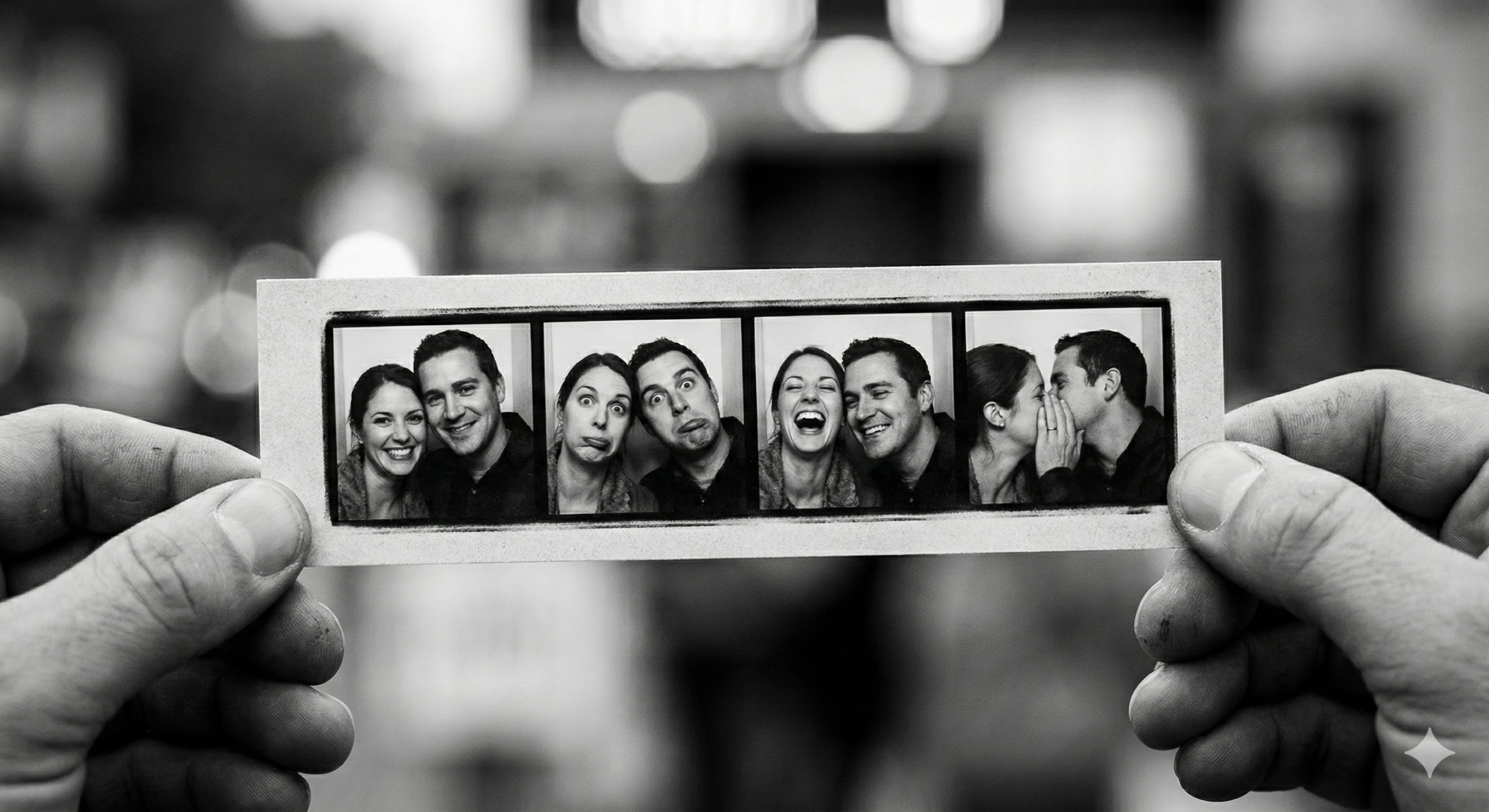
This is where the venerable photo booth and its classic 1×4 film strip format re-enters the conversation, not just as a novelty, but as a powerfully resonant memory vessel. The photo strip is perhaps the ultimate example of a “tangible visual keepsake.” It is a cultural icon. Think about it: four small, square images, arranged vertically, connected by the chemical-stained border of the strip. Each image is a mini-narrative…a progression of goofy faces, shared kisses, or spontaneous bursts of laughter. The strip itself is slender, easily pocketed, tacked onto a corkboard, or slipped into a wallet. It is inherently personal, collectible, and utterly resistant to the tyranny of the digital feed. The magic of the photo strip is that it forces a moment of performance and finality. You get four shots, and that’s it.
The genius of ZillaBooth Pro is its recognition of this cultural demand, translating the spirit and physical constraints of the classic analog photo booth into a powerful, accessible modern tool. The key element is its signature 1×4 strip layout. By deliberately structuring the digital output into this instantly recognizable format, ZillaBooth Pro doesn’t just mimic the look of a physical strip; it satisfies the psychological craving for that defined, tangible keepsake.
When a user selects the 1×4 strip layout in ZillaBooth Pro, they are not just selecting a template; they are opting into a curated experience that replicates the scarcity and progression of the analog process. The app guides the user through four distinct, sequential captures. This process encourages spontaneity and performance in a way a single digital shot never could. The images are meant to tell a story: the first shot is often the most controlled, the final two are the most expressive and relaxed.
Crucially, the ZillaBooth Pro output is designed for both digital sharing and, more importantly, for physical printing. A traditional digital image file is an undefined, boundless entity. A ZillaBooth Pro 1×4 strip file, however, is a pre-formatted, printable object. When printed, the strip emerges as a perfect, standardized visual artifact, ready to be pinned up, given away, or archived. This direct translation from screen to object is the core of its appeal. It bypasses the complexity of a regular photo printer, eliminating questions about cropping, size, and aspect ratio. You hit print, and you have your tangible keepsake. This streamlined process is essential for bridging the gap between digital ease and analog desire.
Furthermore, ZillaBooth Pro enhances the nostalgic experience by layering in film-emulating effects that work perfectly within the high-contrast photo booth context. Users can apply filters that introduce realistic digital “grain,” subtle vignettes, and color shifts that mimic the aging or imperfect chemical development of film stock. The application often incorporates the classic high-contrast black and white look…a staple of vintage photo booths…which inherently enhances the dramatic, raw, and spontaneous feeling associated with physical media. When these grain and color filters are combined with the rigid structure of the 1×4 layout, the final product feels less like a photo and more like a cherished piece of history, instantly created.
The ZillaBooth Pro’s focus on the 1×4 strip is a brilliant move that addresses the limitations of the modern digital landscape. In the vast, infinite scroll of a social media feed, a single photo is easily lost. But a photo strip…especially one featuring the iconic texture and visual progression of the ZillaBooth Pro output…demands attention. It is a visual blockquote, a curated micro-gallery of a moment, and its distinct shape makes it a statement piece. It’s an instant signifier of fun, retro charm, and intentional memory-making.
For many, the app’s value lies in its ability to recapture the communal, shared experience of the photo booth. We are drawn to film because it is a shared experience. You take photos with friends, you wait for the final strip, and you instantly divide the tangible memory between you. ZillaBooth Pro allows for this same dynamic interaction: friends gather, pose, and see their four-shot story unfold, culminating in a printout that is immediately split and treasured. It transforms a solo digital activity back into a group performance, forging stronger emotional links to the resulting images.
In conclusion, the passion for film photography and the enduring appeal of the “grain” is not a fleeting trend but a significant shift toward value, substance, and tangibility in our digital lives. ZillaBooth Pro has successfully tapped into this desire by recognizing that the format is just as important as the content. By standardizing the output to the nostalgic, powerful 1×4 strip, and overlaying it with authentic film-like textures, ZillaBooth Pro is not simply a camera application. It is a modern engine for generating “tangible visual keepsakes.” It offers users a deliberate, curated, and wonderfully nostalgic way to capture, print, and cherish the moments that matter, rescuing our memories from the infinite, undifferentiated abyss of the digital camera roll and giving them the physical weight and personality they deserve. The grain, in this context, is more than just an effect…it’s the beautiful, imperfect signal that this memory is real, it’s ours, and it’s meant to be held.


