Tag: Purikura

  • The “Purikura” Effect: How Japanese Booths Changed the Game

    The “Purikura” Effect: How Japanese Booths Changed the Game

    The air was thick with pop music and the metallic scent of fresh prints. Inside the brightly lit arcade in late 1990s Tokyo, a line snaked out the door for a machine that wasn’t a video game, wasn’t a crane machine, but a simple, oversized photo booth. This was the birthplace of Purikura , a contraction of “print club,” and it was here that one of the most powerful and enduring trends in digital graphic personalization was born.

    Analog film photograph of section 1 related to The

    Long before Snapchat filters, Instagram Stories, or branded digital frames, the Purikura machine established the fundamental human desire to not just take a photo, but to remake it, to cover it in decorative graphics, and to claim ownership of the image through digital customization. The history of photo booths is global, but the history of the decorated photo booth is uniquely Japanese. Developed by Atlus and Sega and first released in 1995, Purikura was an immediate sensation.

    Analog film photograph of section 2 related to The

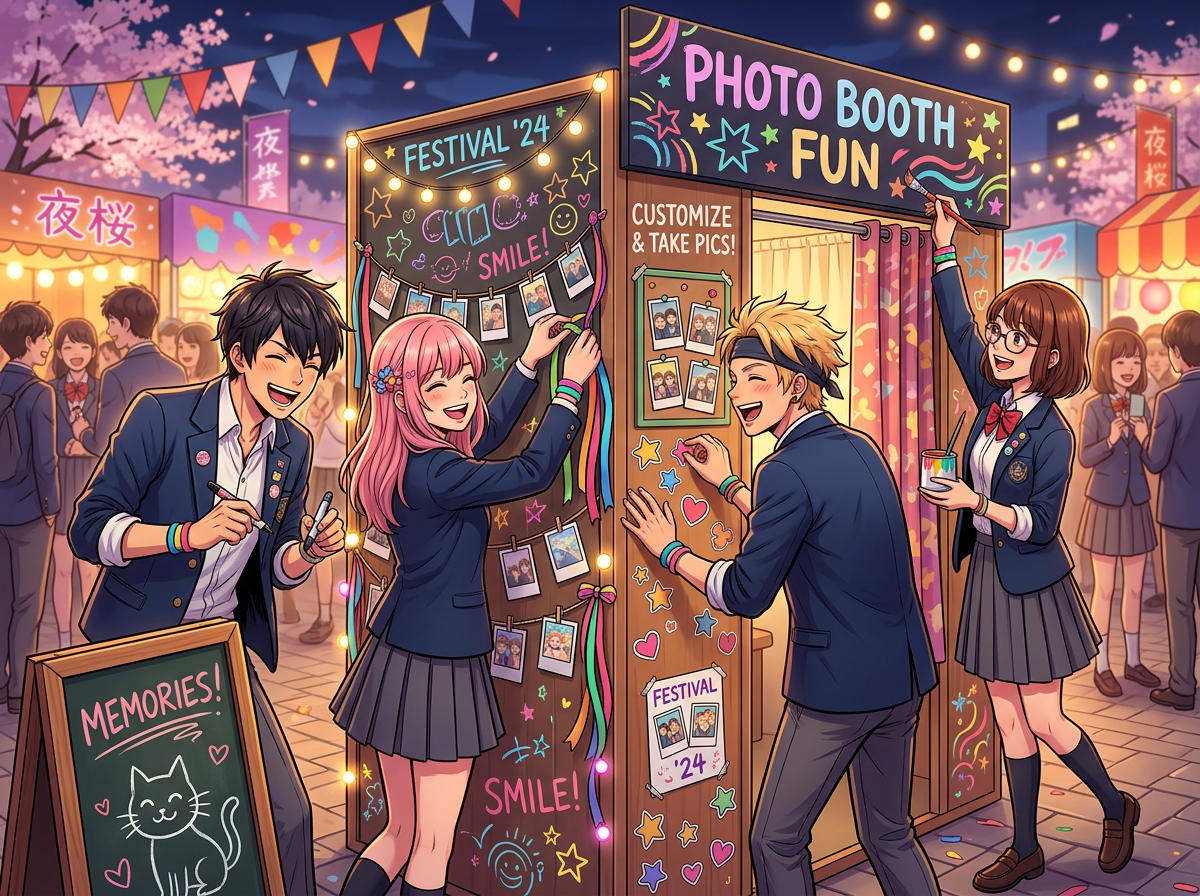
    It took the basic concept of a self-portrait booth and added two revolutionary elements: digital capture and a dedicated decoration station. Users didn’t just get four passport-style photos; they got a sheet of small, adhesive, highly personalized stickers…a physical, tangible product of their creativity.The Original Sticker Shock: An Explosion of Kawaii Culture The ’90s Purikura experience was a creative explosion centered entirely on the act of decoration, or rakugaki (doodling). After the photo was snapped, users would move to a separate terminal equipped with a stylus and a touchscreen.

    Analog film photograph of section 3 related to The

    The interface, though primitive by today’s standards, offered an overwhelming array of options that were unheard of for consumer photography:1. Stickers and Stamps: Hundreds of digital clip-art graphics…stars, hearts, sparkles, speech bubbles, animals, and stylized kawaii characters…could be dragged and dropped onto the photo. This wasn’t merely a small border; the pictures were often dominated by these graphics.

    • Handwritten Text: Users could write directly onto the image with the stylus, adding messages, dates, inside jokes, or phonetic transcriptions of English words. This was the most personal and intimate layer of customization.
    • Digital Makeup and Enhancement: Early versions allowed for primitive skin smoothing, widening of the eyes (a feature that would evolve into the de rigueur ‘big eye’ effect), and applying digital blush or hair streaks.
    • Borders and Backgrounds: Frames, colorful backgrounds, and themed overlays transformed the simple snapshot into a scene.The entire process was fast, frenetic, and social. Girls, often in groups of two to five, would race against a timer to cram as much personality and decoration onto the screen as possible. The resulting sticker sheets were then meticulously cut, kept in wallets, traded with friends, or plastered onto notebooks. The purpose was clear: the decoration was not an afterthought; it was the photograph. It transformed a generic image into a personalized piece of cultural currency, a tiny, physical, shareable memory artifact that was intrinsically linked to the relationship between the people in the photo.

      The Purikura boom was foundational because it tapped into two powerful human instincts: the desire for personalized expression and the urge to create a unique, shareable social object. By allowing the user to become the editor, the artist, and the distributor, the machine gave them creative control over their own narrative. It was the first true step in moving photography from an objective record of reality to a highly subjective, decorative, and performance-based medium.The Digital Evolution: From Physical Sticker to Virtual Overlay

      Fast forward two decades, and the core psychological engine of the Purikura phenomenon is more relevant than ever…it has simply changed its form and purpose. The tiny, physical sticker has been replaced by the “Branded Graphic Overlay,” and the analog process of trading physical sheets has been supersized into the hyper-efficient, instantaneous sharing of a branded digital asset on social media.

      This is where platforms like ZillaBooth Party step into the modern narrative. A modern photo booth at an event…whether a wedding, a corporate gala, or a product launch…is fundamentally the same as a Purikura booth: it is a machine for capturing social memories. But in the 2020s, the decoration function has been co-opted and perfected by the marketing world.Modern Desire: The Power of Branded Graphic Overlays

      A Branded Graphic Overlay is the contemporary, corporate-friendly evolution of the Purikura sticker. It is a customizable, semi-transparent graphic layer applied to a user’s photo or GIF before it is shared. These overlays are no longer just kawaii hearts and stars; they are precision-engineered marketing tools designed to accomplish specific goals:1. Brand Consistency and Logo Placement: The most basic function is ensuring every shared piece of user-generated content (UGC) carries the brand identity. This could be a corporate logo, a specific event hashtag, or a call-to-action placed subtly in a corner or boldly as a frame.

    • Event Specificity: Overlays instantly communicate the context of the photo. “Sarah & Tom’s Wedding – July 2026” or “Tech Summit – Day 1” turns a generic photo into a memento of a specific time and place.
    • Aesthetic and Theme Reinforcement: Just as the Purikura frames reinforced the kawaii aesthetic, modern overlays enforce the event’s visual theme. A rustic wedding might use a watercolor floral frame; a futuristic launch party might use geometric, neon lines. This instantly makes the photo feel polished and professional.
    • Digital Virality: The most important function. By including a hashtag, website, or social media handle directly on the photo, the overlay transforms the image into a self-replicating advertisement. When a guest shares the photo to Instagram, they aren’t just sharing a memory; they are sharing a beautifully designed, personalized ad for the host or brand.The Unbroken Line: Purikura’s DNA in ZillaBooth Party

      The connection between the 1990s Japanese phenomenon and the sophisticated technology of ZillaBooth Party is not accidental; it is a direct, cultural inheritance. The “Purikura Effect” proves that given the choice, users will always prefer a decorated, personalized, and visually embellished photo over a plain one. Here is how the ’90s tradition directly informs the modern function: * The Customization Imperative: Purikura taught a generation that a photo booth experience requires user input beyond just posing. ZillaBooth Party capitalizes on this by offering options for digital props, dynamic backgrounds (green screen), and, crucially, a choice of various overlays. The choice itself is part of the experience.

    • The Social Artifact: The Purikura sticker was a physical social artifact…a tradeable token of friendship. The Branded Graphic Overlay is the digital social artifact…an instantaneously shareable token of event attendance. Both are intrinsically linked to social bonding and sharing with a network.
    • Aesthetic Enhancement as Core Value: The fundamental value proposition of Purikura was not the photo quality (it was often grainy and harsh) but the sheer volume and joy of the decoration. Similarly, the value of a ZillaBooth photo is often measured less by the photographic technical specs and more by the distinct, branded, and polished look provided by the overlay. The decoration is the value-add.
    • The Democratization of Editing: In the 90s, the Purikura booth was the only place a non-professional could easily add graphics to a photo. Today, while everyone has editing apps, a high-quality, pre-designed Branded Graphic Overlay from ZillaBooth offers a level of design polish and corporate consistency that is simple, instant, and superior to what a user would achieve manually on their phone. It’s professional-grade customization handed to the user on a silver platter.The Future is Custom and Branded

      The journey from the chaotic, colorful, and highly personal Purikura sticker to the sleek, strategically designed Branded Graphic Overlay is a microcosm of the evolution of social sharing itself. It is the story of how a powerful psychological need…the need to customize and share personalized narratives…was first expressed through physical media in Japan, and is now perfectly integrated into global digital marketing platforms.

      For a junior writer engaging with the ZillaBooth Party platform, understanding the “Purikura Effect” is key to writing compelling copy. You are not selling a photo booth; you are selling the power of personalization for brand goals. You are selling the ability to convert a fun social moment into a polished, branded piece of digital content that guests are eager to share.

      The key takeaway is this: the modern consumer, raised on the gospel of customization preached first by Purikura, doesn’t just want a photo, they want a story. ZillaBooth Party’s Branded Graphic Overlays are the new digital stickers, providing the frame, the context, and the brand identity that allows that story to spread virally. It transforms a simple event photo from an ephemeral memory into an effective, measurable, and highly shareable piece of marketing collateral. The sticker boom of the 90s didn’t end; it simply went digital, grew up, and became the backbone of modern experiential marketing. And thanks to platforms like ZillaBooth Party, the legacy of a simple Japanese photo booth continues to shape how we create, customize, and share our visual lives.
  • Global Booth Culture: London, Berlin, Tokyo

    Global Booth Culture: London, Berlin, Tokyo

    The modern “booth” is no longer just a small wooden box where you snap a passport photo. It has evolved into a micro-cultural landscape, a globally recognized vessel for self-expression, social documentation, and performance art. Today, booth culture encompasses everything from the last surviving chemical photo machines to hyper-edited Japanese Purikura studios and sophisticated 360-degree video installations. What remains constant is the booth’s unique ability to temporarily isolate us from the world and capture a moment…raw or refined…that instantly becomes a memory stamp.

    Yet, despite this universal function, the aesthetic, social purpose, and even the technology of the booth experience shift dramatically when crossing international borders. For the contemporary traveler, navigating this diverse cultural geography of spontaneous portraiture is one of the most rewarding ways to understand a city’s heart.

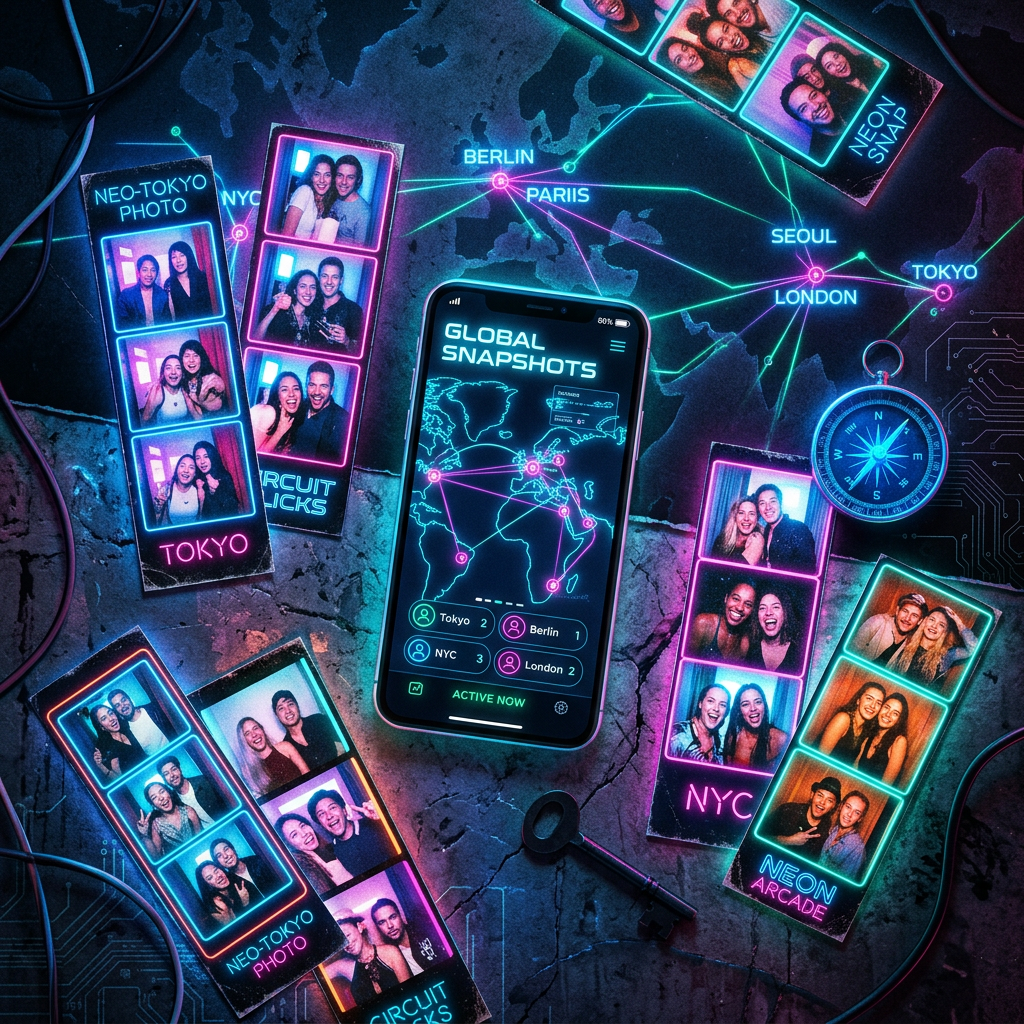
    And for those who want to do more than just collect scattered strips of paper, a tool like ZillaBooth’s geotagging feature becomes essential…it turns a collection of disparate photographs into a curated, geographically organized memoir of a trip. By analyzing the booth cultures of London, Berlin, and Tokyo, we discover not only varying visual styles but profound differences in how these societies view public and private image-making.

    London: The Architect of Nostalgia and the Quick Snap

    London’s booth culture is characterized by its deep-rooted nostalgia and an almost reverent respect for the traditional photo machine. The city is a patchwork of the old and the new, a fact perfectly mirrored in its approach to the quick, public portrait.

    On one hand, you have the iconic black-and-white photobooths…often tucked into tube stations or cinema lobbies…which are fiercely protected by artists and heritage groups. These machines use authentic chemical development, producing strips of four classic, highly-contrasted portraits that instantly evoke 20th-century espionage and cinematic romance. For a Londoner, these images are less about vanity and more about a simple, honest document of a day, a state of mind, or a necessary official photograph.

    Analog film photograph of section 1 related to Global Booth Culture: London, Berlin, Tokyo

    This heritage is juxtaposed with the booming, high-street interactive booth scene. Fashion brands and large concept stores have embraced selfie booths and elaborate video-recording stations as ephemeral marketing tools. These are digital, highly lit, and designed for immediate social sharing. They allow for overlays, GIFs, and brand-specific filters, transforming the quiet act of self-portraiture into a loud, public declaration of association. The London booth-goer often moves between these two extremes, treating the chemical booth as a private time capsule and the digital booth as a temporary, public installation.

    For a traveler documenting their London experience, this duality presents a unique challenge: how do you tie together the grainy, matte black-and-white strip from a Soho back alley with the neon-drenched, shareable GIF taken at a Shoreditch pop-up? This is where ZillaBooth’s geotagging provides a critical connective tissue.

    By using ZillaBooth to log both the physical location of the hidden, chemical machine and the digital address of the modern installation, the traveler creates a map that charts London’s historical and contemporary visual identity. The geotagging doesn’t just record “where” the photo was taken; it documents the kind of experience it was, linking a moment of quiet, analog introspection to a location, and a moment of loud, digital exhibitionism to another. The resulting geotagged portfolio becomes a genuine photographic essay on the contrast that defines the city itself.

    Berlin: The Gritty, Anti-Perfect Fotoautomat

    Booth culture in Berlin is perhaps the most fiercely anti-establishment and artistically pure of the three. Here, the photo booth is overwhelmingly dominated by the Fotoautomat, the quintessential 20th-century machine, often housed in a repurposed metal shipping container or a standalone, graffitied box on a street corner. In Berlin, these booths are not glossy novelties…they are a cultural fixture, an intrinsic part of the city’s rough, unpolished aesthetic.

    The appeal of the Berlin booth is its absolute lack of pretense or digital manipulation. The lighting is harsh, the lens is fixed, and the chemical process is unforgiving. The resulting four images are raw, unedited, and often slightly flawed…a reflection of Berlin’s enduring counter-cultural spirit. People use them spontaneously: stumbling out of a smoky bar at 3 AM, marking a new friendship, or simply creating a piece of spontaneous, affordable art. There is no “pretty” filter; there is only the authentic self, captured in a burst of light that rejects the curated perfection of social media.

    The Fotoautomat is deeply integrated into the Kiez (neighborhood) identity. Finding a machine in Kreuzberg yields a different visual energy than one in Mitte. For the traveler, collecting these strips is a quest for authentic Berlin grit. ZillaBooth’s geotagging feature elevates this quest into a genuine documentary project.

    Analog film photograph of section 2 related to Global Booth Culture: London, Berlin, Tokyo

    Instead of just having a pile of strips, the traveler can use the geotags to map a ‘Fotoautomat’ tour of the city. The geotags provide the context that the strips themselves lack…the time, the street noise, the atmosphere of the Kiez where the photo was taken.

    The resulting digital map tells the story of the traveler’s nocturnal wanderings and spontaneous encounters, grounding the raw, intimate nature of the photos in the exact, unpolished reality of the city’s locations. For a place obsessed with historical memory and unvarnished reality, ZillaBooth allows the traveler to prove, through location data, the exact spontaneity and truth of their photographic captures.

    Tokyo: The Hyper-Edited Fantasy of Purikura

    If London offers nostalgia and Berlin offers grit, Tokyo delivers pure, hyper-edited fantasy through its Purikura (print club) culture. Purikura booths are an extreme contrast to the Western concept. They are large, multi-person studios, often located in dedicated Purikura arcades, and they are inherently social. The entire experience is geared toward group bonding and the creation of a perfected, ‘kawaii’ (cute) version of reality.

    The process is long and elaborate: first, the large-format photos are taken, often with extremely flattering, high-key lighting. Then comes the mandatory editing session, which is the heart of the experience. Users manipulate their images, digitally enlarging eyes, slimming faces, smoothing skin, adding glitter, custom borders, thematic backgrounds, and anime-style accessories. The focus is entirely on creating a shared, highly stylized, and often digitally unreal memory that adheres to a specific aesthetic ideal. These booths are primarily used by friends, couples, and social groups, with the resulting prints being immediately split and exchanged as tokens of the shared experience.

    For the international visitor, engaging with Purikura is a deep dive into Japanese youth culture. The challenge is that the photos themselves are a delightful lie, a beautifully crafted unreality. How does the traveler document their trip honestly when their own photos are so heavily filtered?

    ZillaBooth’s geotagging provides the perfect counterpoint to the Purikura aesthetic. The app captures the real-world, time-stamped coordinates of the Purikura arcade in Shibuya or Harajuku. The geotag becomes the anchor of reality for the filtered image.

    Analog film photograph of section 3 related to Global Booth Culture: London, Berlin, Tokyo

    By juxtaposing the highly stylized, cartoonish Purikura print with the geotag that places the photo firmly on a street corner in the real world, the traveler documents the cultural act of filtering and shared fantasy, not just the fantasy itself.

    It allows the travel narrative to acknowledge the fun, creative unreality of the booth while still authenticating the time and place of the cultural immersion. The traveler uses ZillaBooth to document the journey to the Purikura studio, the moment of entry, and the shared excitement of the editing process, all of which are grounded by location data, turning a fantasy print into an authenticated cultural snapshot.

    ZillaBooth: The Universal Translator for Global Booth Culture

    The global traveler today is a curator, and their images are their data points. Across London, Berlin, and Tokyo, the booth functions as a cultural mirror, reflecting each city’s unique relationship with privacy, art, and aesthetic perfection. London values its heritage and its commercial immediacy. Berlin values an unvarnished, authentic grit. Tokyo values a shared, high-tech fantasy.

    ZillaBooth’s geotagging feature provides the unifying technology required to document this diversity cohesively. It addresses the core dilemma of modern travel documentation: how to preserve the spontaneity of a moment while providing the context that digital images often lack. – For the analog strips of London and Berlin, the geotag ensures the photograph’s location history is not lost, providing crucial context that a loose paper strip cannot carry.

    – For the hyper-edited digital photos of Tokyo, the geotag acts as the essential anchor of reality, authenticating the cultural experience and location despite the image’s lack of realism.By creating a chronological, location-aware feed of these varied booth experiences, ZillaBooth enables a traveler to build a dynamic, interactive map of their journey…a photographic memoir where every snap, whether a serious black-and-white portrait or a glitter-soaked Purikura fantasy, is tied back to the exact pulse point of the city where it was captured.

    It transforms a simple collection of souvenir photos into a powerful, geographically-driven narrative, proving that in the digital age, the location of a self-portrait is just as important as the image itself. The journey to the booth is, after all, the entire point.