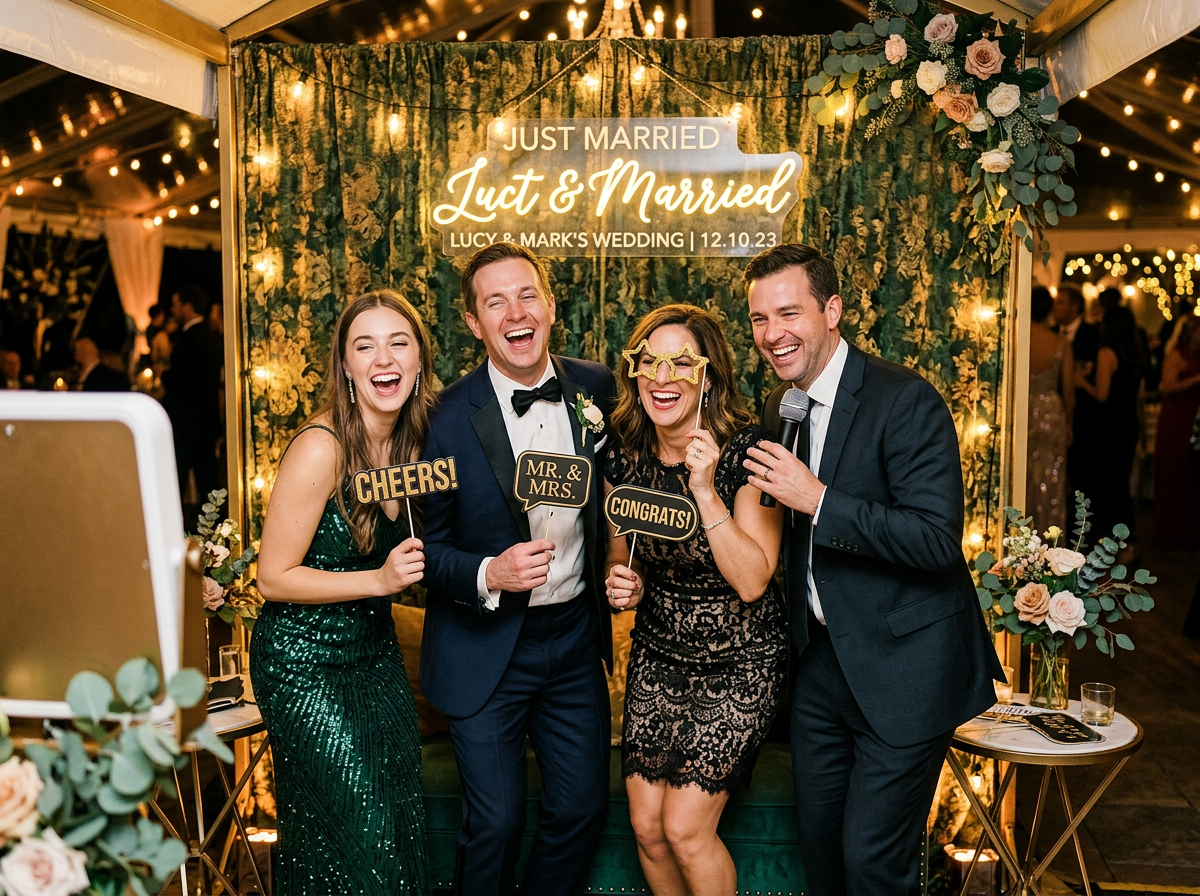
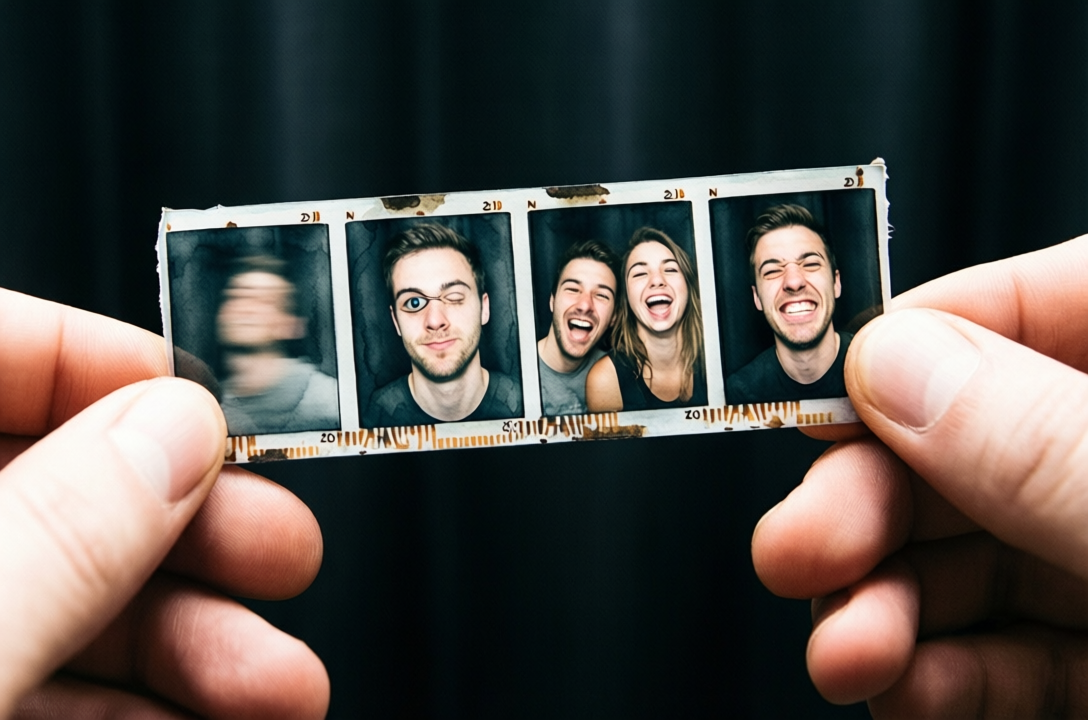
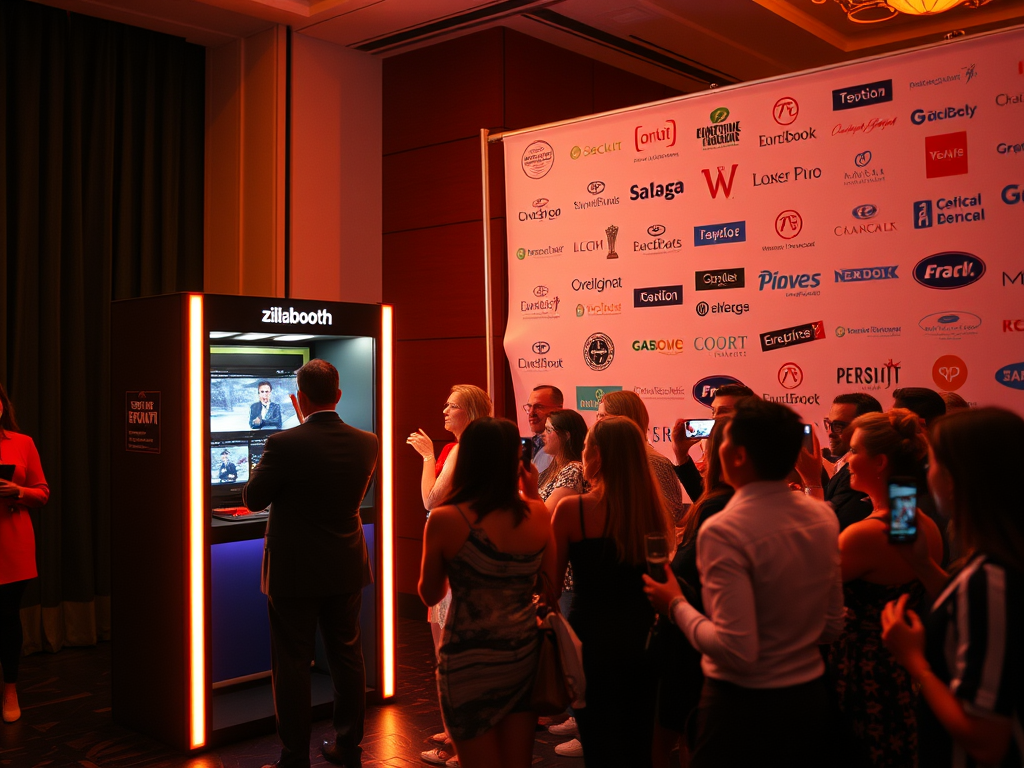
The post gives practical ideas for planning an office holiday party on a limited budget while still supporting team bonding and morale. It suggests changing the event timing, choosing less conventional venues, and using low-cost DIY activities instead of expensive entertainment.
It also recommends an easy office photo booth setup using an iPad, tripod, backdrop, and app. The closing section promotes ZillaBooth as a self-serve photo booth option for corporate events.
Morale Boosting on a Budget
Planning the company holiday party often falls on HR or the office manager, and usually with a tighter budget than expected. You need to maximize the fun, encourage team bonding, and keep costs under control.
Budget-Stretching Party Hacks
Shift the Timing: Moving the party from Friday night to a Thursday afternoon, or hosting a catered “Holiday Lunch,” drastically cuts down venue and alcohol costs.
Ditch the Boring Venue: Instead of a stale hotel ballroom, look into renting a local brewery or a cool co-working lounge space.
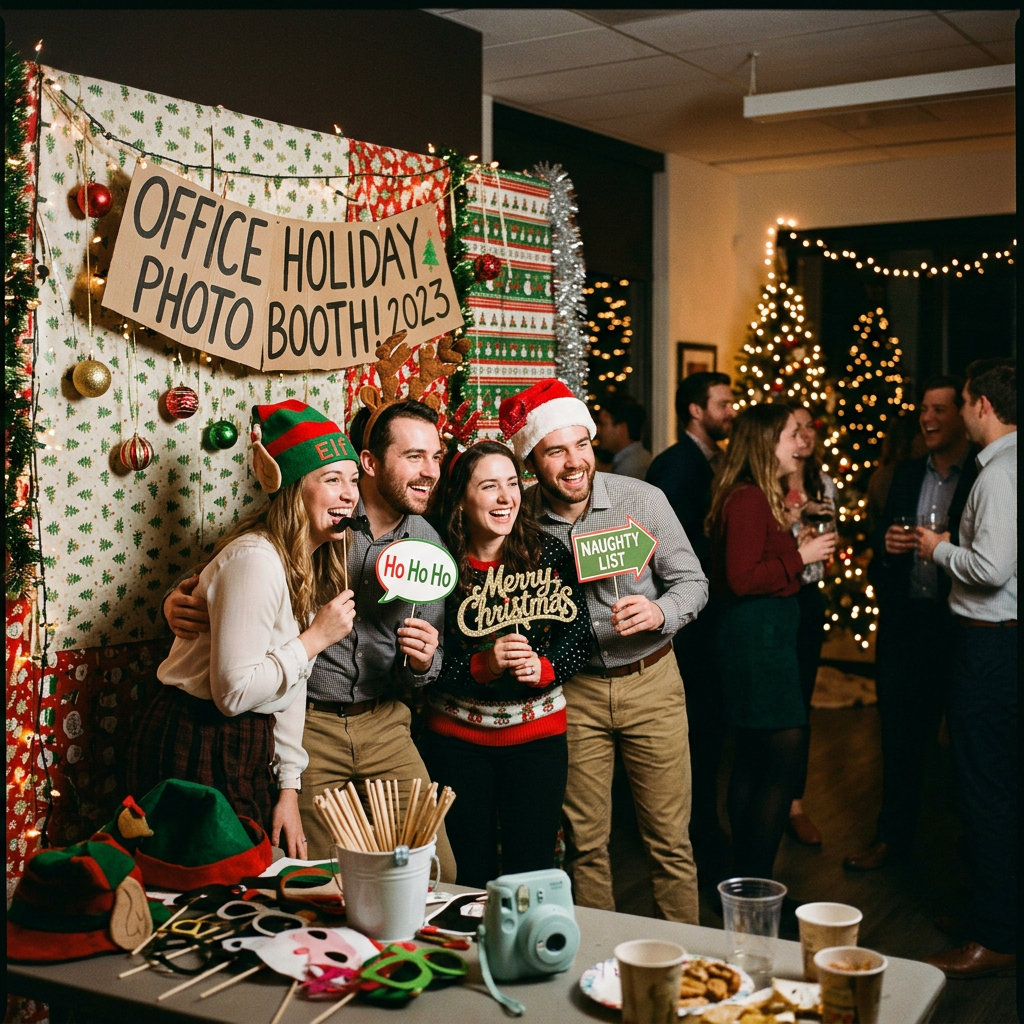
Focus on DIY Entertainment: Don’t hire a live band or rent expensive arcade games. Set up a few interactive stations. A hot cocoa bar, a “worst holiday sweater” contest, and a DIY photo booth are incredibly cost-effective.
The Easy Office Photo Booth
You likely already have an iPad in the office. Put it on a tripod, hang a cheap sequin backdrop, and launch a photo booth app. Your team will spend hours taking photos, and you can add your company logo to the bottom of every picture!
Get the Party Started
ZillaBooth is the smartest way to add high-end entertainment to your corporate party. With Guided Access plus Pro’s Hide Settings and Auto-Restart, guests run the booth themselves, so you can actually enjoy the party you planned.
The Unspoken Barrier: Why Conference Networking Doesn’t Work (and How to Fix It)
We’ve all been there. You arrive at a major industry conference, badge clipped securely to your lapel, armed with a pocket full of meticulously designed business cards. The room is buzzing with hundreds of people who, theoretically, share your professional passion. This is where the magic happens, where you’re supposed to forge the connections that will define your career’s next chapter. Yet, you find yourself staring intently at a lukewarm cup of coffee, nodding vaguely as a speaker drones on, or scrolling through your phone in the corner. The barrier is real, palpable, and built entirely from unspoken social anxiety and the sheer awkwardness of cold-approach networking.
The conventional wisdom about conference networking…the forced smiles, the awkward handshakes, the transactional exchange of paper and fleeting pleasantries…is simply broken. It’s an antiquated system that relies on high-pressure, low-value interactions.
Think about the standard conference connection: You approach someone, interrupt their conversation or solitary moment, and launch into your 30-second elevator pitch. They respond with theirs. You exchange cards. You both promise to “touch base soon,” knowing full well that both of your newly acquired stacks of cards will end up forgotten in a tote bag or a drawer, with a 95% chance of never leading to a meaningful follow-up. The process is exhausting, unmemorable, and fundamentally fails to achieve the core goal of a professional conference: creating genuine human connection. The problem isn’t the people at the conference; it’s the mechanism they are forced to use. We need to move the starting point of the conversation away from “What do you do?” and toward “Let’s do something fun together.” This is where the strategic deployment of a tool like ZillaBooth transforms the conference experience from a series of cold calls into a collaborative, shared adventure.The Power of the Shared, Immediate Experience
ZillaBooth is not merely a piece of hardware; it’s a catalyst for social interaction, a brilliantly simple intervention that bypasses the awkward small talk altogether. At its core, ZillaBooth is a sophisticated, digitally-integrated photo booth platform, but its genius lies in the specific challenge we encourage conference organizers to apply: “Take a photo with someone you just met.”
This single, four-second instruction is a total game-changer. It gives attendees an immediate, explicit, and non-threatening reason to approach a stranger. It transforms the vague, high-pressure goal of “networking” into a clear, low-stakes task. Instead of struggling to find a common professional thread, the common thread is the booth itself. The transaction shifts from: “Hello, I’m Jane, I’m a VP of Marketing at Acme Corp, and I want to tell you about my services,” to: “Hi! They have this ZillaBooth challenge…we need a photo together to enter the contest. Are you up for it?”
The first approach requires mental effort, a well-rehearsed pitch, and the acceptance of potential rejection. The second is a shared, mutual objective that requires only a sense of humor and a willingness to participate in a brief, silly moment. The interaction begins with laughter, a physical action, and a shared memory, all before the professional topics even surface.
When attendees engage with ZillaBooth, they are participating in what is essentially a micro-event within the main event. It forces proximity and collaboration. Standing in front of the camera, perhaps grabbing a ridiculous prop customized with the conference logo, they are creating a piece of shared content. The brief, high-energy environment of the booth…the countdown, the flash, the collective review of the resulting image…creates a temporary bubble of shared vulnerability and fun. That shared vulnerability is the foundation of genuine connection. When you laugh with someone, you drop your guard. When you drop your guard, you open the door to real, substantive conversation.From Digital Content to Real-World Rapport
The beauty of the ZillaBooth application is that the digital output immediately feeds back into and amplifies the networking process. Once the photo is taken, two critical things happen that anchor the new connection:1. Immediate Contact Exchange (The Follow-Up Hook): Because ZillaBooth is integrated, attendees can instantly email or text the photo to themselves, which often requires them to input their new connection’s email to ensure they both receive the digital file. This is a natural, consent-based, and utility-driven way to exchange contact information, far more effective than a disposable business card. The follow-up email isn’t a vague “great to meet you;” it’s the actual, tangible, shared photo with a caption like, “Our official entry for the ZillaBooth challenge! Loved hearing about your work in FinTech after we took this shot.”
Social Proof and Buzz Generation: Every photo taken is typically uploaded to a branded online gallery and shared to a dedicated conference hashtag. This not only generates enormous, authentic social media buzz for the event but also creates a visual leaderboard of activity. Attendees can see who is actively participating, which provides more low-stakes reasons to approach new people (“Hey, I saw your photo on the ZillaBooth feed with the astronaut helmet! I’m trying to catch up to you in the count!”). The visual evidence of connection validates the activity and encourages more people to join, creating a positive feedback loop that accelerates the total number of meaningful interactions across the conference floor.The Psychology Behind the Icebreaker
The success of the “Take a photo with someone you just met” challenge taps into several core elements of social psychology that traditional networking ignores: * Goal Displacement: The primary goal temporarily shifts from “find a client” to “get a photo.” By completing this simple, non-professional task, a flood of dopamine is released…the satisfaction of completion…and this positive emotional state is immediately associated with the person they just met. This is basic conditioning for positive rapport.
* The Primacy Effect: The first interaction is the most memorable. By making that first interaction silly, visual, and shared, you ensure that the image of the person is linked to a positive emotional anchor, rather than a dry professional title. When the attendee reviews their photos later, they are not seeing a stack of forgettable business cards; they are seeing a gallery of new friends and shared, funny memories.
* Breaking the Touch Barrier and Proximity Principle: Standing close, maybe putting an arm around a new acquaintance for a quick photo, gently breaks the physical barrier that often inhibits deep conversation. This small, acceptable moment of proximity increases comfort and establishes a casual intimacy, making the transition into a deeper, professional discussion feel natural and fluid.
* The Artifact of Memory: The photo itself becomes a tangible artifact. It’s a piece of content that lasts long after the conference is over. This contrasts sharply with the ephemeral nature of spoken small talk. The photo serves as a permanent, high-fidelity reminder of the person and the positive circumstances of the meeting.For introverted or socially anxious attendees…a significant portion of the professional population…the ZillaBooth challenge is a lifeline. It provides a prescribed script. They don’t have to invent a conversation starter; the booth is the starter. They are simply executing a simple, required task, which drastically lowers the activation energy needed to approach a stranger. It democratizes networking, making it accessible not just to the natural extroverts but to everyone looking to make authentic connections.Implementation and ROI for Organizers
For the conference organizer, implementing a ZillaBooth challenge is an investment in measurable engagement and attendee satisfaction.1. Custom Branding and Integration: ZillaBooth software allows for deep customization. The screen interface, the photo frames, the digital overlays, and the physical wraps on the booth structure can all feature the conference’s branding, sponsors, and key themes. This makes the booth a high-value sponsorship asset, turning a fun activity into a revenue stream.
2. Gamification and Leaderboards: The ZillaBooth system automatically tracks the number of photos taken and can display a live leaderboard. By adding a tiered prize structure…perhaps for the person with the most photos, the person who takes a photo with the most different types of industry roles, or the funniest photo…the organizers amplify the incentive. The contest adds an element of friendly competition that encourages active participation and movement across the exhibition floor.
3. Data and Metrics: The photo booth provides event organizers with valuable, actionable data that business cards never could. They get verified, opted-in email and phone contacts from every participating user. They gain insight into the event’s most active participants, the peak times of engagement, and a massive gallery of user-generated content that can be used for post-event marketing and promotion. The ROI is clear: increased social visibility, deeper sponsor integration, and verifiable attendee engagement metrics.Case Study: The B2B Software Summit
At a recent B2B Software Summit with over 2,500 attendees, the organizers replaced their standard networking reception with a “ZillaBooth Power Hour.” Instead of a cash bar and passed appetizers, the main floor was dotted with five ZillaBooth kiosks, each with unique, industry-specific props (e.g., a prop sword labeled “Slay Your KPIs,” a whiteboard with marker that said “My Big Idea Is…”).
The challenge was simple: “Take three photos with three different people and tag them in a LinkedIn post for a chance to win a VIP pass to next year’s summit.”
The results were transformative. In that single hour, over 1,100 unique photos were taken, involving approximately 900 different attendees. The event hashtag saw a 400% surge in activity compared to the previous year’s networking reception. More importantly, the organizers noted a qualitative shift: attendees who had met in the booth were seen having long, animated conversations afterward in the main hall. The pre-conference survey data showed that only 35% of attendees felt they had made a “meaningful connection” at previous events; the post-event data for this summit showed a jump to 78%. The single, low-stakes instruction to “Take a photo with someone you just met” dissolved the awkwardness and delivered the authentic connections that are the true currency of any professional conference.
The future of conference networking is not about more formal mixers or better business cards; it’s about strategically engineered moments of shared joy and simple, collaborative tasks. ZillaBooth is the tool that facilitates this shift, proving that the most effective way to start a professional relationship is to bypass the formalities and just share a quick laugh and a memorable photo. It transforms a room full of strangers into a collaborative network, one flash at a time. It’s time to move beyond the handshake and embrace the simple, undeniable power of the selfie.
In a world where millions of photos are snapped, edited, and uploaded every minute, where every memory is immediately archived in the intangible cloud, we are all searching for something real. Something that can be held, pinned to a fridge, tucked into a wallet, or found years later, faded and softened, inside an old book. We are looking for the definitive, physical artifact of a good time, and no format in photography is more powerful, more nostalgic, and more perfectly designed for this task than the humble, four-picture, 1×4 photo strip.
It’s more than just a picture; it’s a story told in four sequential, unedited frames. This slender, unassuming ribbon of paper is, without question, the ultimate souvenir. Its enduring legacy is a fascinating case study in how physical constraints can create a far more valuable and lasting emotional experience than limitless digital freedom ever could.
The enduring charm of the photo strip is rooted in the tradition of the photo booth…an almost sacred space of forced intimacy and creative spontaneity. The classic photo booth was a theatrical stage: a curtain drawn, a small bench shared, and a non-negotiable timer ticking down. You were committed. There was no preview, no retake, and no deleting the unflattering blink or the sudden burst of laughter. The rigid sequence of the flash was the conductor of the performance, forcing collaboration, encouraging silliness, and most importantly, capturing an unpolished, authentic moment that exists outside the tyranny of the perfectly curated Instagram grid.
Think about the photos that matter most to you…they’re rarely the ones taken with careful planning and ideal lighting. They are the artifacts of a spontaneous decision, a shared joke, or a late-night moment of genuine connection. The photo strip excels at bottling this raw, unedited energy.
The format itself…a vertical cascade of four distinct images…lends itself to narrative. It doesn’t just capture a scene; it captures a sequence. Frame one might be the serious attempt, frame two the beginning of the giggle, frame three the full-blown, head-tossed-back laugh, and frame four the sheepish, exhausted smile. This tiny, sequential gallery is a micro-story about a single shared event, and the physical act of running it through your fingers is a direct portal back to the sounds, smells, and feelings of that night.
Moreover, the photo strip is designed to be shared, to be divided. The famous perforation marks running down the center are an intrinsic part of its value. Once the strip is developed, the ritual of tearing it in two…splitting the tangible memory…is an act of sealing a friendship, a date, or a moment in time. One half goes with you, the other with the person you shared the experience with. It is an immediate, physical memento of a shared experience, a twin talisman that connects you, regardless of the miles or years that follow. The digital equivalent…sharing an album link…simply cannot compete with the physical resonance of carrying a slightly crinkled, pocket-warmed strip of photos.
But how do we reconcile this powerful analog legacy with the modern digital event? In a world of high-resolution cameras and instant sharing, how can we recreate that specific, beautiful texture of a classic photo strip without resorting to a grainy, low-quality filter?
This is where the power of modern innovation meets the reverence for classic design, and it’s why ZillaBooth is an absolute game-changer. The developers behind ZillaBooth understood that the aesthetic appeal of the photo booth is inseparable from the physical dimensions of its output. They recognized that people don’t just want four photos side-by-side; they want the 1×4 strip…the exact, proportional format that is instantly recognizable and emotionally resonant.
ZillaBooth has engineered its export capabilities to honor this legacy, and the classic 1×4 strip (like the 2×2 grid) is free in ZillaBooth Core. The application is built on the philosophy that modern technology should enhance, not erase, tradition. While ZillaBooth’s camera engine captures stunning, high-quality images, its ultimate power lies in its ability to deliver the photos in the exact, classic 1×4 strip format.
The importance of the “export in this exact classic format” feature cannot be overstated. This isn’t a digital mockup; it’s a dedicated rendering that recreates the classic layout of the traditional photo booth strip, ready for high-quality printing.
What this means for the user is a strip that looks the part. When you print a photo strip exported from ZillaBooth, it feels right. It has the slender verticality, the perfect spacing between the pictures, and the visual weight that makes it a true heirloom. This feature ensures that:1. Print Quality is Maintained: By exporting to the precise classic format, ZillaBooth ensures that when the file is sent to a high-quality printer, the resulting strip is a keepsake worth holding onto…not a low-resolution afterthought.
2. The Narrative is Preserved: The sequential, story-telling aspect of the strip is kept intact, honoring the unedited, four-frame timeline.
3. Maximum Nostalgia Achieved: For many, the 1×4 strip isn’t just a photo format, it’s the photo format. ZillaBooth gives users the ability to tap directly into that powerful cultural memory and bring it back.The direct flash trend and the rise of digital cameras that deliberately mimic the aesthetic of early 2000s photography prove that we are culturally hungry for authenticity, grit, and nostalgia. The photo strip is the ultimate expression of this desire. It’s a piece of physical history, a collaborative work of art, and a powerful narrative arc compressed into a sliver of paper.
In an age defined by the scroll, the swipe, and the fleeting digital presence, the 1×4 photo strip represents the permanent, the tactile, and the real. It is a genuine piece of material culture from the moments that matter, and thanks to applications like ZillaBooth, this enduring, iconic format is not just surviving…it’s thriving. It reminds us that the best souvenirs are not always the most expensive, but the ones that carry the most weight of a spontaneous, shared, and perfectly unpolished moment.
In the competitive landscape of health and fitness, member retention and organic marketing are the two pillars that determine a studio’s success. For years, the gold standard of demonstrating success was the before-and-after photo, and the most authentic form of promotion was the genuine, post-workout glow…the “sweaty selfie.” However, the traditional methods of capturing these moments are wildly inconsistent, unbranded, and frankly, a logistical nightmare for a busy studio owner. Members either take poor-quality photos in dimly lit corners, capture unflattering reflections in mirrors, or, worst of all, they simply don’t take them at all because the process is too much of a hassle. You’re losing out on your most powerful marketing resource: verifiable member success and enthusiastic, real-time social proof.
The time for haphazard, phone-camera snapshots is over. It is time to professionalize the moment of triumph with a dedicated, permanent installation that serves a dual purpose: a consistent progress tracking tool for member retention and a high-volume, branded content generator for effortless marketing. We are talking about integrating the ZillaBooth: a professional, fixed-position “Post-Workout” Selfie Station that transforms a sweaty moment into a polished, shareable asset.
This isn’t just a fancy backdrop; it is a meticulously engineered piece of equipment designed to solve three critical business challenges for gyms and fitness studios: inconsistent progress tracking, low member engagement, and the scarcity of high-quality, branded user-generated content (UGC). By dedicating a small, well-lit space…ideally near the exit or a high-traffic motivational area, but explicitly not in the changing rooms…and installing a ZillaBooth, you are providing a service that directly supports the member’s fitness journey while simultaneously broadcasting your brand’s value to the world.
The ZillaBooth system standardizes the photography process, which is the cornerstone of effective progress tracking. For progress photos to be genuinely useful and motivating, they must be taken under identical conditions. Our traditional approach…relying on a member’s phone in different locations at different times of day…introduces variables like lighting, shadows, angle, distance, and even the camera lens itself. These inconsistencies make the comparison unreliable, which can be demotivating for members who are working hard but can’t see the subtle physical changes clearly.
The ZillaBooth solves this with an unmoving, perfectly calibrated system. The station features controlled, diffused lighting that eliminates harsh shadows and highlights muscle definition, a fixed-position camera or tablet, and a simple, guided interface. Tape floor markings in place so members stand in the exact same spot every time. Because the iPad, the light, and the distance never change, a member can put today’s photo next to last month’s and actually see the difference. This moment of visible progress is a major trigger for continued commitment, significantly reducing member churn. Each member gets their photo by email, so it lands in their own inbox, turning the booth into a critical feature for accountability and motivation that no other gym can easily replicate. It transforms the physical struggle of a fitness journey into quantifiable, visible success, making your studio an indispensable partner in their goals.
Beyond the vital function of retention, the ZillaBooth acts as a 24/7 content-creation machine…your most reliable and cost-effective marketing employee. Every post-workout selfie becomes an advertisement for your brand, driven by the authenticity and reach of your members’ personal networks. When a member is dripping sweat, energized by endorphins, and feeling proud, they are in the perfect psychological state to share their experience. The ZillaBooth capitalizes on this moment by making the sharing process frictionless and, critically, branded.
Once the photo is captured, the system offers instant digital delivery and social media integration. Before sharing, the system automatically applies a dynamic, branded overlay. This isn’t just a simple logo; it’s a professionally designed graphic that can include your studio’s logo, the specific class or challenge hashtag (e.g., #4WeekShred or #SpinHard), and a subtle call-to-action or tag. The aesthetic of the photo itself is superior to a phone-snapped image, ensuring that when it appears on Instagram or TikTok, it looks polished and professional, reflecting positively on your entire brand.
The act of sharing a “sweaty selfie” from a dedicated station shifts the narrative from, “Look what I did at the gym,” to “Look what my studio helped me achieve.” It elevates the UGC from a casual post into a piece of editorial-quality marketing collateral that you didn’t have to pay a social media agency to create. A single enthusiastic member with a few hundred followers can generate more genuine, trust-building marketing impressions than a thousand dollars spent on targeted ads. Imagine 50 members sharing their post-workout ZillaBooth photos every week…that is hundreds of unique, authentic, and branded touchpoints flooding social media, all pointing back to your business.
The operational benefits of this dedicated station are as compelling as the marketing and retention gains. The ZillaBooth is designed for high volume, self-service use. It requires minimal staff intervention…a simple introductory briefing to new members is often enough. The setup itself is compact, requiring perhaps a 3×3 foot corner. The return on investment (ROI) is rapid and multifaceted:
1. Increased Member Value and Reduced Churn (Retention): By providing the gold standard for visual progress tracking, you add tangible value to the membership fee. A highly engaged member who can clearly see their transformation is far less likely to cancel their membership than one who feels they aren’t making progress. Even a 2% reduction in monthly churn can equate to tens of thousands of dollars in annual revenue.
2. Organic, Hyper-Targeted Marketing (Acquisition): Each branded share acts as an organic referral to a member’s entire network. Friends trust friends more than they trust ads. The social post is seen by people who are already demographically similar to your ideal client base, making it incredibly effective, hyper-targeted advertising at a cost of $0 per impression.
3. Data and Insights: ZillaBooth doesn’t track members, but you can get a simple picture yourself. Add a BCC address, and every emailed photo also lands in your inbox, so you can count sessions per class or challenge. Put a class hashtag on the overlay and search it to see which programs get shared most. That gives you useful insights into your community’s engagement and the effectiveness of your different programs and challenges.
4. Enhanced Facility Experience: In an era where customers expect an “experience,” the ZillaBooth is a modern amenity. It signals that your studio is invested in technology, success, and the social culture of modern fitness. It’s a differentiator that elevates you above competitors who still rely on sticky notes and bad locker room lighting.
To maximize the impact, placement and promotion are key. The station should be illuminated with a simple, high-impact background that contrasts well with the flash (even though the lighting is controlled, a clean background prevents distraction). It should be promoted with clear signage, perhaps a poster with a few inspiring progress photos and simple instructions. Most importantly, your staff must encourage its use. Make it an integral part of onboarding for new members and the capstone of every studio challenge.
The “Post-Workout” Selfie Station is more than just a photo booth; it is a strategic business asset that touches every part of your operational pipeline, from member recruitment and engagement to long-term retention. It transforms the fleeting, euphoric moment after a successful workout into a permanent, measurable, and shareable success story. In the digital economy, the best businesses don’t just facilitate success; they equip their customers to broadcast it. By setting up a permanent ZillaBooth, your fitness studio is not just staying current…you are proactively building a community of empowered, engaged, and highly effective brand advocates, one perfectly lit, sweaty selfie at a time. The investment in this technology is not just for a camera; it is an investment in your members’ success and the perpetual, organic growth of your studio.
Every couple spends countless hours perfecting their wedding timeline, meticulously planning the flow from the ceremony’s first look to the reception’s last dance. You map out the cocktail hour signature drinks, the seating chart geometry, and the exact minute the DJ will cue the grand entrance. Yet, there is one critical juncture that often turns into an energetic black hole: the lull between the end of the cocktail hour and the official start of the reception.
This period is not just a few minutes of milling about; it’s a high-stakes moment for the overall party atmosphere. Guests have enjoyed an hour or more of light chatter and buoyant energy, but when the music cuts and they are directed to the reception space, that momentum can instantly dissipate. You risk losing the high-octane mood you’ve worked so hard to build. This is precisely why your wedding timeline doesn’t just need an activity during this time…it needs a dedicated transition activity.
The Importance of the “Transition Photo” Trend
Over the last few seasons, a viral photography trend has emerged that perfectly encapsulates this critical moment: the “transition photo.” These aren’t posed, formal portraits. They are candid, energetic shots of guests actually moving…often walking, laughing, and gesturing…as they travel from the post-ceremony mingling space into the main dinner and dancing venue.
Why have these photos become so sought after? Because they capture raw, unforced anticipation. They show the genuine shift in energy, the excitement on a guest’s face as they realize the celebration is about to kick up a notch. It’s a documentary-style record of the wedding’s narrative arc, showing movement and dynamic emotion rather than static smiles. These images are often filled with candid moments: an aunt holding her shoes, a group of friends mid-giggle, or a couple pausing to read the seating chart. They are the definition of authentic wedding content, a beautiful counterpoint to the choreographed moments of the ceremony.
However, relying solely on your wedding photographer to capture this energy is a roll of the dice. Their focus is often on the venue’s final preparation or capturing the couple’s quiet moment before their entrance. This is where the ZillaBooth, strategically placed as a controlled, high-energy transition station, transforms a potentially awkward logistical shift into one of the most memorable parts of the day.
Solving the Logistical Nightmare: The Room Flip
Beyond the psychological need to maintain momentum, the transition period often hides a significant logistical hurdle: the dreaded “room flip.”
In many popular wedding venues…especially those with versatile spaces like ballrooms, converted warehouses, or private estates…the cocktail hour space is often the same space that needs to be quickly transformed into the reception area. The instant guests clear out, the venue staff and vendors have a lightning-fast window to: * Remove high-top tables, bar debris, and any remnants of cocktail hour decor.
* Set up dinner chairs and finalize place settings.
* Move and finalize the DJ booth, lighting, and any large floral installations.
* Perform a final clean sweep before the grand entrance.This process, even when executed by the most professional team, takes time…usually a minimum of 20 to 30 minutes. If your guests are simply left waiting outside the main door, staring at their watches, the vibe plummets. They feel stranded, the flow of the evening is broken, and the beautiful sense of event continuity is shattered.
This logistical window needs an attractive, purposeful distraction. The ZillaBooth is not just an entertainment amenity; it is a critical piece of your logistical defense system. Our wedding photo booth guide covers the setup.
Introducing the ZillaBooth: The Purpose-Built Transition Activity
The ZillaBooth is designed to be a high-flow, high-excitement activation that serves both the aesthetic and practical needs of this crucial time slot. Its appeal lies in its immediate gratification and social energy.
Imagine this scenario:
Guests are politely ushered out of the cocktail hour space. Instead of a dead-end hallway, they are immediately greeted by a beautifully designed, modern photo booth activation…the ZillaBooth…stationed directly at the entryway to the reception area. The energy is instantly redirected.
The setup is key: Load a themed overlay into ZillaBooth, add good lighting, and every snap is ready to share. The moment a guest steps in, they are no longer in “waiting mode”; they are in “play mode.” They grab a prop, strike a pose, and within seconds, they have a keepsake photo strip to email themselves and post to social media.
This activation serves three transformative functions during the transition:1. Traffic Control and Queueing: The ZillaBooth creates a voluntary, enjoyable queue. Instead of a bottleneck of confused guests, you have a line of happy participants. This keeps guests contained and occupied for the exact 20–30 minutes needed for the room flip. The flow of guests into the reception can be timed perfectly, as the booth becomes the gatekeeper…only guests who have gotten their “transition photo” are moving forward.
Energy Capture and Creation: The activity itself captures the peak energy of the evening. Guests have had a drink or two, they’ve seen old friends, and they are excited for the meal and dancing. The ZillaBooth records this specific, elated state of being. The photos taken during this window become the definitive archive of your guests’ pre-reception excitement…the ultimate, authentic transition photos, but with perfect lighting and instant sharing.
Unique Guest Book Content: With ZillaBooth printing strips on the spot (or emailing them, with a BCC copy to you on Pro), you are automatically creating a spontaneous, high-energy guest book. Guests can leave a series of hilarious snaps, offering a dynamic and lasting memory that goes far beyond a simple written signature.Four Core Benefits of a ZillaBooth Transition
Integrating a ZillaBooth into your wedding timeline during the transition is a strategic move that delivers on multiple levels:1. Eliminating the Energy Dip: The most crucial benefit is the uninterrupted flow of fun. The party atmosphere should not have an “off” switch. By immediately diverting guests from the cocktail bar to a high-entertainment activity, you maintain the momentum and ensure that when the reception doors open, the crowd is still buzzing with energy and ready to hit the dance floor.
Vendor and Planner Relief: Giving your vendors a distraction-free window is priceless. Knowing that every guest is happily occupied ensures the catering team, florists, and lighting designers can execute the room flip without interference, stress, or time pressure. This guarantees a higher quality, perfectly set reception space that is unveiled exactly when planned. The ZillaBooth essentially buys your entire vendor team valuable, stress-free time.
High-Quality, Authentic Content: The content generated during this short, explosive transition period is gold. It’s spontaneous, slightly uninhibited, and filled with genuine laughter. Unlike the photos taken later in the evening when inhibitions might be too low, or earlier when they are too high, the transition photos hit the sweet spot: genuine excitement captured at its peak.
A Unique Favor and Keepsake: A custom-designed photo strip, printed or emailed on the spot, serves as a modern, personalized wedding favor. Guests walk away with a tangible or digital memento of the fun they had, all tied to the high-point moment of moving into the main event.Pro Tips for Maximizing the ZillaBooth Transition
To ensure your ZillaBooth operates at peak efficiency during this critical 30-minute window, a few pro-level details make all the difference: * Strategic Placement: Place the ZillaBooth immediately outside the reception entrance. It should be the first…and most exciting…thing guests see when they are ushered away from the cocktail area. This placement funnels traffic and manages the line naturally.
* Keep Props Simple and Digital: Given the short time frame, avoid complicated physical props that can slow down the line. Utilize the ZillaBooth’s overlay feature for themed frames and custom logos. This keeps the experience quick, clean, and high-volume.
* Clear Signage is King: Use elegant, clearly worded signage that explains the process: “Welcome to the Reception! Stop for your ZillaBooth Transition Photo.” Ensure a dedicated attendant or a member of the venue staff is nearby to keep the flow moving and explain the quick process.
* Pre-load Your Hashtag: Ensure the ZillaBooth’s sharing feature is pre-loaded with your official wedding hashtag. Guests sharing their transition photos immediately extends the event’s social media reach and makes it easy for you to gather all the spontaneous content later.
* Add Music: Keep the energy high by having an auxiliary speaker dedicated to the ZillaBooth area playing a fun, upbeat playlist…a slight bump in the background music from the cocktail hour to signify the party is moving forward, not stalling.The direct transition from mingling to the main event is no longer a gap to be endured; it is a golden opportunity waiting to be maximized. By implementing a ZillaBooth as your dedicated “Transition Activity,” you are doing more than just entertaining guests. You are seamlessly bridging the logistical gap, keeping the emotional energy of your celebration at a continuous high, and capturing the raw, authentic excitement of your favorite people moving together into the best party of their lives. It’s the simple timeline tweak that elevates a good wedding into an unforgettable, flawlessly executed event.
For decades, the local coffee shop has been revered as the quintessential “Third Place”…a vital space separate from the home (First Place) and work (Second Place) where people gather to socialize, find solace, and engage with their neighborhood. It is the communal living room of the modern city, fueled by caffeine and characterized by the comfortable, rhythmic predictability of its clientele.
When you become a Regular at a cafe, you are not just a customer; you are a participant in a daily ritual, a familiar face whose order is known, whose mood is often tracked, and whose absence is noted. This deep, unwritten social contract is the very soul of the coffee shop experience.
Yet, in our hyper-connected digital age, this sense of authentic, tangible community is increasingly under threat. We sit at tables, physically together, but often miles apart, buried behind the blue glow of our screens.
Our attention is fractured, our interactions transactional, and the profound, silent recognition that defines true community is fading in a haze of Wi-Fi passwords and mobile order pickups. The challenge for the modern cafe isn’t just serving the best latte; it’s recapturing the soul of the Third Place and using technology not as a barrier, but as a bridge to real-world connection. This is where the concept of The Community Camera…a focused, purposeful digital installation designed for the cafe’s most loyal patrons…provides a revolutionary solution.
The Community Camera is not just a standard photo booth. It’s a sophisticated, intentionally designed social touchpoint, permanently installed in a prominent, welcoming corner of the café. Its sole purpose is to celebrate and document the daily, unassuming presence of the “Regulars.” Think of it as the ultimate in-house social media platform, one that is visible only to the people who walk through your doors every day. It’s a curated, digital history of your establishment, captured one familiar face at a time.
The system is designed to be frictionless and fast, requiring only a moment of the Regular’s time. A simple, large, touch-enabled screen invites them to “Capture Your Day.” With a tap, the camera, often employing a flattering but honest lighting setup, snaps a quick, high-quality portrait. This isn’t a selfie station; it’s a documentation of belonging. The images are timestamped, automatically tagged with a custom Regulars ID, and immediately uploaded to a private, dynamic digital display…The Photo Wall.
The Regular is the lifeblood of any local business. They are the financial foundation, the word-of-mouth marketing, and the cultural anchors of the café. They are the ones who come in three times a week, order the same oat milk cappuccino, and know the baristas’ names. Their loyalty is invaluable, and The Community Camera offers a physical, visual token of appreciation that goes beyond a simple punch card or a five-cent discount.
By inviting them to be documented…to be literally put on the wall …you are elevating their status from mere customer to co-owner of the cafe’s atmosphere. This sense of public, visible recognition fulfills a deep human desire for belonging. The photos themselves are designed to be snapshots of routine. They are captured while waiting for their coffee, while reading a book, or mid-conversation…authentic moments that reflect their actual daily experience in the space. The beauty is in the repetition: seeing the same faces over weeks and months creates a visual narrative of the café’s enduring stability.
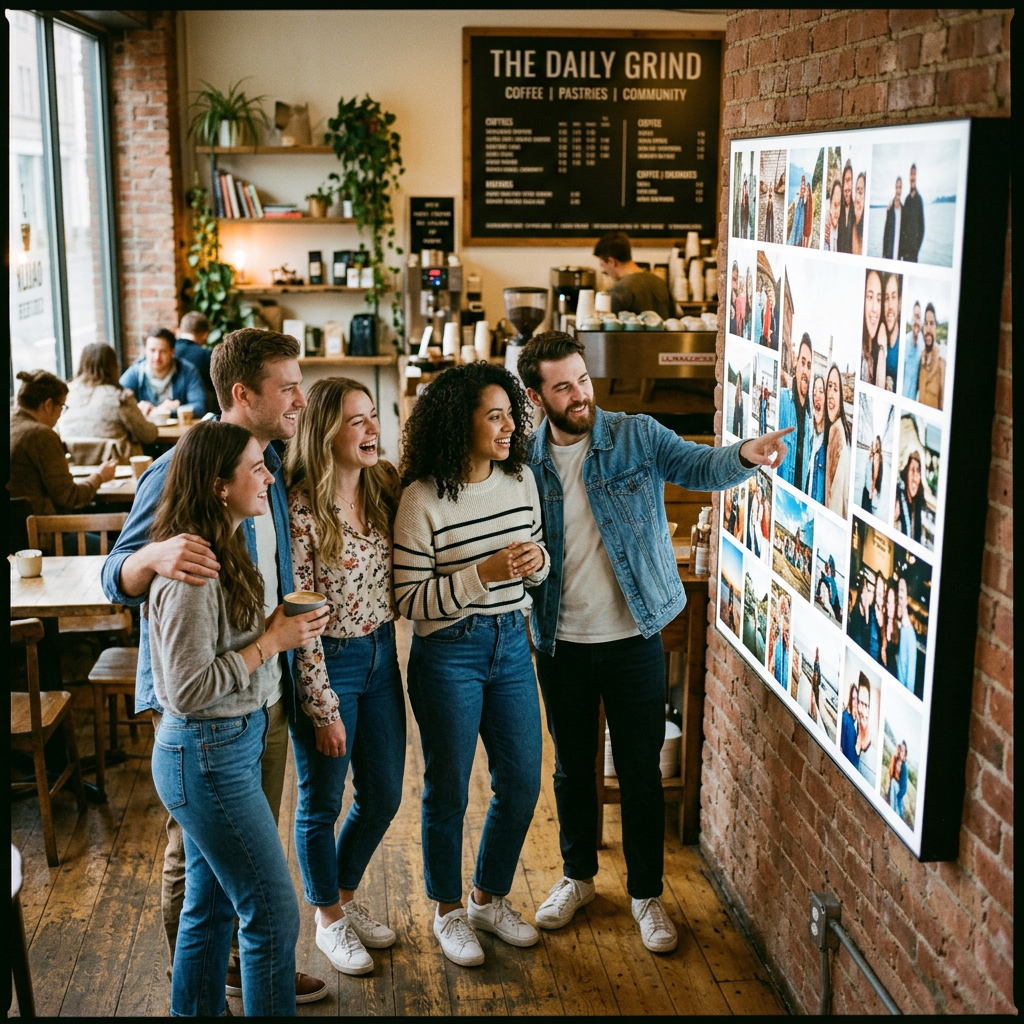
The true magic of this system lies in The Digital Photo Wall. This isn’t a corkboard cluttered with faded pictures; it’s a sleek, modern display…perhaps a large, high-resolution monitor or a series of framed screens…that constantly rotates and displays the latest and oldest captures.
This is where the community is literally made visible. When a new customer walks in, they see a gallery of the cafe’s community, a silent testament to the number of people who have chosen this place as their home away from home. When a Regular walks in, they see their own face, their friends’ faces, and the faces of people they recognize but have never spoken to.
This shared visual history acts as a powerful icebreaker and conversation starter. “Hey, I saw your photo up there from last Tuesday!” Suddenly, the Regulars are connected by a shared digital thread, encouraging them to bridge the gap between shared space and actual conversation. The Digital Photo Wall becomes a living, breathing mural of loyalty.
It shows the community the café is building , not just the coffee it is serving. You can introduce features like a “Regular of the Week” spotlight, displaying an extended gallery of one person’s photos alongside a short, anonymous quote about why they love the café. This adds a layer of gamification and celebration, providing a non-monetary but highly valued reward.
For the café owner, The Community Camera provides far more than just good vibes; it generates tangible business benefits. First and foremost, it is a loyalty powerhouse. Customers are intrinsically motivated to come back to see their own photo on the wall, to check if a friend has been added, or to take a new picture that better captures their current look.
This deepens commitment and drives repeat visits…the holy grail of local business. Secondly, it is a unique and authentic marketing tool. In a world saturated with professional photography and staged social media content, a photo wall of genuine, local faces is refreshing and instantly shareable. Imagine a local news feature or a popular regional blog picking up the story: “The Café That Puts Its Customers on the Wall.” This earned media is priceless.
Furthermore, the data generated by the Community Camera system offers profound operational insights. Because the photos are often tied to an optional ‘Regulars ID’ or a quick entry of a first name/initial, the café gains a better understanding of who their most loyal customers truly are, what times they frequent the shop, and which demographics dominate the community. This allows for highly targeted, personal service that transcends a generic loyalty app.
Owners can identify first-time “Regulars” (those with only one or two photos) and proactively engage them to cement their loyalty. They can also use the photos to celebrate major cafe milestones…like creating a collage of everyone who visited on the café’s five-year anniversary. The photos transform abstract loyalty data into warm, personalized human stories.
The act of capturing a moment in a coffee shop is, in a way, an act of staking a temporary claim on that space. When a person steps up to The Community Camera, they are saying: “I was here, I belong here, and this place recognizes me.” This simple yet powerful gesture fundamentally shifts the customer experience from transactional to participatory. It provides a visual, collective memory. Over time, the photo wall becomes a timeline of the neighborhood. Baristas who have moved on, couples who met there, students who studied for their finals…their memories are preserved.
This enhances the cafe’s legacy and makes it a historical touchstone for the community, a place where people can genuinely track their own lives and the lives of others. The Community Camera is the digital, interactive scrapbook of the Third Place. It’s a rebellion against the fleeting nature of online content, using digital means to create a physical, enduring record.
It transforms the often-lonely experience of scrolling through a phone into a collective, visible celebration of local life. By giving the Regulars the literal power to be seen and remembered, the cafe owner is investing not just in their business, but in the social fabric of the entire neighborhood. This commitment to visibility and recognition is what will ensure that the local coffee shop remains a vibrant, essential ‘Third Place’ for generations to come, reminding us all that the best connections are often the ones made in person, over a perfectly brewed cup of coffee.
The annual corporate holiday party is the Everest of event planning. It’s a summit every HR manager and office event coordinator must climb, navigating a precarious landscape where the quest for genuine employee fun clashes violently with the absolute necessity of maintaining professional standards and, crucially, HR compliance. The goal is simple: throw a party that people actually want to attend…one that generates water cooler buzz for the right reasons…without creating a single compliance headache, uncomfortable situation, or regrettable, viral social media moment.
It’s a balancing act that often leads to planning paralysis. The default solution…a catered dinner with an open bar and a DJ…is reliable but also predictable, expensive, and a high-risk liability zone. In an era where genuine team connection is paramount, the passive party format simply doesn’t cut it. You need an activity that is interactive, memorable, non-alcohol-centric, and, above all, perfectly controllable from a content perspective.
Enter ZillaBooth. It’s not just a photo booth; it’s a photo booth you can brand, lock down, and set up in a way your HR team is comfortable with. When integrated strategically into your party plan, it transforms the riskiest element of the modern corporate event…employee social media sharing…into its greatest asset.
The core challenge for any corporate party is managing the atmosphere and the content. Alcohol often lowers inhibitions, which leads to two primary risks: interpersonal behavior issues and unfiltered, potentially damaging content being shared publicly. The ZillaBooth strategy is designed to directly mitigate both risks by strategically shifting the focus of “fun” away from the bar and onto a curated, self-directed, and compliant content experience.
Step 1: Making the Fun Explicitly Safe for Work The biggest compliance concern at any holiday party is ambiguity. ZillaBooth offers a dedicated, visible space for fun where the tone is easy to set. * Non-Alcoholic Focal Point: By making the ZillaBooth the central, high-energy entertainment hub, you automatically provide a fun, engaging, and sober alternative to simply drinking. People who are taking photos or sharing their experiences are actively engaged in a task that doesn’t require a drink in hand. * The Power of Props: The props provided for the booth are your first line of defense. HR must pre-approve the prop selection. Avoid anything sexually suggestive, politically charged, or potentially offensive to any protected class. Think generic fun: oversized novelty glasses, company-branded items, festive scarves, and seasonal hats. The props themselves set the tone for safe fun. * On-Screen Messaging: With Pro, put your messaging on the PNG overlay so it appears on every collage, on screen and in print. Include subtle, positive reminders like “Teamwork Makes the Dream Work,” “Best of [Company Name] 2026,” or “Capture the Memory, Share the Cheer.” This serves as a constant, gentle reminder of the event’s professional context.Step 2: The Critical Role of Custom Share Messages This is where the magic of ZillaBooth turns a simple photo into a powerful, HR-compliant marketing tool. Most photo booths allow users to email or text the image. ZillaBooth lets you set one pre-filled share message per device. In Pocket it is a caption of up to 160 characters that rides along when guests share from the share sheet; with Pro email delivery on, you write the email subject and message guests receive instead. This feature is the secret weapon for controlling the party narrative and ensuring hashtag compliance.
A. Driving the Official Company Hashtag
A single, company-approved hashtag is non-negotiable for a corporate event. It keeps all public-facing content searchable, trackable, and contained. * Example Setup : Set your share message to something like: “Having a blast with my team at the [Company Name] holiday party! So much fun!
#CompanyHoliday2026 #HRApprovedFun.” * The Psychology of Defaults : Users are overwhelmingly likely to simply hit “send” on a pre-filled, positive, and compliant message rather than deleting it and writing their own from scratch, especially if they’re slightly distracted by the party atmosphere. This simple technological nudge ensures a vast majority of the photos shared publicly are associated with the official company tag and an approved, positive caption. B. Leveraging Custom Messages for Team Building
Don’t limit the custom share messages to just the company-wide tag. Use them to encourage positive, internal team engagement. * Departmental Customization : ZillaBooth has one share message per device, and Pro’s email subject and message sync over iCloud, so if departments want different text, give each its own booth on a separate Apple ID. * Marketing booth message: “Closing out the year strong with the best team! Cheers to the new year! #MarketingMavericks #CompanyHoliday2026” * Product/Engineering booth message: “We code hard, we party harder. See you back at the sprint board!
#ProductPower #CompanyHoliday2026″ * Internal PR and Recruitment : The custom messages can even serve as a subtle internal recruitment tool. By showcasing positive team culture and the festive, collaborative environment, the shared content becomes instant, authentic social proof for the company’s employment brand.Step 3: Pre-Event Compliance & Communication Controlling the narrative starts before the first drink is poured. Clear communication is essential for HR compliance. * The “Social Sharing Agreement” : Include a brief, positive statement in the event invitation that covers the expectation of professional conduct and social sharing. Something like: “We encourage you to capture and share your fun using the ZillaBooth and our official hashtag: #CompanyHoliday2026. Please remember all photos should remain professional and positive.” * Booth Host Briefing : ZillaBooth doesn’t come with an attendant, so if you want someone near the booth, brief whoever is minding it on your HR standards. They are a physical presence in the content creation zone.
They should be trained to gently guide prop choices, ensure full consent for group photos, and discreetly enforce a safe-for-work environment at the booth itself. They act as a friendly, low-profile content regulator.Step 4: Post-Party Content Control and Archiving The biggest win for HR is control over the final content archive. * Your Own Archive : ZillaBooth doesn’t host a gallery. Turn on auto-save so every collage lands in the booth iPad’s photo library, and with Pro you can add a BCC address so a copy of every emailed collage goes to an inbox your team controls. Build any company album from those copies. * Review and Release : If you share an album internally, give it a quick review first (24 hours is plenty) and pull anything that shouldn’t go wide. Keep in mind that guests already have whatever they sent themselves.
This post-event control is invaluable. * Measuring Success : The beauty of the controlled hashtag strategy is that you can now track the reach and sentiment of the party on social media. You are not tracking random, potentially negative posts; you are tracking the deliberate, positive, and compliant content shared through the ZillaBooth. The volume of posts using #CompanyHoliday2026 is a direct metric for high employee engagement and successful, compliant event planning.The holiday party does not have to be a source of stress and liability. By implementing an interactive, engaging activity like ZillaBooth and leveraging its advanced feature for custom, pre-approved share messages, you transform the evening from a passive event into an active, compliant, and highly successful internal marketing moment. You give employees a genuine, fun experience while simultaneously ensuring every piece of content that leaves the party premises reinforces a positive, professional company culture…all with the full and enthusiastic approval of HR. It’s the smart, modern way to celebrate.
The challenge of a pop-up shop is that it is, by nature, fleeting. You have a finite, often short, amount of time to make a massive impression, generate buzz, and convert those impressions into sales before the lease is up and the walls come down. Traditional marketing channels…slow-burn SEO, drawn-out PR cycles…simply cannot move at the speed of a pop-up. To succeed in this high-stakes, hyper-local environment, you need something that generates immediate, authentic, and shareable excitement inside your four temporary walls. You need a mechanism for instant social proof.
This is where the ‘Instant Share Kiosk’…a simple, small-footprint iPad station…becomes not just a novelty, but an essential component of your retail pop-up strategy. By encouraging shoppers to capture and instantly share their “try-on” looks, you transform a transactional retail moment into a moment of content creation, effectively converting every shopper into a temporary micro-influencer for your brand. This guide breaks down the full strategy, from the psychological foundations of social sharing to the specific hardware and software required to set up a seamless, social-media-ready experience that drives sales and extends your pop-up’s reach far beyond its physical location.
Section 1: Why User-Generated Content is a Pop-Up’s Superpower
In the digital age, a shopper’s journey doesn’t end when they walk out of your store; in a successful pop-up, the journey is just beginning. User-Generated Content (UGC) is the single most effective tool for generating buzz because it is inherently trustworthy. Consumers are savvier than ever and are trained to filter out brand-generated advertising. They know a glossy, studio-shot image is paid for and polished. However, a photo of a real customer, in your actual store, wearing your clothes, shared organically to their network of friends? That is currency.
The urgency of the pop-up format makes this UGC even more potent. When a customer shares their experience, their followers see the item, the store’s vibe, and, crucially, a sense of “Fear Of Missing Out” (FOMO). They realize this is a temporary experience, and if they want to get to the store and try on that jacket or accessory, they need to act now.
This urgency translates directly into increased foot traffic and higher conversion rates. The Kiosk capitalizes on this by minimizing the friction involved in creating that content. Instead of asking a shopper to take a picture on their phone, edit it, write a caption, and post it later…all of which drastically reduces follow-through…the Kiosk is a dedicated, perfect photo station that handles the technical heavy lifting, making the share button the very next step after the shutter click. It’s an immediate, high-quality social endorsement that broadcasts your presence across local feeds within minutes of a sale.
Section 2: Designing the Perfect Photo Experience (The Physical Setup)
The Instant Share Kiosk must not be an afterthought. It should be a designated, aesthetically pleasing destination within your pop-up space, designed specifically to encourage the perfect photo. A shopper will only share a picture they feel good about, and that requires professional-level lighting and a compelling backdrop.
First, identify the area in your store that naturally gets the most light or where you can install the best artificial lighting. A dedicated fitting room area, or a small, branded alcove near the cash wrap, works best. The cornerstone of the physical setup is the lighting.
Forget the harsh overhead fluorescents; you need soft, flattering light that minimizes blemishes and highlights the garment. A large, dimmable LED ring light mounted directly around the iPad is the minimum requirement. For an elevated, professional look, consider placing two softbox lights…one to the left and one to the right of the kiosk…to simulate a photographer’s studio setup. This creates soft, even illumination that makes every person look their best.
Second, the backdrop is your brand’s canvas. It should be simple, distinct, and instantly recognizable. This could be a wall painted in your brand’s signature color, a custom wallpaper with a subtle logo pattern, or even a living wall of greenery.
The key is to keep it uncluttered so the focus remains entirely on the shopper and the product. Ensure there is a full-length mirror nearby, or even integrated into the setup, as people naturally pose better and are more comfortable when they can see their whole look before the shot is taken. When the physical experience is curated for quality, the resulting UGC is exponentially more valuable.
Section 3: The Hardware and Software Kiosk Stack
Setting up the technical infrastructure is surprisingly simple and requires minimal capital expenditure, provided you choose the right components.
Hardware Essentials:
The iPad: Any recent-generation standard iPad is sufficient. The most important factor is the quality of the front-facing camera.
Secure Stand and Enclosure: Because the kiosk will be accessible to the public, it needs to be securely mounted. Look for a lockable, articulating stand that allows the iPad to be tilted for different heights and angles, ensuring a comfortable experience for all shoppers.
Integrated Lighting: As mentioned, the ring light is crucial. It must be powered independently of the iPad to avoid draining the tablet’s battery.
Power Management: The iPad must be plugged in at all times. Cable management is critical for safety and aesthetics. Run the power cable through the stand to keep it hidden and tamper-proof.Software and Connectivity: The native camera app is insufficient because it creates too many steps. You need a dedicated photo booth or instant-sharing app that automates the process. These apps have three non-negotiable features:1. Instant Review and Delete: Allows the shopper to take multiple photos and immediately see the result, deleting the bad ones before sharing.
Pre-Populated Text: This is the single most important software feature. The app must allow you to pre-load a shareable caption that includes your pop-up’s specific hashtag (e.g., #BrandNamePopUp), your official social media handle (@BrandName), and a tag for the city/neighborhood (e.g., #SohoStyle). This ensures consistency and makes your UGC trackable.
Direct API Integration: The app should offer a one-tap share button to the major platforms…Instagram (Stories and Feed), TikTok, and X (formerly Twitter). The less the customer has to manually switch apps, the higher the share rate.Finally, connectivity is paramount. Do not rely on your store’s primary Wi-Fi for this. Set up a dedicated, strong, and fast Wi-Fi network purely for the Kiosk. A slow upload speed will frustrate shoppers and kill the impulse to share instantly.
Section 4: The Seamless Kiosk Workflow: From Try-On to Trackable Share
The goal is a five-second, frictionless pathway to social proof. The sales team is integral to initiating this process.
Step 1: The Staff Suggestion. The moment a shopper compliments an outfit in the fitting room, a staff member should be trained to say, “That looks incredible! You absolutely must take a picture in our social media spot…you might win today’s style contest.” This immediately seeds the idea.
Step 2: The Approach. The shopper is directed to the aesthetically perfect Kiosk area. The large screen and flattering lights should be immediately welcoming. The screen should display a bold, clear call-to-action (CTA), such as “SNAP & SHARE YOUR LOOK!”
Step 3: The Capture. The shopper hits the ‘Start’ button. The app presents a clear timer (e.g., a three-second countdown) and takes the picture. Crucially, the app should automatically apply a branded digital overlay…a subtle frame, the pop-up’s address, or a clean, small logo…that ensures every shared image reinforces the brand’s identity, even if the caption is later modified.
Step 4: The Sharing Prompt. Immediately after the photo is approved, the app presents the sharing screen. The pre-populated caption is visible, ready to go. The shopper simply taps the icon for their preferred platform (Instagram/TikTok) and is logged into their respective account to complete the post. This is a point of legal clarity: the interface must be transparent that by sharing, they are agreeing to the brand potentially reposting their image.
Step 5: The Instant Gratification Reward. The final and most critical step for maximizing participation is the incentive. The Kiosk should be tied to a small, immediate reward. Once the share is confirmed (visually by the staff or via an in-app prompt), the shopper receives: * A small, immediate discount on their purchase (e.g., 5% off). * An entry into a larger daily or weekly prize draw. * A free, branded small gift (e.g., a tote bag or sticker pack).This loop…effortless photo, instant share, immediate reward…is a powerful psychological driver that ensures the Kiosk is used repeatedly throughout the day, guaranteeing a constant stream of fresh, relevant, and hyper-local UGC.
Section 5: Maximizing Performance and Measuring Success
A successful Kiosk is one that is constantly being optimized. This requires meticulous staff training and diligent metric tracking.
Staff Training is your secret weapon. The best technology is useless if the front-line staff isn’t utilizing it. Train your sales associates to treat the Kiosk as an extension of the sales floor.
Their performance reviews for the pop-up duration should even include a metric for ‘Kiosk Utilization Rate’ (the percentage of sales that resulted in a social media share). They must be comfortable guiding customers through the process and enthusiastic about the rewards. A staff member saying, “Wait, before you check out, let me show you how to get 5% off” while walking them to the Kiosk is far more effective than a passive sign.
The Incentive Model needs to be dynamic. Run a variety of contests. A ‘Best Look of the Day’ contest encourages higher-quality content and more creative posing. A ‘Tag a Friend’ feature within the pre-populated share text can exponentially increase reach. Consider dedicating a small budget to running targeted, hyper-local social media ads that pull directly from the day’s UGC. Seeing a friend’s photo in a sponsored ad is a powerful catalyst for foot traffic.
Measuring Success: The return on investment (ROI) from an Instant Share Kiosk is not just in sales, but in data and future marketing potential. Key metrics to track include: * Kiosk Utilization Rate (Shares divided by Transactions).
Total Impressions Generated (Estimate this based on the average follower count of participants).
Follower Acquisition (Track how many new followers the brand gains during the pop-up).
Hashtag Performance (Monitor the specific pop-up hashtag for overall reach).
Remarketing List Growth (Collect emails via the Kiosk for post-pop-up follow-up).By viewing the Instant Share Kiosk as a lead generation, content creation, and immediate sales-driver tool…rather than just a fun prop…it becomes the essential engine of a high-impact, short-run retail venture. It transforms a temporary space into a permanent digital footprint, making your ephemeral pop-up an indelible part of the local social landscape.
Guests tap share and wonder: did it work? A confirmation animation closes that anxiety loop with a celebration guests feel—not a technical shrug.
Available in Pro.
The problem
Silent share failures erode trust fast at events. Guests re-tap buttons, clog lines, or walk away unsure whether email or print actually succeeded. Without clear success feedback, even working booths feel broken—and staff spend time reassuring instead of hosting.
Why it matters
Celebrate every share with a clear on-screen confirmation the moment the guest taps
Reduce guest uncertainty after email or share actions
Lower repeat attempts that slow busy lines
Pair with Simple Email Sharing and Simple Printing for end-to-end clarity
Make self-serve kiosks feel responsive and trustworthy
Who it’s for
Confirmation animation matters for Pro operators running guest-facing kiosks: corporate lead-capture booths, wedding teams using Simple Email Sharing, and anyone who has watched a guest ask did it go through three times.
Real-world moments
A corporate booth confirms the email is on its way before the guest steps away
A wedding kiosk celebrates each share as guests send their photos by email
A festival booth gives instant feedback after high-volume share attempts
How ZillaBooth delivers
Pro’s confirmation animation plays the moment a guest taps to send or print, so they know their photo is on its way. Emails and prints queue and retry if the network drops. It complements Simple Email Sharing and Simple Printing so guests finish the booth loop confidently, which matters most at guest-led iPad setups where no staff member is there to nod yes.
Guests should never guess whether the booth did its job.
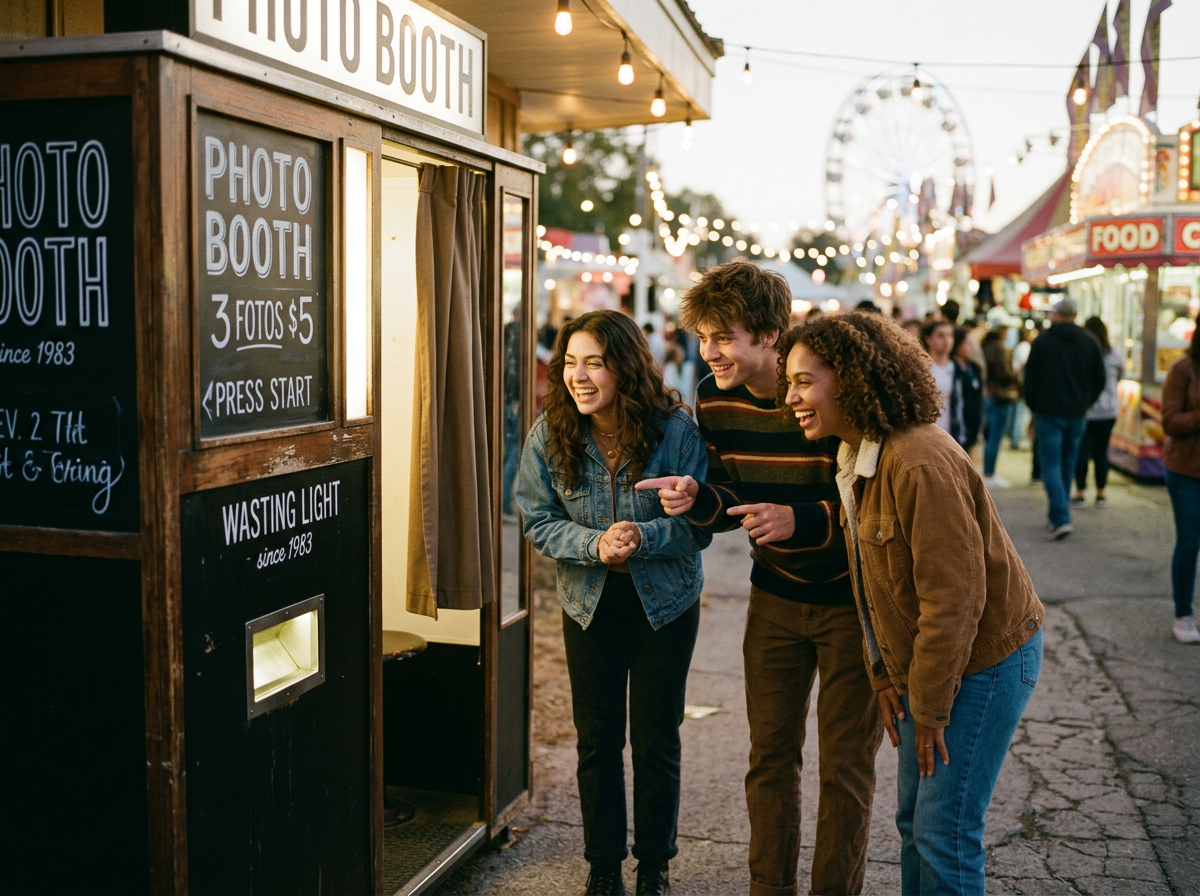
It used to be a social ritual. You’d pile into the tiny, often sticky photo booth, the curtain would zip shut, and the flash would fire…four times in quick, blinding succession. Then came the true test of patience: the develop.
Eight minutes. Eight slow, tangible minutes during which you stood outside, leaning against the flimsy metal casing, or maybe walking laps around the arcade, the entire group focused on the little slot where your memories were being chemically coaxed onto paper. Those eight minutes were not a failure of technology; they were the heart of the experience. They were the price you paid for a physical keepsake, and they were the time you spent savoring the immediate, still-fresh memory of the silly faces and inside jokes you had just captured.
Now, we have ZillaBooth, and the wait is gone. The photo is taken, and before you have time to fully exit the curtain, the digital file is ready…instant, flawless, and already queued for sharing. ZillaBooth didn’t just eliminate a delay; it executed an entire cultural phase shift. It delivered the ultimate modern promise: instant gratification.
But in eliminating the “waiting game,” what are we losing? Are those eight minutes of anticipation just a nostalgic inconvenience, or were they a vital ingredient in the recipe for a truly satisfying experience? This isn’t just about photo strips; it’s a question about how we consume life in the 21st century…a philosophical debate played out across every instant download, every express checkout lane, and every social media refresh. It is the clash between the profound psychological rewards of anticipation and the undeniable, addictive convenience of instant gratification.
The Case for Anticipation: The 8-Minute Dopamine Upgrade
Anticipation, in a scientific sense, is a powerful cognitive tool. When we wait for something desirable, our brain’s reward system (specifically, the nucleus accumbens) is already engaged. This pre-reward excitement is a phenomenon psychologists call “savoring.” The simple act of looking forward to an event, a gift, or a photo strip can often contribute more to our overall happiness than the actual event itself.
The old photo booth’s eight minutes were a masterclass in savoring. That wait transformed the four little pictures from a mere product into a precious artifact. It allowed for metacognition…the time to reflect on the moment that had just passed. You’d talk about the perfect pose, lament the one where someone blinked, and collectively build the narrative that the finished product would represent. This process deepened the memory’s roots.
When the strip finally slid out, warm and slightly damp, the delayed gratification didn’t just feel good; it felt earned . Research has shown that delayed rewards activate the brain’s pleasure centers far more intensely than instant ones. The brief period of abstinence acts like a magnifying glass for the eventual dopamine hit. It’s the reason a slow-cooked meal tastes better than fast food, or why receiving a hand-written letter in the mail is more impactful than an instant text message. The struggle against the delay is what assigns value to the resolution.
In a commercial context, anticipation builds brand loyalty and creates an emotional connection. The eight-minute wait didn’t annoy; it engaged. It created a temporary community outside the booth, bound by a shared, slow-motion ritual. This is the antithesis of the modern, solitary scroll.
The Case for Instant Gratification: The ZillaBooth Efficiency
The argument for ZillaBooth’s instant delivery is self-evident: efficiency, convenience, and control. In a hyper-connected world, an eight-minute delay is an eternity, a critical failure point. Why tolerate it when the technology exists to eliminate it?
Instant gratification satisfies our need for control and minimizes the risk of disappointment. If the photo is instant, you can check it, retake it, and correct the mistake before the moment is entirely gone. This is a crucial advantage in the digital age, where every captured moment is often a piece of personal branding or social content. ZillaBooth’s instant download allows for immediate vetting, editing, and sharing, making the image socially relevant in real-time. This speed is not just about impatience; it’s a form of practical utility.
Furthermore, instant gratification is a powerful motivator. In educational or productivity contexts, immediate feedback (like a grade or a task completion badge) can be far more effective in driving behavior than a delayed reward.
ZillaBooth knows its audience: a generation that values speed and a seamless user experience above almost everything else. The instant result is less about “wanting it now” and more about “not wanting to waste time.” In a life where we feel increasingly time-poor, any technology that can compress the gap between desire and fulfillment is perceived as superior. The efficiency is a comfort, a guarantee that the interaction will be frictionless.
The Paradox of Instant Everything
The true cost of the instant society is a subtle psychological shift: the erosion of tolerance for any delay. When everything is instant…from photo strips to movie rentals to online purchases…our baseline expectation changes. We are constantly moving faster on what psychologists call the “hedonic treadmill.” Once we adapt to instant photo booths, the eight-minute wait is no longer seen as charmingly slow; it’s seen as broken.
This lack of friction is a mixed blessing. While it frees up time, it diminishes the experience of appreciation. When the reward is always immediate, it loses its special status. We click, we get, and we immediately move on to the next click. There is no space for savoring, no time for reflection, and consequently, the memory isn’t as deeply encoded.
Consider the phenomenon of “binge-watching” versus the week-long wait for a new episode. Binging is instant gratification…a satisfying, complete consumption. But the seven-day wait created a cultural space for anticipation. It allowed theories to be debated, characters to be analyzed, and emotional impact to settle. The community shared the anticipation as much as the show itself. Instant access delivers the show, but it often sacrifices the shared cultural ritual that made the show feel important.
The ZillaBooth is the ultimate metaphor for this trade-off. In the instant digital file, the efficiency of the capture is maximized, but the gravitas of the resulting memory is subtly undermined.
Finding the Modern Savor
We cannot, and likely should not, turn back the clock. ZillaBooth’s instant access is here to stay because it aligns with the pragmatic demands of modern life. The key, then, is to learn how to consciously reintroduce the psychological benefits of anticipation into an instant world.
Instead of fighting the technology, we must re-engineer the ritual. ZillaBooth provides the instant gratification of capture, but we can, and should, impose a personal “develop” time afterward.1. The Delayed Share: Don’t post the picture immediately. Take the digital file, but enforce a 24-hour “cooling period.” This period of self-imposed anticipation allows you to review the image with fresh eyes, letting the initial impulse fade and the authentic emotion of the moment resurface. It converts a knee-jerk reaction into a deliberate share.
The Physical Delay: Leverage ZillaBooth’s speed for efficiency, but use the saved time to invest in a higher-quality delayed physical product. Instead of an eight-minute chemical bath, send the photo for an instant high-resolution print or even a custom frame, requiring a three-day wait. The anticipation shifts from the raw development to the final, perfected keepsake.
Mindful Consumption: The next time you use ZillaBooth, take the “found” time…the eight minutes you would have spent waiting…and use it for mindful connection. Talk to the person next to you. Put your phone away and recount the previous moments. Convert the technological delay into a human moment of savoring.The battle between the eight-minute develop and ZillaBooth’s instant snap is a powerful reflection of the human condition. We are constantly pulled between the desire for immediate comfort and the deeper, more resonant satisfaction that only comes from a process, a struggle, or a wait.
ZillaBooth won the war on time. The challenge for us, the users, is to ensure that in our victory over delay, we do not inadvertently surrender the profound art of appreciation. We must recognize that the most meaningful rewards are not those delivered instantly, but those we make time to anticipate, reflect upon, and truly savor. The speed of the modern world is a tool; it should not be a master. We can accept the instant photo, but we must consciously choose to keep the waiting game alive in our minds.
The wedding reception is undergoing a quiet, profound revolution. For generations, the open bar has been the undisputed centerpiece of celebration, the engine that powers the dance floor and loosens the tongues of distant relatives. Yet, a contemporary movement…one rooted in wellness, mindfulness, and a desire for genuine, clear-headed connection…is reshaping the modern reception landscape. This is the rise of the Sober-Curious wedding, where couples are intentionally designing an atmosphere of vibrant, high-energy fun that doesn’t rely on alcohol as its primary fuel.
This shift isn’t about being puritanical or judgmental; it’s about inclusivity, intentionality, and maximizing the memory-making experience. Modern couples are asking a powerful question: How can we give our guests a night they will remember, not one they’ll only vaguely recall? The answer lies in replacing the “alcohol economy” of the reception with a “dopamine economy”…a strategic focus on activities that deliver instant, joyful, and clear-headed hits of happiness. And at the forefront of this new approach, providing the perfect social nexus and memory machine, is the humble yet mighty photo booth.
The Cultural Momentum Behind “Sober-Curious” Weddings
The “Sober-Curious” movement…an invitation to question one’s relationship with alcohol…has moved from a niche lifestyle choice to a mainstream cultural fixture. Data confirms that younger generations, in particular, are consuming less alcohol and prioritizing mental and physical health. This mindset naturally extends to high-stakes social events like weddings.
For couples, the reasons for hosting a more mindful reception are manifold: – Prioritizing Wellness and Health: They want a celebration that reflects their personal commitment to well-being, ensuring they wake up on their first day of marriage feeling energized, not depleted.
Financial Prudence: A non-alcoholic bar can significantly reduce overall catering costs, allowing the budget to be reallocated to premium experiences like gourmet food, elevated decor, or…critically…high-quality entertainment.
Inclusivity and Comfort: Providing sophisticated non-alcoholic options and entertainment ensures all guests feel celebrated and catered to, including pregnant guests, those in recovery, designated drivers, those on medication, or individuals who simply prefer not to drink. By normalizing the mocktail, the reception feels less like two distinct parties (drinkers and non-drinkers) and more like one unified celebration.
Maximizing Presence: The goal of a wedding is connection. A fully present, clear-headed guest is more likely to engage deeply, share heartfelt moments, and genuinely remember the emotional high points of the day.The first step in this revolution is the Mocktail Menu. Gone are the days of sugary sodas or sad glasses of water. Today’s non-alcoholic drinks are elevated works of culinary art. Craft mocktails now feature complex flavor profiles using homemade syrups, fresh botanicals, non-alcoholic spirits, and sparkling teas. The aesthetics are just as important as the taste…served in beautiful glassware and garnished with smoked rosemary or dehydrated citrus, the mocktail is no longer a concession but a sophisticated, exciting option. This emphasis on creative, adult-friendly beverages is essential, but it only solves half the equation.
The Missing Social Lubricant: Replacing the Activity
Alcohol, however, serves a dual function at a wedding. It is a beverage, yes, but it is also a social lubricant and an activity centerpiece. When you remove or de-emphasize the bar, you must intentionally replace the social activity that revolved around it…the gathering at the cocktail station, the bonding over a shared drink, the liquid courage to hit the dance floor. This is where the magic of the photo booth steps in, providing a structured, high-energy, and completely sober social activity that acts as the new center of gravity for the reception.
The Photo Booth as a Dopamine Delivery System
The success of the Sober-Curious wedding hinges on its ability to generate natural, authentic joy…a pure dopamine hit that requires no chemical assistance. The photo booth is uniquely engineered for this purpose.1. Instant Gratification and Play: The core mechanism of a photo booth is immediate and joyful.
Guests step inside, don a ridiculous prop, pose, hear the flash, and moments later, they have a tangible, personalized memento. This immediate cause-and-effect…effortlessly creating a fun picture and having it in hand…is a classic, powerful dopamine reward. It bypasses the need for inhibition-lowering drinks because the activity itself is inherently silly, low-stakes, and focused on pure play.
Structured Social Connection: When guests might feel awkward approaching the dance floor or starting a conversation, the photo booth provides a non-verbal, shared objective. “Let’s take a picture!” is the easiest invitation for a group of strangers or distant friends to bond. It groups people together…old college friends, the bride’s grandparents, the groom’s coworkers…for a fleeting moment of physical closeness and shared laughter. This genuine social interaction is a powerful source of oxytocin and serotonin, complementing the dopamine rush of the instant print.
The Prop Play and Creative Expression: The use of props is a form of temporary, safe role-playing. A feather boa or oversized sunglasses offers a momentary excuse to shed inhibitions. This spontaneous, theatrical play releases stress and fuels laughter, creating a high-energy, engaged atmosphere that naturally keeps the party momentum going. It’s a non-competitive, creative outlet that everyone can participate in, regardless of age or fitness level.
The Physical Memory Memento: In a world dominated by fleeting digital media, the tangible print strip is gold. It’s not just a photo; it’s a physical, date-stamped memory from the event. It acts as an instant wedding favor and a centerpiece for the guest book. Guests take their strips home and tack them on a fridge, where they serve as a constant, positive reminder of the fun they had…a memory untainted by the haze of an overindulgent evening. This physical takeaway amplifies the value of the experience far beyond the moment of the flash.Designing an Intentionally Joyful Space
To truly make the photo booth the star of the show in a wellness-focused reception, couples can take its execution from passive to potent: – Strategic Placement: Don’t tuck it in a dark corner. Place the booth in a highly visible, high-traffic area, close to the main entrance or the mocktail bar. Its activity should be undeniable, encouraging guests to queue up and watch the fun.
Themed Backdrop and Customization: Ensure the booth’s aesthetic is as high-end as the rest of the decor. A custom-designed backdrop, perhaps incorporating the wedding’s floral elements or color palette, elevates the experience. Furthermore, the print template should feature the couple’s custom logo or hashtag, turning every photo strip into a piece of branded wedding collateral.
Interactive Props: Curate a sophisticated, silly, or personalized prop collection. Move beyond the generic plastic hats. Incorporate elements relevant to the couple’s relationship (e.g., props of their pets, a sign with their inside joke, graduation mortarboards for an alumni-filled wedding).
The Digital Gallery and Sharing: Modern booths offer instant text/email sharing. This ensures the digital dopamine hit is satisfied immediately, allowing guests to share their uninhibited photos across social media while the event is still in full swing, increasing the perceived energy and buzz of the party.
The New Standard for Reception Fun
The rise of the Sober-Curious reception and the strategic deployment of the photo booth signal a larger cultural evolution in how we celebrate. It’s a movement away from passive consumption (of alcohol, of atmosphere) toward active engagement and intentional creation of joy.
A reception fueled by mocktails and memories is, ironically, a reception with more energy and more authenticity. The laughter is clearer, the conversations are deeper, and the memories are sharper. The photo booth doesn’t just fill a gap left by the open bar; it provides a superior, more joyful alternative. It’s a dynamic hub of activity that delivers the social connection and instant reward that guests crave, transforming a wedding from a party with activities into an unforgettable, high-octane experience.
By prioritizing wellness and embracing activities like the photo booth, modern couples aren’t just hosting a wedding; they are setting a new standard for celebration…one where the best moments are captured on a personalized print strip, earned by genuine smiles, clear eyes, and a night of pure, unadulterated fun.
The traditional real estate open house has long been the backbone of property marketing, a necessary ritual that brings potential buyers through the door. But let’s be honest: in the age of hyper-curated social feeds and instantaneous digital connections, the standard open house…a broker standing near a bowl of M&Ms while visitors quietly judge the backsplash…is fundamentally flawed. It’s transactional, not experiential. It’s forgettable, not shareable. For a property listing to truly break through the noise and achieve virality, it can no longer rely on feet in the door; it needs fingers on the share button.
The challenge for the modern Realtor is not merely to show a house, but to sell a dream and, crucially, to manufacture a moment that is inherently social. Enter the most novel, unexpected, and powerful marketing tactic sweeping the high-end and high-volume real estate sectors: transforming the open house into a high-tech photo opportunity, powered by platforms like ZillaBooth.
The average open house is a passive event. Buyers walk through, take mental notes, maybe grab a paper flyer, and move on. The most enduring memory they take with them is often the discomfort of awkwardly standing in someone else’s living room. No emotional connection is forged, and absolutely no momentum is created that extends beyond the front door. The only data captured is a hastily scrawled name and email on a sign-in sheet, a lead that is cold before the agent has even packed up.
We are no longer selling four walls and a roof; we are selling a future identity. The most powerful photo op isn’t one featuring the house’s exterior…the MLS photos already handle that. The true marketing gold is a picture of the buyer in the home, a photo that makes them look and feel like they already own it. This is where the concept of the “New Homeowner” overlay becomes a psychological masterstroke.
Imagine a visitor…let’s call her Sarah…walking into a stunning, sun-drenched kitchen. Instead of just admiring the quartz countertop, she’s invited to step into a dedicated, well-lit photo station powered by ZillaBooth. She takes a quick photo, and a custom-designed overlay is applied automatically. This isn’t a generic branded frame; it’s a stylish graphic that reads: “My New Place! #FutureHomeowner #LuxuryLiving” or “Sold (To Me)! Est. 2026.”
Sarah isn’t just taking a picture; she is momentarily performing her future self. She emails the high-resolution image to herself on the spot. What is the very first thing she will do? She will share it. She will post it to her Instagram Story, text it to her partner, and send it to her family group chat. That single act of sharing, driven by aspirational identity, is the mechanism that turns a transactional viewing into a viral property listing.
This strategy hinges entirely on the seamless execution provided by a platform like ZillaBooth. The key differentiators that elevate this from a clumsy DIY photo booth with props are precision, speed, and automation.
First, ZillaBooth provides professional quality. The agent can set up a simple backdrop or utilize a feature of the home (like the fireplace or the view from the deck) and use the app’s lighting features to ensure every shot is flattering. This ensures the UGC generated reflects well on the listing and the agent’s brand.
Second, the custom overlay is automated. The branding is applied instantly, ensuring a consistent message and look. The overlay isn’t just a label; it’s the viral hashtag and the property’s address discreetly woven into the frame, providing all the necessary context for a friend viewing the post to find the listing later.
Third, and most critically for the Realtor, ZillaBooth facilitates instant and robust data capture. The photo delivery mechanism…text or email…requires the user to provide their contact information. This transforms the cumbersome, often illegible paper sign-in sheet into an elegant, high-engagement data capture tool. A lead generated from a photo experience is not just a name; it’s a qualified, warm lead who has voluntarily provided their best contact information and has already established an emotional connection to the property. This is a massive leap in lead quality.
The benefits of the ‘New Homeowner’ photo op can be distilled into three compelling pillars that redefine open house marketing:
Pillar 1: The Viral Engine of User-Generated Content (UGC) Social media marketing for real estate is expensive, and most organic posts from agents are seen as self-promotion. UGC, however, is authentic. When Sarah posts her aspirational “New Homeowner” photo, it is perceived by her network as a genuine, exciting life event, not an advertisement. This is free, credible, word-of-mouth marketing at scale. * Reach Expansion : Sarah’s network, which is precisely the target demographic (friends who live near her, often in a similar economic bracket), sees the post. This reach is highly targeted and far more valuable than a generic paid ad. * Social Proof : The photo acts as social proof. It subtly says, “This property is so desirable, people are already claiming it.” This creates a sense of urgency, the Fear Of Missing Out (FOMO), which is the most effective psychological lever in real estate sales. * Instant Feed Curation : For the agent, they have successfully inserted their listing into the highly prized, personal content stream of a potential buyer. The property becomes a background character in the buyer’s personal narrative.Pillar 2: Superior Lead Quality and Automated Follow-Up The transition from a paper ledger to a digital ZillaBooth sign-in is a foundational upgrade to the Realtor’s CRM pipeline.
* Verification and Quality : Requiring an email or phone number for instant photo delivery ensures the contact information is correct and primary (unlike a rushed, fake email on a clip board). * Segmentation : The system immediately identifies “Active Participants”…those who were engaged enough to take a photo…making them the warmest leads for immediate follow-up. * Contextual Follow-Up : The follow-up email or text is no longer a generic “Thanks for visiting.” It can be a personalized message: “Hope you enjoyed your virtual New Homeowner moment at 123 Maple Street! Here’s the floor plan and a quick mortgage calculator tool to help turn that photo fantasy into reality.” The conversation starts from a place of fun and connection, not cold sales pressure. * Data Analytics : The agent gains data on which overlay designs or photo backdrops are most successful, allowing them to refine their experiential strategy across multiple listings.Pillar 3: Elevating the Open House to an Event In a crowded market, differentiation is everything. This strategy instantly transforms a run-of-the-mill open house into a memorable, buzzworthy event. * A Sense of Fun : The photo booth is an icebreaker. It lowers the barrier to interaction and gives people something to do other than whisper about prices. It creates a positive, high-energy atmosphere that people associate with the property itself. * Emotional Anchoring : By encouraging a photo on a significant feature of the house (e.g., the wine cellar, the master bathroom, the view), the photo serves as a powerful emotional anchor.
When the buyer later reviews the photo, they aren’t just seeing an image; they are reliving the feeling of that potential future moment in the home. This emotional residue is far more valuable than any staging or lighting trick. * Competitive Edge : A ZillaBooth setup signals that the listing agent is modern, digitally savvy, and committed to high-effort marketing. This not only attracts more buyers but also serves as a compelling differentiator when pitching to sellers who are evaluating which agent can best market their home.For Realtors ready to implement this, the key lies in the thoughtful execution of the ZillaBooth setup. The Realtor’s Implementation Checklist: 1. Placement is Everything : Position the ZillaBooth station in the single most photographable spot in the house…the million-dollar view, the chef’s kitchen, or the spa-like master bath. This ensures the UGC generated showcases the property’s best feature. 2. Design the Perfect Overlay : Keep the “New Homeowner” text aspirational and concise. Crucially, include the key property information: the address and the agent’s contact info or a unique, shareable hashtag for the listing (#123MapleStreetDream).
Make the design elegant and non-intrusive. 3. Active Encouragement : The agent and their team must proactively encourage every visitor to use the booth. It shouldn’t be passive. Use language like: “Before you leave, make sure you take your Future Homeowner photo…it’s the fastest way to get on our VIP list for new showings!” 4. Instant Gratification : Ensure the ZillaBooth setup delivers the photo instantly. The window for sharing is immediate; a delay of even a few minutes can kill the viral potential.The era of transactional, silent open houses is over. The future of real estate marketing is experiential, emotional, and social. By using a powerful, automated tool like ZillaBooth to create a curated “New Homeowner” photo op, Realtors are not just holding an open house; they are launching a micro-campaign that turns every visitor into a temporary, enthusiastic brand ambassador. They are selling the dream first, capturing the lead second, and generating organic, viral buzz for their listing that money simply cannot buy. It’s a simple, elegant hack that positions the property…and the agent…at the cutting edge of digital marketing, ensuring the next open house doesn’t just sell a home, but sells a story.
It’s a peculiar phenomenon, one almost universally experienced: the moment you step across the threshold into a small, enclosed space, your demeanor changes. Whether it was the classic strip-photo machine of the 1950s or the sleek, modern digital enclosure at a contemporary event, the photo booth has always served as a tiny, psychological theater where the rules of public decorum are momentarily suspended.
Why is it that inside this temporary box, surrounded by vinyl or canvas, we feel permission to be goofy, to pose outrageously, to let loose with an unfiltered laugh that would feel awkward anywhere else? The answer lies in the deep-seated psychology of the barrier…the curtain…and the profound sense of privacy it guarantees.
The earliest photo booths were fundamentally machines built around an act of disappearance. The heavy velvet or vinyl curtain was more than just a light seal; it was an impenetrable, temporary wall against the outside world. Stepping behind it was a deliberate, ceremonial act of separation. Once the curtain fell closed, the individual or group vanished from public view, entering a space of radical, albeit brief, autonomy. This physical act of exclusion is the psychological root of a familiar effect: it gives people license to “let their guard down.”
In psychological terms, this is a controlled moment of deindividuation . In a large crowd, deindividuation can lead to regrettable behavior because the individual identity is lost. But in the photo booth, the effect is inverted. By removing the individual from the social contract of the public space, the small enclosure allows a positive, momentary loss of self-consciousness .
You are no longer subject to the immediate, judging gaze of the audience outside the booth. This removal of external surveillance is what frees people to shed the carefully constructed mask they wear in public and express their genuine, often playful, personality. The camera, a machine without judgment or memory, becomes an accomplice rather than an observer. The curtain tells the brain: “What happens in the booth, stays in the booth.”
This sense of a private sanctuary stands in stark opposition to the modern age of perpetual performance. Today, particularly at major social events, the camera is an instrument of the public domain.
Every action, every outfit, and every reaction is potentially curated, captured, and instantly broadcast to a vast, invisible audience on social media. The shift from private memory to public content has introduced a pervasive sense of self-monitoring. We become acutely aware that the photos being taken are not just for us; they are for the ‘feed,’ for the metrics, for the thousands of passive followers we will never meet.
This pressure is the enemy of authenticity. When a couple poses for a wedding photographer, for example, the image is often immaculate, perfectly lit, and composed to tell a specific, idealized story. But that image is also a performance . The photographer is an active participant in the staging, directing the pose, adjusting the angle, and maintaining an intimate, watchful eye.
While the resulting photograph is beautiful, it captures a moment that is inherently aware of being captured. The self-consciousness of being watched…a mild form of the well-known Hawthorne effect …means the subject is acting for the camera, not simply reacting to the moment. The photographer, by their very presence, is a constant reminder of the public’s anticipated consumption of the image. They are the human embodiment of the external gaze.
This is where the genius of modern, guest-led photo technology, exemplified by ZillaBooth, comes into sharp focus. The traditional photo booth’s power came from its physical curtain; ZillaBooth’s power comes from its guest-led, privacy-first design, which serves as the psychological equivalent of that barrier. Lock the iPad with Guided Access and keep it plugged in, and nobody needs to stand beside it.
ZillaBooth is not a prop or an accessory for the photographer; it is a discrete experience. The most critical factor is the absence of the human operator. In a traditional setting, even a casual photographer or booth attendant introduces a layer of public accountability. That person is another eye, a potential critic, and a proxy for the wider social audience. When a group steps into the ZillaBooth, they are not posing for anyone; they are posing with each other. The booth becomes a silent, automated confidante. The pressure is instantly off.
The design emphasizes that the action inside the booth is a self-contained unit of fun. There is no instant, public-facing sharing mechanism; the focus is solely on the immediate, internal dynamic of the group. The sense of being unwatched, even when fully aware a camera is flashing, is what restores the psychological condition of the original, curtained space. The subject is freed from the social burden of producing content and allowed to simply produce memory.
This is why the resulting images are invariably “goofier” and more “natural.” Goofiness is not an action you can successfully stage; it is the spontaneous overflow of genuine, uninhibited joy. It is a moment of shared, unselfconscious absurdity that only erupts when the participants feel completely secure and unjudged. The photographs capture the real, chaotic, and often hilarious essence of friendship and relationship dynamics.
Consider the typical photo booth strip:1. Frame One: Initial self-conscious pose, often a bit stiff.
Frame Two: The subjects realize they are truly alone, and the first hint of a real smile appears.
Frame Three: The group dynamic takes over, prompting a genuinely funny pose or a spontaneous, shared laugh.
Frame Four: Complete, joyous absurdity…a wild gesture, a silly face, an image that is deeply personal and truly captures a moment of connection.The transition from Frame One to Frame Four is the journey from performance to authenticity, facilitated entirely by the psychological safety of the private, photographer-free space. A photographer is often asked to capture the ideal version of the event; the photo booth captures the real version.
This contrast is crucial for the discerning host or event planner. While professional photography captures the grandeur and the aesthetics, ZillaBooth captures the soul and the intimacy. The professional photographer is tasked with documenting the curated narrative; the guest-led booth is allowed to document the spontaneous truth. The images produced are not merely complementary; they are two sides of the same psychological coin. One is the public face; the other is the private, shared joke.
Ultimately, the power of the booth is the power of a temporary, communal blind spot. In a world saturated by surveillance…from CCTV to the omnipresent smartphone camera…the photo booth offers a small, defiant sanctuary. It is a declaration that for four quick flashes, you are exempt from the requirements of the stage. The attendant is gone, the social media link is severed, and the outside world is muted. All that remains is the interaction between the people in the frame.
ZillaBooth’s successful recreation of the “Psychology of the Curtain” is not about nostalgia; it is about addressing a very modern need. It acknowledges that true, uninhibited connection is best captured when the subjects forget the camera exists, and the best way to make them forget the camera is to ensure they are only conscious of the company they keep.
By removing the watchful, judging eye of the human operator and the immediate, judging audience of the internet, ZillaBooth facilitates the kind of natural, goofy, and profoundly human moments that become not just great photos, but true, unblemished private memories. It is where the human guard comes down, and the true picture emerges.
It was a simpler time. A time when a night out wasn’t complete until you and your friends crammed yourselves into a tiny, velvet-curtained box, frantically trying to strike a pose before the blinding flash stole four precious moments of your evening. This wasn’t just photography; it was a performance art of rushed expressions, accidental intimacy, and absolute, unchangeable finality.
You paid your four quarters, you pressed the button, and whatever happened in the next thirty seconds…the hair falling across your face, the untimely blink, the awkward, half-formed smile, the friend who couldn’t fit in the frame…that was it . There were no screens to check, no “Delete and Retake” button, and certainly no gallery of 50 similar attempts to scroll through later. The resulting strip, still warm and damp, was a genuine, raw, unedited, four-panel portrait of a specific moment in time.
That tangible artifact, that imperfect strip of memories, holds a lesson that has been utterly lost in our digital age.
Today, we are all professional curators of our own existence. The average person takes dozens of photos to get “the one”…the perfect angle, the ideal lighting, the candid-but-staged moment that makes us look effortlessly flawless. Our camera rolls are graveyards of near-misses, a constant cycle of correction, refinement, and elimination.
The philosophy of digital photography is simple: if it’s not perfect, it doesn’t exist. We are terrified of the flaw, the shadow, the unpolished glimpse of reality. We airbrush our lives, creating a grid of sun-drenched, wrinkle-free, perfectly composed moments that bear only a passing resemblance to our actual, messy, wonderful lives. We’ve replaced memory with myth, and spontaneity with a script.
But what if we could bring back the high-stakes, authentic thrill of the original photo booth? What if we could celebrate the raw, unrehearsed shot? What if we declared war on the delete button?
This is the inspiration behind the challenge, and it’s built on the principle that the most meaningful photos are the ones we don’t take 17 times.
The Challenge is simple, but the mental hurdle is immense: You must use the ZillaBooth app for a session, and you are forbidden from retaking any of the photos. You take the shots, and you live with the strip. The “blinked eyes,” the “awkward smiles,” the wild, windblown hair, the strange glare from the streetlamp…these are not errors to be corrected; they are the essential elements that elevate the strip from a staged moment into a true piece of art.
We know what you’re thinking: But what if it’s bad?
That’s precisely the point. “Bad” is subjective, and in the context of authenticity, “bad” often means real. The reason we cherish those vintage photo booth strips isn’t because they are technically superior to a modern portrait. They are cherished because they are an immediate, unfiltered snapshot of personality and interaction. They carry the energy of the moment. The forced, unflattering nature of the flash, the tiny space, and the knowledge that this is your one and only chance all conspire to create a genuine vulnerability that a 30-minute photoshoot could never replicate.
Think about the psychological shift that occurs when the delete button is off the table. Suddenly, you stop trying to control the outcome. You stop posing and you start being.
In the age of infinite digital storage and immediate preview, the delete function is both a blessing and a curse. It has allowed us to perfect our craft, but it has simultaneously eroded our confidence in the genuine. The moment you look at the screen after a snap and judge it, you’ve already broken the spell of spontaneity. You are no longer documenting; you are criticizing and reprocessing. The “No Do-Over” Challenge forces you to commit to the moment, trusting that the true magic happens when you let go of the reins.
It’s an exercise in trusting your own life.
We are specifically calling on the power of ZillaBooth to help enforce this radical shift. While most apps are designed for endless refinement, ZillaBooth’s intuitive interface and commitment to the classic photo strip format is the perfect vessel for this challenge. Its rapid-fire capture and layout mimic the pressure and pacing of the original booths, helping you to bypass your internal editor and simply react. The app becomes a tool for discipline, a digital velvet curtain forcing you to stay present.
But this challenge is about more than just one app or one photo strip. It’s a cultural counter-movement. It’s a quiet rebellion against the curated perfection that has begun to exhaust an entire generation. We are all suffering from “Curation Fatigue”…the mental exhaustion that comes from maintaining a perpetually flawless facade. The desire for “authenticity” has become a massive, powerful trend because people are genuinely tired of the lie. They are tired of comparing their real, messy lives to the highlight reels of others.
The “No Do-Over” photo strip is a powerful antidote to this fatigue.
It says, “Here I am. This is what I looked like at 11:37 PM, after two cups of coffee and a long talk with my friend. I’m blinking in the third frame, and my smile is lopsided, but this is the real memory.”
When you share an imperfect photo that you know you could have deleted and retaken, you are making a profound statement. You are granting permission to others…and to yourself…to be less than perfect. You are declaring that the story encoded in the image is more valuable than its technical polish. The photo where you’re mid-laughter, blurry and out of focus, is often a more accurate representation of true joy than the one where you’re perfectly composed, staring placidly into the lens.
Embracing the Unflattering: A Practical Guide to Winning the Challenge
To successfully complete the “No Do-Over” Challenge, you need to fundamentally change your approach to taking photos. It requires a shift from “posing for the camera” to “living in front of the camera.”1. Don’t Look at the Screen (Until the End): The core rule of the classic photo booth was delayed gratification.
You didn’t see the results until the process was over. When using ZillaBooth for this challenge, resist the urge to peek at the camera preview. Focus on your friend, on the environment, on the feeling. Pretend the camera is a mystery box; your only job is to fill it with genuine reactions.
Move Faster Than Your Internal Critic: The rapid-fire nature of the ZillaBooth strip is your friend. Don’t pause to adjust between shots. Change expressions quickly. Lean in, lean out, make a funny face, look serious, then burst into laughter. The speed prevents your brain from engaging in the pose-and-check cycle. The faster you move, the more authentic the results will be.
Lean Into the “Flaw”: Specifically try to capture what you would normally avoid. Is the light source creating a harsh shadow? Great, use it to frame your face dramatically. Is a friend about to sneeze? Capture the sneeze! A “blinked eye” in a final photo is a timestamp, a clear signal that the shot was spontaneous and real. The mistake is the memory.
Focus on Connection, Not Composition: Use the photo session as a chance to connect with your companion. Tell an inside joke. Whisper a secret. Make each click a reaction to something real happening between you, not a reaction to the camera itself. The strip will then become a document of your relationship, not just a document of your faces.
Share the Strip as-is: Once the challenge is complete, share the entire strip. Do not crop. Do not filter. Do not use external editing apps. The power of the “No Do-Over” Challenge is in its raw presentation. Tag your post with #NoDoOverChallenge and #ZillaBooth and declare your commitment to the unfiltered reality.The beauty of the “No Do-Over” Challenge is that you cannot fail, because there is no perfect outcome to aim for. The goal is not to produce a technically beautiful photograph, but to produce an authentic, memorable moment. The success of the challenge is measured not in likes or comments, but in the moment you look at that final, imperfect strip and smile, knowing that every strange look and accidental gesture is a genuine piece of your life, captured with the brutal, beautiful honesty of a simpler time.
We invite you to step away from the curated facade. Shut down your internal editor. Embrace the awkwardness. Get ready to blink, smile awkwardly, and reclaim the joy of the unrehearsed moment. Pay your quarters, press the button, and let your real life begin to show up in your feed. Join the “No Do-Over” Challenge today, and let’s make imperfection the new standard. Your most honest photo is waiting to be taken.
The wedding landscape is defined by an evolving tension between tradition and innovation…especially when it comes to capturing memories. For decades, the photo booth has reigned supreme, a guaranteed crowd-pleaser that delivers spontaneous visual fun and physical keepsakes. Yet, in the last few years, a compelling challenger has emerged to claim a spot in the memory hall of fame: the audio guestbook.
These two trends, the visual and the aural, represent distinct but equally powerful ways to bottle the lightning of your wedding day. As couples plan their celebrations, they often find themselves facing what feels like a budgetary or logistical showdown: Audio Guestbooks vs. Photo Booths. But the truth is, this is a false dichotomy. Why pit sight against sound when you can amplify the entire memory?
The most forward-thinking modern weddings are moving past the “vs.” and embracing the synergy of “both.” The ultimate way to honor your day is by creating a dedicated, multi-sensory ‘Memory Corner,’ intentionally designed to capture the joyous, candid faces and the heartfelt, unscripted voices of your guests.
The Enduring Power of the Visual Moment
The Photo Booth, at its core, is instant, sharable joy. It’s where the shyest guest lets loose, where cousins who haven’t seen each other in years pose for a ridiculous strip, and where the energy of the dance floor spills over into four quick frames. The popularity of the photo booth is simple: it provides an immediate, tangible memory of a feeling.
However, not all photo booths are created equal, and in a world where privacy and authenticity are paramount, a modern solution is necessary. This is where a service like ZillaBooth stands out as the anchor for the visual experience in your Memory Corner.
A ZillaBooth is designed for the modern couple who wants the candid fun without the public performance. It takes sharp four-shot collages on an iPhone or iPad, and, critically, it never posts anything on its own. There is no public online gallery and no automatic upload. Guests decide whether to share their own photos, and with Pro you can swap the share sheet for your own email delivery or run a print-only booth. Turn on auto-save and every collage also lands in the booth device’s photo library for you, the couple.
It serves as the dynamic visual center of the Memory Corner, providing several key benefits:1. Instant Gratification (Physical and Digital): With Pro and an AirPrint printer, guests can take home a print right away, a fun memento for their fridge or wallet, while the full set of collages stays on the booth device for the couple.
Candid Authenticity: When nothing goes public unless a guest chooses to share it, people relax and act like themselves. The photos are silly, loving, and unfiltered, capturing true emotion.
Visual Narrative: The collected photo strips create a vibrant, visual story of the evening, showcasing the outfits, the laughter, and the changing mood of the celebration.The Visual Booth captures the energy and the faces of your day. It’s an essential snapshot of the party’s soul.
The Soul-Stirring Intimacy of the Aural Keepsake
In contrast, the audio guestbook…often embodied by a beautiful, vintage-style rotary phone…is a far more intimate, soul-stirring experience. The simple act of lifting a receiver and hearing a dial tone encourages a person to pause, reflect, and speak from the heart.
While a photo strip captures a fleeting visual moment, the audio guestbook captures a timeless aural one. There is nothing in the world quite like hearing the actual sound of your grandmother’s laugh, your college friend’s specific cadence, or the slightly tipsy, heartfelt voice of your father-in-law delivering an unscripted blessing.
A handwritten card is lovely, but a voice message is a time machine. * Emotional Depth: A person’s voice carries nuance, inflection, and emotion that text simply cannot convey. You hear the true happiness, the raw love, and sometimes, the tearful pride.
A Personal Time Capsule: In ten or twenty years, you won’t just be reading a message; you’ll be hearing the people you love as they were on that exact day. This is particularly poignant for messages from guests who may eventually pass away. Their voice becomes a priceless heirloom.
Unscripted Honesty: Unlike a formal toast, the messages recorded on an audio guestbook are often more raw and spontaneous. They are quick thoughts, funny anecdotes, inside jokes, and deeply personal congratulations, all bundled into a few seconds of sound.The audio element captures the voice and the emotion of your day. It’s the soundtrack to your memories.
The Folly of Choosing One Over the Other
The traditional wedding planning model often frames these two services as competing vendors. A couple might think, “We can only afford the photo booth, so we’ll skip the phone,” or “The audio messages are so meaningful, we’ll just rely on our phones for pictures.” This is a mistake, because they are not substitutes for one another; they are complements.
Consider the memory of your favorite movie. Would you ever want to watch it with the sound off? No, because the music, the dialogue, and the sound effects are half the story. Conversely, would you be satisfied listening to the soundtrack without the images? It would lack the full visual context.
Your wedding day is the same: it requires both the visual and the aural narrative to be complete. * The Photo Booth answers the question: “What did it look like? What were we doing?” * The Audio Guestbook answers the question: “What did it sound like? What were they saying?”By viewing them as two halves of a whole, you can move past the conflict and embrace the solution: the intentional “Memory Corner.”
Designing the Ultimate ‘Memory Corner’
The Memory Corner is a dedicated, stylish, and functional station that integrates both the visual and aural capture elements, making it an experience rather than just a transaction. It encourages a natural flow, ensuring every guest participates in both memory-making activities.
Here is the blueprint for success:1. Anchor the Corner with ZillaBooth (Visual): Place your ZillaBooth in a visually appealing area. Its backdrop (or lack thereof, if it’s an open-air booth) should be integrated with your wedding decor. Give it a ring light or a soft lamp; the booth brings the energy and the movement that draws guests in. This is the ‘main event’ of the corner.
Nestle the Vintage Phone (Aural): The audio guestbook…the vintage phone…should be placed on a small, charming side table adjacent to the booth, perhaps on a classic stand with a small, comfortable chair. This placement serves a crucial function: it allows the guest to transition immediately after the high-energy fun of the photo booth into a moment of calm reflection.
Thematic Signage is Key: Do not simply place the items and expect guests to figure it out. Use clear, warm, and themed signage:
For the Visual Booth: “Smile for the Camera! Take a strip home, leave a memory for us.”
For the Audio Phone: “Lift the Receiver, Leave a Message. Tell us your favorite memory, a piece of advice, or just say ‘I love you!’…Your voice is our favorite sound.”
For the Corner Itself: A large sign unifying the area: “Our Memory Corner: Look, Listen, and Laugh.”
Manage the Flow and Ambiance:
Lighting: Light the photo booth well (a ring light does the job), and also provide a soft, intimate lamp on the phone table. This subtle change in lighting signals the shift from ‘party’ to ‘private reflection.’
Placement: Locate the Memory Corner away from the loudest speakers of the dance floor. While you want the photo booth to capture the party’s energy, the audio guestbook needs a slightly quieter zone to ensure clear recordings of your guests’ voices. The corner should be accessible but not right in the main traffic path.
Educate the Guests: Have your DJ or MC announce the “Memory Corner” early in the evening, explaining the dual functions: “The ZillaBooth is ready for your best poses, and the vintage phone is ready for your best advice! Don’t leave without doing both!”The Result: A Complete Time Capsule
When you finally receive your post-wedding assets, the combined Memory Corner will deliver a truly complete time capsule.
From the ZillaBooth, you will have the full set of collages saved on the booth device (turn on auto-save): the spontaneous kiss, the group of friends making a silly face, the joyful chaos of the reception captured in crisp, beautiful detail.
From the audio guestbook, you will have a preserved soundtrack: a collection of voices, unedited and full of the emotion that pulsed beneath the laughter and music.
Together, these two elements create a memory that is greater than the sum of its parts. You won’t just see the silly pose your aunt struck; you’ll hear the accompanying story she left on the phone minutes later. You won’t just hear your best friend’s emotional message; you’ll see the teary, joyful smile he was wearing when he recorded it.
In a wedding world full of compromises, the decision between audio and visual memories should not be one of them. By choosing ‘Why Not Both?’ and designing an intentional Memory Corner anchored by the high-quality, privacy-first ZillaBooth and a soulful vintage audio guestbook, you ensure that every dimension of your most important day is preserved…visually, aurally, and most importantly, genuinely.
The era of soft-focus, perfectly lit, and meticulously edited social media content is finally, definitively over. For the nightlife industry…bars, clubs, and high-end lounges…this isn’t just a stylistic shift; it’s a monumental marketing opportunity. After a decade spent chasing the curated perfection of the “influencer aesthetic,” consumers are now demanding raw, unfiltered authenticity, and the most powerful tool for delivering this vibe is the harsh, aggressive glow of the direct flash photograph. This high-contrast, often unflattering, yet intensely honest photographic style is the single most effective way to capture the unfiltered energy of a night out, transforming a fleeting moment into a highly valuable, instantly shareable “night out souvenir” that drives incredible organic reach for your venue. This isn’t just about taking pictures; it’s about weaponizing a cultural aesthetic for maximum brand visibility and customer loyalty. The images that once seemed like mistakes…blown-out skin tones, deep shadows, and that signature sense of being “caught in the act”…are now the gold standard for conveying genuine nightlife grit. To leverage this, however, you need more than a point-and-shoot camera; you need a seamless system to brand these viral assets, and that’s where the specialized power of ZillaBooth Pro comes in, allowing you to instantly and effortlessly watermark every single “souvenir” with your bar’s logo before it leaves the digital building. Why is the direct flash photo so potent for the nightlife scene right now? The appeal is multi-layered, tapping into both nostalgia and a modern desire to resist digital artifice. The aesthetic harks back to the late 1990s and early 2000s…the golden age of disposable film cameras and early digital cameras. These devices featured simple, front-facing flashes that didn’t diffuse light, resulting in the dramatic, contrast-heavy look that dominates today’s photography trends. When customers see these photos, they are instantly transported to the era of iconic celebrity paparazzi shots, grainy tabloid photos, and the pure, uninhibited chaos of classic club photography. This aesthetic says, loud and clear, “This is real, this is now, and it’s an event.” This contrasts starkly with the boring, overly bright, and posed photos that usually populate a venue’s official feed. A direct flash photo feels spontaneous, even when it’s not, giving your club a stamp of genuine, un-staged fun. Crucially, the harsh light acts as a spotlight, focusing intensely on the subject…the customers. In a dimly lit bar or nightclub, the direct flash cuts through the ambient light, making the people the undeniable stars of the show. It highlights textures…sequins, vinyl, glitter, and glossy makeup…in a way that soft lighting simply cannot. The result is an image that is explosive, cinematic, and fundamentally dramatic.
It makes the customer look exciting and, by association, makes the experience at your venue feel high-energy and worth sharing. This raw, high-contrast visual style is the perfect counterpoint to the over-saturated, filtered reality of much of social media, making it immediately compelling and highly thumb-stopping. This is the foundation of the “night out souvenir” concept. A great night out is transient…it exists only in the moment. The direct flash photo captures that moment’s essence, freezing the energy and allowing the customer to take a piece of the club’s vibe home with them. It becomes a physical, or rather, digital, token of an exclusive, high-energy experience. The moment a customer receives this photo, they are inclined to share it instantly. This sharing is where the souvenir transitions from a simple photo into a potent marketing asset for your venue. However, a photo shared without a brand identifier is a missed opportunity. This is why the watermarking step is not optional…it is the single most crucial element of this marketing strategy. The image must carry your bar’s DNA. This is where ZillaBooth Pro becomes the indispensable core of the entire operation. ZillaBooth Pro is a photo booth app that brands every photo the moment it’s taken, which suits busy, dark rooms. It streamlines the entire process, from capturing the perfect paparazzi-style shot to delivering a professional, branded asset to the customer, often before they’ve even finished their drink. The problem with standard photo tools is the manual effort required: take the photo, open an editor, import the logo, adjust opacity, position it, save, and then send. This process is too slow for the fast-paced, high-volume environment of a bar or nightclub. ZillaBooth Pro automates the branding process entirely, embedding your venue’s logo or social handle directly onto the image in a non-intrusive, yet unmistakable way, essentially turning every single customer photo into a mini-advertisement for your bar. To execute this strategy effectively, the first step is assigning a “Vibe Photographer” or using a dedicated photo booth (running ZillaBooth Pro) that understands the aesthetic. For manual shooting, the photographer must master forcing the flash.
Even in a moderately lit area, the flash must be set to ‘On’ (not ‘Auto’) to intentionally overpower the ambient light, creating those signature deep shadows and the dramatic subject focus. The photographer should get close to the subjects, as the light from a small flash falls off rapidly, further enhancing the dramatic spotlight effect. They should also encourage natural, unposed interaction…the aesthetic is inherently chaotic and better suited to a candid moment than a staged one. Once the photo is captured, ZillaBooth Pro adds your overlay right away. Load a PNG overlay with your bar’s logo once, and it goes on every collage. A well-made overlay is what keeps it looking professional. You design the overlay as a PNG, so you choose where the logo sits (bottom right works), how big it is, and how see-through it is. A well-designed watermark is subtle enough not to ruin the photo’s artistic integrity but prominent enough to be clearly visible upon sharing. A transparent white logo or social handle works exceptionally well for this high-contrast aesthetic. Crucially, ZillaBooth Pro’s power is in its seamless delivery system. The photographer doesn’t have to manually send the file. Guests get their photos almost instantly, by email from your own address or from the share sheet, straight to AirDrop or their favorite app. This near-instant access is what maximizes the viral potential. When a customer receives a dramatic, high-energy photo of themselves looking great at your club, they don’t wait until the next morning to post it…they post it immediately to their Instagram Stories or their feed, tagging their friends and your venue. This instant gratification loop transforms the customer into an unpaid, highly enthusiastic social media marketer. Every single post serves as a direct endorsement. Think of the math: A customer with a modest following of 500 people shares one watermarked photo.
That is 500 direct, visual impressions on their network, all vouching for the quality of the experience at your bar. If your venue captures and brands 100 such photos in a single night, you have potentially generated tens of thousands of authentic, word-of-mouth impressions, all for the operational cost of the photographer and the ZillaBooth Pro subscription. The return on investment is unparalleled compared to paid social media advertising. Furthermore, these images create a powerful feedback loop. Put a branded hashtag (e.g., #[BarName]Souvenir) on your overlay or in ZillaBooth’s share message, then search it to see how far the photos travel. You can then repost the best customer-generated images on your official channels, which not only provides free, high-quality content but also reinforces the sense of community and exclusivity among your patrons. Seeing themselves on the bar’s official page incentivizes other customers to seek out the photographer for their own “souvenir.” The longevity of this asset is also significant. While an Instagram Story disappears, a direct flash photo posted to a customer’s feed or saved to their phone becomes a permanent fixture. Six months later, when they look back at their feed, the high-energy, branded photo is a stark reminder of the great time they had at your bar, subtly influencing their decision on where to go for their next night out. It is a long-term branding exercise disguised as a spontaneous moment. In conclusion, the direct flash photograph is not a gimmick; it is a fundamental shift in visual culture that perfectly aligns with the high-energy, unfiltered world of nightlife. It provides a unique, highly desirable asset…the “night out souvenir”…that customers crave. But the raw power of this aesthetic can only be fully monetized when it is seamlessly branded. ZillaBooth Pro solves this critical marketing gap, ensuring that every viral moment, every high-contrast flash, and every spontaneously shared post is clearly and professionally linked back to your venue. It is the essential tool for turning customer experience into sustainable, viral marketing reach, making the branded direct flash photo the single most valuable piece of content your bar can generate. Embrace the shadows, force the flash, and let your customers do the marketing for you, all thanks to the perfectly branded souvenir. The future of nightclub marketing is bright, harsh, and fully watermarked. The strategic use of this technology ensures that your club doesn’t just host a great night; it provides a shareable, lasting testament to it, guaranteeing your brand remains front-of-mind long after last call. This is more than a trend; it is the definitive strategy for capturing the contemporary nightlife market — see also Coffee Shop Culture: The Community Camera.
The traditional ‘step-and-repeat’ banner, that iconic wall of sponsor logos where VIPs pause for a quick flash, is an absolute staple of the modern fundraising gala, corporate event, and exclusive premiere. It is the designated photo opportunity, a non-negotiable moment of brand visibility and celebrity sighting. For decades, the ritual has remained unchanged: an event photographer stands poised, snaps a few dozen shots of each group, thanks them, and then moves on. The promise of the photo…the actual currency of the moment…is that the images will be delivered “in a few days.”
In the 2020s, a delay of “a few days” is not just inconvenient; it’s an operational and marketing failure.
We are living in an era of instantaneity, where social media reach peaks within hours, not days. The value of a beautiful, branded, high-quality photograph is highest in the 15 minutes following its capture, when the attendee is still at the event, buzzing with energy, and scrolling through their social feeds. This is where the old model…the tethered event photographer…falls tragically short, and where the self-service, digital-first ZillaBooth kiosk steps in to rewrite the rules of event visibility and donor recognition.
The Archaic Bottleneck of Traditional Event Photography
Consider the journey of a single photograph taken at a high-profile gala.1. Capture: The photographer takes the image.
Transfer: At the end of the night, the photographer downloads hundreds or thousands of RAW files.
Cull & Edit: A day or two is spent culling the best shots, color-correcting, and adding a simple watermark or crop.
Delivery: The organizer receives a massive gallery link, which they then have to disseminate to attendees, often days after the event’s social media peak has passed.The primary goal of the step-and-repeat…providing instant, high-profile recognition for corporate sponsors and key donors…is completely undermined by this slow, analog process. A sponsor logo that appears on an attendee’s Instagram story during the event is live, relevant, and engaging. The same logo shared 72 hours later is simply documentation. By replacing the photographer with an intelligently designed, self-contained ZillaBooth kiosk, we dissolve this bottleneck entirely, translating event capture into immediate, measurable donor visibility.
The ZillaBooth Kiosk: A 24/7 Digital Publicist
ZillaBooth turns an iPad into a professional photo booth built for busy corporate and non-profit events. Add good lighting and a sturdy stand, and guests get a simple touch-screen flow. The whole idea fits in one line: Instant sharing means instant donor visibility.
How the ZillaBooth Kiosk Works at the Step-and-Repeat:1. Pose & Snap: Attendees approach the ZillaBooth, which is already perfectly positioned and lit. They tap the screen, pose, and the professional-grade camera captures the moment.
Instant Preview & Branding: The image appears instantly on the screen, overlaid with the event’s custom-designed digital frame, prominently featuring the logos of the event’s top-tier sponsors and the official event hashtag.
Digital Delivery: The attendee enters their email address (Simple Email Sharing, with Pro) or AirDrops the photo from the share sheet. Seconds later, the fully branded, high-resolution photo is in their hand, ready to be shared.
Immediate Social Action: With the image already on their phone, the attendee can post it to Instagram, X, or LinkedIn before they even walk from the step-and-repeat to the cocktail reception. This is the moment of peak visibility, where the sponsor logos gain maximum, real-time exposure.
The Immediate Return on Visibility (ROV)
The most compelling argument for this evolution is the unprecedented Return on Visibility (ROV) it generates for sponsors. Event sponsorship is fundamentally a transaction of money for visibility. By offering instant social media reach, the ZillaBooth solution drastically enhances the perceived and actual value of every sponsor package.1. Maximize the Event Hashtag: When photos are shared immediately, the official event hashtag begins trending and accumulating content in real-time. This creates a powerful, dynamic social narrative as the event is happening, drawing attention from followers who are not present and increasing ticket sales potential for future events.
High-Value Tagging: The ZillaBooth template ensures that every single shared photo is already tagged with the correct, high-resolution sponsor logos. This eliminates the risk of attendees forgetting to tag or incorrectly tagging event sponsors, ensuring guaranteed brand impressions on every share.
Extended Brand Life: An attendee’s post that generates engagement the night of the gala lives on the internet indefinitely, serving as a social proof of their attendance and a visual endorsement of the event and its partners. This is far more impactful than a static, archival gallery link shared a week later.The Donor Experience: Instant Gratification is the New White Glove Service
For the high-net-worth individual, the CEO, or the key donor, the ZillaBooth experience is a significant upgrade to their evening. These individuals value efficiency and quality. They don’t want to be chased down days later for their photo; they want a high-quality asset for their personal or corporate social feed immediately. * Autonomy: The self-service nature respects their time and privacy. There is no awkward interaction or wait time with a busy photographer.
Quality: ZillaBooth systems are equipped with professional-grade flashes and lenses, delivering a polished, perfectly lit image every time, removing the variability of a single freelance photographer.
Convenience: The photo is in their inbox right away, an elegant and simple delivery method that requires no app download or cumbersome gallery search.This small yet critical change in the photo delivery mechanism transforms the step-and-repeat from a necessary chore into an exciting, value-added moment of instant gratification, reinforcing the overall premium feel of the event.
Operational Excellence and Data Capture
Beyond the marketing benefits, the ZillaBooth offers tangible operational advantages for the event planner:1. Reduced Staffing and Cost Variability
Event photographers are expensive, and their hourly rate typically does not include the days of post-production required to deliver the final gallery. By automating the capture, editing, and distribution process, ZillaBooth significantly reduces personnel costs. Lock the iPad with Guided Access and keep it plugged in, and the booth can run guest-led for the whole event, turning out branded, print-ready or share-ready photos.2. The Golden Moment of Data Capture
Perhaps the most underappreciated asset of the ZillaBooth is its powerful ability to capture data at the moment of joy . When an attendee is enthusiastic about receiving their photo, they are highly motivated to provide accurate contact information (an email address) to ensure delivery. This opt-in data collection is invaluable.
* Actionable Contacts : With a BCC address set, the organizer gets a copy of every photo email, which adds up to a list of engaged attendees. Check your local privacy rules before marketing to it. * Direct Follow-Up : These contacts can be immediately segmented for a targeted follow-up communication…a thank you note, an appeal for an extra donation, or an early bird announcement for next year’s event…all tied directly to the positive memory of their photo moment. The list is clean and easy to move into your CRM.3. Simple Reporting
ZillaBooth doesn’t have an analytics dashboard, but you can still report back to sponsors with a few simple numbers: * Photos Taken (with auto-save on, count them in the booth iPad’s photo library)
Emails Sent (count the BCC copies in your inbox)
Hashtag Posts (search the event hashtag on Instagram, X, and LinkedIn)This data allows the event team to quantify the value delivered to sponsors, moving the conversation from “we took great photos” to “your brand generated 50,000 organic social impressions within four hours of the event opening.”Making the Switch: A Seamless Transition
Implementing the ZillaBooth evolution is designed to be seamless. Event organizers simply:1. Design the Digital Overlay: Put sponsor logos, the event hashtag, and your branding into one overlay PNG, then load it into ZillaBooth Pro.
Position the Kiosk: Place the ZillaBooth exactly where the photographer used to stand…in front of the step-and-repeat backdrop.
Go Live: The kiosk is self-explanatory. Its intuitive prompts guide attendees through the photo, preview, and sharing process in under 30 seconds per group.The result is a step-and-repeat experience that respects the historical role of event documentation while completely modernizing the delivery and marketing function. It is a strategic upgrade that turns a passive photo opportunity into an active, real-time social media campaign. The evolution from a human photographer to a ZillaBooth kiosk is not merely a swap of technology; it is a fundamental shift in philosophy, trading delayed documentation for instant visibility. For the future of successful fundraising and sponsor engagement, the time to step into the digital spotlight is now.
The era of the perfectly curated, softly-lit product reveal is dead. In the world of high-end streetwear and limited-edition drops, authenticity is the ultimate currency, and nothing screams “real” and “right now” like a photograph that looks like it was yanked from a 2003 tabloid or a grainy disposable camera roll.
This is the phenomenon of the ‘Hype Beast Booth,’ and it represents a profound pivot in how clothing brands are choosing to launch their most coveted items. It is a calculated embrace of the “Anti-Trend”…a raw, often unflattering, and aggressively honest visual aesthetic…that is fundamentally redefining the product launch party from a polished press event into a spontaneous, high-energy, and slightly chaotic cultural moment.
For years, brands chased the unattainable perfection of the Instagram grid: soft natural light, meticulous color grading, and models posed just-so against minimalist backdrops. But perfection has become monotonous. In a digital landscape saturated with images that feel machine-made, the discerning consumer…the true hype beast…is craving grit. They want evidence that they were there, or that the product is so hot it literally broke the camera. This is where the direct flash, or “paparazzi aesthetic,” takes center stage. It’s a deliberate rejection of digital artifice, a visual statement that cuts through the noise of over-edited content.
The appeal of this “Anti-Trend” aesthetic is rooted in two powerful cultural forces: deep nostalgia and a contemporary yearning for unvarnished reality. The Nostalgia Hook: It’s the visual language of the late 1990s and early 2000s, an era when the only cameras most people owned were cheap, plastic point-and-shoots with a notoriously unforgiving, front-facing flash.
This non-diffused light source was a savage tool, casting deep, dramatic shadows, frequently blowing out skin tones, and creating bright, unmistakable highlights. When a brand adopts this look, they are tapping into a potent reservoir of cultural memory: grainy red-carpet photos, blurred club snaps, and the raw energy of celebrity street style before it was managed by stylists and publicists.
It carries the weight of history and an implied narrative of secret, high-octane happenings. The Authenticity Craving: In the current digital climate…where AI photo-editing is ubiquitous and every image is suspect…the harshness of direct flash is a badge of honesty.
It shouts, “This was taken right now with zero time for setup or adjustment.” It feels spontaneous and unposed, a deliberate contrast to the immaculate, sun-drenched images that have dominated feeds for the last decade. The deep shadows are part of the story, the blown-out fabric is a trophy of authenticity, and the intense focus on the subject creates an undeniable sense of drama. The aesthetic is the visual equivalent of a lo-fi track: imperfect, rebellious, and immediately evocative, making the event feel less like a brand activation and more like a document of real life unfolding.
For a brand launching a new collection…especially in the streetwear and sneaker space where product scarcity and urgency drive demand…the ‘Hype Beast Booth’ serves a dual purpose. First, it acts as a high-impact, in-event engagement tool. Second, and more importantly, it generates a torrent of raw, brand-aligned User Generated Content (UGC) that effortlessly circulates online.
The Flash Aesthetic as a Marketing Weapon: Creating Controlled Chaos: The core mechanism of the Hype Beast Booth is the forced flash. Brands set up photo areas…not a traditional step-and-repeat with soft box lighting…but a compact, often dark, space designed to replicate a chaotic, paparazzi-style ambush. The setup uses a camera or phone rigged with an app that forces the flash to fire at maximum intensity for every shot, even in a moderately lit environment.
The goal is to aggressively overpower the ambient light, resulting in signature deep, black shadows and the dramatic, stark illumination of the subject. Highlighting the Product as a Star: Direct flash is unforgiving, but that is its true strength in a product launch scenario. It aggressively magnifies texture. Brands encourage attendees to shoot the pieces…a new jacket, a rare sneaker, or a vinyl logo…under the booth’s harsh light.
This light will bounce off specific materials like sequins, metallic finishes, heavy glitter, or high-gloss leather, creating an explosive, dynamic effect. It’s an almost cinematic spotlight, ensuring the product itself is razor-sharp and dramatically rendered, elevating the drama and making the texture of the garment the focal point of the image. The product is not just seen; it is spotlit and examined. The ‘Caught in the Act’ Effect: The close proximity of the subject to the camera is key.
Due to the inverse square law of light, the light from the small, harsh flash falls off rapidly. This means the model or attendee wearing the product is brilliantly illuminated while everything a few feet behind them dissolves into a deep shadow. This enhances the “spotlight” or “caught in the act” effect, isolating the subject and reinforcing the idea of a high-energy, secretive moment. When this image hits social media, it doesn’t look like a staged promo photo; it looks like a genuine, high-value moment captured in a secretive club or late-night street encounter.
Implementing the ‘Hype Beast Booth’: A Brand’s Toolkit Beyond the basic forced flash, successful implementation of the Hype Beast Booth requires a series of deliberate, “Anti-Trend” decisions that maximize the raw effect:1. Embrace the Red Eye and Imperfection: In conventional product photography, red-eye is a flaw to be corrected. In the “paparazzi aesthetic,” it is a feature. It adds to the raw, uncontrolled, and nostalgic feel of a genuinely spontaneous late-night flash photo. Brands should explicitly instruct their event photographers or the booth software not to correct this. This deliberate inclusion of technical “flaws” reinforces the authenticity narrative.
Strategic Underexposure: Even with the flash firing, savvy brands slightly underexpose the shot using manual camera controls. This makes the shadows even deeper and the highlights of the flash pop even more aggressively. It creates a hyper-contrast that reinforces the “spotlight” effect and gives the final image the aggressive, saturated look of a cheap 2000s-era digital camera.
Use Flash in Broad Daylight: The ultimate power move for this aesthetic is to not reserve the flash for dark party environments. For the most aggressively contrasting and fashion-forward look, the forced flash is used during the day or under bright overhead venue lights. This technique creates a surreal, hyper-real look where the ambient light and the flash compete, resulting in ultra-deep black shadows and perfectly lit faces. It’s a signature editorial fashion style that gives the image a sense of heightened, almost unnerving reality. This is particularly effective for outdoor or brightly-lit daytime drops.
Black and White Conversion as an Afterthought: While shooting in color, many brands find that the high-contrast black and white conversion afterward is highly impactful. The harsh tonal separation created by the direct flash translates beautifully into dramatic monochrome, mimicking the look of classic tabloid photography that had to be printed quickly and cheaply in print media. This gives the content a journalistic, historical feel.The resulting content is a powerful driver of hype. When an attendee posts a ‘Hype Beast Booth’ photo, they are not just sharing an image; they are sharing a piece of perceived, unadulterated reality. The brand is essentially crowdsourcing the raw documentation of its own success. This unfiltered UGC holds more weight and trust with the community than any polished studio campaign could. It’s a rebellion against the carefully manicured, a statement in favor of the real, the raw, and the dramatically lit.
In essence, the ‘Hype Beast Booth’ strategy is a masterclass in leveraging visual imperfection for maximum cultural impact. It’s a calculated decision to step away from the polished grid and embrace a visual language that feels spontaneous, rebellious, and immediately evocative. It is not about taking better photos in the traditional, technically perfect sense; it’s about taking photos with more personality and more story.
For streetwear brands, which thrive on an image of exclusivity and authentic street credibility, this visual aesthetic is perfectly right on time. By manually forcing the flash and creating a purposefully harsh environment, brands are capturing a mood, a moment, and a potent hit of digital nostalgia that feels utterly real, cementing the product drop not just as a release, but as an underground, unforgettable experience. The future of hype is unfiltered, and it’s lit by a tiny, aggressive flash.