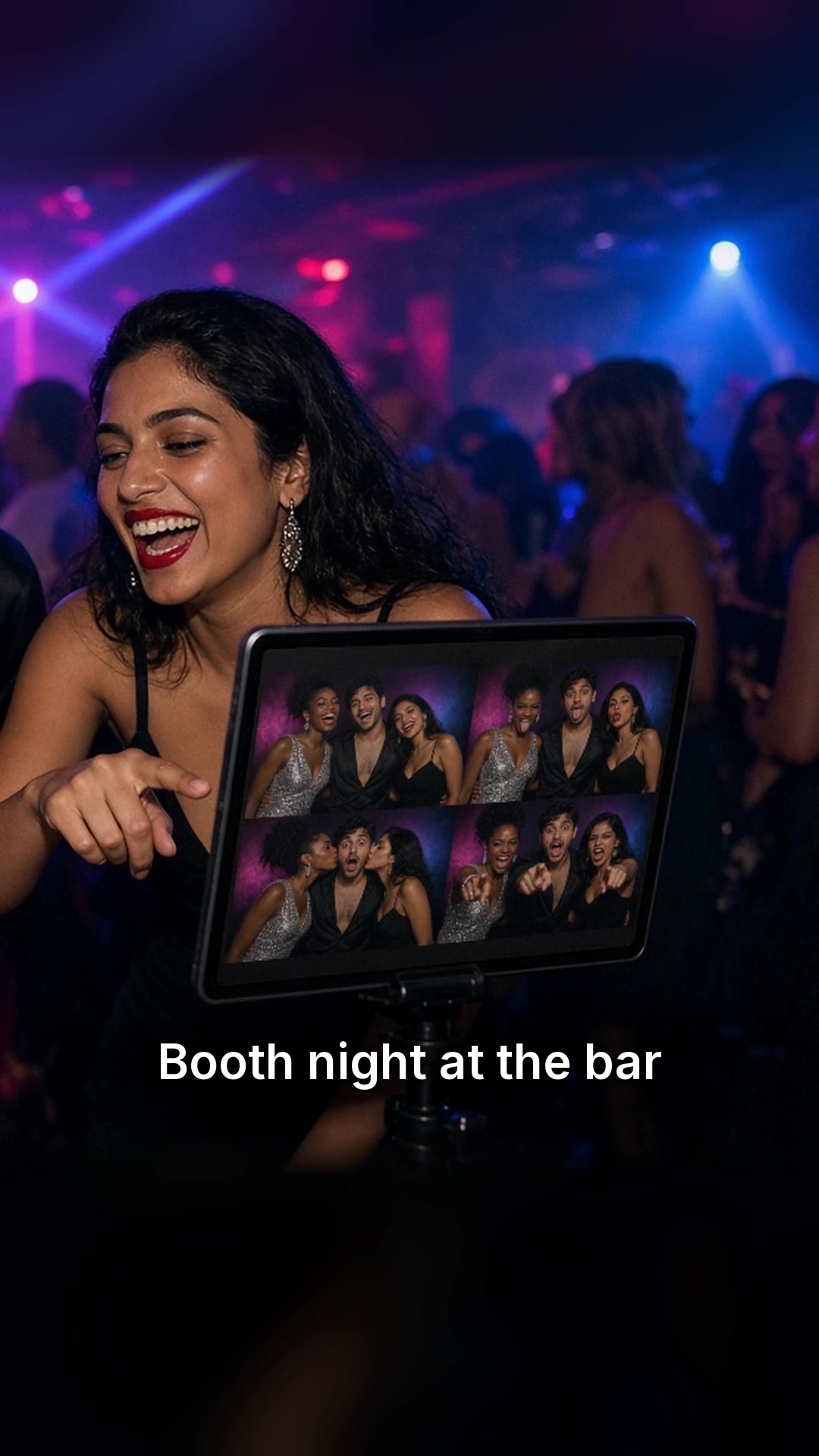
Every bar has a night that needs a reason to come out. A themed booth night gives regulars something to look forward to, and it gives newcomers a reason to stay for one more round. All it takes is an iPad on a stand, a printer, and a plan.
Pick a night
Choose the slowest night of the week, or the one you want to build up. Tuesday trivia crowds, Thursday after-work groups and Sunday afternoon regulars all work. Give it a name, such as “Booth Night,” and put it on the chalkboard so it feels like a ritual.
Consistency helps. If guests know the booth is out every Thursday, they will plan around it.
Holiday weeks make an easy theme. Dress the room up for December, and if you’re in South Florida, the best Christmas light installers in Boca Raton can have the bar glowing before the first strip prints.
Set up the booth
Put an iPad on a stand near the end of the bar or by a cozy table. Open ZillaBooth, choose a 2×2 grid or a classic strip, and take a test session with a bartender. Guests tap, pose through the countdown, and get four photos in one finished picture.
Strips and grids are free in the core app, with no watermark and no account. That means you can test the idea for a night with no commitment.
Add the print moment
A printed picture is a souvenir that guests carry out the door and show to friends. Printing works on every tier through AirPrint, so an AirPrint printer behind the bar is enough, and Pro adds Simple Printing, a one-tap Print button. Keep a small stack of paper under the counter and check it at the start of each shift.
Put your venue on every grid
If you run booth night more than once, a venue overlay is worth the effort. With Pro, you can add your own PNG overlay to every grid, so your bar’s name or logo appears on each picture. Guests share the photos with their friends, and your bar gets a little free marketing each time.
Keep guests on the booth
Bars get busy, and a curious guest might open the settings by accident. Apple’s Guided Access locks the iPad to ZillaBooth, and with Pro, Hide Settings keeps the settings button out of sight. Together they keep the iPad on the booth screen, even when the room is full.
Promote it
A booth night works best when people know about it ahead of time:
Post a short preview on your account the day before.
Add a line to the chalkboard or menu.
Ask guests to tag the bar when they post their grid.
Share the best grid of the week the next morning.
If you want more ideas on how bars use the night out as a marketing moment, read our post on bar and nightclub marketing.
Staff notes
A booth should not slow down service. Give one person the job of checking paper and wiping the screen once an hour, and let everyone else focus on the bar. Put a “Tap to start” sign on the stand so staff do not have to explain it.
Is it worth it?
It costs very little to find out. Free ZillaBooth is enough to run a trial night, and an AirPrint printer is the only extra hardware. If it works, you can look at Pro for the overlay and the one-tap print button. The event photo booth app page explains how other venues use it.
In the modern enterprise, data is the lifeblood of the organization. It is the fuel for strategic decision-making, the currency of digital trust, and an asset that demands uncompromising protection. For any business, the conversation around data security has evolved far beyond the IT department; it is now a fundamental, client-facing priority that impacts brand reputation, legal standing, and competitive advantage. This imperative becomes even more acute when dealing with high-profile corporate events, where proprietary information, internal communication, and valuable attendee data are exchanged and captured.
The Importance of Data Integrity in Corporate Events
Why do businesses prioritize data security, especially when planning something as seemingly lighthearted as a corporate photo experience? The answer lies in the complex web of regulations, reputation management, and attendee expectations that define the 21st-century business landscape.1. Regulatory Compliance and Legal Risk:
For global businesses, compliance is non-negotiable. Regulations like the General Data Protection Regulation (GDPR) in Europe, the California Consumer Privacy Act (CCPA), and countless others worldwide impose severe penalties for mishandling personally identifiable information (PII). An event, whether it’s an internal sales kickoff or a public-facing trade show, is a data-gathering operation. Attendee lists, registration details, lead capture forms, and even high-resolution images of employees or clients all fall under the purview of these laws. A breach, or even a perceived misuse of this data by a third-party vendor, can trigger massive fines and prolonged legal headaches for the organizing company.
Protecting Brand and Reputational Capital:
Trust is the hardest asset to earn and the easiest to lose. When a company hosts an event, it extends its brand promise to every attendee. If a vendor associated with that event is seen to be harvesting attendee data, displaying unauthorized third-party advertisements, or adding their own branding in a way that dilutes the corporate message, the event host’s reputation suffers. Corporate events are meticulously curated statements of brand identity. Any element that introduces noise, confusion, or risk to the attendees’ privacy directly undercuts the purpose of the event itself. A security breach at a corporate event can instantly become a public relations crisis, damaging years of brand building and eroding the confidence of investors, partners, and employees.
Securing Internal and Proprietary Content:
Corporate events, particularly internal ones, often involve sensitive information…new product launches, financial targets, strategic planning, or employee information. Even in a seemingly innocent photo booth setting, if the application is cloud-based and uses unsecure storage or unknown data processing policies, there is a risk of proprietary imagery or sensitive organizational context being exposed. Protecting this information is critical, and the chain of trust must extend to every service provider utilized at the event.ZillaBooth Pro: A Business-First Stance on Privacy
Understanding these high-stakes requirements is why ZillaBooth’s Pro package was architected from the ground up as a secure, business-first solution. Our stance on privacy is not an add-on feature; it is the foundation of our offering for corporate clients. We directly address the two primary ways consumer-grade services compromise corporate integrity: data mining and brand dilution.
No Third-Party Ads. Ever.
The commitment to “no ads” is more than a preference for a clean interface; it is a profound philosophical statement about our relationship with your data. Many free or low-cost photo booth applications operate on an ad-supported model, meaning they must inevitably analyze the data they collect…user behavior, image metadata, location, and even facial recognition data…to serve targeted advertising.
For a corporate event, this presents an unacceptable risk: * Data Exploitation: It signals that a third party is mining data collected from your event attendees for their own commercial gain, a direct violation of corporate attendees’ privacy expectations.
* Brand Hijack: Third-party ads appearing on the screen or in shared media hijack your event’s narrative, dilute the corporate message, and introduce unauthorized, potentially competing, branding into your carefully controlled environment.
* Compliance Failure: Allowing an ad-supported platform to handle PII makes compliance with data laws exponentially more difficult, as you lose all transparency and control over what happens to the data once it leaves your direct sight.With ZillaBooth Pro, our revenue comes exclusively from the software license you purchase. This means we have zero incentive and zero operational requirement to analyze, sell, or monetize any data gathered at your event. Your attendee data remains solely yours, stored in your own preferred secure cloud environment or locally, with complete transparency. This is the cornerstone of professional data security: the alignment of vendor and client incentives.
No External Watermarks. Pure Brand Control.
The second, equally critical feature is the commitment to “no watermarks.” In consumer-grade applications, the vendor often applies a persistent, visible watermark to every image and video to market their own brand.
For a corporate client, this is a significant brand intrusion: * Diluted Messaging: Every shared photo, whether posted on LinkedIn by an employee or used in a follow-up email by the sales team, becomes a promotion for the photo booth company, not your brand. This weakens your event’s message and professionalism.
* Perception of Frugality: Watermarks can sometimes be perceived as a telltale sign of using a cheaper, less professional service, which is contrary to the high-value image a corporate event is designed to project.
* Ownership Clarity: The absence of a watermark signals clean, unencumbered ownership of the final assets. All images captured at a ZillaBooth Pro event are purely branded with your corporate logos, your event hashtag, and your aesthetic, reinforcing the investment you made in your brand experience.The ZillaBooth Pro Differentiator for Corporate Events
When a corporate event organizer chooses ZillaBooth Pro, they are not simply purchasing a photo booth solution; they are investing in a secure, compliant, and professional brand extension. This commitment to privacy and brand purity becomes an invaluable selling point during the planning phase. * Elevated Professionalism: Organizers can confidently assure legal and marketing teams that the photo experience will meet the highest standards of data stewardship and brand integrity. It’s not a fun gadget; it’s a professional content-capture tool.
* Full Data Transparency: The client maintains full control over where the data is stored (on-device or within a pre-approved, secure corporate cloud environment). This allows for easy integration into existing corporate data handling and deletion policies.
* Uncompromised Brand Experience: Every visual output…the digital frames, the email sharing template, and the final image…is 100% focused on the client’s brand. This transforms the photo booth from a standalone activity into an integrated marketing and engagement asset.In the final analysis, privacy and data security are not just line items on a risk assessment form…they are a critical component of the value proposition for every corporate service. ZillaBooth Pro’s explicit and unwavering stance on “no ads” and “no watermarks” is the clearest possible assurance that when you choose our solution for your corporate event, you are choosing a partner that prioritizes your company’s data security, brand purity, and compliance above all else. This secure foundation allows businesses to utilize the power of event photography to drive engagement and capture valuable content, all while maintaining the professional integrity that defines their organization.
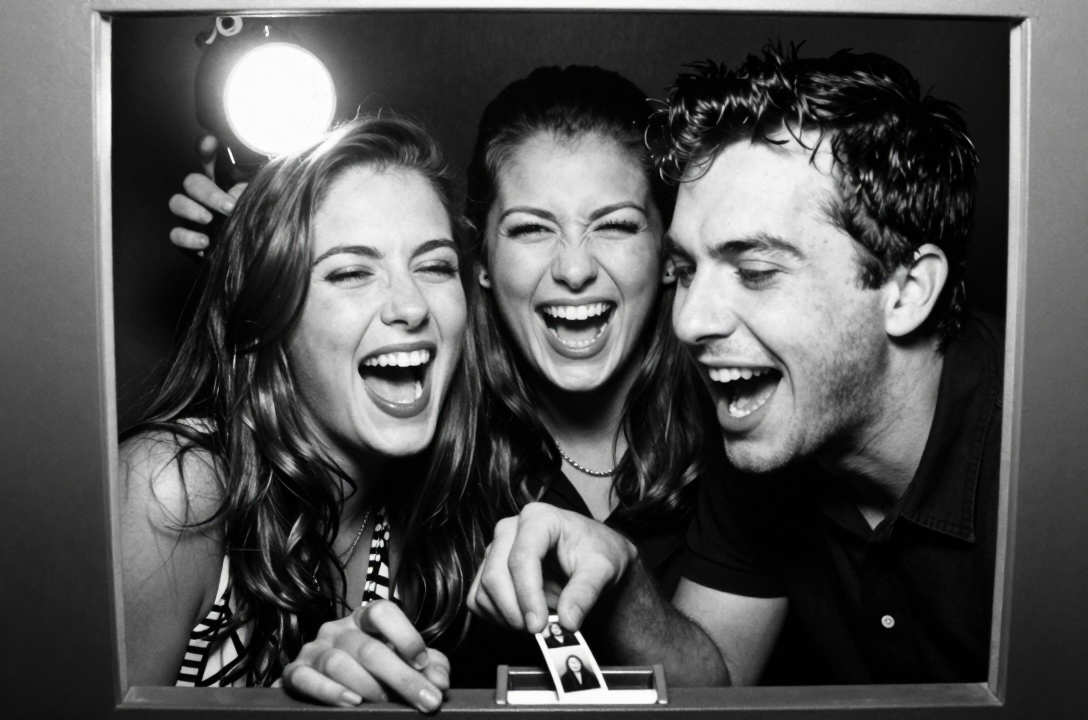
The velvet curtain pulls shut, the coin drops, and a bright, aggressive flash blinds you for a split second, followed by the whirring sound of a machine developing your image. For decades, the analog photo booth has been a cultural icon, a spontaneous capsule of friendship, romance, and late-night antics.
It is an experience defined by a few precious minutes and a strip of perfectly imperfect, high-contrast, physical prints. But a shadow is falling over this cherished tradition, and it’s not just the deep shadow cast by the flash. The experience we love is being threatened by a crisis far beyond the booth’s four walls: a global shortage of the one thing that makes it all possible…the analog paper itself.
What started as an industry-specific inconvenience has become a profound supply chain crisis, threatening to extinguish the very tradition it was built on. The primary, unavoidable culprit is the global geopolitical landscape, specifically the ongoing war in Ukraine, which has created a domino effect across the world’s chemical and manufacturing supply lines.
Analog photographic paper relies on a complex, highly specialized manufacturing process that requires key chemical components and specific material sources, many of which are now directly or indirectly impacted by the conflict. Manufacturing centers and supply routes for vital materials…from wood pulp to the specialized silver halide emulsions…have been disrupted, either through direct conflict zone closures or the cascading effects of trade sanctions, energy price volatility, and shipping bottlenecks. The result is a simple, brutal equation for photo booth operators: less paper available globally, at a significantly higher cost, and with no certainty about future supply.
For the purists and operators of traditional analog booths, this paper crisis is a punch to the gut. The cost of a single roll of paper, already a premium item, has skyrocketed, often doubling or tripling in price in under two years. Lead times for new stock stretch from weeks to months, turning routine re-stocking into a desperate, high-stakes hunt.
This is not just an inconvenience; it’s an existential threat. Many smaller, independent booth operators, who have kept the analog flame alive in arcades, cultural centers, and vintage markets, are being forced to make heartbreaking choices: drastically raise prices, ration prints, or, tragically, shut down entirely. The physical, tangible experience of the analog print…the very heart of the tradition…is becoming unsustainably expensive and unreliable.
The irony is that the crisis is forcing a reassessment of what we truly cherish about the analog booth experience. Is it the chemical process, or is it the vibe ? Is it the raw materials, or the spontaneity ?
Most of us would agree it’s the latter. We love the immediacy, the aggressive, unforgiving lighting, the black-and-white grit, and the uneditable, un-retouched honesty of the strip that slides out of the slot. We love the high-contrast aesthetic that the direct flash creates…the deep shadows and the dramatic highlights that feel more authentic than any soft-lit, filtered digital selfie. This raw, imperfect aesthetic is what needs to be preserved, not the brittle supply chain it currently rests upon.
This is where the vision of the future comes into sharp focus, a future that is not about replacing the spirit of the analog booth, but about liberating it from its physical constraints. This is the case for embracing digital solutions like ZillaBooth.
ZillaBooth is not just a digital camera in a box; it is an experience meticulously engineered to replicate, and then enhance, the core emotional and aesthetic value of the traditional booth, all while making it far less dependent on the global paper and chemical supply chain. It offers the ultimate continuity solution for operators who want to maintain the classic look without the risk of an empty paper tray or a looming price hike driven by events thousands of miles away.
The first and most critical advantage ZillaBooth offers is unshakeable supply chain resilience. Because it works digitally first, there are no darkroom chemicals, and prints are optional. If paper runs short, an operator running a ZillaBooth can keep the booth going with digital sharing. This provides operational stability, predictable overhead, and the ability to offer the photo booth experience consistently, whether the global supply of wood pulp is up or down.
But the shift to digital with ZillaBooth is about much more than mere reliability; it is about aesthetic faithfulness and enhancement . The developers behind ZillaBooth understand that the charm of the analog print lies in its imperfections and its specific high-contrast look.
ZillaBooth doesn’t try to fake the chemistry. There’s no grain or film filter; its only look is Black & White (in ZillaBooth Pocket), a simple way to lean into the deep shadows and high contrast that analog enthusiasts love.
Furthermore, ZillaBooth takes the concept of the physical keepsake and makes it infinitely more accessible and useful for the modern consumer. While the traditional analog booth provided one, two, or maybe three physical strips, ZillaBooth Pro’s Simple Printing sends each collage with one tap to your saved AirPrint printer, including DNP dye-sub printers through DNP’s WCM-Plus, and guests can take a digital copy home through the share sheet or by email with Pro’s Simple Email Sharing.
Guests can share their collage right away and post it to social media. This solves one of the biggest drawbacks of the traditional analog booth: the beautiful print that is cherished but often not easily shared with friends who weren’t there, or with the wider social world. The digital-physical hybrid ensures the moment is both a treasured private memento and a powerful piece of shareable content.
This shift also opens the door to unprecedented creative flexibility. The analog booth is stuck with one look: the look of the chemistry and paper loaded into it. ZillaBooth, being software-driven, isn’t stuck with one look. Operators can switch between full color and black-and-white (in ZillaBooth Pocket) and, with Pro, swap the overlay to match the theme. This allows a single machine to serve multiple markets and themes, from a vintage-themed wedding to a hyper-modern corporate event, drastically increasing the machine’s utility and revenue potential.
The sustainability argument is perhaps the most compelling for future-forward businesses. The analog process is chemically intensive and creates waste. While the romanticism of the darkroom is powerful, the reality is that the process is resource-heavy. ZillaBooth is a fundamentally sustainable alternative. By making prints optional and dropping the darkroom chemistry, it can shrink the ecological footprint of the photo booth experience. In an era where consumers and businesses are increasingly prioritizing environmental responsibility, choosing a digital-first solution is not just a pragmatic choice…it’s an ethical one that aligns the business with modern values.
Ultimately, the goal is to keep the spirit alive. The enduring magic of the photo booth is the shared, spontaneous act of creative self-expression in a small, private space. It’s the instant gratification of seeing the result, unedited and raw. ZillaBooth ensures this experience continues, not as a relic dependent on a fragile, costly, and resource-intensive global supply chain, but as a robust, modern, and accessible piece of technology. The paper crisis has laid bare the vulnerabilities of the analog system. The response must be a sophisticated digital pivot that respects the past while building a reliable future.
By choosing ZillaBooth, operators are not just installing a new piece of equipment; they are future-proofing a beloved cultural tradition. They are trading the stress of supply chain logistics for the freedom of digital abundance, the uncertainty of geopolitical volatility for the stability of software updates, and the high cost of vanishing paper for the sustainable model of digital distribution.
The velvet curtain will still pull shut, the flash will still fire with its signature, aggressive intensity, and the strip of images will still be instantly available…but the memory, and the business, will be safe and thriving, liberated by the power of digital innovation. The future of the analog aesthetic is unequivocally digital.
Guest one finishes. Guest two taps nothing because the booth still shows the last session’s share screen. Auto-restart keeps the kiosk ready so the line never stalls on a reset someone forgot to tap.
Available in Pro.
The problem
Self-serve booths die quietly in the idle state after a share or print. The next guest assumes it is broken, staff scramble to reset, and throughput collapses during peak hours. Manual restart is fine for demos—it fails when two hundred guests expect rental-grade reliability.
Why it matters
Return the booth to ready state automatically after each session
Keep lines moving without staff resetting between guests
Reduce abandoned attempts from confused walk-up users
Pair with attention shutter so each guest sees the same clear starting point
Who it’s for
Auto-restart is essential for Pro operators running guest-led booths: self-serve venue booths, festival kiosks with volunteer rotation, and operators who measure success in sessions per hour.
Real-world moments
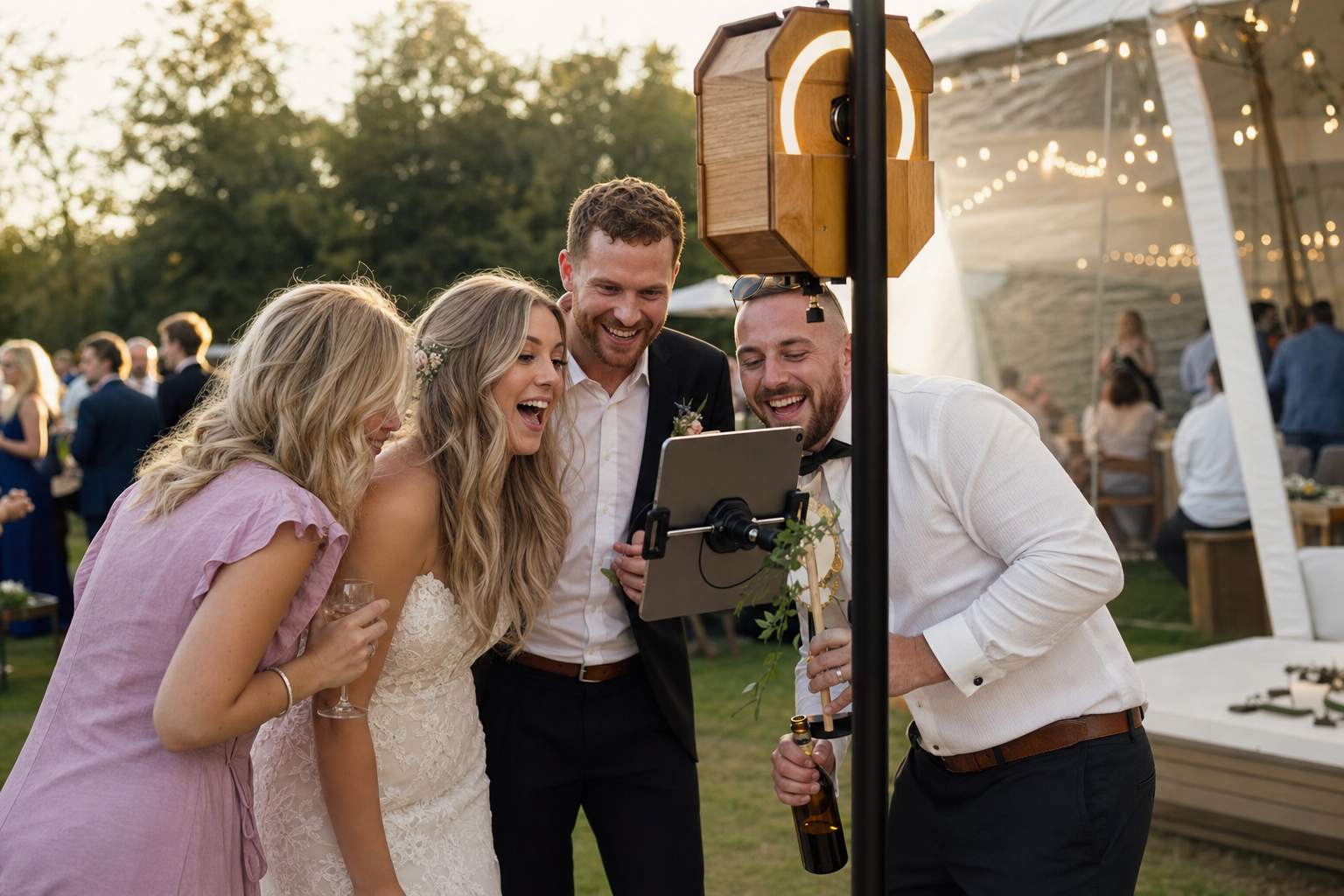
A wedding reception iPad kiosk resets automatically during peak dance-floor line surges
A trade show booth runs guest-led during keynote blocks, locked with Guided Access
A venue weekend kiosk stays ready between groups without a manual reset
How ZillaBooth delivers
Pro’s auto-restart returns the booth to a ready capture state after guests complete sharing, printing, or other session endings. Combined with Guided Access (with Pro, the screen stays on and Settings stay hidden) and the confirmation animation, it delivers the always-on reliability guests expect from rental booths.
A pro booth is ready for the next guest before they step up.
Yes. Auto-restart keeps kiosk flow continuous after print and share completions.
Can I disable auto-restart for styled sessions?
Pro event controls support pro workflows; configure behavior during pre-event setup.
Which tier includes auto-restart?
Auto-restart is part of ZillaBooth Pro, a monthly or yearly subscription.
How does auto-restart relate to keeping the screen on?
With Guided Access or Single App Mode on, the screen stays on all event, and auto-restart resets the session. Together, with Auto-Lock set to Never and the iPad plugged in, they keep the booth running.
The evolution of the simple photo booth is at a critical juncture. For decades, the charm of the booth lay in its immediacy, its small-box intimacy, and the raw, often hilarious, imperfection of the strip of four photos it spat out. It was an analog anchor in a digitally accelerating world, a machine dedicated to capturing candid, unfiltered human connection. But as Artificial Intelligence (AI) permeates every layer of the digital ecosystem, the photo booth industry is bracing for a transformation that promises…or threatens…to completely redefine the experience.
The future, as projected by many tech optimists, is one where the photo booth becomes a highly sophisticated, predictive, and generative tool. At the forefront of this shift is the deployment of advanced AI imaging and facial recognition technologies. Imagine a booth that doesn’t just take a picture, but instantly analyzes the composition, light, and subjects’ expressions.
This next-generation system would employ AI to automatically perfect the image, going far beyond simple digital flash. It could correct for bad lighting in real-time, instantly smooth out skin texture, adjust color balance to match a high-end photographer’s signature look, and even subtly alter facial symmetry to conform to prevailing aesthetic ideals. The output would be a product of machine-generated perfection…an image that is technically flawless but perhaps emotionally sterile.
Beyond mere correction, the predictive capabilities of AI promise an era of hyper-customization. Facial recognition, a technology that has already sparked widespread debate in public safety and social media, is poised to enter the booth. An AI-powered booth could recognize a returning customer, recall their preferred filters, and instantly generate backgrounds tailored to their past choices or, more invasively, to data pulled from their public social profiles. Planning a trip to Paris?
The AI might instantly render a dynamic Eiffel Tower background. The process moves from capture to generation , where the photo booth is less a camera and more a content factory. Furthermore, generative AI could be used to remix the subjects entirely, placing them into a completely different artistic style, turning a simple photo strip into a Van Gogh-esque painting or a comic book panel on demand. This shift represents a move toward content that is highly consumable, shareable, and optimized for virality…but it fundamentally alters the relationship between the subject and their memory.
This wholesale embrace of ‘over-AI’d photos,’ however, introduces a critical and often overlooked set of trade-offs. The first casualty is authenticity. The very charm of the classic photo booth was its commitment to the moment: the awkward, spur-of-the-moment pose, the goofy face, the genuine, unforced laughter. When AI intervenes to “perfect” an image…smoothing, correcting, and stylizing…it erodes the candid truth of the moment.
The output becomes a manufactured, idealized version of reality, indistinguishable from a dozen other heavily filtered selfies. As consumers, we are already experiencing significant fatigue with this aesthetic uniformity. When every image is polished to the same sheen of perfection, the emotional resonance of the photograph declines. We want to see the real moment, not its improved avatar.
The second, and far more serious, concern revolves around privacy and control. The integration of facial recognition, while convenient for instant sharing and personalization, represents a massive step toward surveillance and data collection. When a photo booth uses facial recognition, it’s not just recognizing a face for a moment; it’s potentially creating a permanent biometric profile linked to a unique piece of personalized, private data. Furthermore, the push for instant, automated social sharing, often touted as a feature of these AI-powered systems, transforms a private moment of fun among friends into public marketing collateral.
The couple or event host loses control the moment the photo is taken, as the data is instantly beamed into a cloud governed by the photo booth operator and its AI vendors. This trade-off of convenience for personal data and control is the core issue defining the “over-AI’d” future. The consumer’s memory becomes another input for a machine’s data model. The moment is sacrificed to the metric.
In this context of accelerating digital perfection and eroding privacy, ZillaBooth is staking a firm and necessary claim as the streamlined, “human-centric” alternative. It is not an anti-technology stance, but a purposeful rejection of unnecessary complexity and data-hungry AI. ZillaBooth’s philosophy recognizes that the true value of a photo booth is not in its computational power, but in its ability to facilitate authentic, spontaneous human interaction.
ZillaBooth’s design is intentionally streamlined, serving as a clean, high-quality capture tool rather than a complex AI engine. The focus is on exceptional hardware…professional-grade cameras, lighting, and printing…that ensures a stunning image without resorting to deep-learning algorithms for correction. This commitment to ‘streamlined’ operation translates to a user experience that is simple, instantaneous, and focused on the interaction happening inside the booth, not the processing happening behind the screen. The machine steps back, allowing the human element to dominate. The memories are genuine, crisp, and true to the moment they were captured, celebrated for their spontaneity, not their digital polish.
The “human-centric” core of ZillaBooth manifests most powerfully in its privacy-by-design approach. In a world where photo booths are becoming data collectors, ZillaBooth operates on a principle of trust and absolute user control. The system is designed to be self-contained and locally managed, minimizing the inherent risks associated with cloud-based, automated sharing and facial recognition. The images and data are sequestered and placed directly in the hands of the event organizer or host, not automatically broadcast to the world.
This model rejects the modern impulse for instantaneous, uncurated public sharing. There is no automated social media integration, no “upload to Instagram” button presented to the user inside the booth.
Guests are encouraged to capture the memory for the host …for the shared experience…not for their own personal social feed. This design choice powerfully reinforces the notion of a “circle of trust” around an event, ensuring that the precious, candid moments remain the private property of the people who created them. This is the antidote to social media fatigue; it is a commitment to the memory as a private heirloom, not a public piece of content.
Furthermore, ZillaBooth’s rejection of excessive AI-driven personalization is a deliberate choice to maintain accessibility and authentic fun. While AI-booths might generate 100 different digital backgrounds, ZillaBooth prioritizes physical, tangible props and backdrops that encourage real-world play and interaction. The memories created are not composites of algorithms and digital overlays; they are high-quality records of genuine human expression and interaction…the goofy prop combinations, the spontaneous huddle of friends, the simple, honest fun of being present. The focus remains on the people and the party, not the processing power.
The future of the photo booth is thus a fork in the road: the path of the AI-driven system, which prioritizes technical perfection, data collection, and viral shareability at the cost of authenticity and privacy; or the path championed by ZillaBooth, which doubles down on the core, timeless appeal of the photo booth…simplicity, quality, and human connection. In an era where digital noise and algorithmic perfection are the defaults, ZillaBooth stands as a necessary, refreshing counterpoint…a technology designed to capture real life, not to refine or replace it.
It ensures that the memories made remain just that: memories, not metrics. And in the long run, it is the genuine, human-centric memory that truly endures.