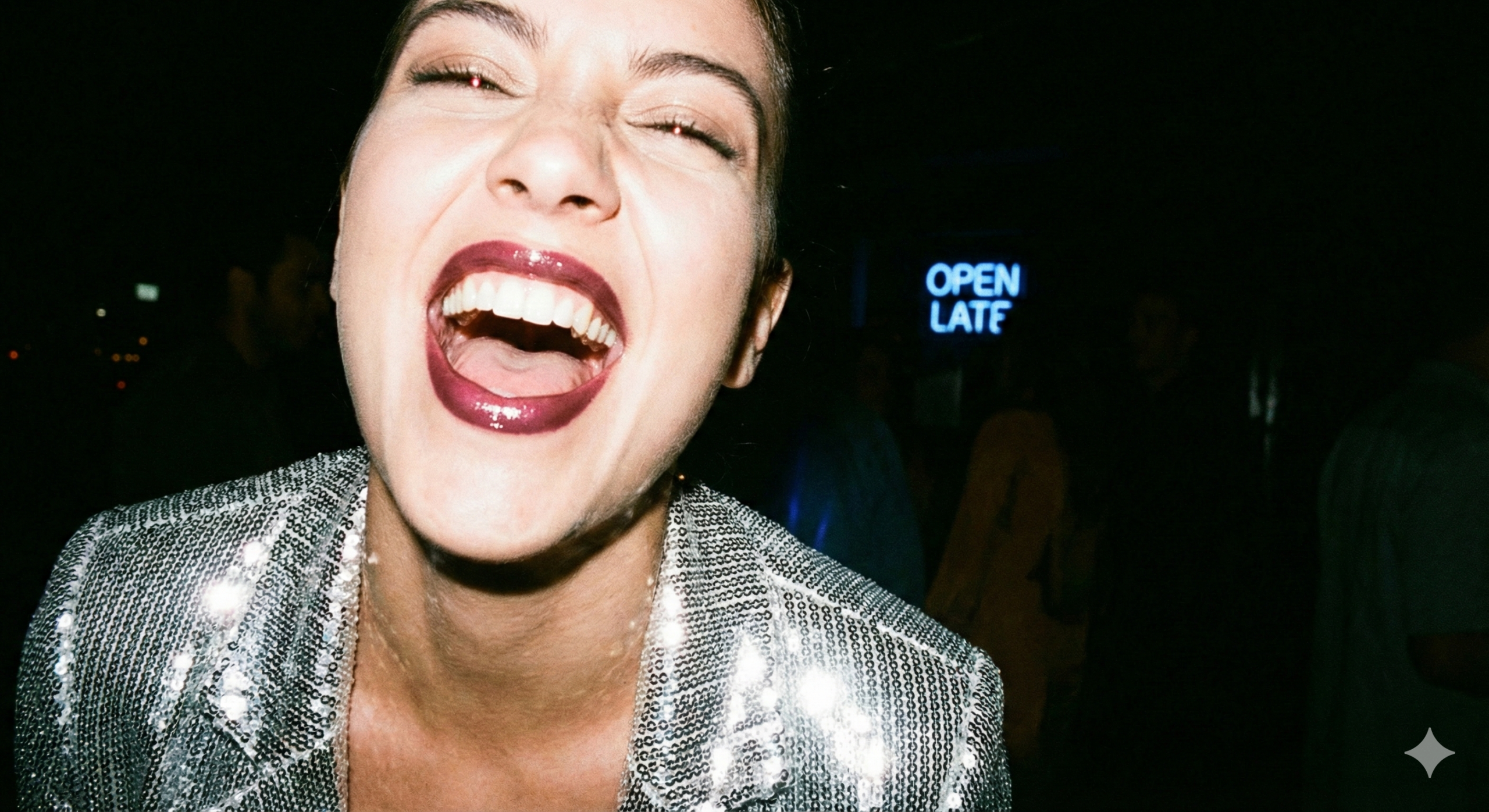
The return of the harsh, unfiltered flash is one of the most surprising and dominant photography trends of 2026. After years of chasing soft, natural light, carefully editing out shadows, and defaulting to our phone’s automatic low-light settings, we’ve collectively thrown out the rule book and embraced the high-contrast, often unflattering aesthetic of the direct flash photograph. It’s not just a passing fad; it’s a full cultural moment rooted deeply in nostalgia for the late 1990s and early 2000s, an era when inexpensive point-and-shoot digital cameras and the classic disposable film cameras reigned supreme.
What the modern photographer is craving is the “off-the-cuff” feel…that raw, sequential aesthetic born from a device that required zero technical expertise and gave you exactly what you got. It’s the look of spontaneity, a visual diary of real life captured without the digital artifice of filters, airbrushing, or meticulous staging.
The disposable camera, with its non-diffused, front-facing flash, was the master of this style, casting deep, unmistakable shadows, often blowing out skin tones, and creating dramatic, high-contrast highlights. It’s a vibe that screams “This was taken right now and no one had time to adjust the lighting.” It feels real, spontaneous, and unposed.
This aesthetic is the visual equivalent of lo-fi music…imperfect, slightly rebellious, and immediately evocative. It’s the raw energy that contrasts sharply with the meticulously curated, sun-drenched perfection that has dominated social media for the past decade. The shadows are part of the story, the blown-out highlights are a badge of authenticity, and the intense focus on the subject creates an undeniable sense of drama.
The Expensive Wait for Authenticity
So why not just buy an actual disposable camera? The truth is, while the aesthetic is cool, the classic “old school” method comes with major pain points that simply don’t fit into our instantaneous digital world. First, there’s the cost. Disposables are not cheap, and the film and developing fees quickly add up, turning a fun trend into an expensive habit.

Second, and perhaps the biggest hurdle: the wait. You have to finish the roll, drop it off, and wait anywhere from a few days to a week to see your pictures. That delay kills the immediacy of a moment, frustrating a generation used to instant feedback. You might realize your flash wasn’t working, or the moment was totally missed, but only after your memories have been held hostage in a lab for a week. The environmental cost of single-use plastic and chemical development is also a growing concern for many.
This is where ZillaBooth enters the chat. We understand you want the look…that raw, sequential aesthetic…without the week-long wait, the cost per photo, or the environmental guilt. ZillaBooth is the ultimate digital equivalent of the classic disposable camera, giving you the power to capture that raw, high-contrast aesthetic instantly on your iPhone. It’s about leveraging your phone’s camera to behave exactly like a primitive, flash-forward-only point-and-shoot, but with the instant gratification of a modern device.
Mastering the Look with ZillaBooth Pro
Replicating the “disposable camera aesthetic” requires forcing your phone’s incredibly smart camera to override its automatic settings and behave in a simple, almost brutal way. The key lies in manual control over the flash, which is where a dedicated professional camera app like ZillaBooth Pro becomes essential. Your iPhone’s standard camera app is designed to prevent the harsh, high-contrast look you’re actually after, so we need to step outside of its controlled environment.

The core mechanism of the aesthetic is the Direct Flash…a technique that creates the same high-contrast, dramatic look found in those late ’90s/early ’00s shots. This style is often referred to as the ‘Paparazzi Aesthetic’ because it mimics the intense, unfiltered look of celebrity street style from tabloid magazines and grainy, late-night party photos taken in dimly lit clubs.
Here is the tutorial for mastering the high-contrast aesthetic with ZillaBooth Pro:
Step 1: Download and Open ZillaBooth Pro
The journey begins with the application itself. If you haven’t already, download the ZillaBooth Pro application. This app is the gateway to granular control over your iPhone’s camera settings, crucially including the flash function that the native camera app manages automatically to avoid the desired harsh effect.

Step 2: Locate the Flash Control and Go Manual
Once inside the ZillaBooth Pro interface, locate the flash icon…usually a small lightning bolt. In the standard iPhone app, this is often set to ‘Auto’ or ‘Off.’ Within ZillaBooth Pro, you’ll see primary settings for the flash: Auto, On, and Off. This is the crucial moment: set the flash control to Manual “Flash On”.

This single action is the secret sauce. It forces the flash to fire at its maximum intensity every single time you press the shutter, regardless of how bright the scene actually is. You want the flash to overpower the ambient light…even if there is plenty of natural light…which is what creates those signature deep, black shadows and the dramatic, spotlight look on your subject. The lack of diffusion is key; the iPhone’s tiny flash is perfect for this, as it acts like the unrefined light source of a classic point-and-shoot disposable.
Step 3: Select Your Subject and Background for Maximum Drama
The aesthetic works best when there is a strong, dramatic contrast between the subject and the background. * The Subject: The direct flash will highlight texture, makeup, and fabric dramatically. Encourage your subject to look directly at the camera for the classic, direct confrontation look, or let them move naturally in a chaotic setting to maximize the perceived spontaneity.

* The Background: Look for settings with deep shadows or busy, interesting textures, like a dark brick wall, a crowded bar, or a street scene at night. The harsh flash will powerfully cut your subject out of the darkness and push the background into deep shadow, enhancing the drama and sense of isolation common in this aesthetic. Step 4: Adjust Exposure (The Aggressive Underexposure Move)
Even with the flash forced on, you can fine-tune the drama using ZillaBooth Pro’s manual controls. While the flash is active, try slightly underexposing the shot using ZillaBooth Pro’s manual exposure slider. This will make the shadows even deeper and the highlights of the flash pop even more aggressively, reinforcing the “spotlight” effect that defines the disposable aesthetic. For maximum effect, also use the manual focus control to ensure your subject is razor-sharp. The extreme contrast created by the direct flash demands perfect focus to maintain the image’s overall impact.
Step 5: Shoot and Review Instantly
Take the shot. The result should be a high-contrast image with a distinct, vintage-digital feel. Pay attention to the shadows…they should be harsh, dark, and clearly defined behind your subject. Look for the reflective qualities in eyes, jewelry, or glossy fabrics, which should gleam intensely under the direct, undiffused light. Best of all? You see it immediately. No waiting, no cost, no waste.
Pro Tips for Digital Disposable Perfection
To elevate your digital disposable game beyond a simple snapshot and into a refined piece of editorial-style content, keep these professional tips in mind:1. Embrace the Red Eye: Unlike conventional photography where red-eye is a flaw to be corrected, in this aesthetic, it can be a feature. Don’t worry about editing it out. It adds to the raw, uncontrolled, and nostalgic feel of a genuinely spontaneous late-night flash photo.
Focus on Texture: Direct flash is unforgiving, but that’s its strength. It aggressively magnifies texture. Shoot subjects wearing sequins, vinyl, metallic finishes, or heavy glitter. The intense light will bounce off these materials, creating an explosive, dynamic effect that elevates the drama and adds an almost cinematic quality to the shot.
Get Close: The Inverse Square Law is Your Friend: The closer you are to your subject, the more intense and dramatic the flash effect will be. Due to the physics of light, the inverse square law means the light from your phone’s small flash will fall off rapidly; this means your subject will be brilliantly illuminated while everything even a few feet behind them will dissolve into shadow. This enhances the “spotlight” or “caught in the act” effect which is the hallmark of the spontaneous aesthetic.
Shoot in Broad Daylight (The Ultimate Power Move): Don’t reserve the flash just for dark environments. For the most aggressively contrasting and fashion-forward look, use the forced flash during the day. This technique, sometimes called “fill flash” (though here it’s more of an “overpower flash”), creates a surreal, hyper-real look where the sunlight and the flash compete, resulting in ultra-deep black shadows and perfectly lit faces…a signature style of editorial fashion photography from the early 2000s that gives the image a sense of heightened reality.
Black and White Conversion: While shooting in color, consider a high-contrast black and white conversion afterward. The tonal separation created by the direct flash translates beautifully into dramatic monochrome, often mimicking the look of classic tabloid photography that had to be printed quickly and cheaply.The disposable camera trend isn’t about taking better photos in the traditional, technically perfect sense; it’s about taking photos with more personality and more story. It’s a statement against the polished, perfect grid, a rebellion in favor of the real, the raw, and the dramatically lit. ZillaBooth allows you to access this potent hit of digital nostalgia instantly and consistently, giving you the classic, sequential, and raw aesthetic you crave without the week-long wait or the development cost. Step out of the soft light and into the shadows, and let ZillaBooth be the source of your next great, imperfectly perfect shot.