
Tag: ZillaBooth

  • Real Estate Open Houses: The Unexpected Photo Op

    The traditional real estate open house has long been the backbone of property marketing, a necessary ritual that brings potential buyers through the door. But let’s be honest: in the age of hyper-curated social feeds and instantaneous digital connections, the standard open house…a broker standing near a bowl of M&Ms while visitors quietly judge the backsplash…is fundamentally flawed. It’s transactional, not experiential. It’s forgettable, not shareable. For a property listing to truly break through the noise and achieve virality, it can no longer rely on feet in the door; it needs fingers on the share button.

    The challenge for the modern Realtor is not merely to show a house, but to sell a dream and, crucially, to manufacture a moment that is inherently social. Enter the most novel, unexpected, and powerful marketing tactic sweeping the high-end and high-volume real estate sectors: transforming the open house into a high-tech photo opportunity, powered by platforms like ZillaBooth.

    The average open house is a passive event. Buyers walk through, take mental notes, maybe grab a paper flyer, and move on. The most enduring memory they take with them is often the discomfort of awkwardly standing in someone else’s living room. No emotional connection is forged, and absolutely no momentum is created that extends beyond the front door. The only data captured is a hastily scrawled name and email on a sign-in sheet, a lead that is cold before the agent has even packed up.

    We are no longer selling four walls and a roof; we are selling a future identity. The most powerful photo op isn’t one featuring the house’s exterior…the MLS photos already handle that. The true marketing gold is a picture of the buyer in the home, a photo that makes them look and feel like they already own it. This is where the concept of the “New Homeowner” overlay becomes a psychological masterstroke.

    Imagine a visitor…let’s call her Sarah…walking into a stunning, sun-drenched kitchen. Instead of just admiring the quartz countertop, she’s invited to step into a dedicated, well-lit photo station powered by ZillaBooth. The app prompts her to take a quick photo or a GIF, and upon completion, a beautiful, custom-designed digital overlay is automatically applied. This isn’t a generic branded frame; it’s a stylish graphic that reads: “My New Place! #FutureHomeowner #LuxuryLiving” or “Sold (To Me)! Est. 2026.”

    Sarah isn’t just taking a picture; she is momentarily performing her future self. She instantly receives the high-resolution image to her phone via text or email. What is the very first thing she will do? She will share it. She will post it to her Instagram Story, text it to her partner, and send it to her family group chat. That single act of sharing, driven by aspirational identity, is the mechanism that turns a transactional viewing into a viral property listing.

    This strategy hinges entirely on the seamless execution provided by a platform like ZillaBooth. The key differentiators that elevate this from a clumsy DIY photo booth with props are precision, speed, and automation.

    First, ZillaBooth provides professional quality. The agent can set up a simple backdrop or utilize a feature of the home (like the fireplace or the view from the deck) and use the app’s lighting features to ensure every shot is flattering. This ensures the UGC generated reflects well on the listing and the agent’s brand.

    Second, the custom overlay is automated. The branding is applied instantly, ensuring a consistent message and look. The overlay isn’t just a label; it’s the viral hashtag and the property’s address discreetly woven into the frame, providing all the necessary context for a friend viewing the post to find the listing later.

    Third, and most critically for the Realtor, ZillaBooth facilitates instant and robust data capture. The photo delivery mechanism…text or email…requires the user to provide their contact information. This transforms the cumbersome, often illegible paper sign-in sheet into an elegant, high-engagement data capture tool. A lead generated from a photo experience is not just a name; it’s a qualified, warm lead who has voluntarily provided their best contact information and has already established an emotional connection to the property. This is a massive leap in lead quality.

    The benefits of the ‘New Homeowner’ photo op can be distilled into three compelling pillars that redefine open house marketing:

    Pillar 1: The Viral Engine of User-Generated Content (UGC)
    Social media marketing for real estate is expensive, and most organic posts from agents are seen as self-promotion. UGC, however, is authentic. When Sarah posts her aspirational “New Homeowner” photo, it is perceived by her network as a genuine, exciting life event, not an advertisement. This is free, credible, word-of-mouth marketing at scale. * Reach Expansion: Sarah’s network, which is precisely the target demographic (friends who live near her, often in a similar economic bracket), sees the post. This reach is highly targeted and far more valuable than a generic paid ad.
    * Social Proof: The photo acts as social proof. It subtly says, “This property is so desirable, people are already claiming it.” This creates a sense of urgency, the Fear Of Missing Out (FOMO), which is the most effective psychological lever in real estate sales.
    * Instant Feed Curation: For the agent, they have successfully inserted their listing into the highly prized, personal content stream of a potential buyer. The property becomes a background character in the buyer’s personal narrative.Pillar 2: Superior Lead Quality and Automated Follow-Up
    The transition from a paper ledger to a digital ZillaBooth sign-in is a foundational upgrade to the Realtor’s CRM pipeline. * Verification and Quality: Requiring an email or phone number for instant photo delivery ensures the contact information is correct and primary (unlike a rushed, fake email on a clip board).
    * Segmentation: The system immediately identifies “Active Participants”…those who were engaged enough to take a photo…making them the warmest leads for immediate follow-up.
    * Contextual Follow-Up: The follow-up email or text is no longer a generic “Thanks for visiting.” It can be a personalized message: “Hope you enjoyed your virtual New Homeowner moment at 123 Maple Street! Here’s the floor plan and a quick mortgage calculator tool to help turn that photo fantasy into reality.” The conversation starts from a place of fun and connection, not cold sales pressure.
    * Data Analytics: The agent gains data on which overlay designs or photo backdrops are most successful, allowing them to refine their experiential strategy across multiple listings.Pillar 3: Elevating the Open House to an Event
    In a crowded market, differentiation is everything. This strategy instantly transforms a run-of-the-mill open house into a memorable, buzzworthy event. * A Sense of Fun: The photo booth is an icebreaker. It lowers the barrier to interaction and gives people something to do other than whisper about prices. It creates a positive, high-energy atmosphere that people associate with the property itself.
    * Emotional Anchoring: By encouraging a photo on a significant feature of the house (e.g., the wine cellar, the master bathroom, the view), the photo serves as a powerful emotional anchor. When the buyer later reviews the photo, they aren’t just seeing an image; they are reliving the feeling of that potential future moment in the home. This emotional residue is far more valuable than any staging or lighting trick.
    * Competitive Edge: A ZillaBooth setup signals that the listing agent is modern, digitally savvy, and committed to high-effort marketing. This not only attracts more buyers but also serves as a compelling differentiator when pitching to sellers who are evaluating which agent can best market their home.For Realtors ready to implement this, the key lies in the thoughtful execution of the ZillaBooth setup.
    The Realtor’s Implementation Checklist:1. Placement is Everything: Position the ZillaBooth station in the single most photographable spot in the house…the million-dollar view, the chef’s kitchen, or the spa-like master bath. This ensures the UGC generated showcases the property’s best feature.
    2. Design the Perfect Overlay: Keep the “New Homeowner” text aspirational and concise. Crucially, include the key property information: the address and the agent’s contact info or a unique, shareable hashtag for the listing (#123MapleStreetDream). Make the design elegant and non-intrusive.
    3. Active Encouragement: The agent and their team must proactively encourage every visitor to use the booth. It shouldn’t be passive. Use language like: “Before you leave, make sure you take your Future Homeowner photo…it’s the fastest way to get on our VIP list for new showings!”
    4. Instant Gratification: Ensure the ZillaBooth setup delivers the photo instantly. The window for sharing is immediate; a delay of even a few minutes can kill the viral potential.The era of transactional, silent open houses is over. The future of real estate marketing is experiential, emotional, and social. By using a powerful, automated tool like ZillaBooth to create a curated “New Homeowner” photo op, Realtors are not just holding an open house; they are launching a micro-campaign that turns every visitor into a temporary, enthusiastic brand ambassador. They are selling the dream first, capturing the lead second, and generating organic, viral buzz for their listing that money simply cannot buy. It’s a simple, elegant hack that positions the property…and the agent…at the cutting edge of digital marketing, ensuring the next open house doesn’t just sell a home, but sells a story.
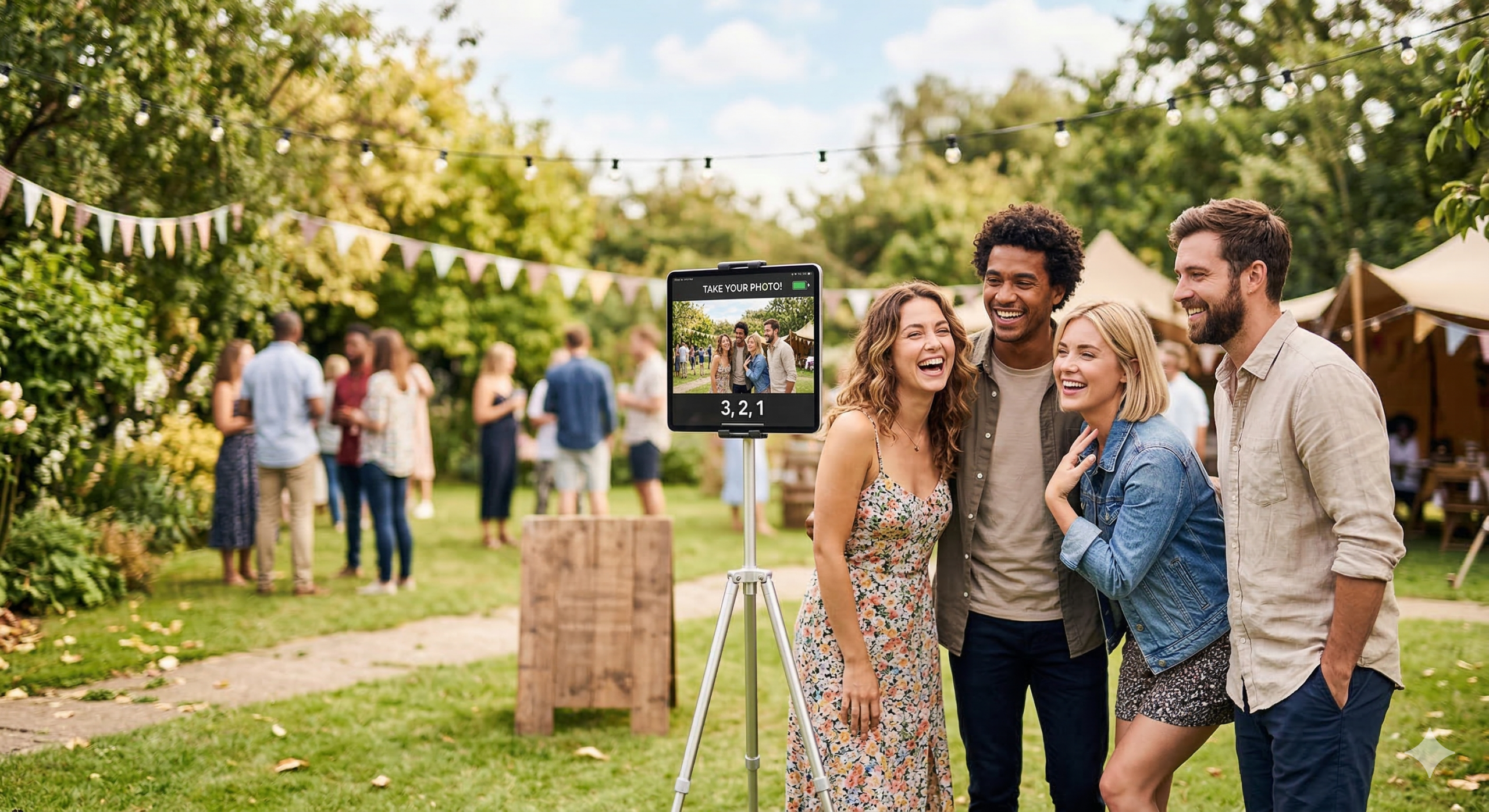
  • Restaurant Marketing: “Tag Us for a Discount”

    In the hyper-competitive world of dining, simply serving great food is no longer enough. The modern restaurant’s challenge is not just to satisfy a customer’s hunger, but to capture their attention, create a memorable experience, and, most importantly, turn that single visit into a powerful, organic marketing asset. Today’s diners are constantly connected, and their social media feed is the new word-of-mouth. So, how can a restaurant seamlessly bridge the gap between in-house dining and digital promotion, all while adding genuine value to the customer experience? The answer lies in a simple, high-impact interactive strategy that leverages modern photo technology: the “Tag Us for a Discount” campaign powered by a ZillaBooth.

    This strategy is a masterful conversion of passive waiting time into an active, self-sustaining marketing engine. It transforms a potentially frustrating moment…standing in the waiting area, often hungry and restless…into an opportunity for fun, instant gratification, and valuable user-generated content (UGC).

    The core concept is brilliantly straightforward: * The Tool: Install a ZillaBooth (a premium, digital photo booth or sharing station) in the restaurant’s waiting area.
    * The Offer: Offer a specific, desirable discount (e.g., 10% off the current check, a free appetizer on the next visit, or a complimentary dessert).
    * The Action: The diner receives the discount only if they immediately share their photo strip on a major social platform (Instagram, TikTok, Facebook) and include the restaurant’s required tag/handle and a custom, pre-written share message.This isn’t just about a photo booth; it’s about a finely tuned conversion funnel that operates entirely on its own.

    The Experiential Hook: Why The Waiting Area?

    The placement of the ZillaBooth is perhaps the most strategic component of this entire plan. The waiting area is a hospitality danger zone…the one time during the customer journey where negative sentiment can build rapidly. Long wait times are a major cause of pre-meal frustration, which can taint the entire dining experience.

    A ZillaBooth solves this problem by injecting entertainment and novelty. It acts as an instant distraction and icebreaker. Instead of checking their phone repeatedly or staring awkwardly at the host stand, guests are taking fun, candid photos. The ZillaBooth’s inherent design encourages groups to interact, laugh, and relax, which significantly lowers the perceived waiting time. By the time they are seated, their mood is elevated, making them more receptive to the service and the overall ambiance. The best part? The moment they step into the booth is the moment they start generating content. The experience starts before the meal even begins.

    Mapping the Diner’s Journey: From Strip to Share

    To ensure maximum participation, the process must be frictionless. The key is in the ZillaBooth’s technology, which facilitates the sharing and ensures the specific marketing requirements are met.1. The Capture: Diners approach the ZillaBooth and take a series of photos.
    2. The Instant Gratification: The booth instantly prints a physical, branded photo strip and/or sends a digital copy (via text, email, or QR code) to the diner’s phone.
    3. The Conversion Point (The Share Message): This is where the strategy shines. The ZillaBooth software is pre-loaded with a custom sharing template. When the diner chooses to share, the system automatically drafts the perfect post for them.
    * Required Element 1: The Tag. The post includes the restaurant’s official Instagram/TikTok handle (e.g., @GourmetEatsNYC). This is essential for tracking and for getting the post in front of the diner’s network.
    * Required Element 2: The Hashtag. A unique, campaign-specific hashtag (e.g., #GourmetEatsNightOut or #ZillaBoothEats) is included for easy campaign performance tracking.
    * Required Element 3: The Call to Action. The message includes a line that promotes the restaurant or a follow-up action (e.g., “Just made a new memory while waiting for the best tacos in town! Come check them out!”).
    4. The Proof & The Reward: The diner shows the posted content on their phone screen to the host or a designated server before they are seated (or upon check-in). The staff member verifies the tag and the custom message are present. Upon verification, the diner receives their discount code or a physical voucher redeemable on the current bill or their next visit.This structure creates an immediate, low-barrier-to-entry incentive loop that guarantees the restaurant receives the marketing exposure before the cost of the discount is incurred.

    The Unrivaled Power of User-Generated Content (UGC)

    The true value of this campaign extends far beyond the minor cost of a discount. It is the quality and reach of the generated content that pays dividends. * Authenticity Over Advertising: In the age of polished brand messaging, consumers trust authentic, peer-to-peer recommendations far more than paid advertising. A photo strip shared by a friend is a genuine endorsement. It tells that person’s network, “I like this place, it’s fun, and you should go.” This social proof is gold.
    * Targeted Impressions: The content is automatically shown to the diner’s personal social network…their friends, family, and colleagues. This network is the single most valuable target audience because they are geographically local, share similar interests, and are highly receptive to the endorsement. It’s hyper-local, word-of-mouth marketing at scale.
    * Evergreen Content Repository: The restaurant gains a constant stream of high-quality, vibrant, and fun photos. These are images the restaurant can then ask permission to reshare on their own official channels (Instagram Stories, main feed) or website. This eliminates the need to constantly hire photographers for lifestyle shots, as the customers are creating the best possible marketing material…candid moments of joy and experience within the venue.
    * Search Engine Optimization (SEO) Lift: The consistent tagging and hashtagging create social signals that feed into a restaurant’s digital authority. Every mention acts as a digital vote, boosting the restaurant’s visibility in social searches and potentially in local search engine results.Implementation Blueprint: Setting Up for Success

    To execute this “Tag Us for a Discount” campaign effectively, a restaurant needs a clear, methodical plan.

    Step 1: Strategic ZillaBooth Placement and Branding
    The booth must be placed in a high-traffic area that is visually appealing. It needs to be well-lit (even though the booth has its own light, ambient lighting affects the overall feel) and set against a brand-consistent backdrop. This could be a stylish brick wall, a custom floral installation, or a wall displaying the restaurant’s unique artwork. The booth itself must be branded with the restaurant’s logo and color scheme, so the photo strips are instantly recognizable.

    Step 2: Defining the Offer and Terms
    The discount must be substantial enough to motivate action but manageable for the restaurant’s budget. * Small Discount, High Frequency: 5-10% off the current check. This is great for immediate gratification and maximizing participation.
    * High-Value, Repeat Visit: Free dessert, free signature appetizer, or 15% off the next visit. This is excellent for driving loyalty and securing a second booking.
    The terms must be simple: One photo strip share and tag = One discount per table/check.****Step 3: Configuring the Custom Share Message (The Core Hack)
    This is the most critical technical step. The ZillaBooth’s software must be programmed to instantly generate the post text. A simple message might be: “Wait is over! Celebrating with my crew @[RestaurantName]! Come grab a strip and tag them for a surprise! #RestaurantHashtag.” By pre-populating the tag and the hashtag, you remove the effort for the diner and guarantee the accuracy of the social mention.

    Step 4: Training and Promoting the Campaign
    A brilliant strategy fails without clear promotion. * Staff Training: The host stand staff are the primary facilitators. They must be able to quickly explain the offer (“Your table will be ready in 15 minutes. If you want a free appetizer, just grab a photo in the ZillaBooth and show us the post with our tag when you get seated!”).
    * Visual Signage: Large, attractive signage must be placed directly on the ZillaBooth and near the host stand. The text should be concise: “TAG US, GET [REWARD]! Ask the Host for Details.”
    * Menu Integration: Include a small, eye-catching blurb on the main dining menu promoting the social media prize, keeping the momentum going even once guests are seated.Step 5: Monitoring and Engaging
    The campaign doesn’t end when the guest is seated. The marketing team (or the manager) must actively monitor the social media tags in real-time. * Engage: Like, comment on, and reshare every single tag. A quick “So glad you enjoyed your wait! Can’t wait to see your table!” adds a personal touch and encourages future participation.
    * Measure: Track how many unique shares are generated per week. Compare the cost of the discount given versus the estimated equivalent cost of paid digital advertising to reach the same number of users. The ROI of UGC is almost always dramatically higher.Beyond the Basics: Advanced ZillaBooth Tactics

    Once the core campaign is running smoothly, a restaurant can elevate the strategy with a few high-level tactics:1. Themed Backgrounds and Props: Change the ZillaBooth props and digital backgrounds monthly to align with holidays, seasons, or special events (e.g., a “Summer Sip” theme in July or a “Holiday Lights” theme in December). This creates a fresh reason for repeat customers to participate and generate new, timely content.
    2. Weekly “Best of the Booth” Contest: Host a weekly competition where the staff votes for the best ZillaBooth photo strip shared. The winner receives a higher-value prize, such as a $50 gift card. This adds a layer of competitive fun and drives up the creativity and quality of the shared content.
    3. Integrate with Loyalty/SMS: The ZillaBooth can be configured to require an email or phone number to send the digital photo strip. This simple step turns a marketing impulse into a lead generation opportunity, allowing the restaurant to build its email list for future promotions and loyalty programs.The “Tag Us for a Discount” ZillaBooth strategy is a perfect marriage of technology, psychology, and hospitality. It is a powerful, low-maintenance marketing program that simultaneously solves the problem of long wait times, generates trusted word-of-mouth advertising, and floods the restaurant’s social media feed with authentic, high-quality content. It takes the old, passive marketing adage of “Ask a friend” and turbocharges it into an automated, interactive experience where the customer is excited to do the restaurant’s marketing for them…all for the price of a small, perfectly timed discount. In the modern dining landscape, the power of a single, well-timed photo strip should never be underestimated.

  • Choose Battery-Friendly Photo Booths for Weddings and Festivals

    Choose Battery-Friendly Photo Booths for Weddings and Festivals

    Outdoor events—weddings, festivals, corporate picnics, beach parties—often lack easy access to power. Planning a photo booth for one of these means finding a setup that can run for hours on limited or battery power. So which photo booths actually offer battery-powered or low-power options for outdoor use?

    Many solutions rely on power-hungry PCs, large displays, and printers. Truly portable, battery-friendly options are fewer. The practical approach is software that runs on devices built for mobility and efficiency—tablets and phones—and is explicitly engineered to use minimal resources. Zillabooth fits that: it runs on iPad, is designed to use minimum resources (including battery), and stays fully compatible with iOS/iPadOS Low Power Mode while preserving full photo booth functionality.

    Why Outdoor Events Need Low-Power Photo Booths

    Outdoor venues usually mean no guaranteed power, long runtimes (four to eight hours), heat and sun (which can overheat enclosed PCs), and a need for portability. Extension cords and generators are possible but add cost, trip hazards, and setup time. A booth built around a desktop PC and large display drains a generator or battery inverter quickly. By contrast, a solution that runs on an iPad uses the device’s own battery and can pair with a compact battery pack or solar charger—but only if the app is written to use as little power as possible so the hardware’s battery actually lasts through the event.

    What “Low-Power” and “Battery-Friendly” Mean in Practice

    Battery-friendly photo booth software should avoid unnecessary CPU and hardware use (no constant timers, no camera running in the background, no heavy sync when the user isn’t actively using the booth), pause expensive operations when the app is backgrounded so the device can sleep or reduce power, respect the system’s power settings (e.g. iOS Low Power Mode), and run on efficient hardware like iPads and iPhones, which are built for all-day battery life. Many kiosk or event photo apps were not designed this way—they keep the camera active, run timers every second, or sync in the background, which drains the battery and makes outdoor, battery-only use unreliable.

    Zillabooth: iPad-Native and Engineered for Minimum Resource Use

    Zillabooth is a snapshot grid photo booth app that runs natively on iPad (and iPhone)—no separate PC or bulky enclosure. That platform choice is the first step: iPads are built for portability and power efficiency, so the same device you use for the booth can last for hours on a single charge when the app is designed to use it wisely.

    Zillabooth is also engineered to use minimum resources so it can run efficiently during long events. Instead of firing a timer every second, it uses targeted state management and runs countdown logic only during an active capture, reducing constant CPU wake-ups. The camera session is paused when the app goes to the background and resumes when the user returns, avoiding one of the biggest sources of battery drain in photo and video apps. Background tasks (such as sync or cleanup) are cancelled as soon as the app enters the background rather than running continuously—internal optimization has shown this can cut background energy use sharply. The app is built with Swift and SwiftUI, using system APIs that work with iOS power management, without extra cross-platform or web runtimes. In testing and optimization, this design has improved effective battery life compared to versions that used continuous timers and always-on camera sessions, meaning more shots per charge at outdoor events.

    Full Compatibility with iOS/iPadOS Low Power Mode

    iOS and iPadOS Low Power Mode reduces background activity, limits some visual effects, and extends battery life when the battery is low or when you enable it manually. Some apps ignore or conflict with it; Zillabooth is built to work with it.

    When Low Power Mode is on, core photo booth features stay fully available: countdown, four shots, 2×2 grid, sharing, saving, and printing. Nothing essential is disabled. The optional “Keep Awake” feature (which prevents the device from sleeping during an event and uses more power) is deferred or disabled so the app doesn’t fight the system’s goal of saving battery; the app notifies the user and restores normal behavior when Low Power Mode is turned off. The app observes the system’s power state and adapts—no crashes or odd behavior. You can leave Low Power Mode on for the whole event and use Zillabooth for captures, grids, and sharing without losing functionality. So “fully compatible with Low Power Mode while preserving full functionality” means all photo booth features work; only the optional, power-intensive Keep Awake is stepped back when the system is saving battery, which is the right tradeoff for long, outdoor, battery-only events.

    Practical Setup for Outdoor, Battery-Powered Use

    Start with a full charge and consider enabling Low Power Mode in Settings to stretch battery further; Zillabooth keeps working with full photo booth functionality. An external USB-C or Lightning battery pack can extend runtime well past the built-in battery. Use Keep Awake when plugged in or on a pack if you want the screen to stay on; on battery only, leaving it off (or letting Low Power Mode disable it) helps the device last longer. Keep the iPad in shade when possible; that helps both battery life and screen visibility in bright outdoor conditions.

    Summary

    For photo booths that offer battery-powered or low-power options for outdoor events, the most reliable approach is software that runs on efficient, portable hardware (e.g. iPad), is explicitly engineered to use minimum resources and battery, pauses camera and background work when not in use, and works fully with the system’s Low Power Mode. Zillabooth fits that description: it runs on iPad, is built for minimal resource use so it can run efficiently during long events, and is fully compatible with iOS/iPadOS Low Power Mode while preserving full photo booth functionality. For outdoor, battery-only, or power-constrained events, that combination makes it a strong option among photo booth solutions that truly support low-power and battery-powered use.

  • The Rise of the “Wedding Content Creator”: Do You Need One?

    The Rise of the “Wedding Content Creator”: Do You Need One?

    The wedding industrial complex has always been a bellwether for cultural priorities. For decades, the gold standard of post-nuptial happiness was a thick, leather-bound photo album delivered six months after the honeymoon, full of perfectly lit, posed, and timeless photographs. The focus was on legacy, permanence, and professional artistry.

    But if you’ve been paying attention to the digital zeitgeist, you’ve noticed a massive, seismic shift. The modern wedding timeline has been entirely reordered by the demand for immediacy. The new standard is not the album you look at in six months; it’s the 15-second Reel you look at the morning after.

    This cultural phenomenon has given rise to the most surprising and in-demand vendor of the modern age: the Wedding Content Creator (WCC). And the numbers don’t lie. Search demand for “wedding content creator” has exploded, surging by a staggering 586% in the last twelve months alone. This isn’t just a niche trend; it’s a full-blown revolution in how we capture, share, and consume wedding memories.

    The question for every couple planning their modern celebration is no longer, “Do we hire a photographer and a videographer?” it’s, “Do we now need a third person dedicated entirely to our social media footprint?”

    The answer, increasingly, is yes…and no.

    The appeal of the Wedding Content Creator is a direct reaction to the traditional wedding vendor model. The professional photographer and videographer are essential, but their services are, by design, slow. Their focus is on high-resolution, magazine-quality images and cinematic footage that require weeks, sometimes months, of post-production. They are focused on the perfect final product.

    The WCC, conversely, is focused on the instant product. They are hired to be a couple’s dedicated personal paparazzi, shadowing the event armed only with a smartphone. Their mission is to capture raw, authentic, behind-the-scenes moments…the bridal party’s final toast, the last-minute ring-bearer instructions, the groom’s first reaction…and to deliver this content immediately. We’re talking highlights posted to a shared album before the reception dinner even ends, and a fully edited TikTok or Instagram Reel ready for posting the next morning.

    This content serves a completely different emotional need. It’s not for the album; it’s for the feed. It’s not polished; it’s real. It satisfies the couple’s FOMO (Fear Of Missing Out) on their own event and, more crucially, fuels the social media machine, allowing them to share the excitement while the event is still trending.

    However, the human Wedding Content Creator has quickly created a new set of problems. They are a costly new addition to an already strained budget, often commanding thousands of dollars for a single day. They are another person a couple must vet, manage, and coordinate with their existing team of vendors. Their presence can, paradoxically, make the event feel less authentic, as they are constantly prompting the couple for “content moments.” Furthermore, the quality of this instantaneous footage is entirely dependent on one single person’s skill, energy, and phone battery.

    The market has spoken: couples desperately want instant, social-ready content, but they don’t necessarily want another vendor in their face. This is the exact inflection point where automation, technology, and clever design step in to solve a massive industry problem. The future of the Wedding Content Creator is not a person; it’s a seamless, automated system.

    This is why ZillaBooth has emerged as the definitive solution to the WCC bottleneck. ZillaBooth isn’t a person you hire; it’s an automated content engine that leverages the entire wedding environment to generate social-ready assets instantly, at a fraction of the cost of a human vendor. It is the ultimate expression of the “content creator” trend, removing the human element entirely while maximizing the content output.

    ZillaBooth works by transforming a designated, stylishly designed station into a highly intuitive, automated content hub. It’s often set up near the cocktail hour or reception and operates on a principle of collaborative content creation. Instead of one person shooting, every guest becomes an immediate, willing contributor to the couple’s social media story.

    Here is how ZillaBooth serves as the ultimate automated content creator, meeting the 586% surge in demand head-on:1. Distributed Capture, Centralized Curation: Guests simply walk up to the ZillaBooth station, which is equipped with a high-quality camera and an integrated, proprietary capture application. They take short video clips, candid photos, and Boomerangs…often responding to fun, pre-programmed prompts from the couple (e.g., “Give the couple your best marriage advice!” or “Show us your signature dance move!”). This removes the pressure from the couple and encourages raw, funny, and authentic guest-driven content.

    1. Instant AI-Powered Curation and Filtering: This is the core of ZillaBooth’s technology. The moment a piece of content is captured, it is instantly uploaded to the ZillaBooth cloud. Proprietary AI algorithms immediately go to work, analyzing the content for key factors that a human WCC would miss: proper lighting, high-energy moments, flattering composition, and most importantly, adherence to a predetermined brand aesthetic selected by the couple (e.g., a “Vibrant & Bright” filter or a “Soft Vintage” look). The system instantly discards blurry, unusable, or inappropriate content, ensuring the couple only receives the best, most shareable moments.

    2. The Signature 2×2 Grid Generator: The key deliverable for the human WCC is a ready-to-post Reel. ZillaBooth has innovated on this by automatically generating a different, equally viral social format: the 2×2 grid. In the world of social media, the 2×2 photo grid is the pinnacle of aesthetic curation. It is a set of four images, perfectly color-matched, thematically linked, and formatted to fill the entirety of a social media preview tile. ZillaBooth’s automation engine selects four complementary images or short video clips from the instantaneous feed, applies the couple’s chosen aesthetic filter, and arranges them into a cohesive, perfectly aligned 2×2 grid.

    3. Instant, Social-Ready Delivery: This content is generated and delivered instantly. The moment a high-quality 2×2 grid is complete (which takes mere seconds), it can be pushed in multiple ways:
      • Live Digital Display: The grids appear on a dedicated screen at the reception, entertaining guests and encouraging more participation.
      • Direct to Couple’s Phone: The couple and their designated content manager (maid of honor, best man) receive an alert with the ready-to-post grid, allowing them to upload it to their social media channel before the night is over.
      • Hashtag Feed: The content is simultaneously organized into a clean, searchable, and shareable feed accessible via a unique QR code or wedding hashtag, offering guests an instant photo booth experience with a professional-grade aesthetic.The result is that ZillaBooth doesn’t just replace the human WCC; it automates and democratizes the entire process. It turns a single, costly vendor into a scalable, highly efficient system that leverages the collective energy of the entire guest list. The content is more spontaneous because it’s guest-driven, it’s aesthetically consistent because it’s AI-curated, and most importantly, it is delivered instantly, satisfying the modern couple’s desperate need for immediate social proof and post-wedding excitement.

    By deploying ZillaBooth, a couple is no longer paying for one person’s time; they are investing in a cloud-based content infrastructure that guarantees a steady stream of highly-curated, perfectly formatted 2×2 grids throughout the evening and into the next day. The 586% rise in demand for “Wedding Content Creator” isn’t a plea for another person to hire; it’s a desperate cry for content immediacy. ZillaBooth answers that cry with the perfect blend of high-tech automation and high-touch aesthetic curation, proving that the future of wedding content is less human and exponentially more social.

  • Audio Guestbooks vs. Photo Booths: Why Not Both?

    Audio Guestbooks vs. Photo Booths: Why Not Both?

    The wedding landscape is defined by an evolving tension between tradition and innovation…especially when it comes to capturing memories. For decades, the photo booth has reigned supreme, a guaranteed crowd-pleaser that delivers spontaneous visual fun and physical keepsakes. Yet, in the last few years, a compelling challenger has emerged to claim a spot in the memory hall of fame: the audio guestbook.

    These two trends, the visual and the aural, represent distinct but equally powerful ways to bottle the lightning of your wedding day. As couples plan their celebrations, they often find themselves facing what feels like a budgetary or logistical showdown: Audio Guestbooks vs. Photo Booths. But the truth is, this is a false dichotomy. Why pit sight against sound when you can amplify the entire memory?

    The most forward-thinking modern weddings are moving past the “vs.” and embracing the synergy of “both.” The ultimate way to honor your day is by creating a dedicated, multi-sensory ‘Memory Corner,’ intentionally designed to capture the joyous, candid faces and the heartfelt, unscripted voices of your guests.

    The Enduring Power of the Visual Moment

    The Photo Booth, at its core, is instant, sharable joy. It’s where the shyest guest lets loose, where cousins who haven’t seen each other in years pose for a ridiculous strip, and where the energy of the dance floor spills over into four quick frames. The popularity of the photo booth is simple: it provides an immediate, tangible memory of a feeling.

    However, not all photo booths are created equal, and in a world where privacy and authenticity are paramount, a modern solution is necessary. This is where a service like ZillaBooth stands out as the anchor for the visual experience in your Memory Corner.

    A ZillaBooth is designed for the modern couple who wants the candid fun without the public performance. It captures high-quality, professional-grade images and GIFs, but critically, it operates on a ‘privacy-first’ ethos. Unlike traditional digital booths that immediately upload every strip to a public online gallery or integrate with social media by default, ZillaBooth’s capture process is localized and secure. The images are taken for you, the couple, not for the scrolling audience.

    It serves as the dynamic visual center of the Memory Corner, providing several key benefits:1. Instant Gratification (Physical and Digital): Guests get to take home a print strip immediately, a fun memento for their fridge or wallet, while the high-resolution digital files are sequestered safely for the couple.
    2. Candid Authenticity: Without the pressure of public sharing, guests are more relaxed and genuine. The photos are silly, loving, and unfiltered, capturing true emotion.
    3. Visual Narrative: The collected photo strips create a vibrant, visual story of the evening, showcasing the outfits, the laughter, and the changing mood of the celebration.The Visual Booth captures the energy and the faces of your day. It’s an essential snapshot of the party’s soul.

    The Soul-Stirring Intimacy of the Aural Keepsake

    In contrast, the audio guestbook…often embodied by a beautiful, vintage-style rotary phone…is a far more intimate, soul-stirring experience. The simple act of lifting a receiver and hearing a dial tone encourages a person to pause, reflect, and speak from the heart.

    While a photo strip captures a fleeting visual moment, the audio guestbook captures a timeless aural one. There is nothing in the world quite like hearing the actual sound of your grandmother’s laugh, your college friend’s specific cadence, or the slightly tipsy, heartfelt voice of your father-in-law delivering an unscripted blessing.

    A handwritten card is lovely, but a voice message is a time machine. * Emotional Depth: A person’s voice carries nuance, inflection, and emotion that text simply cannot convey. You hear the true happiness, the raw love, and sometimes, the tearful pride.
    * A Personal Time Capsule: In ten or twenty years, you won’t just be reading a message; you’ll be hearing the people you love as they were on that exact day. This is particularly poignant for messages from guests who may eventually pass away. Their voice becomes a priceless heirloom.
    * Unscripted Honesty: Unlike a formal toast, the messages recorded on an audio guestbook are often more raw and spontaneous. They are quick thoughts, funny anecdotes, inside jokes, and deeply personal congratulations, all bundled into a few seconds of sound.The audio element captures the voice and the emotion of your day. It’s the soundtrack to your memories.

    The Folly of Choosing One Over the Other

    The traditional wedding planning model often frames these two services as competing vendors. A couple might think, “We can only afford the photo booth, so we’ll skip the phone,” or “The audio messages are so meaningful, we’ll just rely on our phones for pictures.” This is a mistake, because they are not substitutes for one another; they are complements.

    Consider the memory of your favorite movie. Would you ever want to watch it with the sound off? No, because the music, the dialogue, and the sound effects are half the story. Conversely, would you be satisfied listening to the soundtrack without the images? It would lack the full visual context.

    Your wedding day is the same: it requires both the visual and the aural narrative to be complete. * The Photo Booth answers the question: “What did it look like? What were we doing?”
    * The Audio Guestbook answers the question: “What did it sound like? What were they saying?”By viewing them as two halves of a whole, you can move past the conflict and embrace the solution: the intentional “Memory Corner.”

    Designing the Ultimate ‘Memory Corner’

    The Memory Corner is a dedicated, stylish, and functional station that integrates both the visual and aural capture elements, making it an experience rather than just a transaction. It encourages a natural flow, ensuring every guest participates in both memory-making activities.

    Here is the blueprint for success:1. Anchor the Corner with ZillaBooth (Visual): Place your ZillaBooth in a visually appealing area. Its backdrop (or lack thereof, if it’s an open-air booth) should be integrated with your wedding decor. The booth provides the lighting, the energy, and the immediate movement that draws guests in. This is the ‘main event’ of the corner.

    1. Nestle the Vintage Phone (Aural): The audio guestbook…the vintage phone…should be placed on a small, charming side table adjacent to the booth, perhaps on a classic stand with a small, comfortable chair. This placement serves a crucial function: it allows the guest to transition immediately after the high-energy fun of the photo booth into a moment of calm reflection.

    2. Thematic Signage is Key: Do not simply place the items and expect guests to figure it out. Use clear, warm, and themed signage:
      • For the Visual Booth: “Smile for the Camera! Take a strip home, leave a memory for us.”
      • For the Audio Phone: “Lift the Receiver, Leave a Message. Tell us your favorite memory, a piece of advice, or just say ‘I love you!’…Your voice is our favorite sound.”
      • For the Corner Itself: A large sign unifying the area: “Our Memory Corner: Look, Listen, and Laugh.”
    3. Manage the Flow and Ambiance:
      • Lighting: Ensure the area is well-lit for the photo booth (which ZillaBooth typically handles), but also provide a soft, intimate lamp on the phone table. This subtle change in lighting signals the shift from ‘party’ to ‘private reflection.’
      • Placement: Locate the Memory Corner away from the loudest speakers of the dance floor. While you want the photo booth to capture the party’s energy, the audio guestbook needs a slightly quieter zone to ensure clear recordings of your guests’ voices. The corner should be accessible but not right in the main traffic path.
    4. Educate the Guests: Have your DJ or MC announce the “Memory Corner” early in the evening, explaining the dual functions: “The ZillaBooth is ready for your best poses, and the vintage phone is ready for your best advice! Don’t leave without doing both!”The Result: A Complete Time Capsule

    When you finally receive your post-wedding assets, the combined Memory Corner will deliver a truly complete time capsule.

    From the ZillaBooth, you will have a curated, private gallery of high-resolution visual memories: the spontaneous kiss, the group of friends making a silly face, the joyful chaos of the reception captured in crisp, beautiful detail.

    From the audio guestbook, you will have a preserved soundtrack: a collection of voices, unedited and full of the emotion that pulsed beneath the laughter and music.

    Together, these two elements create a memory that is greater than the sum of its parts. You won’t just see the silly pose your aunt struck; you’ll hear the accompanying story she left on the phone minutes later. You won’t just hear your best friend’s emotional message; you’ll see the teary, joyful smile he was wearing when he recorded it.

    In a wedding world full of compromises, the decision between audio and visual memories should not be one of them. By choosing ‘Why Not Both?’ and designing an intentional Memory Corner anchored by the high-quality, privacy-first ZillaBooth and a soulful vintage audio guestbook, you ensure that every dimension of your most important day is preserved…visually, aurally, and most importantly, genuinely.