Tag: Wedding Trends 2026

  • Wedding Etiquette 2026: Phone-Free Ceremonies, Photo-Full Receptions

    Wedding Etiquette 2026: Phone-Free Ceremonies, Photo-Full Receptions

    The Modern Wedding: A Tale of Two Technologies

    The wedding day is, and always has been, a study in contrasts. It’s the blending of two families, the mix of solemn vows and exuberant celebration, and the delicate dance between time-honored tradition and personal, modern flair. In 2026, a new and perhaps the most defining contrast has taken center stage in wedding etiquette: the dramatic divide between the ceremony and the reception when it comes to technology.

    We are living in the age of the “Unplugged Ceremony” followed immediately by the “Photo-Full Reception.” This isn’t just a trend; it is a meticulously calculated strategy by couples to maximize the emotional depth of their vows while simultaneously leveraging the power of social connection and instant photography for the party. It is an acknowledgment that the smartphone is no longer an unwelcome guest but a powerful, necessary tool…provided it is used in the right time, in the right place, and for the right purpose. The data is unequivocal: approximately 75% of couples now explicitly request, if not outright demand, that their ceremony be a completely phone-free, camera-free zone. This statistic is a direct cultural reaction to the last decade of Instagram-fueled oversharing, a collective scream for genuine presence during the most sacred part of the day.

    The Sacred Space: Why the Ceremony Must Be Unplugged

    For the majority of modern couples, the decision to go phone-free for the ceremony is not about being anti-technology; it is about being pro-presence. They are investing thousands into a professional photography and videography team…a team whose job it is to capture the day perfectly, without a sea of glowing screens or amateur phone flashes ruining the shot. But the reasoning goes deeper than aesthetics. It is a psychological and emotional imperative.

    The “Why” Behind Phone-Free: The Gift of Witnessing
    When a guest is holding a phone, they are no longer a fully present witness; they are a secondary photographer, a content creator. Their focus is divided between the event unfolding before them and the device in their hands. They are worrying about the angle, the filter, the focus, and the upload. The couple wants to look out at their friends and family and see smiling faces, tear-filled eyes, and genuine, unmediated emotion. They don’t want to see the tops of heads illuminated by a blue glow, nor do they want their most intimate moments to be filtered through the lens of a social media feed before they’ve even finished saying “I do.”

    A phone-free ceremony elevates the entire experience. It creates an atmosphere of collective respect, a shared, in-the-moment breath where everyone is focused on the couple, and the couple is focused only on each other. It ensures the first photos of the married couple shared with the world will be the ones chosen and approved by them, professionally edited and emotionally resonant, rather than a blurry, over-filtered cell phone shot from Aunt Carol’s iPhone 8. This is the new boundary for the sacred space: respect the ritual, and the moment, by putting the device away. The couple is giving their guests an enormous gift…the gift of being fully present…and the 75% statistic proves that more and more couples are prioritizing this over instant gratification.

    The Psychological Cost of the Unplugged Fail
    The few seconds it takes a guest to snap a photo…the phone flash, the sound of the shutter, the sight of a hand reaching out into the aisle…can pull the couple out of the solemnity of their moment and directly impact the quality of the professional photos. A wedding photographer’s nightmare is an unplanned flash from a guest’s phone, which can entirely overexpose and ruin a perfectly timed kiss or ring exchange shot, a moment that cannot be recreated. By requesting an unplugged ceremony, couples are not being controlling; they are protecting their investment and the singular memory of their vows.

    The Shift: From Formal Vows to Celebration Unleashed

    The moment the officiant says, “You may kiss the bride,” or the equivalent declaration, the rules of the day change entirely. The ceremony is about reverence and boundary; the reception is about release, celebration, and connection. And in 2026, the reception is where the phone is not just permitted, but actively encouraged to become a creative, collaborative tool. This is the strategic pivot, the intentional channeling of all that contained photo-taking energy into the celebratory, chaotic, and high-energy atmosphere of the party.

    The modern wedding reception is designed to be content-rich. It’s a blur of dynamic lighting, intricate decor, dance floor action, and spontaneous moments that a single photographer, no matter how talented, simply cannot be in all places to capture. The guests’ phones are the solution to this logistical problem. Every guest is a new angle, a new perspective, and a new personal curator of the night’s memories. But the sheer volume of content…hundreds of guests taking thousands of photos and videos…presents its own logistical nightmare: how does the couple actually get all that content in a single, organized place?

    This is where the technology and the etiquette seamlessly blend, and where platforms like ZillaBooth redefine the “wedding hashtag.”

    Channeling the Energy: ZillaBooth and the Seamless Photo Funnel

    The old model relied on a wedding hashtag…a fun idea, but a logistical failure. You had to hunt through a thousand Instagram feeds, and you never got the original, high-resolution file. The new model, epitomized by smart sharing platforms like ZillaBooth, turns the guest’s phone into a fun, collaborative photo booth that feeds directly into a centralized, private gallery.

    ZillaBooth’s genius lies in its ability to harness the guest’s natural impulse to take photos and share them instantly, while directing that impulse to the right time and place. It turns the phone from a ceremony distraction into a reception asset.

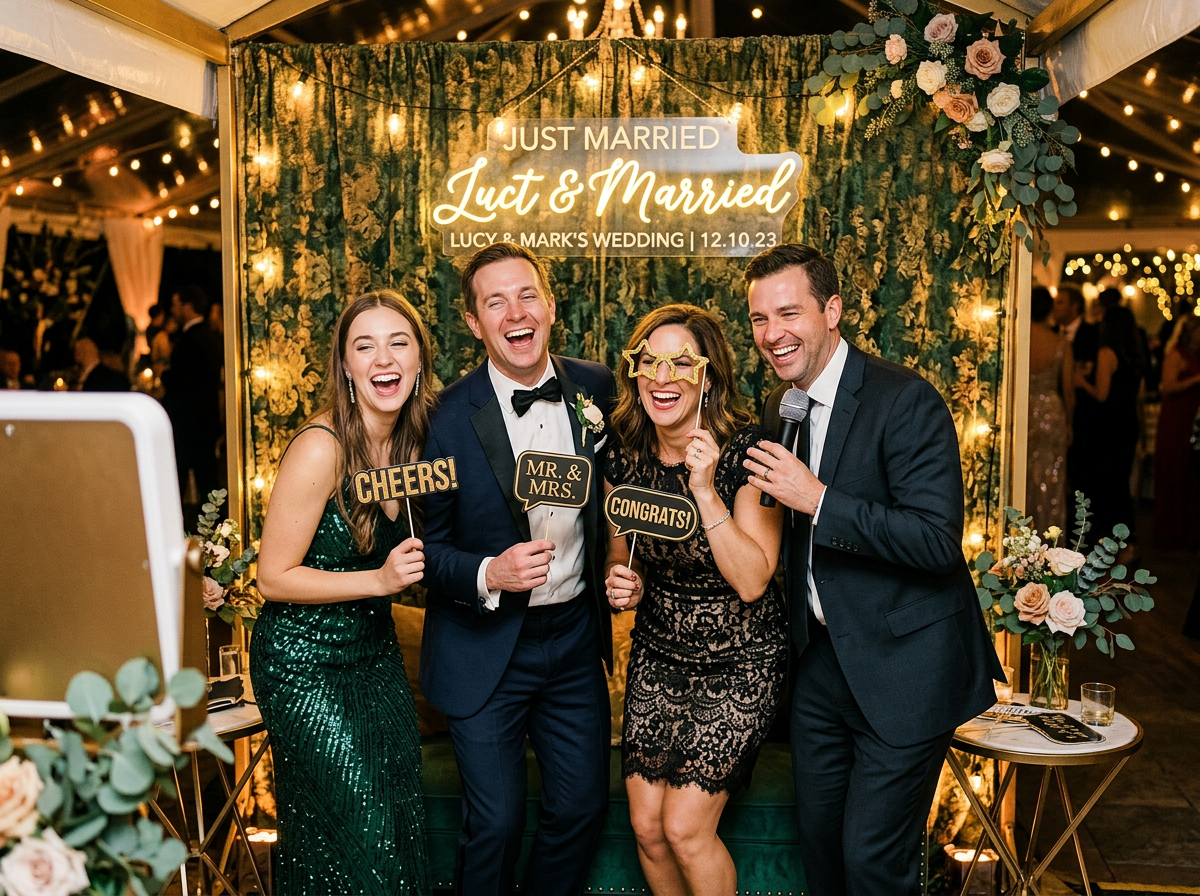
    How ZillaBooth Works as the New Etiquette Engine:1. Immediate Permission: The couple explicitly announces, “The phones are out! Please take photos of everything!” This permission is liberating for guests who have held back all day. It signals a clear, official switch in the day’s mood and rules.
    2. The Direct Funnel (AirDropping and Instant Uploads): ZillaBooth is often designed for proximity sharing, solving the friction of traditional photo collection. In the most advanced setups, guests can AirDrop (for iPhone users) or use a direct Wi-Fi upload link to send their photos and short videos immediately to the couple’s gallery. This is instant gratification for the guest…they see their photo appear in the live gallery on a projector screen…and instant collection for the couple. No waiting, no hunting, and the couple gets the original, high-resolution file, not a compressed, low-quality social media version. This ensures that the couple owns the full archive of the night.
    3. Encouraged Spontaneity: The platform encourages the natural, unposed “candid” shots that a professional photographer might miss…the laughing fit at the table, the ridiculous dance move, the late-night snack run. This raw, unfiltered, fun content is the perfect complement to the formal, staged professional shots. It’s the emotional connective tissue of the night, capturing the genuine joy and chaos from the guest’s perspective.
    4. Guest Entertainment and Interaction: A live feed of guest-contributed photos and videos projected onto a wall or screen becomes an interactive element of the reception itself. Guests are entertained by each other’s contributions, reinforcing the collaborative, celebratory mood. It’s a dynamic, evolving slide show that keeps the energy high and the phones active in a productive, rather than distracting, way.By actively channeling the guest’s phone energy into a designated, organized, and time-appropriate platform, the couple solves two problems: they ensure emotional presence at the ceremony and they crowdsource an incredible, comprehensive photographic archive of their party without having to chase people for months afterward. This approach leverages the ubiquity of smartphone cameras for the couple’s benefit.

    The New Rules of Engagement: A Guest’s Guide to 2026 Etiquette

    Understanding this dichotomy is key to being a perfect wedding guest in 2026. The new etiquette is built on clear, intentional boundaries. Here is the modern guest’s checklist for navigating the Unplugged/Photo-Full wedding:

    The Ceremony Checklist (Put Your Phone in a Clutch or Pocket and Leave It There): * Silence and Stowed: Turn your ringer off entirely, not just on vibrate, and put the phone in a bag or pocket before you take your seat. Do not take it out under any circumstances, even to “check the time.”
    * Be a Face, Not a Screen: Look at the couple. Be in the moment. Your applause, your tears, and your genuine smile are more important than a photo. The couple wants to share this intimate moment with you, not with your device.
    * Trust the Professionals: Remember the couple paid good money for a pro. Any photo you take will, comparatively, be worse and could potentially ruin a professional shot. Respect the professionals’ space and work flow.The Reception Checklist (Unleash the Content Creation, Responsibly): * Seek Permission: Wait until the couple or the DJ explicitly announces that phones and cameras are now welcome. This is your cue to switch from guest to content curator. The moment the party starts is your green light.
    * Locate the Funnel: Immediately find out the preferred sharing method (e.g., “Upload your ZillaBooth photos here!”). Prioritize uploading to the couple’s designated platform (ZillaBooth, etc.) over posting to social media. Giving the couple the original file is the highest form of reception etiquette.
    * Snap the Candids, Skip the Couple’s Portraits: Focus your lens on the dance floor, the food, the details, and other guests. Let the professional capture the formal moments of the couple. Your job is to capture the vibe.
    * Mind Your Social Posts: Even at the reception, if you post to social media, wait until the couple has posted the first official reception photo. Your first priority is to give the content to the couple; your second is to share with your personal network. This is a sign of respect for their social media narrative.
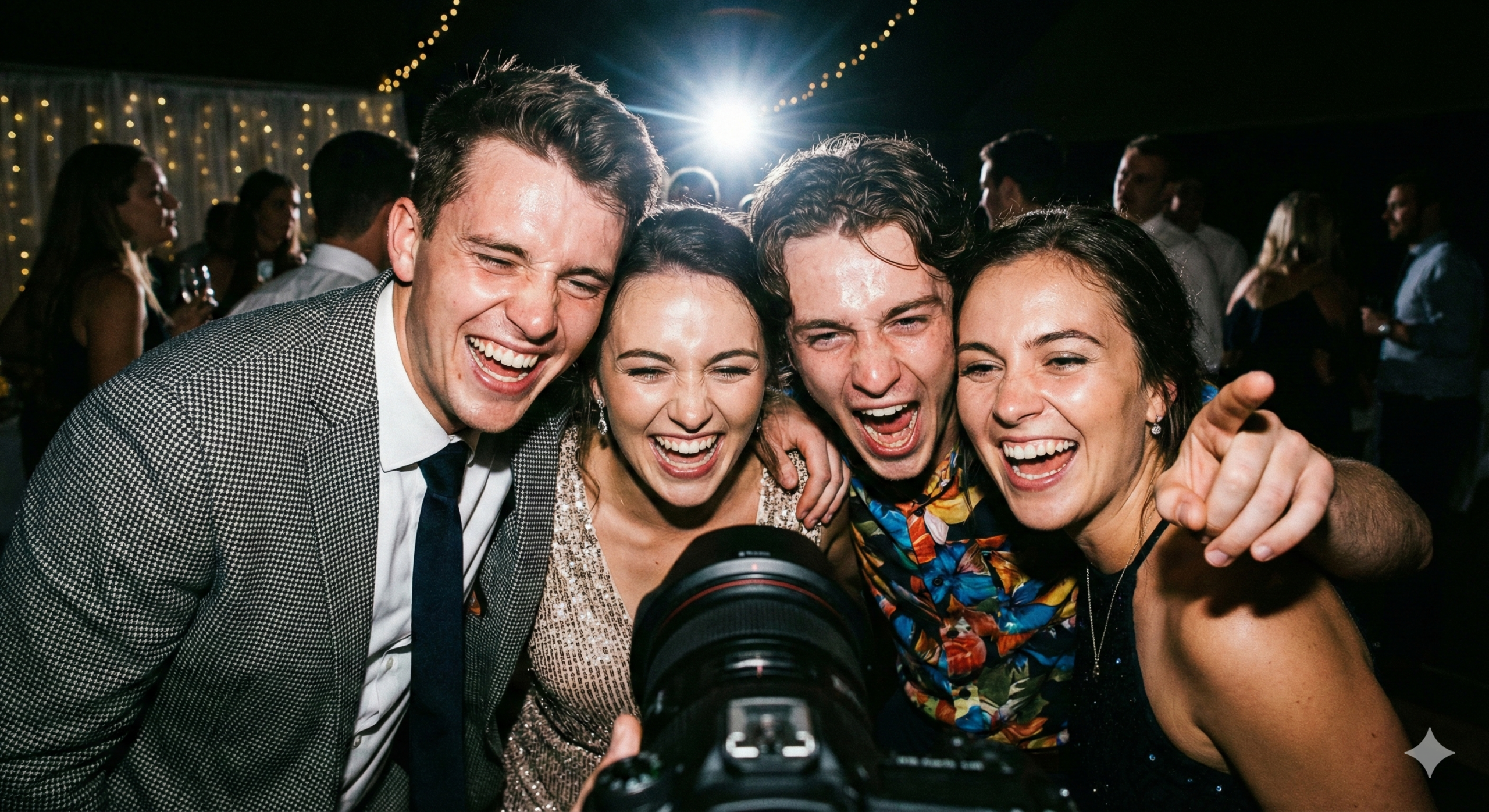
    * Use The Flash Wisely: If the couple is clearly leveraging the high-contrast “Paparazzi Aesthetic” trend (often seen with specific lighting or a dedicated photo zone), use your phone’s flash generously on the dance floor to create those energetic party shots…but never, ever flash the professional photographer while they are working or shine a flash directly into the couple’s eyes unless they are participating in a designated “flash” photo moment.Conclusion: Intentionality is the New Tradition

    The phone-free ceremony and the photo-full reception are two sides of the same coin: intentionality. In a hyper-connected world, the ultimate luxury is control over your moments and your memories. The modern couple has mastered the art of maximizing both human connection and digital capture by creating a sharp, clear division in the day.

    The new wedding etiquette of 2026 isn’t about banning technology or blindly embracing it. It’s a sophisticated, emotional contract between the couple and their guests. The contract is simple: you give us your pure, undivided presence for the half-hour of the ceremony, and in return, we give you full, enthusiastic permission to document, share, and connect for the next four hours of the party. By funneling all that creative, capturing energy into the celebratory space with tools like ZillaBooth, modern couples are creating a wedding day that is both deeply personal and universally shared, striking a perfect balance between the sacred, the social, and the spectacularly well-documented. This strategic division ensures that their wedding day is captured beautifully, respectfully, and most importantly, authentically…a true reflection of their unique journey.
  • The “Anti-Bride” Aesthetic: Why Perfect Photos Are Out and “Blurry” Is In

    The “Anti-Bride” Aesthetic: Why Perfect Photos Are Out and “Blurry” Is In

    The era of hyper-curated, flawlessly filtered, and stiffly posed event photography is officially over. Driven primarily by Gen Z, a new cultural movement is challenging the very definition of a “perfect picture,” especially in the high-stakes world of weddings and celebrations. This shift isn’t just about a preference for film grain or a different color palette; it’s a fundamental rebellion against the commodification of memory. It’s the arrival of the “Anti-Bride” aesthetic, where the most cherished images are the ones that capture genuine, raw, unscripted energy…even if they are a little (or a lot) blurry. This is the modern remix of tradition, declaring that a photo’s authenticity outweighs its technical perfection every single time.

    For decades, the standard for wedding and event photography was sharpness, light, and symmetry. Photographers chased the “golden hour,” meticulously straightened dresses, and demanded guests stand still for pristine, high-resolution masterpieces. The resulting images were beautiful, yes, but often sterile…a polished, airbrushed rendition of a memory that felt more like an advertisement than a lived experience. This pursuit of the impossible, flawless moment has exhausted a generation that is acutely aware of the performance inherent in social media perfection. They are done with the illusion.

    The Anti-Bride aesthetic rejects this pressure to perform. It embraces the candid, the accidental, the messy truth of a celebration. Instead of flawless, they crave feeling. Instead of still, they demand action. This cultural craving has crystallized into the definitive photographic trend of the moment: “Blurred-Action” photography.

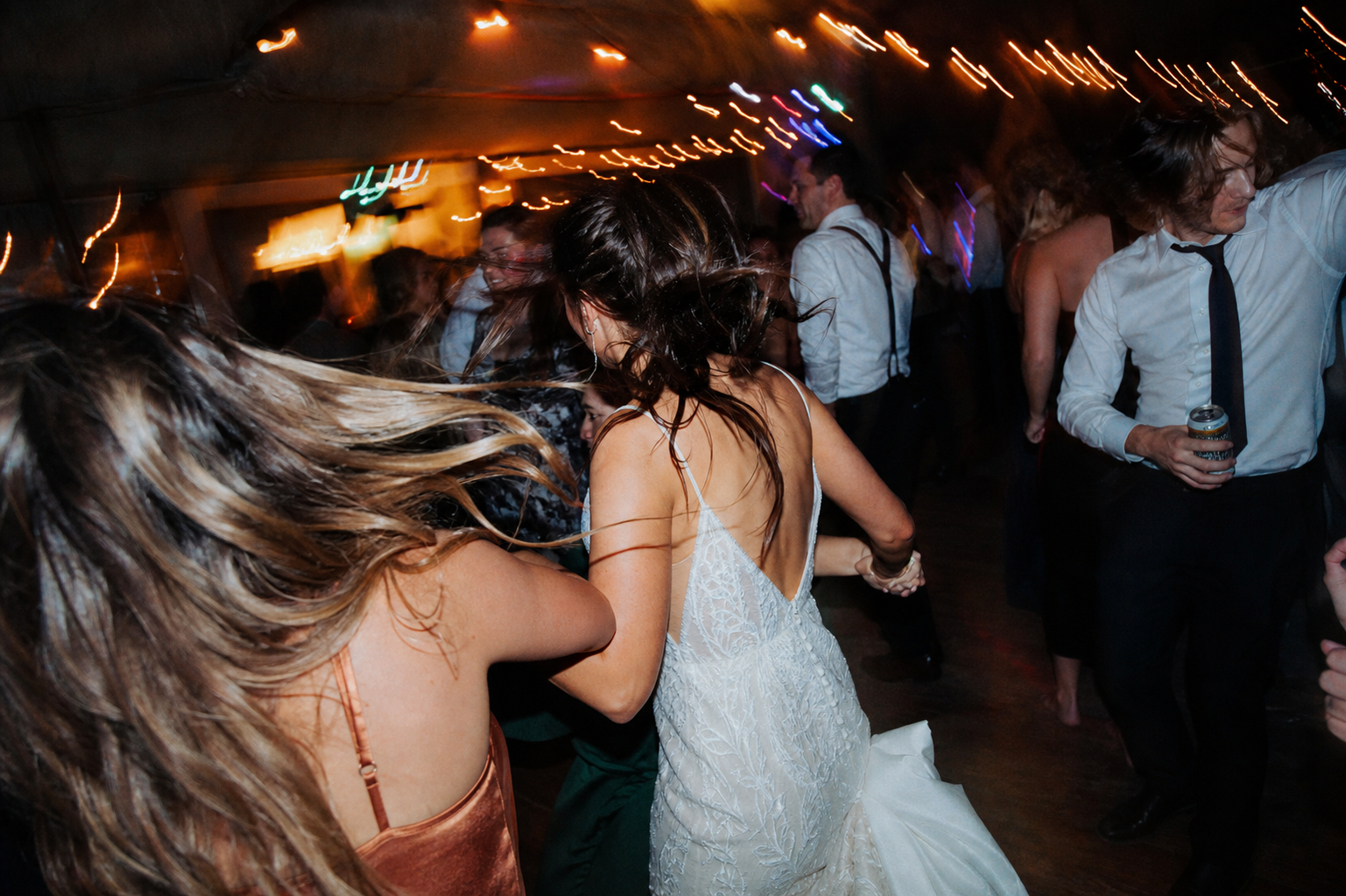
    What exactly is Blurred-Action photography? It’s the visual equivalent of a memory rush…that feeling of high-energy chaos, a spin on the dance floor, a genuine burst of laughter, or a quick movement across the room. Technically, it is the deliberate use of motion blur to convey speed and dynamism, making the image feel alive rather than frozen. In a Blurred-Action photo, the subject might be soft, the lights might streak, and the background might be a smear of color, but the story of the moment is crystal clear. It communicates: “This was fun. This was fast. This was real.”

    This style intentionally evokes the look of old, inexpensive point-and-shoot film cameras or the late-night flash photos from the early 2000s…the kind of spontaneous, high-contrast, often imperfect snapshots that were taken without any thought of social media approval. It’s raw, it’s rebellious, and it’s a direct counterpoint to the meticulously posed, sun-drenched shots that have clogged Instagram feeds for the last decade. The Anti-Bride and the celebration host who embraces this look wants their guests to move, dance, and celebrate freely, knowing that the camera’s job is not to stop the action, but to harness it.

    The key to mastering this dynamic look is realizing that your standard camera app is actively working against you. Modern smartphone cameras, including the iPhone’s native app, are programmed for one thing: to eliminate blur, automatically increasing shutter speed and smoothing movement to deliver a perfectly sharp image. To capture true Blurred-Action, you need to wrest back control and instruct the camera to slow down, allowing light and movement to streak across the sensor. This is where dedicated, professional-grade camera applications like ZillaBooth become essential. ZillaBooth is designed for creators who want to prioritize energy and atmosphere over mere technical accuracy. It gives the photographer the ability to “weaponize” motion.

    Here is how any user, from a seasoned photographer to a junior writer documenting an event, can utilize ZillaBooth’s features to capture movement and energy that is impossible to achieve with a standard camera app, perfectly embodying the spirit of the Anti-Bride aesthetic:1. The Essential Setting: Manual Shutter Speed ControlThe foundation of the Blurred-Action aesthetic is a slow shutter speed. Shutter speed determines how long the camera’s sensor is exposed to light. A fast shutter (e.g., 1/1000th of a second) freezes action; a slow shutter (e.g., 1/15th of a second) captures movement as a blur. ZillaBooth Pro unlocks this critical setting, which the native phone app locks down. – The Technique: Navigate to ZillaBooth’s manual controls and locate the Shutter Speed (often labeled as an ‘S’ or a time value). For moderate blur that still hints at the subject, try a shutter speed between 1/30 and 1/15 of a second. This range is excellent for capturing a fast spin on the dance floor or a subject walking quickly. For more dramatic, abstract blur, such as lights streaking into lines or a completely smeared background, experiment with speeds as slow as 1/8 or 1/4 of a second.
    – The Intent: By forcing the shutter open longer, you are literally telling the camera to record the duration of the action, not just a single instant. The goal is to see the subject’s path of motion within the frame.2. Focus on Panning: The Sharp-Blur ContrastTo create an image that feels incredibly dynamic but still has a clear point of focus, employ the panning technique…a classic photography trick made easier by ZillaBooth’s manual focus lock. Panning involves moving the camera with the subject while the shutter is open. – The Technique: Set a moderately slow shutter speed (1/30 to 1/60 is a good starting point). As your subject (a person walking, a dancer) moves past you, lock your focus on them using ZillaBooth’s manual focus lock feature. Then, move your phone to follow them smoothly as you press the shutter.
    – The Intent: The subject, because the camera is tracking their movement, will appear relatively sharp, but the background will be rendered as spectacular, horizontal streaks of color and light. This contrast creates an incredible sense of speed and forward momentum, isolating the energy of the subject against a blurred backdrop of the event.3. The Flash-Blur Combination (For Maximum Drama)Many photographers forget that the flash can also be used with a slow shutter speed, and this combination is a potent tool for the Blurred-Action aesthetic, especially in dimly lit venues. – The Technique: Set ZillaBooth to a slow shutter speed (e.g., 1/15) and manually force the flash ‘On’ (which ZillaBooth allows). When you take the photo, the flash will freeze the subject for an instant (creating a sharp ghost image) while the rest of the 1/15-second exposure records the subject’s movement after the flash fires.
    – The Intent: This technique, often called ‘rear-curtain sync’ in professional cameras, results in an image where the subject is distinct but the trails of movement follow behind them, suggesting they are moving out of the blurred energy, or captured mid-spin. This produces a dramatic, slightly surreal, and highly energetic party photo.4. Movement Priority Poses: Shoot the Transition, Not the StillThe Anti-Bride look is fundamentally about capturing movement over stiff poses. As a photographer or event documenter, your role is to encourage and anticipate this movement, not stop it. – The Subject: Tell people to do an action: spin, jump, hug, cheer, or walk down a flight of stairs quickly. Never ask them to stand still.
    – The Technique: With a slow shutter (1/30), deliberately take the photo as the action is happening…not before or after. Shoot the half-step, the mid-air jump, the moment the head is thrown back in laughter. This is when the camera’s slow shutter will maximize the motion blur, capturing the true physical expression of the energy. A photo of a couple walking towards the camera at 1/15 of a second will result in soft, smeared faces and streaking foregrounds…capturing the feeling of a grand, sweeping entrance better than any perfectly sharp shot ever could.5. Embrace the Grain and Edit for VibeOnce the image is captured with ZillaBooth’s manual controls, the final step is to emphasize the raw, analogue-like feel. – The Technique: ZillaBooth and many post-processing apps allow for the addition of film grain or noise. Don’t smooth the image; add intentional noise to give the high-energy, digitized film look of the late 90s.
    – The Intent: The final image should look like an artifact…a treasured snapshot that couldn’t possibly be a highly-edited, commercial photograph. The grain enhances the raw, unpolished honesty that the Anti-Bride aesthetic champions.The shift toward Blurred-Action photography is more than just a passing style; it’s a cultural declaration. It’s a rebellion against the pressure to be perfect and a celebration of authentic, unrepeatable moments of joy. Gen Z isn’t throwing out tradition; they are remixing it, insisting that a wedding or major celebration should be documented as it feels…fast, fun, and a little chaotic…rather than how a magazine or social media feed dictates it should look.

    By using ZillaBooth to take back the power of manual shutter control, any user can move past the limitations of the default camera app. You’re not just creating a blurry photo; you’re creating a story. You are moving from documenting a pose to capturing a movement, from recording a smile to immortalizing a moment of pure, unadulterated energy. Step away from the stifling perfection and embrace the beautiful, dynamic, and wonderfully imperfect chaos of the Anti-Bride’s real-life celebration. Use the blur to make your memories feel more real.

  • The “Privacy Era” Wedding: Why 2026 Couples Are Ditching the Hashtag

    The “Privacy Era” Wedding: Why 2026 Couples Are Ditching the Hashtag

    In the dynamic landscape of wedding trends, 2026 is poised to be defined by a significant, soul-searching shift: the ascendancy of the “Privacy Era” wedding. After years of performative celebrations meticulously curated for the feed, modern couples are staging a gentle rebellion, prioritizing profound intimacy and authentic presence over the widespread public consumption of their most personal day. This isn’t merely about setting phones aside; it’s a fundamental re-evaluation of who the wedding is for.

    For the last decade, the wedding industrial complex was intertwined with the social media machine. A successful wedding was often measured not just by the joy in the room, but by the engagement metrics online: the number of likes on the professionally shot sneak peek, the virality of a dance floor moment, and the proliferation of a unique, custom wedding hashtag. The expectation was that the event was a piece of content, meant to be broadcast, aggregated, and perpetually consumed by an audience stretching far beyond the immediate guest list…sometimes reaching thousands of passive followers. But what happens when the relentless spotlight begins to dim the very intimacy it’s supposed to celebrate?

    Today’s couples, seasoned by a decade of living life online, are experiencing significant social media fatigue, especially concerning major life milestones. They recognize the inherent pressure to make their wedding a “show,” leading to decisions driven by aesthetic approval rather than personal meaning. More critically, they are acutely aware of the permanence and lack of control that comes with a globally broadcast digital footprint. Every photo, every video tagged with a unique hashtag, becomes a permanent, searchable artifact, a public domain record of a private, foundational moment. The ‘Privacy Era’ couple is saying ‘enough.’ They are choosing presence over performance, and memory over metrics. They want their day to be remembered by the people who were actually there, not by a scrolling audience. They are reclaiming the narrative of their own celebration.

    The most visible symbol of this reclamation is the deliberate decision to ditch the wedding hashtag. The hashtag served as the ultimate aggregator, an open invitation for every guest…and every curious outsider…to contribute to a public, searchable album. By removing it, couples are drawing a clear, intentional boundary. They are communicating that the precious moments captured that day are reserved for the “circle of trust”…the family and friends who have been invited to share the physical space and the emotional weight of the commitment. It’s a statement that their wedding photos are not marketing collateral for their relationship, nor are they fodder for an endless scroll. They are private heirlooms.

    This is where the demand for privacy-first technology like ZillaBooth comes into sharp focus. The modern couple still wants to capture the fun, candid, and often hilarious moments that only a photo booth can provide, but they need a solution that respects their newly established privacy boundaries. ZillaBooth is designed not just as an entertainment feature, but as a commitment to the couple’s ethos. It operates on the principle of private, offline capture.

    Here’s how ZillaBooth effectively becomes the ideal partner for the Privacy Era wedding:

    First, it features a completely private, localized network. Unlike legacy photo booths or open-access digital sharing platforms that are inherently linked to the public internet, ZillaBooth’s capture process is offline. This immediately eliminates the risk of accidental or automatic broadcasting. The photos and GIFs created in the booth remain sequestered within the system until the couple determines the next step.

    Second, there is zero automatic social media integration. This is a non-negotiable feature for the privacy-minded couple. There is no button that immediately uploads a strip to Instagram or Facebook. Guests are encouraged to live in the moment and capture memories for the couple, not for their personal followers. This design choice powerfully reinforces the couple’s wish to maintain a tight “circle of trust” around their celebration’s imagery. The images are taken for the couple, not for the feed.

    Third, ZillaBooth facilitates a curated, intentional sharing process. While the capture is offline, the final, high-resolution gallery of images is delivered directly and solely to the couple. This gives them complete, granular control over their memories. They, and only they, decide which images to share, when to share them, and with whom…if at all. They can choose to keep the entire collection completely private, share a curated, small gallery with their immediate family, or perhaps release a select few images a month later, long after the pressure of the wedding weekend has dissipated. The power returns to the proprietors of the memory.

    The Privacy Era wedding is more than a trend; it’s a necessary cultural correction. It reflects a growing collective desire to slow down, to be present, and to recognize that some of life’s most precious experiences are diminished by the act of being performed for an anonymous audience. By ditching the hashtag and embracing privacy-first technologies like ZillaBooth, 2026 couples are not being exclusionary…they are being protective. They are safeguarding the authenticity of their joy, ensuring that their wedding day is a moment shared deeply and intimately with the people they love most, resulting in a priceless collection of private memories untainted by the demands of public consumption.

  • Mocktails & Memories: The Rise of the Sober-Curious Reception

    Mocktails & Memories: The Rise of the Sober-Curious Reception

    The wedding reception is undergoing a quiet, profound revolution. For generations, the open bar has been the undisputed centerpiece of celebration, the engine that powers the dance floor and loosens the tongues of distant relatives. Yet, a contemporary movement…one rooted in wellness, mindfulness, and a desire for genuine, clear-headed connection…is reshaping the modern reception landscape. This is the rise of the Sober-Curious wedding, where couples are intentionally designing an atmosphere of vibrant, high-energy fun that doesn’t rely on alcohol as its primary fuel.

    This shift isn’t about being puritanical or judgmental; it’s about inclusivity, intentionality, and maximizing the memory-making experience. Modern couples are asking a powerful question: How can we give our guests a night they will remember, not one they’ll only vaguely recall? The answer lies in replacing the “alcohol economy” of the reception with a “dopamine economy”…a strategic focus on activities that deliver instant, joyful, and clear-headed hits of happiness. And at the forefront of this new approach, providing the perfect social nexus and memory machine, is the humble yet mighty photo booth.

    The Cultural Momentum Behind “Sober-Curious” Weddings

    The “Sober-Curious” movement…an invitation to question one’s relationship with alcohol…has moved from a niche lifestyle choice to a mainstream cultural fixture. Data confirms that younger generations, in particular, are consuming less alcohol and prioritizing mental and physical health. This mindset naturally extends to high-stakes social events like weddings.

    For couples, the reasons for hosting a more mindful reception are manifold: – Prioritizing Wellness and Health: They want a celebration that reflects their personal commitment to well-being, ensuring they wake up on their first day of marriage feeling energized, not depleted.
    Financial Prudence: A non-alcoholic bar can significantly reduce overall catering costs, allowing the budget to be reallocated to premium experiences like gourmet food, elevated decor, or…critically…high-quality entertainment.
    Inclusivity and Comfort: Providing sophisticated non-alcoholic options and entertainment ensures all guests feel celebrated and catered to, including pregnant guests, those in recovery, designated drivers, those on medication, or individuals who simply prefer not to drink. By normalizing the mocktail, the reception feels less like two distinct parties (drinkers and non-drinkers) and more like one unified celebration.
    Maximizing Presence: The goal of a wedding is connection. A fully present, clear-headed guest is more likely to engage deeply, share heartfelt moments, and genuinely remember the emotional high points of the day.The first step in this revolution is the Mocktail Menu. Gone are the days of sugary sodas or sad glasses of water. Today’s non-alcoholic drinks are elevated works of culinary art. Craft mocktails now feature complex flavor profiles using homemade syrups, fresh botanicals, non-alcoholic spirits, and sparkling teas. The aesthetics are just as important as the taste…served in beautiful glassware and garnished with smoked rosemary or dehydrated citrus, the mocktail is no longer a concession but a sophisticated, exciting option. This emphasis on creative, adult-friendly beverages is essential, but it only solves half the equation.

    The Missing Social Lubricant: Replacing the Activity

    Alcohol, however, serves a dual function at a wedding. It is a beverage, yes, but it is also a social lubricant and an activity centerpiece. When you remove or de-emphasize the bar, you must intentionally replace the social activity that revolved around it…the gathering at the cocktail station, the bonding over a shared drink, the liquid courage to hit the dance floor. This is where the magic of the photo booth steps in, providing a structured, high-energy, and completely sober social activity that acts as the new center of gravity for the reception.

    The Photo Booth as a Dopamine Delivery System

    The success of the Sober-Curious wedding hinges on its ability to generate natural, authentic joy…a pure dopamine hit that requires no chemical assistance. The photo booth is uniquely engineered for this purpose.1. Instant Gratification and Play: The core mechanism of a photo booth is immediate and joyful. Guests step inside, don a ridiculous prop, pose, hear the flash, and moments later, they have a tangible, personalized memento. This immediate cause-and-effect…effortlessly creating a fun picture and having it in hand…is a classic, powerful dopamine reward. It bypasses the need for inhibition-lowering drinks because the activity itself is inherently silly, low-stakes, and focused on pure play.

    1. Structured Social Connection: When guests might feel awkward approaching the dance floor or starting a conversation, the photo booth provides a non-verbal, shared objective. “Let’s take a picture!” is the easiest invitation for a group of strangers or distant friends to bond. It groups people together…old college friends, the bride’s grandparents, the groom’s coworkers…for a fleeting moment of physical closeness and shared laughter. This genuine social interaction is a powerful source of oxytocin and serotonin, complementing the dopamine rush of the instant print.

    2. The Prop Play and Creative Expression: The use of props is a form of temporary, safe role-playing. A feather boa or oversized sunglasses offers a momentary excuse to shed inhibitions. This spontaneous, theatrical play releases stress and fuels laughter, creating a high-energy, engaged atmosphere that naturally keeps the party momentum going. It’s a non-competitive, creative outlet that everyone can participate in, regardless of age or fitness level.

    3. The Physical Memory Memento: In a world dominated by fleeting digital media, the tangible print strip is gold. It’s not just a photo; it’s a physical, date-stamped memory from the event. It acts as an instant wedding favor and a centerpiece for the guest book. Guests take their strips home and tack them on a fridge, where they serve as a constant, positive reminder of the fun they had…a memory untainted by the haze of an overindulgent evening. This physical takeaway amplifies the value of the experience far beyond the moment of the flash.Designing an Intentionally Joyful Space

    To truly make the photo booth the star of the show in a wellness-focused reception, couples can take its execution from passive to potent: – Strategic Placement: Don’t tuck it in a dark corner. Place the booth in a highly visible, high-traffic area, close to the main entrance or the mocktail bar. Its activity should be undeniable, encouraging guests to queue up and watch the fun.
    Themed Backdrop and Customization: Ensure the booth’s aesthetic is as high-end as the rest of the decor. A custom-designed backdrop, perhaps incorporating the wedding’s floral elements or color palette, elevates the experience. Furthermore, the print template should feature the couple’s custom logo or hashtag, turning every photo strip into a piece of branded wedding collateral.
    Interactive Props: Curate a sophisticated, silly, or personalized prop collection. Move beyond the generic plastic hats. Incorporate elements relevant to the couple’s relationship (e.g., props of their pets, a sign with their inside joke, graduation mortarboards for an alumni-filled wedding).
    The Digital Gallery and Sharing: Modern booths offer instant text/email sharing. This ensures the digital dopamine hit is satisfied immediately, allowing guests to share their uninhibited photos across social media while the event is still in full swing, increasing the perceived energy and buzz of the party.The New Standard for Reception Fun

    The rise of the Sober-Curious reception and the strategic deployment of the photo booth signal a larger cultural evolution in how we celebrate. It’s a movement away from passive consumption (of alcohol, of atmosphere) toward active engagement and intentional creation of joy.

    A reception fueled by mocktails and memories is, ironically, a reception with more energy and more authenticity. The laughter is clearer, the conversations are deeper, and the memories are sharper. The photo booth doesn’t just fill a gap left by the open bar; it provides a superior, more joyful alternative. It’s a dynamic hub of activity that delivers the social connection and instant reward that guests crave, transforming a wedding from a party with activities into an unforgettable, high-octane experience.

    By prioritizing wellness and embracing activities like the photo booth, modern couples aren’t just hosting a wedding; they are setting a new standard for celebration…one where the best moments are captured on a personalized print strip, earned by genuine smiles, clear eyes, and a night of pure, unadulterated fun.

  • The Rise of the “Wedding Content Creator”: Do You Need One?

    The Rise of the “Wedding Content Creator”: Do You Need One?

    The wedding industrial complex has always been a bellwether for cultural priorities. For decades, the gold standard of post-nuptial happiness was a thick, leather-bound photo album delivered six months after the honeymoon, full of perfectly lit, posed, and timeless photographs. The focus was on legacy, permanence, and professional artistry.

    But if you’ve been paying attention to the digital zeitgeist, you’ve noticed a massive, seismic shift. The modern wedding timeline has been entirely reordered by the demand for immediacy. The new standard is not the album you look at in six months; it’s the 15-second Reel you look at the morning after.

    This cultural phenomenon has given rise to the most surprising and in-demand vendor of the modern age: the Wedding Content Creator (WCC). And the numbers don’t lie. Search demand for “wedding content creator” has exploded, surging by a staggering 586% in the last twelve months alone. This isn’t just a niche trend; it’s a full-blown revolution in how we capture, share, and consume wedding memories.

    The question for every couple planning their modern celebration is no longer, “Do we hire a photographer and a videographer?” it’s, “Do we now need a third person dedicated entirely to our social media footprint?”

    The answer, increasingly, is yes…and no.

    The appeal of the Wedding Content Creator is a direct reaction to the traditional wedding vendor model. The professional photographer and videographer are essential, but their services are, by design, slow. Their focus is on high-resolution, magazine-quality images and cinematic footage that require weeks, sometimes months, of post-production. They are focused on the perfect final product.

    The WCC, conversely, is focused on the instant product. They are hired to be a couple’s dedicated personal paparazzi, shadowing the event armed only with a smartphone. Their mission is to capture raw, authentic, behind-the-scenes moments…the bridal party’s final toast, the last-minute ring-bearer instructions, the groom’s first reaction…and to deliver this content immediately. We’re talking highlights posted to a shared album before the reception dinner even ends, and a fully edited TikTok or Instagram Reel ready for posting the next morning.

    This content serves a completely different emotional need. It’s not for the album; it’s for the feed. It’s not polished; it’s real. It satisfies the couple’s FOMO (Fear Of Missing Out) on their own event and, more crucially, fuels the social media machine, allowing them to share the excitement while the event is still trending.

    However, the human Wedding Content Creator has quickly created a new set of problems. They are a costly new addition to an already strained budget, often commanding thousands of dollars for a single day. They are another person a couple must vet, manage, and coordinate with their existing team of vendors. Their presence can, paradoxically, make the event feel less authentic, as they are constantly prompting the couple for “content moments.” Furthermore, the quality of this instantaneous footage is entirely dependent on one single person’s skill, energy, and phone battery.

    The market has spoken: couples desperately want instant, social-ready content, but they don’t necessarily want another vendor in their face. This is the exact inflection point where automation, technology, and clever design step in to solve a massive industry problem. The future of the Wedding Content Creator is not a person; it’s a seamless, automated system.

    This is why ZillaBooth has emerged as the definitive solution to the WCC bottleneck. ZillaBooth isn’t a person you hire; it’s an automated content engine that leverages the entire wedding environment to generate social-ready assets instantly, at a fraction of the cost of a human vendor. It is the ultimate expression of the “content creator” trend, removing the human element entirely while maximizing the content output.

    ZillaBooth works by transforming a designated, stylishly designed station into a highly intuitive, automated content hub. It’s often set up near the cocktail hour or reception and operates on a principle of collaborative content creation. Instead of one person shooting, every guest becomes an immediate, willing contributor to the couple’s social media story.

    Here is how ZillaBooth serves as the ultimate automated content creator, meeting the 586% surge in demand head-on:1. Distributed Capture, Centralized Curation: Guests simply walk up to the ZillaBooth station, which is equipped with a high-quality camera and an integrated, proprietary capture application. They take short video clips, candid photos, and Boomerangs…often responding to fun, pre-programmed prompts from the couple (e.g., “Give the couple your best marriage advice!” or “Show us your signature dance move!”). This removes the pressure from the couple and encourages raw, funny, and authentic guest-driven content.

    1. Instant AI-Powered Curation and Filtering: This is the core of ZillaBooth’s technology. The moment a piece of content is captured, it is instantly uploaded to the ZillaBooth cloud. Proprietary AI algorithms immediately go to work, analyzing the content for key factors that a human WCC would miss: proper lighting, high-energy moments, flattering composition, and most importantly, adherence to a predetermined brand aesthetic selected by the couple (e.g., a “Vibrant & Bright” filter or a “Soft Vintage” look). The system instantly discards blurry, unusable, or inappropriate content, ensuring the couple only receives the best, most shareable moments.

    2. The Signature 2×2 Grid Generator: The key deliverable for the human WCC is a ready-to-post Reel. ZillaBooth has innovated on this by automatically generating a different, equally viral social format: the 2×2 grid. In the world of social media, the 2×2 photo grid is the pinnacle of aesthetic curation. It is a set of four images, perfectly color-matched, thematically linked, and formatted to fill the entirety of a social media preview tile. ZillaBooth’s automation engine selects four complementary images or short video clips from the instantaneous feed, applies the couple’s chosen aesthetic filter, and arranges them into a cohesive, perfectly aligned 2×2 grid.

    3. Instant, Social-Ready Delivery: This content is generated and delivered instantly. The moment a high-quality 2×2 grid is complete (which takes mere seconds), it can be pushed in multiple ways:
      • Live Digital Display: The grids appear on a dedicated screen at the reception, entertaining guests and encouraging more participation.
      • Direct to Couple’s Phone: The couple and their designated content manager (maid of honor, best man) receive an alert with the ready-to-post grid, allowing them to upload it to their social media channel before the night is over.
      • Hashtag Feed: The content is simultaneously organized into a clean, searchable, and shareable feed accessible via a unique QR code or wedding hashtag, offering guests an instant photo booth experience with a professional-grade aesthetic.The result is that ZillaBooth doesn’t just replace the human WCC; it automates and democratizes the entire process. It turns a single, costly vendor into a scalable, highly efficient system that leverages the collective energy of the entire guest list. The content is more spontaneous because it’s guest-driven, it’s aesthetically consistent because it’s AI-curated, and most importantly, it is delivered instantly, satisfying the modern couple’s desperate need for immediate social proof and post-wedding excitement.

    By deploying ZillaBooth, a couple is no longer paying for one person’s time; they are investing in a cloud-based content infrastructure that guarantees a steady stream of highly-curated, perfectly formatted 2×2 grids throughout the evening and into the next day. The 586% rise in demand for “Wedding Content Creator” isn’t a plea for another person to hire; it’s a desperate cry for content immediacy. ZillaBooth answers that cry with the perfect blend of high-tech automation and high-touch aesthetic curation, proving that the future of wedding content is less human and exponentially more social.

  • Messy Flatlays & Chaos: The New “Detail Shot”

    Messy Flatlays & Chaos: The New “Detail Shot”

    The era of the meticulously curated, perfectly lit, and utterly pristine flatlay is officially over. For years, the gold standard for any event recap or professional detail shot involved a sterile table setting, a pair of artfully arranged shoes, or a champagne flute positioned just-so to catch the perfect glint of sunlight. It was beautiful, yes, but it was also predictable, emotionally inert, and ultimately, a lie.

    Today, the most compelling visual stories of any great celebration are found not in the ‘before’ but in the glorious, messy ‘aftermath.’ We’re not talking about staging a prop to look slightly dishevelled; we’re talking about documenting the genuine, glorious chaos that is the indelible evidence of a party that truly succeeded. This is the new detail shot, and it is a powerful statement of authenticity that your followers and your clients are craving. It’s the half-eaten slice of cake abandoned on a cocktail napkin because the DJ dropped a banger and the guest ran to the dance floor. It’s the pile of discarded photo booth props, the scattering of confetti, and the shoes that were kicked off hours ago. These aren’t just pictures of debris; they are the visual transcripts of unadulterated joy.

    The Aesthetics of Aftermath: Why Mess is the Message

    Why has this shift occurred? Simple: audience fatigue. We’ve all scrolled past thousands of identical, hyper-edited images. They lack grit, vulnerability, and the sense of a real, lived moment. The messy detail shot, conversely, offers an instant injection of reality. It’s a raw, spontaneous energy that speaks volumes. When a photographer captures a perfectly untouched space, it says “We were here.” When you capture the beautiful debris, it shouts “WE HAD A BLAST HERE.”

    This aesthetic is deeply rooted in a contemporary craving for authenticity over perfection. The small, scattered elements…a smudge of lipstick on a glass, a crumpled thank-you note, the wilted flowers from a table centerpiece…become powerful storytelling devices. They are artifacts of a memory in progress. They possess a lo-fi, almost accidental quality that contrasts sharply with the high-production sheen of standard event photography. This contrast is what makes them arresting and magnetic. The chaos is a badge of honour, signaling to the viewer that the energy of the night was simply too good for anyone to stop and tidy up. To master this look is to stop documenting the staging and start documenting the story.

    The Game-Changer: Weaponizing the iPad Photo Booth

    Now, let’s talk about the secret weapon for capturing this beautiful disorder: your iPad photo booth. Typically, the booth is a stationary fixture, a magnet for smiling faces. But late in the evening, when the room is dark and the party is peaking or winding down, it needs to become a mobile, handheld instrument of photojournalism.

    The traditional detail photographer with a huge DSLR can often look out of place, breaking the spell of the late-night vibe. But the familiar, simple profile of an iPad is non-intrusive. It blends in, allowing you to capture moments that feel truly candid.

    This is the key instruction: encourage and train your users…whether they are junior staff or clients…to take the iPad booth off its stand. The goal is to liberate the camera and turn it into a dedicated tool for capturing the night’s aftermath. This should be an authorized move reserved for the final hour of the event when the dance floor is spent, the caterers are clearing out, and the lights are low. The iPad’s inherent limitations in low light, when combined with its internal flash (which you should force to fire if possible, or rely solely on ambient light), perfectly replicate that desirable, high-contrast, grainy, early-2000s disposable camera look.

    Tutorial: Capturing the Chaotic Debris in Grid Format

    Once you’ve liberated the booth, the most crucial tool in your composition arsenal is the Grid Format. You must always shoot with the 3×3 grid display activated on the screen. The grid provides a simple, structured method for organizing visual chaos, ensuring that your messy photo still reads as an intentional, aesthetically pleasing image, not just a haphazard snapshot. The grid is what turns clutter into composition.

    Step 1: Go Mobile and Hunt for Evidence
    Around 30 minutes before the end of the event, or after the main action has passed, remove the iPad from its stand. Move through the event space like an archaeologist. Ignore people for a moment; you are looking for evidence of their revelry. * The Half-Eaten Cake: Don’t focus on the remaining pristine slice. Zoom in on the area where the first slice was messily carved out. Look for the fork, the smear of frosting, the crumbs scattered on the linen.
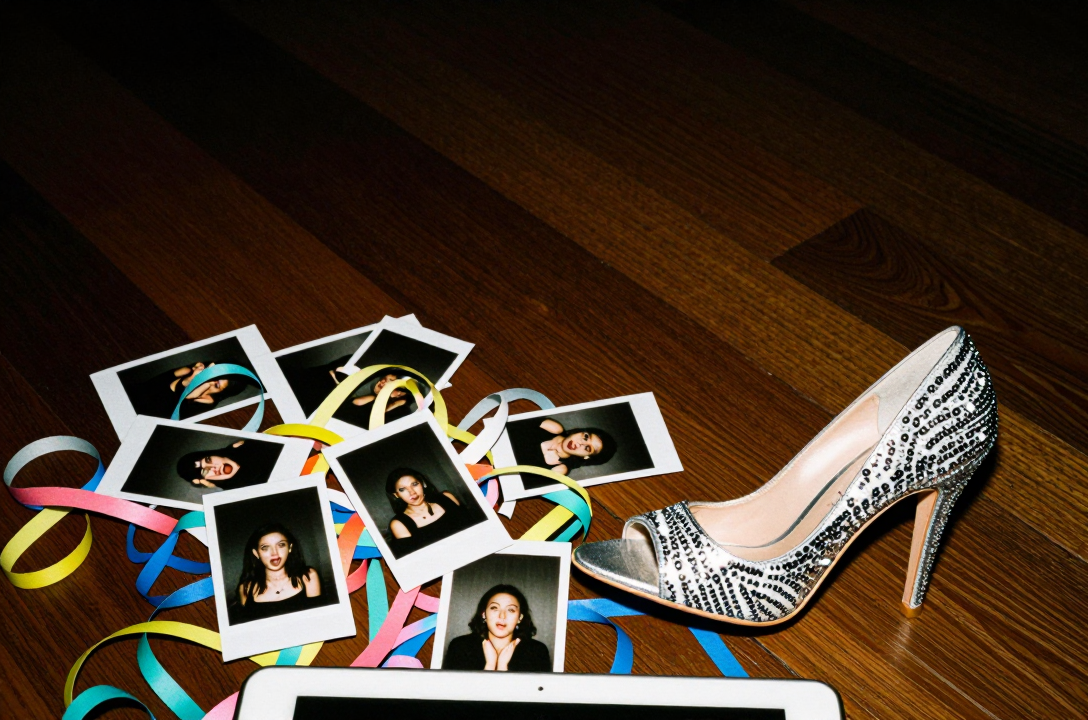
    * Dance Floor Relics: A fallen tie, a single shoe, a discarded funny hat, or a handful of tangled streamers. Focus on a grouping of three or more items.
    * The Bar Aftermath: Piles of used cocktail napkins, a few abandoned glasses with condensation rings, a twist of lime rind, and a spilled drop of red wine.
    * The Booth’s Own Debris: A pile of photo booth printouts scattered haphazardly on a table, perhaps with a stray glass on top of them. This is the ultimate meta-shot.Step 2: Compose Using the Rule of Thirds
    The 3×3 grid should be your guiding principle. Instead of centering the mess, you must use the grid lines and their four intersection points (the ‘power points’) to compose the shot. * Subject Placement: Identify the single most interesting or telling element…the ‘hero’ of the mess (e.g., the bright red lipstick stain, the glint of a lost earring). Place this element directly on one of the four intersection points. This gives the photo an immediate focal point that anchors the surrounding chaos.
    * Framing the Debris: Use the grid lines to establish borders. For example, you can line up the edge of a table or a long, fallen streamer along one of the horizontal or vertical grid lines. This imposes intentional structure on the random elements.
    * Negative Space: A common mistake is filling the entire frame with clutter. To make the messy detail shot work, you need to use a clean section of the floor, a dark corner of a wall, or a solid tablecloth as negative space. Use one or two of the grid sections to contain the mess, leaving the remaining sections as purposeful negative space. This highlights the chaos, giving it room to breathe. For example, frame a pile of confetti in the bottom right corner (one grid square), allowing the empty, shadowed floor to take up the rest of the shot.Step 3: Embrace the Low-Light Grain and Flash
    Do not be afraid of the noise or graininess that comes from shooting late at night with low, ambient light. This is an essential part of the aesthetic. It adds texture and drama. If the venue lighting is too low to capture anything legible, turn the iPad’s flash on (manual on, not auto). The harsh, undiffused light from the iPad’s small flash will cast deep, dramatic shadows and blow out highlights on reflective surfaces (like sequins or metal), which is exactly the high-contrast, rebellious look we are after. This direct light aggressively isolates the debris, cutting it out from the shadowy background and emphasizing the drama.

    Why Grid Format is Essential to Chaotic Photography

    In traditional photography, the Rule of Thirds is used to place important elements in a balanced, visually pleasing way. In chaotic photography, the grid does something more powerful: it legitimizes the mess. Without the grid, the photo looks accidental…just a picture of trash. With the grid, the viewer understands that the mess has been chosen and framed. * Balancing Visual Weight: A pile of abandoned glow sticks might be visually ‘heavy.’ You can balance this weight by placing it in the bottom third of the frame, leaving the upper two-thirds for a clean, darker background like an empty wall. The grid helps you measure this balance instantly.
    * Leading the Eye: Scattered objects like streamers, spilled powder, or tracks on the dance floor can be used as leading lines. Align these natural lines of debris with a grid line to direct the viewer’s eye toward the main point of interest (the intersection point).
    * Creating Tension: Placing a solitary, significant object (like a single, lost key) in the center of one of the empty grid sections, surrounded by the mess, creates a powerful sense of isolation and dramatic tension.The Impact on Your Brand Story

    The final messy detail shots, composed using the grid format and captured with the inherent drama of late-night light, are the ultimate testimonial. They don’t just show that an event was beautiful; they prove it was alive.

    This new aesthetic shifts the narrative of your event photos from a cold portfolio of perfect styling to a warm, genuine scrapbook of shared experience. These are the images that get saved, shared, and talked about. They are relatable, honest, and far more memorable than any staged flatlay.

    The photo booth, liberated from its stand, becomes the ultimate storyteller, a documentary filmmaker capturing the authentic, unscripted moments that define the success of an event. Stop cleaning up your photos. Start embracing the glorious, beautifully composed chaos. Take your iPad off the stand, turn on that grid, and document the party’s beautiful, brilliant surrender.

  • Audio Guestbooks vs. Photo Booths: Why Not Both?

    Audio Guestbooks vs. Photo Booths: Why Not Both?

    The wedding landscape is defined by an evolving tension between tradition and innovation…especially when it comes to capturing memories. For decades, the photo booth has reigned supreme, a guaranteed crowd-pleaser that delivers spontaneous visual fun and physical keepsakes. Yet, in the last few years, a compelling challenger has emerged to claim a spot in the memory hall of fame: the audio guestbook.

    These two trends, the visual and the aural, represent distinct but equally powerful ways to bottle the lightning of your wedding day. As couples plan their celebrations, they often find themselves facing what feels like a budgetary or logistical showdown: Audio Guestbooks vs. Photo Booths. But the truth is, this is a false dichotomy. Why pit sight against sound when you can amplify the entire memory?

    The most forward-thinking modern weddings are moving past the “vs.” and embracing the synergy of “both.” The ultimate way to honor your day is by creating a dedicated, multi-sensory ‘Memory Corner,’ intentionally designed to capture the joyous, candid faces and the heartfelt, unscripted voices of your guests.

    The Enduring Power of the Visual Moment

    The Photo Booth, at its core, is instant, sharable joy. It’s where the shyest guest lets loose, where cousins who haven’t seen each other in years pose for a ridiculous strip, and where the energy of the dance floor spills over into four quick frames. The popularity of the photo booth is simple: it provides an immediate, tangible memory of a feeling.

    However, not all photo booths are created equal, and in a world where privacy and authenticity are paramount, a modern solution is necessary. This is where a service like ZillaBooth stands out as the anchor for the visual experience in your Memory Corner.

    A ZillaBooth is designed for the modern couple who wants the candid fun without the public performance. It captures high-quality, professional-grade images and GIFs, but critically, it operates on a ‘privacy-first’ ethos. Unlike traditional digital booths that immediately upload every strip to a public online gallery or integrate with social media by default, ZillaBooth’s capture process is localized and secure. The images are taken for you, the couple, not for the scrolling audience.

    It serves as the dynamic visual center of the Memory Corner, providing several key benefits:1. Instant Gratification (Physical and Digital): Guests get to take home a print strip immediately, a fun memento for their fridge or wallet, while the high-resolution digital files are sequestered safely for the couple.
    2. Candid Authenticity: Without the pressure of public sharing, guests are more relaxed and genuine. The photos are silly, loving, and unfiltered, capturing true emotion.
    3. Visual Narrative: The collected photo strips create a vibrant, visual story of the evening, showcasing the outfits, the laughter, and the changing mood of the celebration.The Visual Booth captures the energy and the faces of your day. It’s an essential snapshot of the party’s soul.

    The Soul-Stirring Intimacy of the Aural Keepsake

    In contrast, the audio guestbook…often embodied by a beautiful, vintage-style rotary phone…is a far more intimate, soul-stirring experience. The simple act of lifting a receiver and hearing a dial tone encourages a person to pause, reflect, and speak from the heart.

    While a photo strip captures a fleeting visual moment, the audio guestbook captures a timeless aural one. There is nothing in the world quite like hearing the actual sound of your grandmother’s laugh, your college friend’s specific cadence, or the slightly tipsy, heartfelt voice of your father-in-law delivering an unscripted blessing.

    A handwritten card is lovely, but a voice message is a time machine. * Emotional Depth: A person’s voice carries nuance, inflection, and emotion that text simply cannot convey. You hear the true happiness, the raw love, and sometimes, the tearful pride.
    * A Personal Time Capsule: In ten or twenty years, you won’t just be reading a message; you’ll be hearing the people you love as they were on that exact day. This is particularly poignant for messages from guests who may eventually pass away. Their voice becomes a priceless heirloom.
    * Unscripted Honesty: Unlike a formal toast, the messages recorded on an audio guestbook are often more raw and spontaneous. They are quick thoughts, funny anecdotes, inside jokes, and deeply personal congratulations, all bundled into a few seconds of sound.The audio element captures the voice and the emotion of your day. It’s the soundtrack to your memories.

    The Folly of Choosing One Over the Other

    The traditional wedding planning model often frames these two services as competing vendors. A couple might think, “We can only afford the photo booth, so we’ll skip the phone,” or “The audio messages are so meaningful, we’ll just rely on our phones for pictures.” This is a mistake, because they are not substitutes for one another; they are complements.

    Consider the memory of your favorite movie. Would you ever want to watch it with the sound off? No, because the music, the dialogue, and the sound effects are half the story. Conversely, would you be satisfied listening to the soundtrack without the images? It would lack the full visual context.

    Your wedding day is the same: it requires both the visual and the aural narrative to be complete. * The Photo Booth answers the question: “What did it look like? What were we doing?”
    * The Audio Guestbook answers the question: “What did it sound like? What were they saying?”By viewing them as two halves of a whole, you can move past the conflict and embrace the solution: the intentional “Memory Corner.”

    Designing the Ultimate ‘Memory Corner’

    The Memory Corner is a dedicated, stylish, and functional station that integrates both the visual and aural capture elements, making it an experience rather than just a transaction. It encourages a natural flow, ensuring every guest participates in both memory-making activities.

    Here is the blueprint for success:1. Anchor the Corner with ZillaBooth (Visual): Place your ZillaBooth in a visually appealing area. Its backdrop (or lack thereof, if it’s an open-air booth) should be integrated with your wedding decor. The booth provides the lighting, the energy, and the immediate movement that draws guests in. This is the ‘main event’ of the corner.

    1. Nestle the Vintage Phone (Aural): The audio guestbook…the vintage phone…should be placed on a small, charming side table adjacent to the booth, perhaps on a classic stand with a small, comfortable chair. This placement serves a crucial function: it allows the guest to transition immediately after the high-energy fun of the photo booth into a moment of calm reflection.

    2. Thematic Signage is Key: Do not simply place the items and expect guests to figure it out. Use clear, warm, and themed signage:
      • For the Visual Booth: “Smile for the Camera! Take a strip home, leave a memory for us.”
      • For the Audio Phone: “Lift the Receiver, Leave a Message. Tell us your favorite memory, a piece of advice, or just say ‘I love you!’…Your voice is our favorite sound.”
      • For the Corner Itself: A large sign unifying the area: “Our Memory Corner: Look, Listen, and Laugh.”
    3. Manage the Flow and Ambiance:
      • Lighting: Ensure the area is well-lit for the photo booth (which ZillaBooth typically handles), but also provide a soft, intimate lamp on the phone table. This subtle change in lighting signals the shift from ‘party’ to ‘private reflection.’
      • Placement: Locate the Memory Corner away from the loudest speakers of the dance floor. While you want the photo booth to capture the party’s energy, the audio guestbook needs a slightly quieter zone to ensure clear recordings of your guests’ voices. The corner should be accessible but not right in the main traffic path.
    4. Educate the Guests: Have your DJ or MC announce the “Memory Corner” early in the evening, explaining the dual functions: “The ZillaBooth is ready for your best poses, and the vintage phone is ready for your best advice! Don’t leave without doing both!”The Result: A Complete Time Capsule

    When you finally receive your post-wedding assets, the combined Memory Corner will deliver a truly complete time capsule.

    From the ZillaBooth, you will have a curated, private gallery of high-resolution visual memories: the spontaneous kiss, the group of friends making a silly face, the joyful chaos of the reception captured in crisp, beautiful detail.

    From the audio guestbook, you will have a preserved soundtrack: a collection of voices, unedited and full of the emotion that pulsed beneath the laughter and music.

    Together, these two elements create a memory that is greater than the sum of its parts. You won’t just see the silly pose your aunt struck; you’ll hear the accompanying story she left on the phone minutes later. You won’t just hear your best friend’s emotional message; you’ll see the teary, joyful smile he was wearing when he recorded it.

    In a wedding world full of compromises, the decision between audio and visual memories should not be one of them. By choosing ‘Why Not Both?’ and designing an intentional Memory Corner anchored by the high-quality, privacy-first ZillaBooth and a soulful vintage audio guestbook, you ensure that every dimension of your most important day is preserved…visually, aurally, and most importantly, genuinely.

  • Gen Z Has Entered the Chat: What the New Generation Wants in a Photo Booth

    Gen Z Has Entered the Chat: What the New Generation Wants in a Photo Booth

    The wedding industry has officially entered the era of Gen Z. This generation, now forming the majority of newly engaged couples, is not just changing décor and menus; they are fundamentally reshaping the way memories are captured. Having grown up navigating the hyper-curated, filter-heavy landscape of social media’s adolescence, Gen Z has developed a powerful cultural counter-movement: a demand for authenticity and imagery that is definitively “raw and unfiltered.” This cultural shift explains exactly why they are walking past the traditional, overly-processed photo booths and flocking toward streamlined, simple-interface solutions like ZillaBooth.

    For the modern couple, a wedding is no longer a performance staged for the social media feed; it is an intimate, authentic gathering. This generational pivot is a direct reaction to the intense pressure of the mid-2010s aesthetic, where digital perfection was the unattainable standard. Gen Z watched as Millennials chased the elusive “Instagram Face” and polished every photo until it lacked any sense of realness. They experienced the mental fatigue of constant curation. Their response is a powerful aesthetic rebellion, prioritizing genuine connection and imperfect, candid moments over sterile, airbrushed visuals.

    This rejection of the digital veneer is most visible in their photography choices. They romanticize the aesthetic of disposable cameras, vintage film, and high-flash point-and-shoots…not because the images are flawless, but because they carry the weight and warmth of genuine, unmanipulated moments. They understand that a beautifully lit, slightly-off-center, candid shot is infinitely more valuable as a memory than an image scrubbed clean of all personality by a heavy smoothing filter.

    This deep-seated value system has created a significant problem for the traditional photo booth. For years, photo booths were defined by their excessive digital enhancements: cartoon filters, aggressive skin-smoothing effects, heavy color overlays, and digital props that looked tacked-on and cheap. While this “more is more” approach was initially fun, it now feels jarringly dated and, crucially, completely inauthentic to the Gen Z couple. They don’t want a memory that is obscured by a digital mask. They want the real, unvarnished emotion of their reception, captured brilliantly.

    The traditional photo booth’s greatest sin, in the eyes of this new generation, is complexity born from over-processing. A typical legacy system forces guests through a bewildering labyrinth of on-screen choices, demanding they select a frame, a filter, a digital prop, and an effect…all in the span of a few hurried seconds. This selection process distracts from the moment itself. The spontaneity is lost as a group of friends stares at the screen, arguing over which shade of sepia works best. The resulting images, laden with heavy digital manipulation, fail to capture the true atmosphere and genuine emotion of the evening. They look generic, temporary, and easily discardable.

    ZillaBooth: The Champion of the Anti-Filter Aesthetic

    ZillaBooth has successfully disrupted this outdated model by operating on a completely different principle: the technology must serve the moment, not dominate it. Its success lies not in the features it offers, but in its deliberate subtraction of unnecessary digital noise.

    The core appeal is the simple interface.1. Minimalist, Intuitive Design: When a guest steps up to a ZillaBooth, the interface is clean, fast, and intuitive. There is no overwhelming menu of filters and digital junk. The screen presents only the essentials: the clean camera feed and a large, clear start button. This minimalist design cuts down on the decision fatigue that Gen Z actively seeks to avoid. Guests spend less time scrolling through digital options and more time being fully present, spontaneous, and silly. The focus is immediately placed on the people in the frame and the fun being had, not the machine itself.

    1. A Focus on Foundational Quality: ZillaBooth trusts the quality of its underlying technology. Instead of compensating for poor lighting and camera quality with digital smoothing, it invests in professional-grade components. The images are captured with brilliant, flattering, high-end flash and excellent resolution. This foundational quality means that the resulting photo is already high-end, crisp, and beautifully lit, requiring no heavy-handed digital ‘corrections.’ It delivers the authentic, natural look that Gen Z finds editorial and timeless.

    2. The Editorial Look vs. The Social Filter Look: The final output from a ZillaBooth image looks like a professional, high-quality, candid photograph…the kind of flash-lit, high-contrast, beautiful moment one would expect from a talented editorial photographer. This look aligns perfectly with the current Gen Z aesthetic that embraces the “unfiltered” yet high-quality analog feel. The image preserves the texture, the expressions, and the real colors of the moment. In contrast, traditional filters flatten the image, smear the skin texture, and apply artificial colors that instantly date the photograph. For Gen Z, an image that respects reality is an image worth keeping.

    3. A Cultural Alignment with Authenticity: By defaulting to a clean, filter-free capture, ZillaBooth makes a powerful cultural statement that resonates with the new generation: “You don’t need digital alteration to be beautiful or to capture a great memory.” This message of radical acceptance and anti-perfectionism is precisely what Gen Z is championing in every corner of their lives. The simple interface is a facilitator of realness; it gives guests permission to be their true, silly, un-airbrushed selves, knowing the resulting image will be a true record of that spontaneous moment.For the Gen Z couple planning a wedding, every vendor choice is a reflection of their values. Choosing ZillaBooth is not just about entertainment; it is a statement against the performative culture of the past. It’s a commitment to safeguarding the authenticity of their celebration. The simple interface is the gatekeeper of this authenticity, removing the temptation and the friction of over-processing, and ensuring that the memories captured are genuine, high-quality, and completely unfiltered…perfect for the generation that is finally ready to embrace the truth behind the lens.