Tag: Memory Preservation

  • Geotagging Your Love Story: A ZillaBooth Pro Feature

    Geotagging Your Love Story: A ZillaBooth Pro Feature

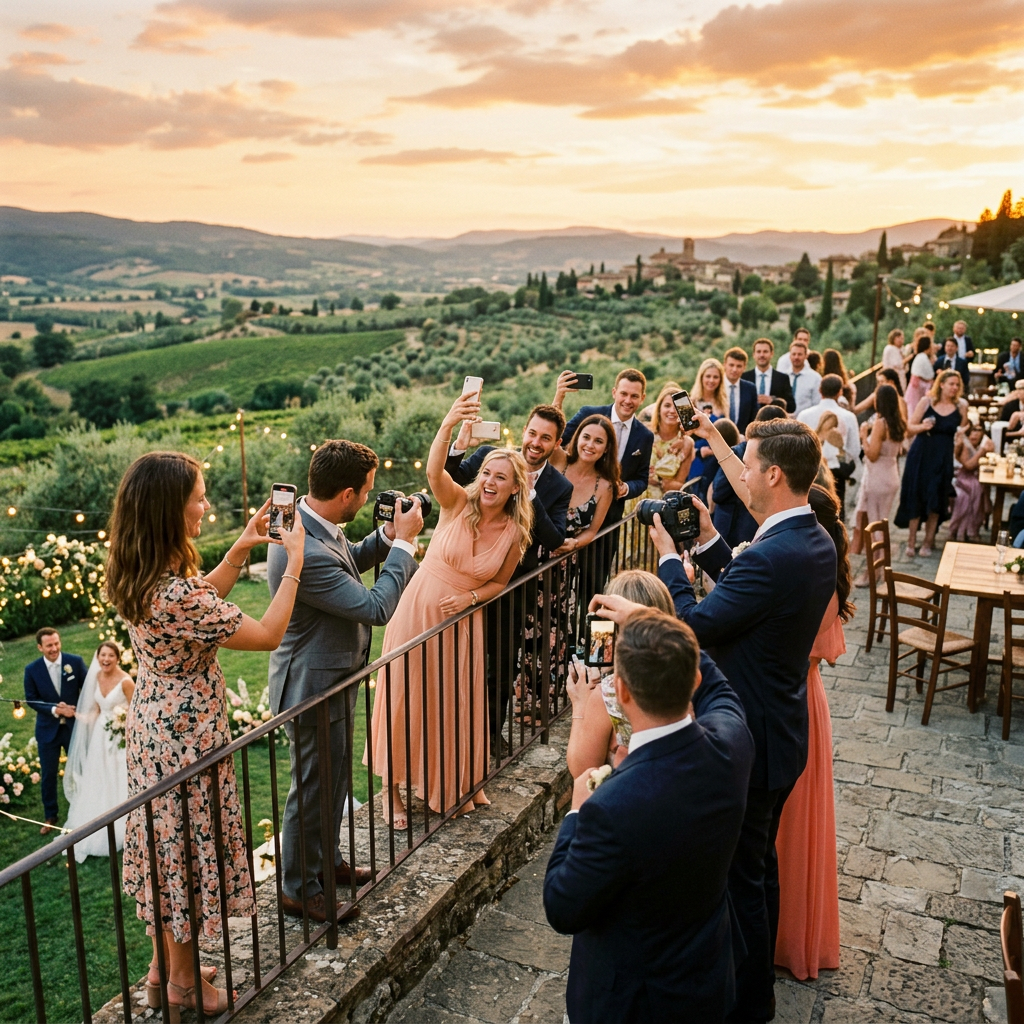
    The sun is setting. It could be dipping below the rolling, vine-covered hills of Tuscany, bathing an ancient stone villa in a deep, honey-gold light. Or, just as magically, it could be sinking behind the familiar silhouette of the old oak tree in your parents’ backyard, casting long, familiar shadows across the lawn where you played as a child. In either scene, a love story is unfolding, and whether you flew halfway around the world or simply stepped out your back door, the setting itself is a silent, vital character in the narrative of your wedding day.

    For years, the wedding industry chased a certain kind of perfection…a polished, Pinterest-ready aesthetic that was often beautiful but occasionally lacked a deep sense of place. But the trend has shifted profoundly. Today, couples are obsessively focused on meaning. They aren’t just choosing a venue; they are choosing a location with a story, a sense of soul, and an identity that is meant to be woven into the fabric of their marriage. Destination weddings…from intimate elopements on remote cliffsides to grand, multi-day affairs in European capitals…have surged, but so too has the intentional, highly personalized ‘home’ wedding, staged on family property, in a favorite park, or at a meaningful local landmark.

    The problem with this new focus on location, however, is that once the final photo is taken and the last guest has departed, the digital evidence of that meaningful setting often dissolves into a vast, flat sprawl of files. Your photographer delivers thousands of images, your videographer sends terabytes of footage, and your guests, via a shared album, contribute hundreds of snapshots. You have a huge, beautiful collection, but the fundamental context…where exactly that beautiful, spontaneous moment occurred…is lost. Was that hilarious speech delivered next to the fountain overlooking the Adriatic, or was it given in the glow of the string lights under the old walnut tree? Digital files are stripped of their emotional geography, leaving you with an inventory of moments, but a fragmented map of the experience.

    This is where the magic of ZillaBooth Pro’s advanced Geotagging feature turns your digital memories from a simple gallery into an interactive, spatial memoir.ZillaBooth Pro’s Geotagging: The GPS of Your Soul

    ZillaBooth Pro is an indispensable tool for the modern wedding, allowing you to capture spontaneous, high-quality, and deeply personalized content from your guests without the awkwardness of a traditional, physical photo booth. But its most powerful feature for location-conscious couples is its seamless, hyper-accurate Geotagging technology.

    In simple terms, Geotagging is the automatic process of adding precise geographical identification metadata…latitude and longitude coordinates…to every single piece of content captured through the ZillaBooth Pro app. This includes every silly photo, every heartfelt guest video message, every slow-motion boomerang, and every stunning 360-degree clip.

    Unlike the generic geotags you see on social media, which often only register the name of the broad venue (e.g., “Villa Pienza”), ZillaBooth Pro utilizes your phone’s internal GPS with high granularity. This means it records the exact coordinate of the guest at the moment they hit the shutter or record button. The result is a memory bank that is organized, not just by time, but by space. When your final ZillaBooth Pro memory package is delivered, it’s not just a folder of files; it’s a living, breathing, interactive map of your wedding.Destination Memoir: Mapping the Multilingual Journey

    Consider the dream destination wedding in Tuscany. The celebration may span three days and multiple locations: the intimate rehearsal dinner in a medieval cellar on Thursday, the cliffside ceremony overlooking the Val d’Orcia on Friday, and the grand reception at the villa pool on Saturday.

    In a standard digital album, all these files would be sorted by date, but the distinct flavor of each setting would blend together. With ZillaBooth Pro Geotagging, your memory review becomes a journey: * The Proposal Spot Pin: Before the main event, you and your partner sneak back to the exact spot where he or she proposed…a tiny, overgrown chapel perhaps. You record a short, reflective video message together in the app. That memory is instantly pinned to those exact coordinates on your master map.
    * The Ceremony Overlook: The actual ceremony takes place at a specific, breathtaking overlook 500 meters from the villa. Guests capture their initial gasp of the view, close-up shots of the rings, and the tearful reactions to your vows. By clicking the pin labeled “Ceremony Site” on your ZillaBooth Pro map, you instantly filter all content to only the memories created in that sacred, fifteen-square-meter area.
    * The Aperitivo Corner: Later, during cocktail hour, one of your aunts is seen on a guest video message offering unsolicited, hilarious marriage advice. This memory is pinned, not just to the villa, but specifically to the corner of the terrace by the old olive tree where the Aperol Spritz bar was set up. Years later, you can click that exact spot and relive that perfectly timed moment, complete with the clink of glasses and the sound of Italian chatter from the street below.Geotagging in a destination setting is the ultimate organizational tool. It turns a vast, beautiful collection of moments into a chronological, geographical itinerary, allowing you to navigate your memories with the same intentionality you used to plan the trip itself. It ensures that the unique character of every stop on your wedding journey is permanently preserved and instantly retrievable.Local Legend: Elevating the Backyard to a Landmark

    But the true genius of Geotagging isn’t just for exotic locations…it’s for making familiar locations feel just as sacred and special. For the couple who chooses to host their wedding in the beloved, meaningful space of a family backyard, Geotagging is the tool that transforms a beloved piece of property into a living, breathing landmark of their union.

    A backyard wedding, while deeply personal, can be spatially confusing in retrospect. Every moment happens within a hundred-foot radius. The kitchen is the dressing room, the lawn is the dance floor, and the gazebo is the altar. Geotagging creates precise, memory-laden zones: * The Vows Pin: Your vows were exchanged beneath the old, enormous maple tree. Geotagging ensures that every photo or video taken of that sacred moment is grouped not under “Backyard,” but under “Maple Tree Altar – Vows.”
    * The Dessert Bar Pin: You spent weeks perfecting a stunning dessert bar, and your cousin took a video describing the full array of treats. That message isn’t lost in the general reception footage; it’s pinned precisely to the coordinates of the picnic table that held the cakes.
    * The Dance Floor Zone: ZillaBooth Pro can even create a virtual fence, or ‘geofence,’ around the dance floor area. By filtering the master map for this zone, you can instantly pull up every single photo, video, and GIF of your guests letting loose, effectively creating a “Best of the Dance Party” reel with a single click.For a local wedding, Geotagging transforms proximity into specificity. It acknowledges the emotional reality that the spot where you said ‘I do’ is fundamentally different from the spot where you cut the cake, even if they are only thirty feet apart. The feature acts like a professional archivist, differentiating and cataloging every micro-location to honor the specific memory created there, making the familiar feel uniquely profound.More Than Photos: The Spatialization of Sentiment

    ZillaBooth Pro’s Geotagging extends far beyond standard photography, adding unparalleled depth to other forms of memory capture:1. Geotagged Video Messages: The most valuable content captured by the app are often the spontaneous, heartfelt video messages from guests. With Geotagging, you don’t just get the message; you get the location. This can add subtle, beautiful context. Perhaps your grandmother recorded her message from a quiet bench on the edge of the property, providing a moment of calm reflection that is now permanently linked to that spot.
    2. Mapping Speeches: Even formal elements like speeches, which can sometimes be hard to locate in hours of video, become instantly accessible. Was your sister’s tear-jerking toast delivered from the veranda? Click the “Veranda” pin and jump straight to the exact moment.
    3. Future Proofing: By permanently embedding the exact location into the file metadata, you are future-proofing your memories. Ten, twenty, or thirty years from now, you will not rely on memory or cryptic filenames to recall the setting. The location data is part of the file itself, a timeless, unerasable link between the moment and the geography.In a world drowning in digital clutter, ZillaBooth Pro’s Geotagging is an anchor. It connects the fleeting, joyous chaos of your wedding day back to the fundamental constant of place. It transforms your collection of files into a deeply meaningful, navigable memory experience…a digital map of your love story. Whether your journey began in a sun-drenched Italian olive grove or under the comfortable shade of the backyard oak, this feature ensures that the unique geography of your celebration is never lost, allowing you to relive every single cherished moment exactly where it happened. It’s the difference between looking at a photograph of a castle and standing right where you stood when the photograph was taken. It’s the ultimate way to honor the most meaningful location in your life: the place where you officially became a family.
  • Analog in a Digital World: Why We Crave Physical Prints

    Analog in a Digital World: Why We Crave Physical Prints

    The modern paradox of photography is that in the age of endless images, we feel we have fewer actual photos. Our camera rolls overflow with tens of thousands of digital captures…perfectly exposed, flawlessly focused, and immediately shareable…yet they often feel weightless, ephemeral, and ultimately, disposable. We are drowning in JPEGs, but starving for keepsakes. This deep, persistent craving for something tangible…something we can hold, put in a frame, or slip into a wallet…is what fuels the powerful trend of returning to physical prints. It is not merely a retro fad; it is a profound psychological need for permanence and tactile connection in a world that has become overwhelmingly screen-based and transient. The solution is not to abandon digital, but to master the hybrid workflow: utilizing the speed and quality of modern digital tools, like ZillaBooth, and completing the experience by transforming those digital captures into timeless, analog-feeling prints. This approach gives us the best of both worlds, turning fleeting data into cherished objects.

    The Haptic and Emotional Superiority of Print

    Why does a print feel so much more significant than its digital twin? The answer lies in psychology and the human need for ritual and permanence. Firstly, a physical photograph demands a ritual. To print an image, one must intentionally select it from the digital multitude, a process of curation that elevates its value. Unlike endlessly scrolling through a camera roll where every image is equally available and therefore equally insignificant, the act of printing grants the chosen photograph a ceremonial status. It signifies: “This image matters. This moment is worthy of permanence.” Once printed, the image becomes a fixed, non-editable piece of history. A digital file is endlessly changeable, existing in a state of potential revision; a print is final, a concrete testament to a specific moment in time. This finality lends it a greater emotional weight.

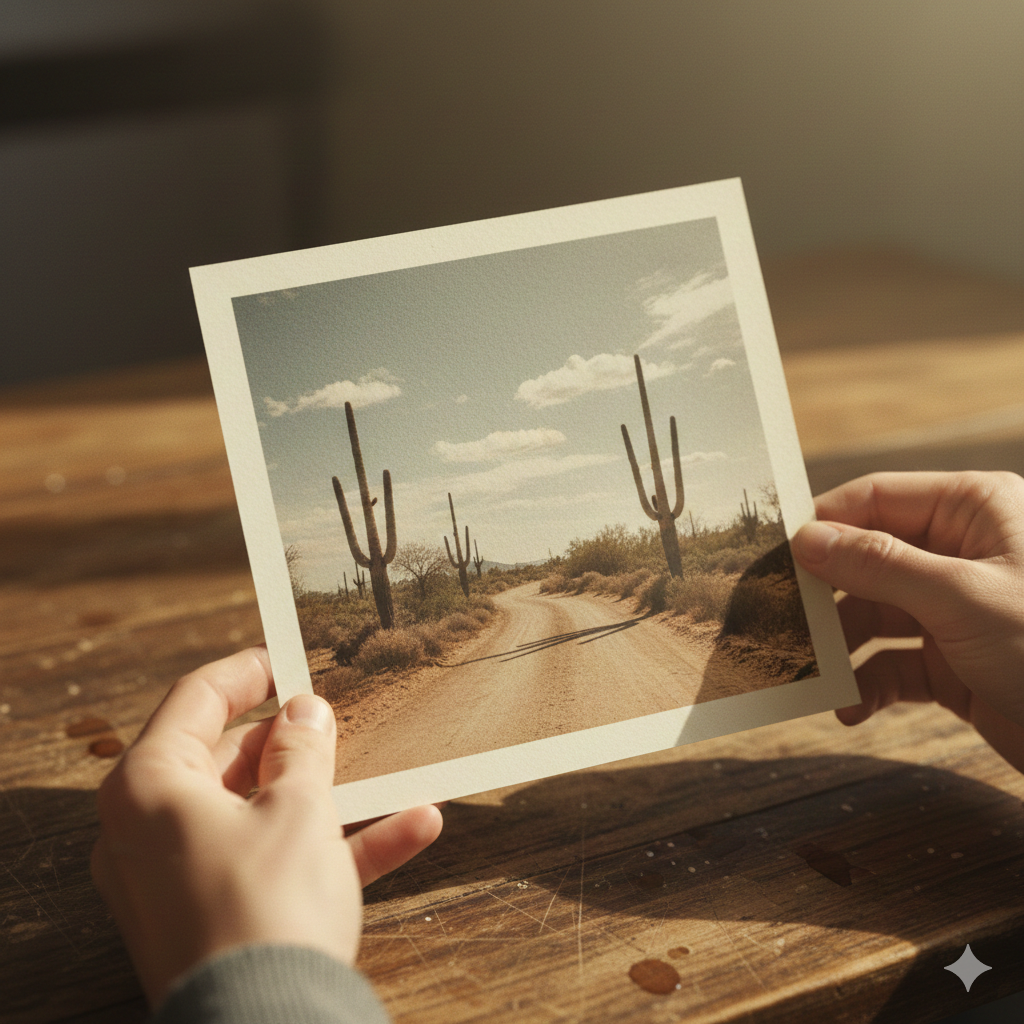
    Secondly, the superiority of the print is fundamentally haptic, or related to the sense of touch. We experience digital images through cold glass and light. We experience a print through touch, smell, and substance. The texture of matte paper versus glossy; the slightly frayed corner from being handled; the weight of the cardstock…these physical properties engage our senses in a way a digital file simply cannot. The print possesses what the great photographer Henri Cartier-Bresson called “the feeling of a scrap of paper.” It accrues history through wear and tear. A crease is a memory of a child’s hand; a faded edge is the mark of time. When we hold a print, we are activating a different kind of memory…one tied to the physical world, making the recollection richer and more multi-sensory. This is the core of the analog craving: a desire for substance over simulation.

    The Great Digital Devaluation

    Our current digital photo ecosystem, for all its convenience, has a significant flaw: it promotes devaluation through abundance. We take thousands of photos without thought because storage is cheap and deleting them is optional. This sheer volume creates a paralyzing effect…the “digital archive paralysis”…where the most important images are lost in the noise of the mediocre ones. They exist in a perpetual digital purgatory, never truly seen, enjoyed, or shared in a meaningful way. Moreover, digital photos exist under the threat of technological obsolescence. File formats change, cloud services shut down, hard drives fail. The very ease with which they are stored makes them vulnerable to being forgotten, or worse, lost forever in an unreadable format years from now. The printed photograph, conversely, is immediately accessible without electricity, software, or passwords. Its technology is paper, ink, and light…a universally readable format that has survived for centuries.

    The ZillaBooth Hybrid Solution: Analog Feel, Digital Power

    The modern photographer doesn’t have to choose between the convenience of digital and the soul of analog. The hybrid workflow is the elegant compromise that captures the best features of both. This is where a dedicated professional camera system or application like ZillaBooth comes into its own. The power of ZillaBooth lies in its ability to offer granular control and high-quality capture, which is essential for a great final print, while maintaining the speed and ease of a digital device.

    The process is simple, yet transformative, and is built on intentionality at every stage:1. Capture with Digital Precision: Use the ZillaBooth application to take your photos. The advantage here is the immediate feedback, the high-resolution sensor, and the ability to take multiple shots quickly without the cost of film. ZillaBooth’s advanced controls allow you to fine-tune exposure, color temperature, and even apply specific grain or color-shift filters at the point of capture that are specifically designed to emulate classic film stocks, providing the “analog feel” from the start. By controlling the camera’s raw output, you ensure the image has the necessary depth and quality to withstand the printing process, unlike quick snaps taken with an auto setting. This attention to detail in the capture phase ensures the final print is not just a high-quality reproduction, but an image with rich tonal information.

    1. The Curation Stage: This is the critical step that restores value. Instead of printing everything, you must curate. Scrolling through the ZillaBooth gallery, the user is forced to select only the top 1%…the images that genuinely resonate. This digital culling process is the modern equivalent of choosing which roll of film to develop. It reintroduces the scarcity that gives a photograph worth. This curation should be done with a physical eye, asking: “Does this look good as a print? Will I want to handle this in ten years?” The act of deletion and selection sharpens your photographic eye and fundamentally changes your relationship with the images that remain.

    2. Preparation for Print (The Analogization): Before sending the digital file to a printer, ZillaBooth or a related professional editing suite is used for the final analog-style treatment. This involves several key steps to break the clean, sterile aesthetic of pure digital: * Aspect Ratio and Border: Cropping the image to a classic print size (e.g., a square 1:1 or a rectangular 4:3) and applying a digital border, often with a white or sepia tone, instantly frames the image like a traditional print. This border separates the image from the digital canvas and gives the eye a resting place, focusing attention inward.
      • Tonal Adjustments: Digital vibrancy is often too clean. The image should be slightly softened, with contrast gently lowered, and a subtle color cast (like a mild sepia or a pale yellow) introduced to simulate the chemical aging process of film. Film, particularly older film, has a distinct color bias, and mimicking this bias adds a layer of authentic nostalgia. This is often achieved by adjusting the white balance or using color grading tools to lift the blacks slightly, preventing true digital black.
      • Grain Application: A subtle but intentional layer of digital film grain is applied. This adds texture and breaks up the unnatural perfection of high-resolution digital capture, lending it the characteristic roughness and organic structure of an analog image. This grain is the texture of film, and its presence psychologically signals “old school” to the viewer.4. The Final Print: The choice of print medium is as important as the original capture. To achieve the “analog feel,” avoid standard inkjet photo paper. Instead, opt for specialty papers: * Matte and Cotton Rag Papers: These absorb light rather than reflecting it, giving the image a soft, luxurious, and non-reflective quality that feels much older and more substantial than glossy paper. The fibers in the paper interact with the ink to create an organic texture that mimics the subtle irregularities of a darkroom print.
      • Fuji Crystal Archive or Luster Finish: For a more traditional photographic feel, these professional papers are ideal. They offer a semi-glossy surface that is less reflective than true gloss, and their chemical composition helps colors pop in a way that recalls traditional photo lab processing.When a high-quality ZillaBooth digital file is printed on a textured matte paper, the transformation is complete. The digital grain integrates seamlessly into the paper’s texture, the intentional color shift warms the image, and the final result is a physical artifact that carries the emotional resonance of a film photograph, but with the technical sharpness and clarity afforded by a 21st-century digital camera.

    More Than Just Paper: The Power of Context

    The true victory of the physical print is not just its texture, but its context. A digital photo lives on a phone, competing with emails, social media feeds, and news alerts. A printed photo, however, has a dedicated space in the real world. It is pinned to a refrigerator, tucked into a journal, or displayed on a desk. This context forces interaction in a way a digital photo never can.

    The refrigerator magnet photo isn’t just looked at; it’s seen every day while grabbing a coffee. The wallet photo isn’t merely a file; it’s a tiny, worn talisman of a loved one that is handled and felt. The physical print creates a continuous, low-level emotional connection to the memory that its digital counterpart, locked away behind a passcode, cannot replicate. It is the final, ultimate form of the image…a permanent fixture in our lives, not just an entry in a database.

    Ultimately, the craving for physical prints in a digital world is a yearning for substance, ritual, and a tangible connection to our personal history. The hybrid workflow…from ZillaBooth’s digital precision to a deliberately chosen, analog-styled print…is the modern photographer’s way of satisfying this deep-seated need. We capture the moment with the speed of light, but we preserve it with the timeless gravity of paper. We use technology to make the photo, but we use the ritual of printing to make it matter. Stop hoarding JPEGs; start collecting memories. Embrace the power of the printed photograph. It is the only true keepsake in the digital age.