Tag: Lo-Fi Aesthetic

  • From Broadway to Your Backyard: The Evolution of Access

    From Broadway to Your Backyard: The Evolution of Access

    The distance between “Broadway” and “your backyard” once measured not just geography, but a vast and unbridgeable chasm of access, cost, and expertise. This is the story of how photography…the single most powerful tool for capturing and curating human life…has been thoroughly democratized, moving from a monumental, fixed destination to a feature as fluid and personal as the breath in your lungs. In 1925, the idea of instantaneous, portable image-making was a future so distant it was science fiction. If you wanted a professional portrait, a memory fixed for posterity, or a casual photo booth snap with a friend, you undertook a pilgrimage. You went to the dedicated space, the photo studio, the kinetoscope parlor, or the specialized booth…the commercial, cultural ‘Broadway’ of image capture.

    That experience was defined by its friction. The process was expensive, reserved for special occasions, and required a surrender of agency. You dressed for the event. You waited your turn. You were positioned by a professional who understood the temperamental chemistry and the unforgiving physics of light and shadow. The resulting picture was a precious artifact, a heavy cardstock portrait or a handful of grainy, monochromatic photobooth strips, meant for an album, a locket, or a mantelpiece. It was a formal contract with history, carefully negotiated and rarely executed. The financial and time investment meant that the common experience of life…the mundane, the silly, the spontaneous, the ugly…was deemed unworthy of documentation. A photograph was an investment, a performance, and a luxury.

    This high barrier to entry created a cultural monopoly on visual storytelling. The narrative of the era was predominantly captured by those with resources, equipment, and training: journalists, artists, and the wealthy. The visual historical record of the early 20th century is, by necessity, a curated, elevated, and sometimes stiflingly formal one. The average person’s life existed mostly in memory, not on paper. The booth was stationary, the technology was complex, and the power remained concentrated.

    The first crack in this monolithic structure came not from digital technology, but from ingenious simplification. The introduction of roll film cameras…the Kodak Brownie being the most famous evangelist…began to pull the practice out of the studio and into the sun. The tagline, “You press the button, we do the rest,” was a revolutionary declaration of photographic independence. It severed the photographer from the chemist, placing the ability to capture the image in the hands of the public while the complex, darkroom work remained with the professionals. This made photography a leisure activity rather than a profession. People began taking pictures of holidays, family gatherings, and everyday scenes. The aesthetic shifted from formal portraiture to the candid snap, embracing the slightly blurry, slightly off-kilter perspective of the amateur. But even then, the friction remained significant: the cost of film, the limit of twelve or twenty-four exposures, the anxious wait for development, and the final cost of the prints. The booth had been moved from Broadway to the living room, but it was still a finite resource.

    The true, cataclysmic shift, the one that fully unlatched the booth and placed it in the pocket of every global citizen, was the advent of digital technology and, crucially, the smartphone. This eliminated all remaining forms of friction simultaneously. It was a quadruple-whammy of democratization: cost, time, skill, and sharing.

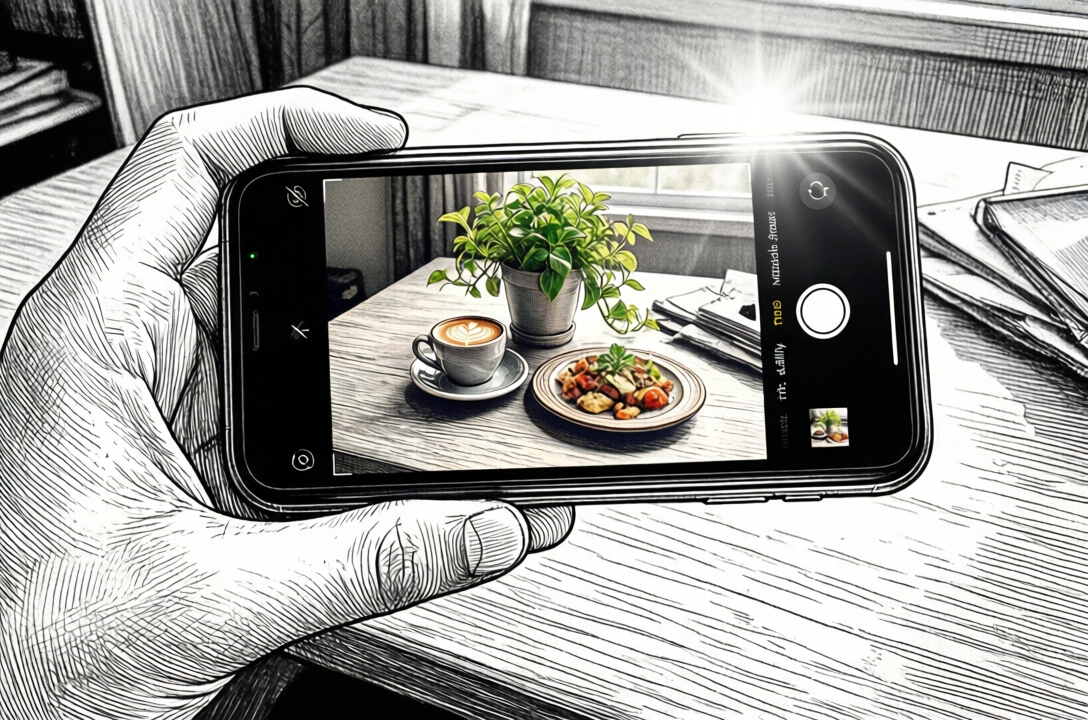
    First, the cost per picture dropped to zero. There is no film, no development fee, and essentially infinite storage capacity. This single change…the total removal of economic consequence for hitting the shutter button…was the engine of the modern visual age. It encouraged a philosophy of documentation that is fundamentally different from the past. Why take one picture when you can take fifty? Why save the camera for a birthday when you can use it to capture the pattern of morning shadows on your coffee cup? The photograph became a throwaway note, a fleeting text message, an experimental draft.

    Second, the skill barrier collapsed. Sophisticated algorithms now manage light, focus, color balance, and exposure automatically, often producing technically superior images to those taken by all but the most dedicated professional of fifty years ago. The modern camera is not a tool you operate; it is a smart partner you simply point. With a tap, you can edit, crop, and filter the image, bypassing years of darkroom expertise and Adobe Photoshop mastery. The photographer, the developer, the editor, and the publisher are all now one and the same person, armed with a single device.

    Third, the mobility and time factor achieved totality. The camera is no longer a dedicated device left in a drawer, but a fused extension of the self, carried in the pocket at all times. The opportunity to capture a moment is instantaneous and unmissable. That pivotal moment, that perfect intersection of light and emotion, is no longer lost because the photographer was blocks away from the nearest booth, or fumbling with a film canister. The booth is always, constantly, right there, waiting.

    Finally, sharing became instant and global. The digital image is born connected. It does not exist merely as a physical object; it exists as a data stream capable of transmission to millions of people in a fraction of a second. The physical distance between “my backyard” and “your backyard” has been obliterated, replaced by the immediacy of the Instagram feed, the TikTok video, and the FaceTime call. The photograph has evolved from a precious artifact to a language of communication, a primary verb in the syntax of global digital culture.

    The ramifications of this shift are profound and complex. On one hand, the accessibility has led to an explosion of human history and creativity. We have an unprecedented record of the collective human experience…from high political drama to the intimate moments of family life, all contributed by billions of independent witnesses. Subcultures, protests, personal joys, and mundane reality are all recorded, archived, and shared. This democratization has given voice to countless communities and perspectives previously absent from the official, professionally curated visual record. The power of the image as a tool for political change, emotional connection, and self-definition has never been higher.

    On the other hand, this total accessibility has led to a counter-cultural reaction. When every picture is technically perfect and instantly available, the value of perfection diminishes. The infinite access has created a new kind of friction…the cultural friction of authenticity. When every image is filtered, posed, and algorithmically enhanced, there arises a craving for the grit and reality that defined the friction-filled photography of the past. The rise of trends that deliberately mimic the flaws of early photography…the harsh, unflattering direct flash, the grainy, disposable camera aesthetic, the ‘lo-fi’ digital noise…is not a rejection of the technology in our pocket. It is a rebellion against its perfection. It is a nostalgic longing for the raw, unplanned honesty that came as a necessary side effect of the technical limitations of the 1925 ‘Broadway’ experience. We deliberately reintroduce friction to prove an image is ‘real.’

    The journey from Broadway to your backyard is more than a technological success story; it is a profound cultural transformation. The photography booth has been unshackled, its walls dissolved, its processes internalized by a chip and an algorithm. The picture has evolved from a luxury good to a universal utility. It is no longer an object we occasionally seek out, but a power we wield constantly. The greatest achievement of the modern camera is not that it takes beautiful pictures, but that it has become an invisible extension of human sight…a limitless, ever-present device that has made the visual memory of the world instantly accessible to everyone, everywhere. The booth is truly in your pocket, and with it, the power to define and share your own history, moment by moment.
  • Why “Authenticity” is the Buzzword of the Year

    Why “Authenticity” is the Buzzword of the Year

    The cultural pendulum has definitively swung. After nearly a decade defined by the relentless pursuit of digital perfection…the soft-focus portrait, the meticulously arranged flat lay, the sun-drenched, over-exposed travel shot…we have collectively reached a saturation point. The meticulously curated grid, once the gold standard of social media success, now registers as inauthentic, tiring, and even dishonest. The visual language of the internet is undergoing a seismic shift, and the single word dominating this new conversation, the one that serves as both a critique of the past and a blueprint for the future, is authenticity. It is more than a fleeting trend; it is a full-blown cultural mandate, a demand from consumers and creators alike to ditch the artifice and embrace the raw, the real, and the momentarily imperfect.

    This widespread craving for “realness” is a direct response to what can only be called ‘Digital Fatigue.’ We grew weary of the visual lie. The perfected image promised an unattainable lifestyle, fueling a low-grade, perpetual anxiety about presentation. The counter-movement began subtly…a return to grainy film simulations, the strategic use of phone camera ‘time stamps,’ and the celebration of images taken under difficult or unflattering lighting. This aesthetic revolution, however, has crystallized around a singular core principle: the preservation of true-to-life color and texture.

    For years, the goal of any casual picture-taker was the soft wash of light that erased blemishes, minimized shadows, and homogenized color into a single, pleasing, ‘golden hour’ palette. Technology bent over backward to deliver this; camera apps automatically smoothed skin, corrected for every possible lighting flaw, and defaulted to flattering, soft-focus portrait modes. But in striving for technical perfection, these tools stripped the image of its narrative power…the very details that make a moment feel real.

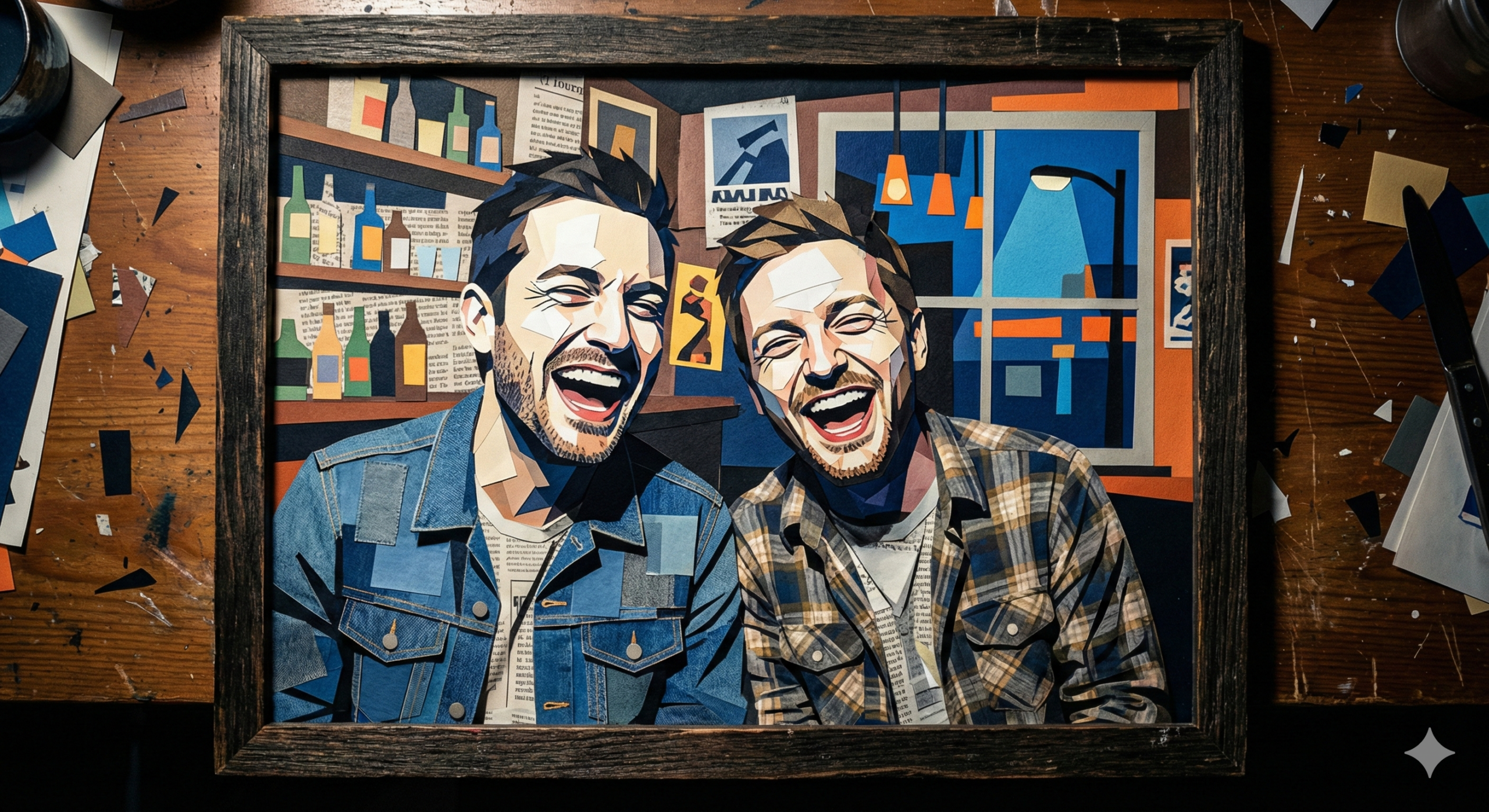
    Authenticity, in the current visual context, is defined by the integrity of the original detail. A photo is authentic when it registers the grit of the city street, the harsh reflection of fluorescent light, the true, undoctored color of a cocktail in a dimly lit bar, and the actual, imperfect texture of human skin. This is the visual equivalent of ‘lo-fi’ music…it deliberately eschews high-fidelity polish in favor of an imperfect, slightly messy, yet immediately evocative honesty. The shadows, the grain, the unforgiving color cast…these are no longer flaws to be edited out. They are essential characters in the story. They scream: This was taken right now, with no time for adjustments.

    This cultural moment demands a new type of tool…one that facilitates the trend of authenticity rather than fighting it. It requires a technology that gets out of the way, intentionally disabling the automated, ‘beautifying’ smart features that defined the last decade of phone photography. This is precisely where ZillaBooth Pro has emerged as the essential application for the authentic creator.

    ZillaBooth Pro’s defining feature is not a new filter or a groundbreaking editing tool; it is its revolutionary commitment to omission. The app is engineered with a purposeful lack of “beauty filters.” This is the anti-algorithm. While the native camera app on any modern smartphone uses incredibly complex artificial intelligence to automatically and preemptively soften skin, subtly adjust contours, and correct what it perceives as ‘flaws,’ ZillaBooth Pro provides a completely unvarnished feed. It hands the user the raw, high-contrast, technically ‘imperfect’ image that the culture is currently demanding.

    This intentional absence of automated enhancement is the key to unlocking the new aesthetic of truth. When the camera’s internal software is prevented from performing its automated smoothing, the lens is finally allowed to capture true-to-life texture.

    Consider the human subject. In the era of the beauty filter, every portrait was destined to look slightly airbrushed…skin tones were unnaturally uniform, pores were blurred, and the fine lines that tell a life story were digitally erased. ZillaBooth Pro throws this out entirely. Its lack of smoothing algorithms means that the texture of fabric…the heavy weave of denim, the sheen of silk, the glitter of sequins…is rendered with a brutal, almost hyper-real clarity. More importantly, it means that skin is captured with its true texture intact. A direct, harsh light source, like the forced flash ZillaBooth Pro so expertly controls, does not flatter; it magnifies. It highlights the pores, the natural oil of the skin, the delicate lines around the eyes. This unforgiving honesty is what audiences now equate with being ‘real,’ a defiant badge of authenticity worn by the subject.

    The effect is even more pronounced when it comes to true-to-life color. Modern camera algorithms are programmed to chase a specific color temperature, usually one that is warm, flattering, and consistent…a constant, soft-focus ‘golden hour.’ This results in an image where the colors of the environment are flattened and corrected to conform to an idealized vision. ZillaBooth Pro rejects this chromatic homogenization. By offering granular, manual control and intentionally avoiding automated white balance correction, the app allows the image to be saturated with the genuine color of the moment.

    The colors that were once aggressively ‘corrected’…the eerie blue of a late-night streetlamp, the intense green of an LED screen, the harsh yellow-orange glow of old-school incandescent bulbs…are now preserved. The result is a color profile that is chaotic, dynamic, and perfectly captures the feeling of being in that space, not the technically ‘correct’ version of it. The lack of an intervening filter means a subject’s true-to-life skin color is not warped by an attempt to make the whole scene uniformly ‘pretty.’ When you look at an image captured with ZillaBooth Pro, you are not seeing a post-processed interpretation; you are seeing the moment’s raw, unedited light signature. This is why the aesthetic is so compelling: it is visual proof that you were there, experiencing the moment as it truly appeared, not as an algorithm wished it had appeared.

    ZillaBooth Pro is, therefore, not just a camera app; it is a statement of philosophical intent. It operates on the principle that the most engaging image is the one that is the least filtered. It empowers the user to reject the soft-focus fantasy and embrace the high-contrast, hyper-textured reality. It’s a move that feels rebellious in a digital landscape still largely dominated by polished perfection.

    The tools ZillaBooth Pro does offer…manual control over flash, exposure, and focus…are designed to enhance the chaos and truth, not tame it. Forcing the flash to fire at maximum intensity, even in bright sunlight, is the ultimate power move of the authenticity trend. This technique, which instantly separates the subject from the background with aggressive shadows and blinding highlights, ruthlessly exposes texture and preserves the most chaotic, true colors of the scene, creating a sense of raw, unmediated drama.

    In this new visual economy, authenticity is the currency, and the preservation of true-to-life color and texture is the gold standard. ZillaBooth Pro is the definitive tool because its very function is a rejection of the artifice that came before. It is built for a generation that has seen through the digital veil and is now demanding the real, the raw, and the unedited truth in every frame. To capture an image with ZillaBooth Pro is to participate in this cultural moment, transforming a simple picture into an unflinching document of reality. By choosing an app defined by its lack of automated enhancements, the modern creator is making a powerful statement: that reality, in all its high-contrast, textured, and colorful glory, is far more compelling than any manufactured fantasy.