Tag: Content Creation

  • The “Influencer” Kit: Essential Gear for ZillaBooth

    The “Influencer” Kit: Essential Gear for ZillaBooth

    Every ZillaBooth creator knows that the magic of the app lies in its ability to transform raw footage into highly polished, viral-ready content. But even the most sophisticated software is only as good as the hardware running it. If you’re serious about building your audience, landing brand deals, and turning your ZillaBooth channel into a full-time business, you need to stop relying on desk lamps and stacks of books and invest in a professional, travel-ready kit.

    This is more than just a list of gadgets. This is a blueprint for your ultimate mobile studio. We’ve scoured the market for the best-performing, most reliable pieces of gear that will integrate seamlessly with your ZillaBooth workflow. Each recommendation is focused on three things: Quality, Portability, and Endurance. When your lighting is perfect, your camera is rock-steady, and your battery lasts through a full day of shoots, your only job is to create.

    Let’s dive into the three pillars of the ZillaBooth “Influencer” Kit.

    Pillar 1: The Illuminated Canvas – Choosing the Right Ring Light

    Lighting is the single greatest determinant of video quality. It dictates mood, sharpness, and most importantly, how flattering the final image is. While ZillaBooth’s editing suite can fix a lot, it can’t fix terrible lighting. A good ring light is non-negotiable for eliminating distracting shadows, reducing skin blemishes, and giving your eyes that characteristic, professional sparkle. For ZillaBooth creators, portability and color accuracy are the two most crucial features.

    Why a Ring Light for ZillaBooth?
    Ring lights provide a uniquely soft, even, and almost shadowless light that wraps around your subject. When shooting with the ZillaBooth front-facing camera for Q&A sessions, tutorials, or unboxing videos, the ring light ensures your face is perfectly and consistently illuminated, making color grading in post-production a breeze. For the more advanced 3D scanning features of ZillaBooth Pro, consistent, shadow-free lighting is vital for creating clean, high-fidelity object models.

    Key Features to Look For:1. Bi-Color/Dimmable: You need to be able to match the ambient light around you. A light that can switch between warm (3200K) and cool/daylight (5600K) is essential. Dimmability allows you to control the intensity without moving the light.
    2. USB or Battery Powered: Forget wall sockets. A mobile influencer needs a light that runs off a battery bank or built-in rechargeable cells for on-the-go shooting.
    3. Integrated Phone/iPad Mount: This saves space and keeps your whole setup…light and camera…on the same axis for the most flattering light pattern.Our Top Gear Recommendations:

    The Budget Powerhouse: LumiPro 10-Inch Traveler
    This model hits the sweet spot for new creators. It’s USB-powered, meaning you can connect it directly to your battery bank (see Pillar 3). Its 10-inch size is compact enough to fit in a backpack but powerful enough for close-up shots. It includes a basic tripod and a flexible phone mount. It’s the perfect, cost-effective entry point to immediately professionalize your look.
    [Affiliate Link: LumiPro 10-Inch Traveler]

    The Mid-Range Workhorse: BrightStar 18-Inch Pro Ring
    Designed for dedicated home studios that still need to be mobile. At 18 inches, it provides significantly more coverage, making it ideal for full-torso shots or shooting objects on a tabletop. It features an AC adapter and a swappable battery pack option, giving you the choice between unlimited power at home or mobility in the field. It also offers dedicated dials for precise bi-color temperature and brightness adjustments.
    [Affiliate Link: BrightStar 18-Inch Pro Ring]

    Pillar 2: The Steady Hand – The Best iPad Stands

    A shaky camera is the quickest way to lose credibility. Whether you’re live-streaming a tutorial or recording a high-fidelity ZillaBooth scan, the shot must be stable. Since the ZillaBooth app is optimized for the iPad’s larger screen and superior processing power, your setup needs a stand that can handle the size and weight of a tablet without wobbling or collapsing.

    Why a Dedicated Stand is Essential:
    Trying to prop up a large iPad with makeshift items is unprofessional and unsafe for your gear. A dedicated stand ensures consistent framing, which is crucial for multi-shot videos where you need seamless cuts. Furthermore, when using ZillaBooth’s motion-tracking features, a perfectly stable base is necessary for the app to correctly map 3D space or track your movements accurately.

    Key Features to Look For:1. Rock-Solid Stability: Must have a weighted base or a wide, locking tripod footprint. A stand with a wobbly head will ruin your focus.
    2. Height and Angle Adjustability: You need to be able to shoot from seated eye-level, standing height, and even downward for flat-lay shots. Look for 360-degree rotation.
    3. Universal/Adjustable Mount: The clamp must be able to securely hold various iPad sizes, ideally with a soft-touch interior to protect the device.Our Top Gear Recommendations:

    The Desk Stand King: ApexDesk Multi-Angle Mount
    This is the ultimate tabletop solution. Its key feature is a dual-hinge design that allows you to position your iPad at virtually any angle, even flat for overhead shots of product creation or sketching. The base is heavy, providing fantastic stability even with a large 12.9-inch iPad. It’s the perfect companion for ZillaBooth live coding or digital art tutorials.
    [Affiliate Link: ApexDesk Multi-Angle Mount]

    The Mobile Studio Tripod: TravelPod X-Treme
    When you need to shoot on location…a coffee shop, a park, or a convention…this is your stand. It’s a full-height tripod with a quick-release plate specifically designed for tablets. Crucially, the head features a fluid tilt and pan, allowing for smooth, professional camera movements during your ZillaBooth recording without removing the iPad. It collapses down into a highly portable 18-inch package.
    [Affiliate Link: TravelPod X-Treme]

    Pillar 3: The Endurance Engine – Selecting the Right Battery Banks

    ZillaBooth is a sophisticated application. Running advanced video processing, augmented reality overlays, and high-intensity shooting for hours on end will drain even the best tablet battery in a flash. The number one reason professional shoots get cut short is a dead battery. A powerful, high-capacity battery bank is not an optional accessory…it is a critical power reserve that keeps your income-generating activity going.

    Why You Need Power Delivery (PD):
    For a modern iPad, a standard USB-A port won’t cut it; it will barely trickle-charge the device while it’s in use. You need a battery bank with USB-C Power Delivery (PD) capability. This protocol allows the bank to deliver high wattage (30W, 45W, or higher), which is required to efficiently charge an iPad, especially while you are actively recording.

    Key Features to Look For:1. High Capacity: Look for 20,000mAh or higher. This capacity can fully recharge most iPads at least once, giving you double the shooting time.
    2. USB-C PD Output: At least one port must support 30W+ Power Delivery. Check the specs closely.
    3. Pass-Through Charging: The ability to charge the battery bank while it is charging your iPad. This is essential for long studio sessions.Our Top Gear Recommendations:

    The All-Day Workhorse: TitanCell 25000 PD Max
    The gold standard for creators. With a massive 25,000mAh capacity and a 65W USB-C PD output, this bank can not only charge your iPad at full speed but can also power a full-sized laptop. It features two USB-C ports and a USB-A port, meaning you can power your iPad, your ring light, and charge your phone all simultaneously. It is slightly heavier, but the peace of mind it offers is worth the trade-off.
    [Affiliate Link: TitanCell 25000 PD Max]

    The Ultra-Portable Backup: PocketJuice 10000 QuickCharge
    This smaller, lighter option is perfect for emergency power or when you need to travel as light as possible. At 10,000mAh, it’s not designed for a full recharge, but it’s more than enough to give your iPad an 8-hour boost to finish a challenging on-location shoot. Look for the model with at least an 18W USB-C PD port to ensure a fast, reliable power injection. This is the item to throw in your daily bag and forget about until you absolutely need it.
    [Affiliate Link: PocketJuice 10000 QuickCharge]

    Building Your Professional ZillaBooth Studio

    The professional creative space, whether it’s a corner of your bedroom or a rented studio, is always a work in progress. But you can instantly elevate your production value by prioritizing quality lighting, unshakeable stability, and non-stop power.

    By integrating the right gear…the powerful illumination of a bi-color ring light, the framing consistency of a professional stand, and the endless energy of a high-capacity PD power bank…you are not just buying accessories; you are investing in the reliability and quality of your brand. You are minimizing the technical friction that costs time and concentration, allowing you to focus on what you do best: creating incredible, engaging content with ZillaBooth.

    Click on the links above to grab your essential influencer gear today and take the first step toward a smoother, more profitable creator journey. Your next viral hit is waiting for a perfectly lit, rock-steady power source.
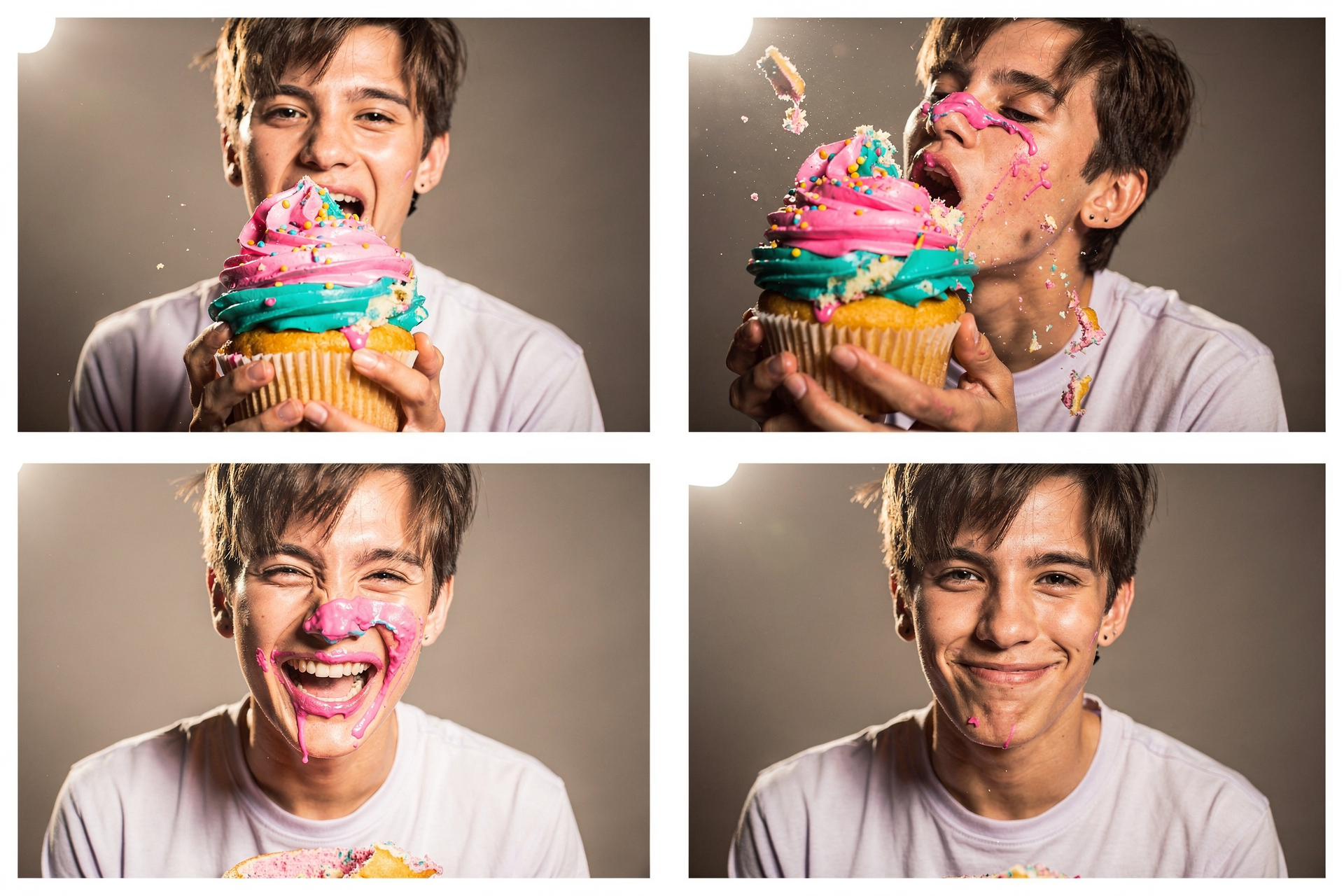
  • The Science of the Strip: Why 4 Photos?

    The Science of the Strip: Why 4 Photos?

    The most common tools for visual storytelling…from the cinematic masterpiece to the humble social media carousel…often rely on a complex, multi-layered structure. We’re taught about the three-act play, the twelve-step hero’s journey, or the endless scroll of a feed. Yet, one of the most powerful, oldest, and universally understood visual narrative formats operates on a deceptively simple number: four.

    Think about the classic photo booth strip. Four small squares, captured in quick succession. Think about the most iconic newspaper comic strips, which almost universally adhere to four panels. Think about the emerging dominance of the four-image Instagram carousel or the quad-split video on platforms like TikTok, forcing a miniature narrative to play out in a constrained space. Why does this specific structure, this quartet of frames, hold such a profound and magnetic appeal? The answer lies not just in visual design, but in the elemental structure of storytelling itself. Four is the precise number of steps required to execute a complete, satisfying narrative arc: Introduction, Action, Climax, and Resolution. It is the narrative minimum, a perfect, self-contained loop that ensures emotional engagement and instant comprehension. Master this four-frame science, and you master the art of the miniature epic.Frame One: The Introduction (The Setup)

    The purpose of the first frame is simple: establish context. This is the “Once upon a time” of the strip. It must clearly define the setting, the subject, and the initial state of the story. The viewer needs to know who we are looking at and where they are. This frame sets the tone and the baseline from which all subsequent drama will deviate.

    Visually, this frame should prioritize clarity and space. It is often a wider shot, or a composition that clearly illustrates the environment. If your subject is a person, Frame One is their baseline expression…calm, expectant, or perhaps slightly bored. This establishes a “normal” state. For example, in a photo strip about eating a giant ice cream cone, Frame One is the subject standing with the perfectly intact, untouched cone, a look of pure anticipation on their face. The viewer’s mind immediately files this away: “Okay, this is the beginning. This is how things stand before the change.” Without this necessary initial setup, the next frames…the action…will lack the contrast required to feel like a story. The first frame is the anchor; it gives weight to the movement that is about to follow. It manages expectations and subtly promises that the next three frames will deliver a shift from this initial stasis. It is the quiet before the storm, the still moment that makes the subsequent movement kinetic. Its success is measured by how effectively it lays the foundational layer of reality for the story to be built upon.Frame Two: The Action (The Rising Tension)

    The second frame is where the story truly begins to move. Having established the “who” and “where,” Frame Two introduces the “what.” This is the catalyst, the complication, or the movement toward a goal. This frame creates tension because it is a direct deviation from the established norm of Frame One. The visual shift should be undeniable.

    In the narrative arc, this is the rising action. It’s the moment the character begins the task, or the problem makes itself known. Returning to the ice cream example, Frame Two is the moment the subject takes the first, massive bite, or perhaps the moment the cone begins to melt slightly, dripping over their hand. This is not the point of maximum drama, but the point of escalating drama. It’s the commitment shot. The expression on the subject’s face often shifts here…from anticipation to engagement, effort, or perhaps mild concern. Frame Two is crucial because it ensures the story isn’t just a collection of moments; it’s a process. It moves the subject from a passive state (being with the ice cream) to an active state (interacting with the ice cream). For a comic strip, this is the dialogue panel that reveals the conflict. For a fashion strip, this might be the moment a model begins a dramatic turn or interaction with a prop. It must confirm the promise of movement made by Frame One and set the stage for the inevitable climax. The visual language here is all about momentum, indicating that things are progressing and building toward an inescapable conclusion, heightening the sense of forward propulsion.Frame Three: The Climax (The Peak Moment)

    The third frame is the narrative apex…the reason the strip exists. This is the moment of maximum release, the punchline, the peak emotion, or the critical event. If the viewer remembers only one frame, it should be Frame Three. In the traditional three-act structure, the climax occurs at the end of Act Two or the beginning of Act Three. By placing it in the third of four frames, the structure acknowledges the narrative necessity of a brief, final conclusion.

    Visually, Frame Three should be the most dramatic, highest-energy, or most impactful image. In the photo booth, this is often the most exaggerated pose: the eyes crossed, the dramatic laugh, the sudden hug, or the full-face expression of delight or distress. Following our ice cream narrative, Frame Three is the glorious, messy peak: the cone has collapsed, the ice cream is smeared all over their face, and the subject is reacting with either pure, ecstatic joy or frustrated, messy surrender. The composition often benefits from being a tight, close-up shot, focusing exclusively on the intense reaction or the dramatic result of the action initiated in Frame Two. The chaos, the emotion, the visual noise…it all peaks here. Frame Three is the explosive release of the tension built across the first two frames. It is the moment where the story’s core thesis…the struggle, the joy, the transformation…is delivered with maximum force. Without a powerful Frame Three, the entire strip falls flat, lacking the necessary payoff that the setup frames promised. It must be visually and emotionally the loudest beat in the sequence.Frame Four: The Resolution (The Aftermath)

    The final frame serves to gently lower the viewer back to reality and provide closure. This is the “happily ever after” or, more often, the “lesson learned.” It is the moment of reflection and conclusion, ensuring the narrative loop is fully closed. After the high energy of the climax, Frame Four offers a necessary emotional and visual cool-down.

    Its visual aesthetic is often a return to calm, mirroring Frame One but with a crucial difference: the subject or scene has been fundamentally changed by the action. For the ice cream strip, Frame Four is the aftermath. The ice cream is gone (or mostly gone). The subject is looking tired but satisfied, perhaps wiping their face, or simply offering a knowing, post-chaos smile to the camera. It’s a moment of reflection and consequence. It doesn’t need to be high energy; its power comes from its quiet acknowledgment of what just occurred. Frame Four provides the necessary emotional safety for the viewer, letting them know the adventure is over. It validates the climax. The strip might end with a punchline, a knowing glance, or a return to the initial pose but with a subtle new detail…a smudge on the cheek, a changed backdrop, or a lingering expression of contentment. This final frame is what elevates the sequence from a mere series of snapshots into a coherent story, allowing the viewer to process the narrative and internalize the emotional journey. It’s the final punctuation mark…the period at the end of a perfectly formed sentence.The Science of the Quartet: Practical Application

    Understanding the four-frame narrative arc is incredibly useful for any content creator working in constrained media. The success of this structure lies in its forced economy. Since you only have four chances, every single frame must carry maximum narrative load.

    1. The Pacing is Non-Negotiable:
    You cannot linger in the introduction (Frame 1) or the action (Frame 2). These must be brief, crisp setups. Similarly, the climax must be instantaneous. This forced brevity is why the four-frame strip feels so dynamic. It’s a hyper-compressed drama, designed for an attention economy where speed of comprehension is paramount. The viewer must grasp the whole story in less than five seconds.

    2. Visual Contrast is Key:
    The transition between frames must be visually clear to signal the change in narrative stage. – Frame 1 to Frame 2: Change in posture or introduction of a new element (e.g., subject moves from sitting to standing).
    – Frame 2 to Frame 3: The most dramatic contrast. Often a change from an action-in-progress to the ultimate, messy result (e.g., from pouring liquid to spilling liquid).
    – Frame 3 to Frame 4: A distinct drop in energy. A move from a tight close-up back to a medium shot, or from an exaggerated expression back to a muted, reflective one.3. Medium Agnostic Magic:
    This principle works across all mediums that rely on sequential imagery: – Photography: A social media photo dump should be organized to follow this structure. The first photo sets the scene (the venue), the second introduces the activity (the dancing), the third is the chaotic peak (the group selfie with confetti), and the fourth is the reflective morning-after shot (the coffee).
    – Graphic Design/Presentation: When explaining a concept, use the four-frame structure: Frame 1…Problem Statement, Frame 2…Proposed Solution, Frame 3…The Result (Data/Outcome), Frame 4…Conclusion/Next Steps. This ensures maximum clarity and narrative drive in professional communication.
    – Video: Even in a short video, the first second should be the Introduction, the next two seconds the Action, the fourth second the Climax, and the final second the Resolution. The narrative integrity of a short clip is fundamentally dependent on hitting these four beats quickly and clearly.The enduring power of the four-frame strip is a testament to the fact that complexity is not required for depth. It proves that the most relatable stories are often the most concise. By forcing a creator to distill their story down to its four essential pillars…the establishment of the world, the introduction of the struggle, the moment of ultimate impact, and the final breath of conclusion…the structure eliminates all narrative fat, leaving behind a sequence of pure, unadulterated storytelling. It is a powerful constraint, but one that yields the most satisfying and perfectly paced miniature epic every single time. It is, quite simply, the most efficient narrative engine ever designed. The universality of this arc, from ancient friezes to modern digital strips, confirms its position as the ultimate guide to instant, powerful communication. When you only have a moment to connect with an audience, four frames are not a limitation…they are the perfect, infallible law of narrative physics. The magic is not in adding more, but in knowing precisely what to include in the perfect, powerful quartet.