Tag: Booth Operations

  • The Future is Streamlined: Why ZillaBooth Wins

    The Future is Streamlined: Why ZillaBooth Wins

    This is the final piece in our three-month deep dive, and it’s time to bring everything we’ve discussed back to the bedrock principle that has defined ZillaBooth’s success since day one. We’ve covered market trends, reviewed feature comparisons, and dissected ROI metrics. But all of that data, all the competitive advantages, ultimately funnel into one single, powerful idea: a streamlined, focused photo booth experience that delivers less fiddling, more memories. This isn’t just a marketing slogan; it is the fundamental operating system for the future of event photography, and it is why ZillaBooth is pulling decisively ahead in a market clogged with over-engineered complexity.The Tyranny of the Unnecessary Feature

    Look around the photo booth landscape today. What do you see? You see a race to add more. More screens, more filters, more animation options, more confusing user interfaces, and more complicated setup procedures. The prevailing belief is that feature bloat equals value.

    This belief is a fundamental misunderstanding of human behavior at a high-energy event. When a guest steps up to a photo booth…at a wedding, a corporate gala, or a product launch…they are not looking for a complex editing suite. They are not looking to spend five minutes calibrating a bokeh effect or deciding between seven different sepia tones. They are looking for instant gratification, a moment of spontaneous fun, and a tangible, high-quality keepsake that encapsulates the joy of the event.

    The competitor’s model…the one that requires a guest to tap through six different menus just to start a four-photo strip…is a friction generator. Every extra button, every confusing setting, every delay in the start sequence introduces a moment of hesitation. This hesitation breaks the flow of the event, frustrates the guest, and, most importantly, pulls them out of the moment. They are no longer focused on their friends, their props, or the spontaneous energy of their pose; they are focused on operating the machine. That, in a single sentence, is the difference between a functional photo booth and a ZillaBooth.

    The operational side is just as critical. For the event professional or venue owner, complexity translates directly into operational overhead. A complicated system means more staff training, longer setup times, more potential points of failure, and more panicked calls to support because a feature that should be set once is suddenly defaulting to ‘off.’ When your business depends on rapid deployment and flawless execution, the last thing you need is a labyrinthine interface designed by engineers, not event specialists. The cost of “more features” is always paid in time, reliability, and ultimately, user frustration. The market is saturated with complicated, unreliable, and frankly, over-priced gimmicks that promise the world but only deliver confusion. ZillaBooth cuts through this noise by prioritizing the essential, proving that peak performance is achieved through purposeful constraint.ZillaBooth’s Core Philosophy: The Art of Subtraction

    ZillaBooth was built on a principle that runs counter to this feature-bloat trend: The most advanced technology is the technology you don’t have to think about. We adhere to an internal mantra: if a feature requires an instruction manual for a guest, it’s the wrong feature.

    We obsessively focus on what we call the “Three Pillars of Streamlining”:1. Zero-Friction UI: From the moment a guest approaches the screen, the path to taking a picture must be visible, intuitive, and immediate. Our interface isn’t designed to impress engineers with its depth; it’s designed to delight a tipsy wedding guest with its simplicity. One large, clearly labeled tap to start, clear visual countdowns, and a focus on the most universally popular, high-impact options only. Everything else…from file conversion to light balancing…runs automatically in the background, out of sight. The screen is a window to fun, not a control panel.

    1. Automated Professional Quality: The single greatest source of “fiddling” in other booths is the need for constant, manual camera and lighting adjustments. An operator shouldn’t have to be a professional lighting designer. ZillaBooth’s proprietary algorithm, which we’ve fine-tuned over years of event data spanning every imaginable venue type, automatically adjusts exposure, white balance, and flash power based on ambient light conditions. Whether the event is in a dimly lit cocktail lounge or a sun-drenched atrium, the system ensures a perfectly exposed, color-accurate photo strip every single time, without a single touch from the operator or the guest. This automation doesn’t just save time; it guarantees a consistent, professional result that reflects the premium ZillaBooth brand quality. It’s the equivalent of hiring an in-house photographer who never gets tired and never makes a mistake.

    2. The Fast-Track Memory Loop: The cycle from “start” to “photo delivery” is ruthlessly optimized for speed. Our internal processor is tuned for near-instant rendering of photo strips, GIFs, and videos, minimizing the wait time that can kill spontaneous energy. Quick sharing via QR code, SMS, or email is integrated seamlessly with our high-speed network components, meaning the guest receives their memory…and posts it to social media…while they are still buzzing from the experience. This rapid loop enhances the perceived value of the memory and maximizes the booth’s utility throughout the event, ensuring that every minute of rental time is used for memory creation, not for processing lag.We didn’t remove features for the sake of being minimalist. We removed complexity to enhance focus. By making the process transparent and instantaneous, we shift the entire focus of the user from the machine to the experience happening in front of the lens. The technology recedes, and the human interaction takes center stage.The Value of Focus: Capturing Authentic Memory

    The true victory of the streamlined approach is revealed in the final product: the memory itself.

    Think about the photos that truly matter from an event. They are almost always the spontaneous ones…the moment a group bursts into laughter, the silly pose that happens organically, the unexpected embrace. These moments are fragile; they are easily lost when the energy is interrupted by a technical delay.

    When a guest has to stop and think, “Wait, which filter do I choose? Where is the button for the video loop?” their focus shifts. Their smile becomes forced, their posture stiffens, and the spontaneous joy in their eyes is replaced by a slight furrow of concentration. This is what we call the Fiddling Tax…a subtle but pervasive reduction in the authenticity of the captured moment, caused by a machine that demands attention it doesn’t deserve.

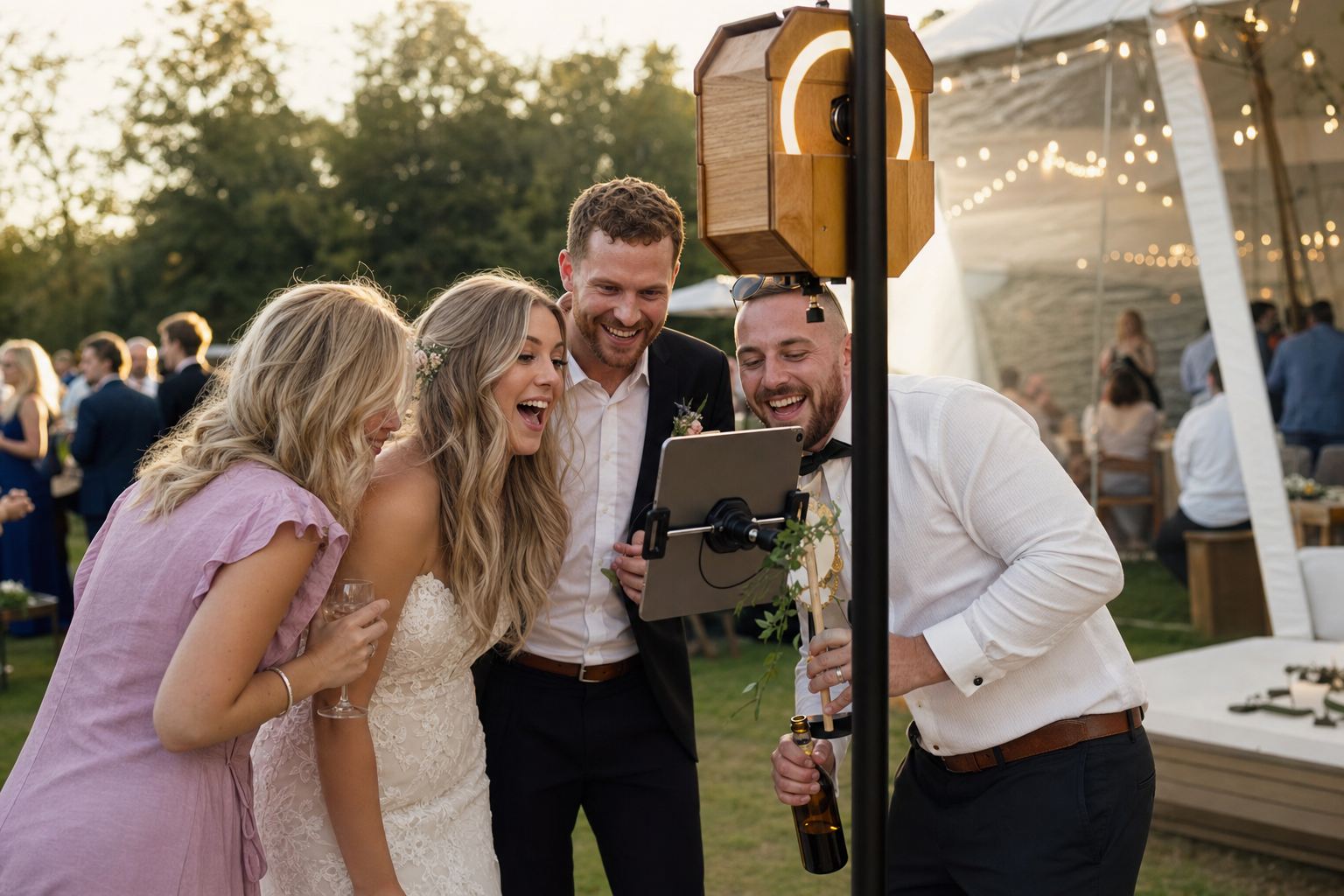
    ZillaBooth pays no Fiddling Tax. Because the process is so quick…often less than 15 seconds from touching the screen to the flash firing…the interaction feels less like operating a computer and more like being snapped by a friendly, professional photographer who knows what they are doing. The guests stay in character. They stay present. They stay silly. They get to be themselves, which is the entire point of a memory capture tool.

    This focus allows the ZillaBooth to capture memories that are more vibrant, more authentic, and ultimately, more valuable to the client and their guests. The final photo strip is not a documentation of an interaction with a machine; it is a genuine, unfiltered record of joy. In a world of over-edited, over-produced event content, ZillaBooth delivers raw, authentic happiness. We believe the highest form of technology in this space is that which maximizes the emotional authenticity of the capture. It’s about preserving human connection, not showcasing hardware.The Professional’s Advantage: ROI in Reliability and Efficiency

    For the event industry professional…the rental company, the venue manager, the corporate planner…the streamlined design of ZillaBooth is a direct accelerator of Return on Investment (ROI).

    1. Reliability is Currency: Complexity is the ultimate enemy of reliability. When there are fewer moving parts, fewer software variables, and an interface that guides the user rather than challenging them, the risk of technical failure plummets. ZillaBooth is designed for maximum uptime, a system so robust it practically runs itself. Our single-purpose, highly-optimized software stack minimizes crashes, bugs, and operator errors. For a professional whose reputation rests on flawless execution, this reliability is priceless. It means less time troubleshooting during an event, less money spent on last-minute support, and a higher client satisfaction rate, leading directly to repeat bookings and high-value referrals. You sell peace of mind as much as you sell photography.

    2. Speed and Scalability: A streamlined experience doesn’t just benefit the guest; it benefits the flow of the event and the operator’s pocketbook. An over-complicated booth can create bottlenecks, leading to long, frustrating queues. This not only annoys guests but limits the number of photo sessions the booth can complete. ZillaBooth’s rapid memory loop ensures a higher throughput of guests. A greater number of guests taking photos means the client’s investment is being maximized. Furthermore, because the setup is so simple and the operation so automated, a single ZillaBooth operator can effortlessly manage multiple units across a large venue or can train a temporary staff member in minutes, dramatically improving the scalability of the rental business. Your overhead is lower, your potential for simultaneous bookings is higher, and your training costs are minimal.

    3. Future-Proof Simplicity: Technology evolves at a breakneck pace, forcing competitors to constantly chase the latest features. This often requires costly hardware or software overhauls. ZillaBooth’s strategy is to focus on a consistently excellent core experience…the perfect photo, the perfect print…and use smart, non-intrusive software updates to layer subtle enhancements that maintain simplicity. We don’t chase every feature fad. We refine the one thing that matters most: making the process of taking a picture invisible. This protects the professional’s investment, ensuring that a ZillaBooth unit purchased today remains a premium, high-demand asset for years to come because its value is based on timeless efficiency and reliable execution, not transient novelty. Our platform is designed to be agnostic to the next big social media trend; it simply provides the best, highest-quality base asset for guests to share wherever they choose.Concluding the Series: The Unbeatable Equation

    Over the past three months, we’ve examined the market from every angle. We’ve seen that the competition, obsessed with providing everything to everyone, is actually providing an experience that is confusing, time-consuming, and ultimately compromises the authenticity of the memories captured. They focus on the machine, and the moment suffers.

    ZillaBooth, conversely, doubled down on a singular, clear vision: * Streamlined User Interface leads to Zero Friction.
    * Focused Technology leads to Automated Reliability.
    * Zero Friction + Automated Reliability delivers Less Fiddling, More Memories.This is the unbeatable equation that delivers a better experience for the user and superior ROI for the professional. We are not just selling a photo booth; we are selling the most efficient, high-fidelity memory capture device on the market. We have stripped away the complexity, not out of technological limitation, but out of a profound respect for the event moment. We want guests to look at the camera, not the interface. We want operators to manage a flawlessly running business, not troubleshoot a cumbersome machine. The future of event capture is not about adding more; it’s about perfecting the essential. And in the world of event photography, ZillaBooth’s commitment to simplicity is the ultimate sophistication. The streamlined future is here, and it’s winning. Get out of the fiddling business and into the memory-making business. Choose ZillaBooth.

  • Passport Photos to Party Photos: A Pivot

    Passport Photos to Party Photos: A Pivot

    The hum of the Photomaton was once the sound of necessity. In 1925, when the automated photographic booth was patented and first presented to the public, it was nothing short of a technological marvel…a rapid, affordable, and private method for producing standardized photographs. But its mission was purely functional, almost clinical. The earliest photo booths were instruments of utility, designed to streamline bureaucracy and provide proof of identity. They were places you went to secure the image that would unlock access, validate your citizenship, or grant entry to an institution. The photograph itself, delivered in a stiff, perforated strip, was a cold, objective record of your face, a requisite component of official life.

    The entire experience was governed by solemn, unspoken rules. Sit up straight. Look directly at the lens. Maintain a neutral expression. Remove your glasses, if necessary. The lighting was unforgiving, designed for clarity over flattery. The backgrounds were plain…a simple, light-colored curtain that served only to provide contrast for facial recognition. This was not about personal expression or capturing a moment of joy; it was about compliance. The resulting image was a commodity, a small strip of paper that allowed you to complete a transaction, be it obtaining a passport, a driver’s license, or an employee ID badge. It was a means to an end, and the emotional context of the photo was zero. You left the booth not with a memory, but with a valid document. This was the foundational era of the photo booth: the Passport Photo era.

    The booth was a silent, unblinking witness to the serious business of identity. For decades, this utility-first mindset dominated the medium. The technology evolved slowly, moving from purely chemical development to faster printing, but the core purpose remained locked in the realm of documentation. The booth was a tool, placed in post offices, government buildings, and transit hubs…locations where people went to perform civic duties, not to seek entertainment. The idea of using such a machine to capture a moment of unbridled, spontaneous joy would have seemed absurd, almost a misuse of a serious technological resource. The strip of four identical frames was a stack of proofs, not a collection of memories.

    However, technology has a way of escaping its intended function, and the pivot began subtly, almost accidentally, when the photo booth migrated from the sterile halls of government to the lively corridors of commerce. As photo booths became more common in public spaces like shopping malls, movie theaters, and, most notably, arcades, the environment itself began to change the user’s intent. The booth was no longer surrounded by people waiting in line to complete paperwork; it was surrounded by friends, teenagers, and dates looking for cheap thrills and novel ways to spend time.

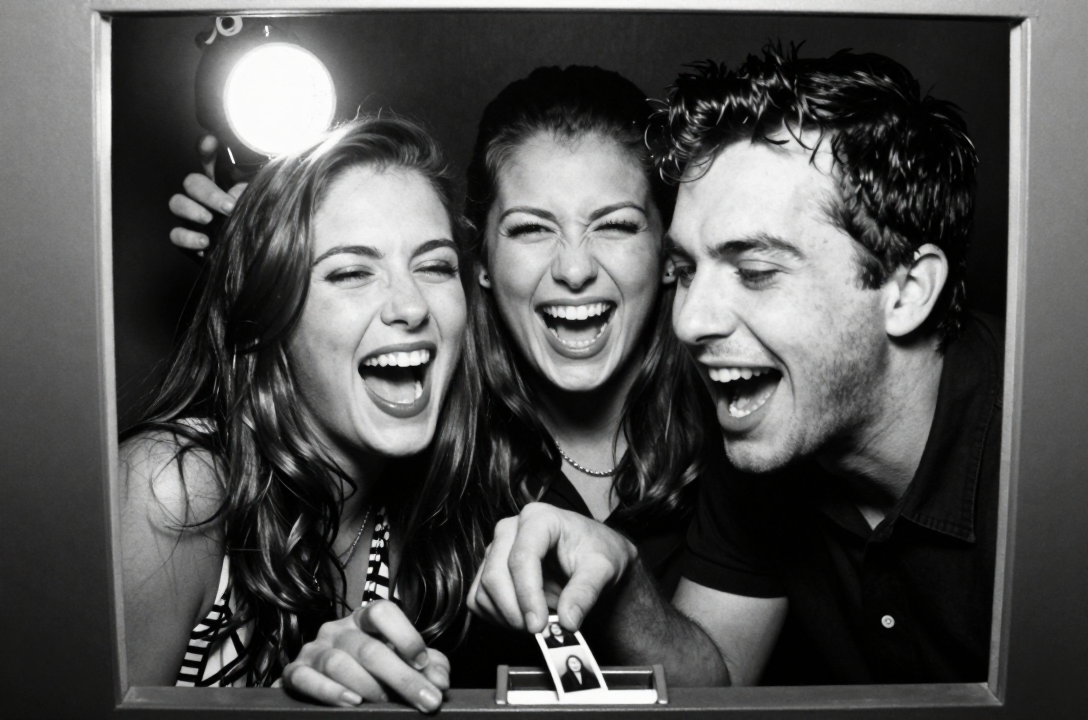
    This marked the beginning of the Transitional Period. Suddenly, the functional machine was reframed as a novelty. The experience transformed from an official transaction into a private, self-directed social ritual. Groups of friends squeezed onto the small bench, daring each other to make the silliest faces. The serious, neutral expressions of the Passport Photo era were replaced by spontaneous bursts of laughter, crossed eyes, and exaggerated poses. The cost…a handful of coins…was low enough to encourage experimentation and repeat attempts. The photo strip was no longer an ID component; it was a tangible piece of shared memory, easily slipped into a wallet or taped onto a bedroom mirror.

    The photo booth had found its voice as a social catalyst. It was a space where, for a few brief minutes, public rules of decorum could be suspended. The curtain offered a small, dark sanctuary for mischief and intimacy. The results…four frames of documented silliness…were physical proof of a friendship or a date. The photos became the product of the experience, not just a necessary step in a process.

    The ultimate and most profound shift, however, came with the Digital Revolution and the subsequent explosion of the Experience Economy. By the early 2000s, the photo booth had shed most of its heavy, boxy, utilitarian shell and was being reinvented for the event market. Weddings, corporate galas, milestone birthdays…the photo booth stopped being an optional accessory and became a mandatory, expected piece of entertainment infrastructure. This is the zenith of the shift, the true beginning of the Party Photo era.

    The key change was digital capture and instant social media sharing. Booths became sleek, open-air structures with high-definition cameras, professional lighting, and customizable backdrops. They no longer produced thin, often blurry, four-frame strips; they delivered instant, high-resolution digital files, GIFs, and boomerang videos, complete with filters and digital props that could be texted, emailed, or uploaded directly to Instagram or Facebook, often with a unique event hashtag.

    The purpose of the photo booth fully pivoted from utility to performance. The goal of the Party Photo is two-fold: first, to capture the fun of the event, and second, to provide guests with a piece of instant, shareable content that promotes the event itself. The booth became a central stage for expression, where guests were encouraged to be as dramatic, silly, or glamorous as possible. Props grew larger, more elaborate, and entirely unrelated to reality…oversized glasses, feathered boas, superhero masks. The constraint of the ID photo was not just broken; it was violently rejected in favor of pure, joyful chaos. The resulting images were not records of who you are, but records of how much fun you are having.

    This is the context into which ZillaBooth was born…a company dedicated not just to participating in the Party Photo era, but to perfecting it by focusing purely on the “Fun.”

    ZillaBooth recognized that in the digital age, the quality of the image and the seamlessness of the experience are what unlock uninhibited fun. Unlike some legacy systems, ZillaBooth’s hardware and software are designed from the ground up to minimize friction and maximize spontaneous joy. High-quality lighting and professional-grade cameras mean that every silly expression, every group pose, and every ridiculous prop choice is captured with flattering clarity. The lighting isn’t the harsh, flat light of the ID machine; it’s the warm, vibrant light of a high-end photography studio, engineered to make everyone look their best while they are being their most playful.

    The focus on “Fun” also means engineering the process to be part of the entertainment. The user interface is intuitive, fast, and visually engaging. There’s minimal wait time, allowing for rapid-fire pose changes and multiple attempts…crucial for capturing the perfect moment of collective laughter. The physical booth structure is often designed to fit seamlessly into high-end event aesthetics, turning the machine itself into an attraction, a colorful, illuminated beacon that draws guests in for a moment of celebratory escape.

    But ZillaBooth’s commitment to “Fun” goes deeper than just technology and good lighting. In the contemporary digital landscape, true, uninhibited fun is increasingly intertwined with authenticity and presence. The Party Photo era, while fun, has developed a pressure point: the implicit demand to perform for the online audience. Guests often feel a pressure to take the perfect, shareable photo, which can actually detract from the genuine, in-the-moment experience.

    This is where ZillaBooth subtly but powerfully separates itself, offering the kind of fun that is not diluted by the anxiety of online performance. By providing cutting-edge, offline-first capture technology, ZillaBooth gives the couple and the guests the best of both worlds. They get the professional-grade, entertaining photo experience without the immediate, compulsory broadcast to the wider world. The images are taken for the couple and the circle of trust, not for the endless scroll.

    ZillaBooth understands that the most genuine fun happens when people are truly present, when they are making memories for themselves and their loved ones, not for anonymous followers. This commitment to “pure fun” means creating a space free from the pressure of social media metrics. The result is a gallery of images that is more candid, more heartfelt, and fundamentally more fun, precisely because the participants felt free to be entirely themselves.

    The journey of the photo booth is a microcosm of modern social history. It began as a practical servant of the state, ensuring that the image matched the document. It evolved into a teenage rebel in the mall, providing affordable, private novelty. Today, in its most advanced form as ZillaBooth, it has completed its pivot into a dedicated engine of pure entertainment. It is an essential feature of modern celebration, a vessel for capturing joy, silliness, and the unscripted magic of being present together. The silent, somber machine of 1925 has transformed into the loud, colorful heart of the party, ensuring that the focus remains entirely on the essential element: the fun. The Passport Photo paved the way for the Party Photo, and ZillaBooth is the ultimate expression of that joyful, uninhibited transformation.

  • The Paper Crisis: The Struggle of Real Analog Booths

    The Paper Crisis: The Struggle of Real Analog Booths

    The velvet curtain pulls shut, the coin drops, and a bright, aggressive flash blinds you for a split second, followed by the whirring sound of a machine developing your image. For decades, the analog photo booth has been a cultural icon, a spontaneous capsule of friendship, romance, and late-night antics. It is an experience defined by a few precious minutes and a strip of perfectly imperfect, high-contrast, physical prints. But a shadow is falling over this cherished tradition, and it’s not just the deep shadow cast by the flash. The experience we love is being threatened by a crisis far beyond the booth’s four walls: a global shortage of the one thing that makes it all possible…the analog paper itself.

    What started as an industry-specific inconvenience has become a profound supply chain crisis, threatening to extinguish the very tradition it was built on. The primary, unavoidable culprit is the global geopolitical landscape, specifically the ongoing war in Ukraine, which has created a domino effect across the world’s chemical and manufacturing supply lines.

    Analog photographic paper relies on a complex, highly specialized manufacturing process that requires key chemical components and specific material sources, many of which are now directly or indirectly impacted by the conflict. Manufacturing centers and supply routes for vital materials…from wood pulp to the specialized silver halide emulsions…have been disrupted, either through direct conflict zone closures or the cascading effects of trade sanctions, energy price volatility, and shipping bottlenecks. The result is a simple, brutal equation for photo booth operators: less paper available globally, at a significantly higher cost, and with no certainty about future supply.

    For the purists and operators of traditional analog booths, this paper crisis is a punch to the gut. The cost of a single roll of paper, already a premium item, has skyrocketed, often doubling or tripling in price in under two years. Lead times for new stock stretch from weeks to months, turning routine re-stocking into a desperate, high-stakes hunt. This is not just an inconvenience; it’s an existential threat. Many smaller, independent booth operators, who have kept the analog flame alive in dive bars, cultural centers, and vintage markets, are being forced to make heartbreaking choices: drastically raise prices, ration prints, or, tragically, shut down entirely. The physical, tangible experience of the analog print…the very heart of the tradition…is becoming unsustainably expensive and unreliable.

    The irony is that the crisis is forcing a reassessment of what we truly cherish about the analog booth experience. Is it the chemical process, or is it the vibe? Is it the raw materials, or the spontaneity? Most of us would agree it’s the latter. We love the immediacy, the aggressive, unforgiving lighting, the black-and-white grit, and the uneditable, un-retouched honesty of the strip that slides out of the slot. We love the high-contrast aesthetic that the direct flash creates…the deep shadows and the dramatic highlights that feel more authentic than any soft-lit, filtered digital selfie. This raw, imperfect aesthetic is what needs to be preserved, not the brittle supply chain it currently rests upon.

    This is where the vision of the future comes into sharp focus, a future that is not about replacing the spirit of the analog booth, but about liberating it from its physical constraints. This is the case for embracing digital solutions like ZillaBooth.

    ZillaBooth is not just a digital camera in a box; it is an experience meticulously engineered to replicate, and then enhance, the core emotional and aesthetic value of the traditional booth, all while completely decoupling it from the volatility of the global paper and chemical supply chain. It offers the ultimate continuity solution for operators who want to maintain the classic look without the risk of an empty paper tray or a looming price hike driven by events thousands of miles away.

    The first and most critical advantage ZillaBooth offers is unshakeable supply chain resilience. Because it operates entirely digitally, there is no analog paper, no costly chemicals, and no reliance on fragile global shipping routes. An operator running a ZillaBooth will never face the anxiety of stock-outs or unexpected triple-digit increases in their consumables cost. This provides operational stability, predictable overhead, and the ability to offer the photo booth experience consistently, whether the global supply of wood pulp is up or down.

    But the shift to digital with ZillaBooth is about much more than mere reliability; it is about aesthetic faithfulness and enhancement. The developers behind ZillaBooth understand that the charm of the analog print lies in its imperfections and its specific high-contrast look. The software is calibrated to precisely emulate the high-gain, direct-flash aesthetic of vintage booths. It captures the image and processes it through a proprietary filter that reproduces the deep, black shadows, the blown-out highlights, and the signature grain and contrast that analog enthusiasts cherish. The final output is not just a digital photograph; it’s a perfectly rendered, digital analog print.

    Furthermore, ZillaBooth takes the concept of the physical keepsake and makes it infinitely more accessible and useful for the modern consumer. While the traditional analog booth provided one, two, or maybe three physical strips, ZillaBooth offers prints (via an optional, standard-paper thermal printer) and an instant, high-resolution digital copy. Guests can immediately share their session via QR code, email, or direct text, instantly posting to social media. This solves one of the biggest drawbacks of the traditional analog booth: the beautiful print that is cherished but often not easily shared with friends who weren’t there, or with the wider social world. The digital-physical hybrid ensures the moment is both a treasured private memento and a powerful piece of shareable content.

    This shift also opens the door to unprecedented creative flexibility. The analog booth is stuck with one look: the look of the chemistry and paper loaded into it. ZillaBooth, being software-driven, can offer an entire gallery of aesthetics. Operators can easily switch the booth between a classic black-and-white look, a vintage color filter that mimics expired film, or a modern, high-definition style…all with a simple tap on the control panel. This allows a single machine to serve multiple markets and themes, from a vintage-themed wedding to a hyper-modern corporate event, drastically increasing the machine’s utility and revenue potential.

    The sustainability argument is perhaps the most compelling for future-forward businesses. The analog process is chemically intensive and creates waste. While the romanticism of the darkroom is powerful, the reality is that the process is resource-heavy. ZillaBooth is a fundamentally sustainable alternative. By eliminating the need for single-use photo paper and the associated chemistry, it drastically reduces the ecological footprint of the photo booth experience. In an era where consumers and businesses are increasingly prioritizing environmental responsibility, choosing a digital-first solution is not just a pragmatic choice…it’s an ethical one that aligns the business with modern values.

    Ultimately, the goal is to keep the spirit alive. The enduring magic of the photo booth is the shared, spontaneous act of creative self-expression in a small, private space. It’s the instant gratification of seeing the result, unedited and raw. ZillaBooth ensures this experience continues, not as a relic dependent on a fragile, costly, and resource-intensive global supply chain, but as a robust, modern, and accessible piece of technology. The paper crisis has laid bare the vulnerabilities of the analog system. The response must be a sophisticated digital pivot that respects the past while building a reliable future.

    By choosing ZillaBooth, operators are not just installing a new piece of equipment; they are future-proofing a beloved cultural tradition. They are trading the stress of supply chain logistics for the freedom of digital abundance, the uncertainty of geopolitical volatility for the stability of software updates, and the high cost of vanishing paper for the sustainable model of digital distribution. The velvet curtain will still pull shut, the flash will still fire with its signature, aggressive intensity, and the strip of images will still be instantly available…but the memory, and the business, will be safe and thriving, liberated by the power of digital innovation. The future of the analog aesthetic is unequivocally digital.

  • The “Auto-Restart” Feature: Keeping the Line Moving

    The “Auto-Restart” Feature: Keeping the Line Moving

    The success of any photo booth rental business hinges on one core metric at the event: throughput. It doesn’t matter if your props are top-of-the-line or your backdrop is custom-designed by an artist; if a bottleneck forms at the booth, the entire guest experience suffers. A long line is an immediate sign of a high-demand service, which is great, but a stagnant line quickly transforms excitement into frustration.

    The single biggest drain on efficiency, the hidden time sink that silently shaves off dozens of potential sessions per event, is the need for manual screen resets.

    Consider the scene: A high-energy wedding reception or a busy corporate holiday party. Guests are excited, fueled by music and celebration, and they surge toward your ZillaBooth Party setup. One group finishes their session, prints their strip, and walks away. The screen remains on the “Thank You” or “Share Your Photo” screen, waiting for the next action. The next group steps up…a new, slightly less technical set of users…and they hesitate. They tap the screen, but nothing happens. They look around, confused, searching for a ‘Home’ button, a ‘Start Over’ prompt, or the attendant. Even if they only take 10 seconds to figure out that they need to tap the small ‘X’ or ‘Back’ arrow, that 10 seconds is now multiplied by every single group that uses the booth. Over a four-hour rental, these tiny increments of hesitation and manual intervention can cost you an hour of actual photo-taking time, translating directly to fewer sessions, a longer line, and ultimately, a less satisfactory client report.

    This is precisely why the “Auto-Restart” feature in ZillaBooth Party isn’t just a convenient toggle; it is the fundamental, non-negotiable engine for high-volume event success. It’s the feature that allows your booth to function as a truly autonomous, high-throughput machine, guaranteeing that the line…and the fun…never stops.

    The Mechanics of Uninterrupted Flow

    At its core, the Auto-Restart feature performs one incredibly simple but critical function: it enforces a strict, time-based, zero-touch reset of the photo booth session.

    When enabled in the ZillaBooth Party settings, you set an “inactivity timer”…typically between 15 and 30 seconds. This timer starts ticking the moment a user completes their last action in the session flow…whether that is taking the final photo, sending a text, or printing their strip. If the booth detects zero touch input for the duration of that timer, it bypasses the final screens (thank you, sharing, etc.) and instantly reverts to the main, welcoming “Tap to Begin” screen.

    The immediate, palpable benefit of this process is the elimination of the “handoff hesitation.”

    Imagine the perspective of the next group in line. The previous party has just left. Before they can even fully step into the frame, the booth screen flicks back to the branded start screen, brightly displaying a clear, unambiguous invitation: “Tap Here to Start!” There is no confusion, no hunting for a button, and no attendant needed to physically press ‘Home.’ The booth is instantaneously ready for the next session.

    This continuous readiness is what separates an amateur operation from a professional one. In a professional, high-volume environment…a busy school prom, a major trade show, a packed wedding cocktail hour…you aren’t running an art installation; you are running a service based on speed, efficiency, and entertainment delivery. The Auto-Restart feature is the silent productivity manager for your photo booth.

    Auto-Restart as a Business Imperative

    The importance of this feature can be broken down into three critical business imperatives for any successful photo booth operator:1. Maximizing Session Throughput (The Revenue Generator):
    The most direct and measurable benefit. Every minute a booth is stuck on a ‘Thank You’ screen is a minute lost. An average photo session takes 60 seconds. If a manual reset adds 10 seconds of delay, that’s an 11.6% drop in potential session volume. Over four hours (240 minutes), that’s a potential reduction of 28 sessions (10 seconds/session * 240 minutes = 2400 seconds of delay, or 40 minutes lost). By eliminating this friction point, Auto-Restart ensures you get the absolute maximum number of sessions possible, which is a key metric for corporate clients tracking engagement and a huge value-add for social clients who want every one of their 200 guests to get a turn. For the operator, more sessions mean more proofs of value and a stronger portfolio for landing future high-end contracts.

    1. Maintaining Operational Attendant-Free Reliability (The Attendant’s Friend):
      One of the highest costs in the rental business is labor…specifically, a reliable, engaging attendant. Auto-Restart dramatically reduces the attendant’s workload. Instead of having to constantly hover and manage the screen reset for groups, the attendant is freed up to focus on higher-value tasks: engaging shy guests, managing the prop table organization, solving minor printing issues, or simply serving as a more engaging brand ambassador for your company. For an operator running multiple booths, Auto-Restart is what makes the “drop-off” or “unattended” model viable, allowing you to charge a premium for a self-sufficient booth that will never freeze on an intermediate screen. The feature guarantees that the booth is always “on task.”

    2. Ensuring Guest Privacy and Aesthetic Consistency (The Brand Protector):
      Imagine a group finishes their session and is momentarily distracted by a text message or a conversation before walking away. If the screen is still showing their captured images, their sharing options, or…worst of all…a successful login to a sharing platform, the next group in line immediately sees private data. Auto-Restart acts as an automated privacy filter. By instantly reverting to the neutral, branded start screen, it ensures that every new guest is greeted by your logo and theme, not the personal photos or information of the previous group. This protects guest privacy and maintains the polished, professional look of your brand throughout the entire event.Setting Up the Optimal Auto-Restart Configuration

    The power of the feature lies in its configurability within ZillaBooth Party’s administrative settings. Operators can typically find this control under a “Session Flow” or “Timing” menu. Here are the best practices for setting the timer: * The Sweet Spot (15-20 Seconds): For high-volume events like weddings or public festivals, 15 to 20 seconds is often the perfect balance. It’s just long enough to allow a slow-moving guest to grab their print or quickly text the photo to themselves, but short enough to immediately reset the screen before the next group even fully walks up to the enclosure.
    * The Corporate/Unattended Setting (30-45 Seconds): For more relaxed corporate environments or unattended drop-off setups, a slightly longer timer can be used. This provides a bit more buffer time, ensuring that guests who are taking a moment to read a corporate message or share to a unique platform aren’t prematurely interrupted, while still guaranteeing the eventual reset.It is crucial to understand that the timer is an inactivity timer. Any touch on the screen…a tap on the ‘Share’ button, a scroll through the photos, a touch to the ‘Print’ button…will reset the counter. This intelligent design ensures that while an active user is engaging with the final screens, their interaction won’t be suddenly cut short, only the passive waiting time is eliminated.

    The Professional Difference: The Case of a Corporate Gala

    To truly appreciate the value of Auto-Restart, consider its performance at a 3-hour corporate gala with 400 attendees and a single booth. The client is paying a premium, and the goal is maximum brand visibility and engagement.| Metric | Manual Reset Booth (No Auto-Restart) | Auto-Restart Booth (20-sec timer) |
    | :——————————- | :—————————————- | :————————————————- |
    | Delay Per Session | 10 seconds (attendant/guest intervention) | 0 seconds (instantaneous reset) |
    | Total Session Time | 70 seconds (60 sec active + 10 sec delay) | 60-80 seconds (depending on guest choice) |
    | Sessions Per Hour | ~51 sessions | ~60 sessions |
    | Total Sessions (3 Hrs) | 153 sessions | 180 sessions |
    | Additional Engagement Gained | – | 27 Sessions (Approx. 100-120 extra guests engaged) |
    The 27 additional sessions translate directly into 27 more groups of people who received a branded takeaway, shared the branded content digitally, and left the event with a positive, friction-free memory of the photo booth experience. This difference is not a small detail; it is a fundamental shift in service capacity and perceived value. It is the core reason why a booth operator utilizing ZillaBooth Party with Auto-Restart can confidently command a higher rate and consistently deliver superior results compared to competitors relying on outdated software that necessitates constant baby-sitting.

    In the fast-paced, competitive world of event rentals, every second counts. The “Auto-Restart” feature in ZillaBooth Party is more than just a software utility; it is the silent workhorse that optimizes every single moment of your rental window. It ensures that your booth is not a source of confusion or delay, but a continuous, high-speed entertainment factory. By automating the most tedious and time-consuming part of the session lifecycle…the reset…you are not just keeping the line moving; you are proving to every client and every guest that your operation is built on professional-grade efficiency and a commitment to a seamless experience. It is the key to unlocking maximum performance from your booth and cementing your status as a top-tier service provider.

  • Digital vs. Analog: The “Frankenstein” Machines

    Digital vs. Analog: The “Frankenstein” Machines

    The world is awash in nostalgia. We crave the tactile feel of an arcade joystick, the satisfying clunk of a coin dropping into a slot, and the private intimacy of a classic photo booth session. This desire for vintage experiences has fueled a massive industry, leading to the proliferation of retro-styled machines in bars, venues, and homes across the globe. But what if I told you that the charming, wood-paneled photo booth you used last weekend, or the meticulously restored, towering arcade cabinet from your local brewery, is almost certainly a lie?

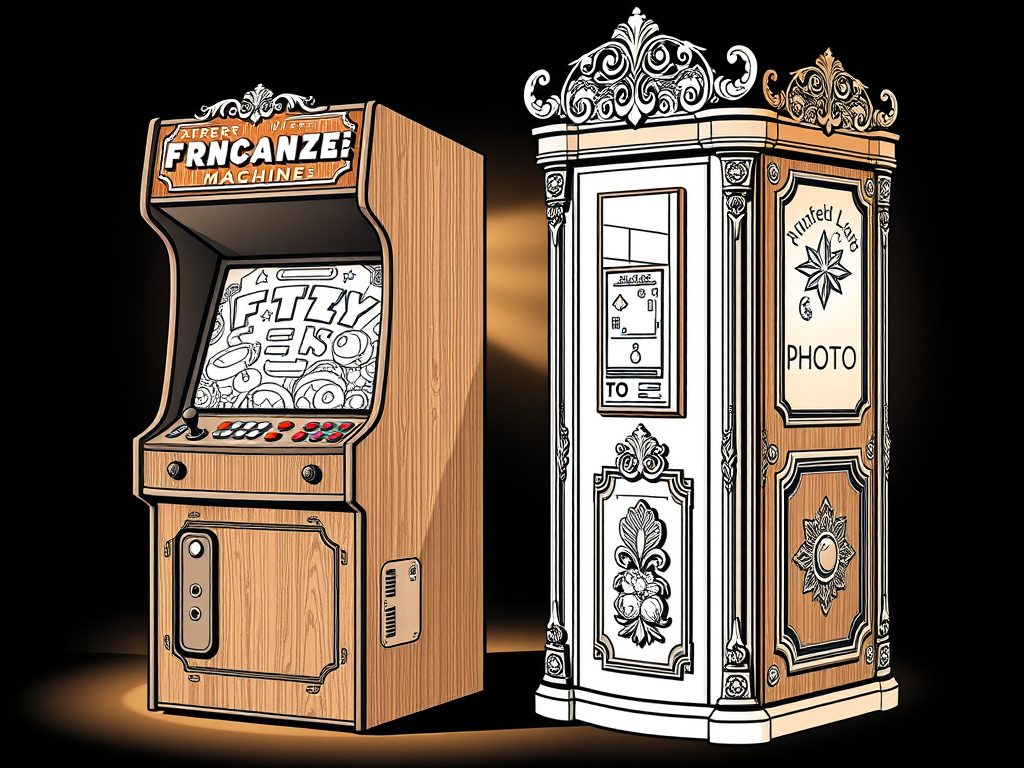
    These machines are not time capsules. They are not analog relics salvaged from a bygone era. They are what we call “Frankenstein Machines”…beautiful, vintage shells housing completely modern, digital guts. They look like the past, but they run on the technology of the present. And for a long time, the only way to get one was to pay a premium for a professionally fabricated unit, leaving enthusiasts and creative builders on the outside looking in.

    The truth about the “vintage” experience is that the aesthetic is the only thing that’s old. Inside that heavy, ornate wooden cabinet is an affordable mini-PC, a high-resolution digital camera, an LED touchscreen, and a thermal printer. The complex, mechanical systems that defined the originals…the film development, the clattering relays, the intricate coin mechanisms…have been replaced by reliable, lightning-fast software.The Anatomy of the Digital Deception

    Why the deception? It’s not malicious; it’s pragmatic. The original analog machines were maintenance nightmares. They broke down constantly, required specialized parts and expertise, and provided poor, inconsistent results. Try running a film-based photo booth in a high-traffic venue today, and you’ll spend more on chemicals and repairs than you make in quarters.

    The Frankenstein Machine solves this problem by offering the best of both worlds: unassailable vintage vibe with uncompromising modern reliability. * The Shell (The Body): This is the critical, visible part. It’s the original 1960s photo booth enclosure, or a bespoke cabinet crafted from reclaimed wood. It provides the texture, the heft, the visual memory that the user is actually seeking. It is the “analog” anchor.
    * The Digital Core (The Brain): This is the hidden system: an inexpensive, powerful computer (the brains), a high-quality camera (the eyes), a commercial-grade screen (the face), and a fast printer (the hand). This core provides the speed, the connectivity (social sharing, Wi-Fi), and the high-resolution output that modern users expect.The challenge for builders, DIY enthusiasts, and entrepreneurs has always been bridging this divide. Creating the cabinet…the “shell”…is a woodworking challenge, but it’s manageable. But what about the software? How do you create an operating system that seamlessly handles:1. Triggering the sequence: Tying a physical button or a touchscreen tap to the camera start.
    2. The countdown: Displaying the classic four-frame layout with perfect timing.
    3. The capture: Interfacing with various digital camera models and grabbing high-quality images.
    4. The processing: Applying a vintage filter, stitching the strip together, and adding a watermark.
    5. The delivery: Sending the image to the printer and simultaneously uploading it to a gallery or a social media feed.That “brain”…the software logic that controls the entire user experience from a nostalgic ‘start’ to a modern ‘share’…is the most complex and expensive part of the equation. It requires deep knowledge of hardware drivers, real-time operating systems, and a polished, idiot-proof user interface. It’s what separates a pile of components from a revenue-generating, crowd-pleasing experience.ZillaBooth: The Brains You’ve Been Waiting For

    This is where ZillaBooth steps in. We recognize that the true barrier to entry for the custom-machine movement isn’t the lumber, the paint, or the screen…it’s the software. ZillaBooth doesn’t sell you a whole machine; we sell you the software brains, a robust, mature, and deeply configurable operating system designed specifically to power your digital-interior, analog-exterior “shell.”

    Think of us as the digital Dr. Frankenstein, providing the spark of life that animates your physical creation. Our mission is to democratize the building of these Frankenstein Machines by neutralizing the single most difficult technical challenge: the code.The Core Features of the ZillaBooth Brain

    ZillaBooth is not just a photo app; it is a full, enterprise-grade machine operating system built for custom kiosks, photo booths, and interactive displays. Our focus on abstraction…separating the software logic from the specific hardware…is what gives the user the ultimate freedom to build their unique shell.1. Hardware Agnosticism and Universal Drivers: The ZillaBooth OS is designed to run on common, powerful, and affordable hardware, not proprietary locked-down systems. It runs smoothly on Windows mini-PCs, a wide array of industrial touchscreens, and easily interfaces with popular cameras (webcams, DSLRs like Canon and Nikon, and even high-end studio strobes). This means you can focus your budget and attention on the shell, confident that the brain will plug into whatever digital components you choose.
    2. The True Analog Look, Digitally Rendered: The vintage charm is in the output. ZillaBooth offers a suite of highly-tuned, pre-sets that mimic the look of classic media:
    * Authentic Dye-Sublimation Profiles: We ensure prints from modern thermal printers look exactly like the glossy, often slightly tinted strips of 1950s electro-chemical prints.
    * Period Filters: Filters that don’t just apply a faded color but correctly replicate the high contrast and light leak patterns of cheap film.
    * Customizable Layouts: Easily design any strip, postcard, or grid layout, complete with custom logos and text, ready for both printing and high-resolution social sharing.
    3. The Perfect User Flow: The software is built around a simple, customizable sequence. The interface is clean, intuitive, and designed to disappear, allowing the user to focus on the experience, not the technology. Every aspect…from the number of frames to the time between shots and the specific messages displayed…is configurable. This is the art of making modern tech feel beautifully simple, like a machine from a simpler time.
    4. Monetization and Management Tools: For those building a booth for a business or rental fleet, ZillaBooth includes the back-end tools you need: secure transaction processing, real-time remote monitoring, and data collection on usage and revenue. This turns your custom physical shell from a hobby project into a self-managing asset.Building Your Shell: Embracing the Freedom of Form

    Once you have the ZillaBooth brain, the only limit is your imagination and your toolbox. We free you from worrying about the code so you can pour your creative energy into the external design…the shell. This is the true spirit of the Frankenstein Machine movement: you are the architect of the experience.

    Imagine a machine built for a specific purpose: * The Steampunk Booth: Housed in a brass and copper cabinet with exposed gears and antique meters. The ZillaBooth software is configured to respond to a heavy, steam-powered lever that users pull to start the session, triggering a burst of flash and a black-and-white, sepia-toned print. The software handles all the internal complexity…you only had to wire a simple relay from the lever to the computer’s USB port.
    * The Mid-Century Modern Jukebox-Cam: A sleek, low-profile machine designed to look like a 1950s hi-fi cabinet. It blends into a stylish living room or a boutique hotel lobby. The shell houses the screen and camera, and ZillaBooth is configured to use an external, retro-styled button panel for user inputs.
    * The Street-Art Vending Machine: A graffiti-covered, metal shell designed to look like a rugged street vendor. The ZillaBooth software prints photos onto sticker paper, complete with QR codes for digital downloads, perfectly matching the raw, urban aesthetic of the enclosure.The beauty of ZillaBooth is that it isolates the technical and the aesthetic. The software is robust enough to handle the most demanding functions, allowing you to use the external shell as a canvas for pure, unadulterated style. The digital core is standardized; the physical form is infinitely customizable.The New Analog: Authenticity Through Synthesis

    To critics who might argue that a digital interior makes the experience “less authentic,” we offer a philosophical counterpoint. Authenticity in vintage machines was never about the fragile mechanics; it was about the experience…the curtain being drawn, the fixed focus, the waiting, the unique look of the resulting print.

    The Frankenstein Machine, powered by ZillaBooth, is a new kind of analog experience. It offers:1. Intentional Imperfection: The software allows you to intentionally bake in the “flaws” of the past…the high contrast, the slight lens distortion, the cut-off frames…while ensuring the final image is a high-quality, shareable file. It’s controlled nostalgia.
    2. Sustainability: By using modern, easily sourced, and energy-efficient digital components, your creation is infinitely more sustainable than maintaining genuine 60-year-old analog mechanics.
    3. Future-Proofing: The ZillaBooth brain can be updated, adding new features, filters, and compatibility with new cameras and printers as they become available. The shell remains a timeless piece of art, while the brain evolves to stay cutting-edge.This is the true synthesis of digital and analog: using the power and reliability of modern computing to perfectly emulate the beloved results and ritual of the past. It’s not a cheat; it’s an evolution.

    Stop settling for the generic, store-bought photo booth box. Stop letting complicated code block your creativity. You’ve got the vision for the ultimate shell…the perfect look, the ideal tactile experience, the unique form factor. ZillaBooth offers you the industrial-strength brains to bring that shell to life. It’s time to become the architect of your own unique, modern-vintage experience. Download the ZillaBooth OS today, wire up your components, and start building your first masterpiece…your very own, perfectly animated Frankenstein Machine.

  • The Future of the Photo Booth: AI and Beyond

    The Future of the Photo Booth: AI and Beyond

    The evolution of the simple photo booth is at a critical juncture. For decades, the charm of the booth lay in its immediacy, its small-box intimacy, and the raw, often hilarious, imperfection of the strip of four photos it spat out. It was an analog anchor in a digitally accelerating world, a machine dedicated to capturing candid, unfiltered human connection. But as Artificial Intelligence (AI) permeates every layer of the digital ecosystem, the photo booth industry is bracing for a transformation that promises…or threatens…to completely redefine the experience.

    The future, as projected by many tech optimists, is one where the photo booth becomes a highly sophisticated, predictive, and generative tool. At the forefront of this shift is the deployment of advanced AI imaging and facial recognition technologies. Imagine a booth that doesn’t just take a picture, but instantly analyzes the composition, light, and subjects’ expressions. This next-generation system would employ AI to automatically perfect the image, going far beyond simple digital flash. It could correct for bad lighting in real-time, instantly smooth out skin texture, adjust color balance to match a high-end photographer’s signature look, and even subtly alter facial symmetry to conform to prevailing aesthetic ideals. The output would be a product of machine-generated perfection…an image that is technically flawless but perhaps emotionally sterile.

    Beyond mere correction, the predictive capabilities of AI promise an era of hyper-customization. Facial recognition, a technology that has already sparked widespread debate in public safety and social media, is poised to enter the booth. An AI-powered booth could recognize a returning customer, recall their preferred filters, and instantly generate backgrounds tailored to their past choices or, more invasively, to data pulled from their public social profiles. Planning a trip to Paris? The AI might instantly render a dynamic Eiffel Tower background. The process moves from capture to generation, where the photo booth is less a camera and more a content factory. Furthermore, generative AI could be used to remix the subjects entirely, placing them into a completely different artistic style, turning a simple photo strip into a Van Gogh-esque painting or a comic book panel on demand. This shift represents a move toward content that is highly consumable, shareable, and optimized for virality…but it fundamentally alters the relationship between the subject and their memory.

    This wholesale embrace of ‘over-AI’d photos,’ however, introduces a critical and often overlooked set of trade-offs. The first casualty is authenticity. The very charm of the classic photo booth was its commitment to the moment: the awkward, spur-of-the-moment pose, the goofy face, the genuine, unforced laughter. When AI intervenes to “perfect” an image…smoothing, correcting, and stylizing…it erodes the candid truth of the moment. The output becomes a manufactured, idealized version of reality, indistinguishable from a dozen other heavily filtered selfies. As consumers, we are already experiencing significant fatigue with this aesthetic uniformity. When every image is polished to the same sheen of perfection, the emotional resonance of the photograph declines. We want to see the real moment, not its improved avatar.

    The second, and far more serious, concern revolves around privacy and control. The integration of facial recognition, while convenient for instant sharing and personalization, represents a massive step toward surveillance and data collection. When a photo booth uses facial recognition, it’s not just recognizing a face for a moment; it’s potentially creating a permanent biometric profile linked to a unique piece of personalized, private data. Furthermore, the push for instant, automated social sharing, often touted as a feature of these AI-powered systems, transforms a private moment of fun among friends into public marketing collateral. The couple or event host loses control the moment the photo is taken, as the data is instantly beamed into a cloud governed by the photo booth operator and its AI vendors. This trade-off of convenience for personal data and control is the core issue defining the “over-AI’d” future. The consumer’s memory becomes another input for a machine’s data model. The moment is sacrificed to the metric.

    In this context of accelerating digital perfection and eroding privacy, ZillaBooth is staking a firm and necessary claim as the streamlined, “human-centric” alternative. It is not an anti-technology stance, but a purposeful rejection of unnecessary complexity and data-hungry AI. ZillaBooth’s philosophy recognizes that the true value of a photo booth is not in its computational power, but in its ability to facilitate authentic, spontaneous human interaction.

    ZillaBooth’s design is intentionally streamlined, serving as a clean, high-quality capture tool rather than a complex AI engine. The focus is on exceptional hardware…professional-grade cameras, lighting, and printing…that ensures a stunning image without resorting to deep-learning algorithms for correction. This commitment to ‘streamlined’ operation translates to a user experience that is simple, instantaneous, and focused on the interaction happening inside the booth, not the processing happening behind the screen. The machine steps back, allowing the human element to dominate. The memories are genuine, crisp, and true to the moment they were captured, celebrated for their spontaneity, not their digital polish.

    The “human-centric” core of ZillaBooth manifests most powerfully in its privacy-by-design approach. In a world where photo booths are becoming data collectors, ZillaBooth operates on a principle of trust and absolute user control. The system is designed to be self-contained and locally managed, minimizing the inherent risks associated with cloud-based, automated sharing and facial recognition. The images and data are sequestered and placed directly in the hands of the event organizer or host, not automatically broadcast to the world.

    This model rejects the modern impulse for instantaneous, uncurated public sharing. There is no automated social media integration, no “upload to Instagram” button presented to the user inside the booth. Guests are encouraged to capture the memory for the host…for the shared experience…not for their own personal social feed. This design choice powerfully reinforces the notion of a “circle of trust” around an event, ensuring that the precious, candid moments remain the private property of the people who created them. This is the antidote to social media fatigue; it is a commitment to the memory as a private heirloom, not a public piece of content.

    Furthermore, ZillaBooth’s rejection of excessive AI-driven personalization is a deliberate choice to maintain accessibility and authentic fun. While AI-booths might generate 100 different digital backgrounds, ZillaBooth prioritizes physical, tangible props and backdrops that encourage real-world play and interaction. The memories created are not composites of algorithms and digital overlays; they are high-quality records of genuine human expression and interaction…the goofy prop combinations, the spontaneous huddle of friends, the simple, honest fun of being present. The focus remains on the people and the party, not the processing power.

    The future of the photo booth is thus a fork in the road: the path of the AI-driven system, which prioritizes technical perfection, data collection, and viral shareability at the cost of authenticity and privacy; or the path championed by ZillaBooth, which doubles down on the core, timeless appeal of the photo booth…simplicity, quality, and human connection. In an era where digital noise and algorithmic perfection are the defaults, ZillaBooth stands as a necessary, refreshing counterpoint…a technology designed to capture real life, not to refine or replace it. It ensures that the memories made remain just that: memories, not metrics. And in the long run, it is the genuine, human-centric memory that truly endures.