Category: Industry Trends & Insights

Photo booth industry trends, Gen Z preferences, authenticity, privacy, AI, and the cultural shifts shaping event photography.

  • The “Waiting” Game: The Anticipation of the Develop

    The “Waiting” Game: The Anticipation of the Develop

    It used to be a social ritual. You’d pile into the tiny, often sticky photo booth, the curtain would zip shut, and the flash would fire…four times in quick, blinding succession. Then came the true test of patience: the develop. Eight minutes. Eight slow, tangible minutes during which you stood outside, leaning against the flimsy metal casing, or maybe walking laps around the arcade, the entire group focused on the little slot where your memories were being chemically coaxed onto paper. Those eight minutes were not a failure of technology; they were the heart of the experience. They were the price you paid for a physical keepsake, and they were the time you spent savoring the immediate, still-fresh memory of the silly faces and inside jokes you had just captured.

    Now, we have ZillaBooth, and the wait is gone. The photo is taken, and before you have time to fully exit the curtain, the digital file is ready…instant, flawless, and already queued for sharing. ZillaBooth didn’t just eliminate a delay; it executed an entire cultural phase shift. It delivered the ultimate modern promise: instant gratification.

    But in eliminating the “waiting game,” what are we losing? Are those eight minutes of anticipation just a nostalgic inconvenience, or were they a vital ingredient in the recipe for a truly satisfying experience? This isn’t just about photo strips; it’s a question about how we consume life in the 21st century…a philosophical debate played out across every instant download, every express checkout lane, and every social media refresh. It is the clash between the profound psychological rewards of anticipation and the undeniable, addictive convenience of instant gratification.

    The Case for Anticipation: The 8-Minute Dopamine Upgrade

    Anticipation, in a scientific sense, is a powerful cognitive tool. When we wait for something desirable, our brain’s reward system (specifically, the nucleus accumbens) is already engaged. This pre-reward excitement is a phenomenon psychologists call “savoring.” The simple act of looking forward to an event, a gift, or a photo strip can often contribute more to our overall happiness than the actual event itself.

    The old photo booth’s eight minutes were a masterclass in savoring. That wait transformed the four little pictures from a mere product into a precious artifact. It allowed for metacognition…the time to reflect on the moment that had just passed. You’d talk about the perfect pose, lament the one where someone blinked, and collectively build the narrative that the finished product would represent. This process deepened the memory’s roots. When the strip finally slid out, warm and slightly damp, the delayed gratification didn’t just feel good; it felt earned. Research has shown that delayed rewards activate the brain’s pleasure centers far more intensely than instant ones. The brief period of abstinence acts like a magnifying glass for the eventual dopamine hit. It’s the reason a slow-cooked meal tastes better than fast food, or why receiving a hand-written letter in the mail is more impactful than an instant text message. The struggle against the delay is what assigns value to the resolution.

    In a commercial context, anticipation builds brand loyalty and creates an emotional connection. The eight-minute wait didn’t annoy; it engaged. It created a temporary community outside the booth, bound by a shared, slow-motion ritual. This is the antithesis of the modern, solitary scroll.

    The Case for Instant Gratification: The ZillaBooth Efficiency

    The argument for ZillaBooth’s instant delivery is self-evident: efficiency, convenience, and control. In a hyper-connected world, an eight-minute delay is an eternity, a critical failure point. Why tolerate it when the technology exists to eliminate it?

    Instant gratification satisfies our need for control and minimizes the risk of disappointment. If the photo is instant, you can check it, retake it, and correct the mistake before the moment is entirely gone. This is a crucial advantage in the digital age, where every captured moment is often a piece of personal branding or social content. ZillaBooth’s instant download allows for immediate vetting, editing, and sharing, making the image socially relevant in real-time. This speed is not just about impatience; it’s a form of practical utility.

    Furthermore, instant gratification is a powerful motivator. In educational or productivity contexts, immediate feedback (like a grade or a task completion badge) can be far more effective in driving behavior than a delayed reward. ZillaBooth knows its audience: a generation that values speed and a seamless user experience above almost everything else. The instant result is less about “wanting it now” and more about “not wanting to waste time.” In a life where we feel increasingly time-poor, any technology that can compress the gap between desire and fulfillment is perceived as superior. The efficiency is a comfort, a guarantee that the interaction will be frictionless.

    The Paradox of Instant Everything

    The true cost of the instant society is a subtle psychological shift: the erosion of tolerance for any delay. When everything is instant…from photo strips to movie rentals to online purchases…our baseline expectation changes. We are constantly moving faster on what psychologists call the “hedonic treadmill.” Once we adapt to instant photo booths, the eight-minute wait is no longer seen as charmingly slow; it’s seen as broken.

    This lack of friction is a mixed blessing. While it frees up time, it diminishes the experience of appreciation. When the reward is always immediate, it loses its special status. We click, we get, and we immediately move on to the next click. There is no space for savoring, no time for reflection, and consequently, the memory isn’t as deeply encoded.

    Consider the phenomenon of “binge-watching” versus the week-long wait for a new episode. Binging is instant gratification…a satisfying, complete consumption. But the seven-day wait created a cultural space for anticipation. It allowed theories to be debated, characters to be analyzed, and emotional impact to settle. The community shared the anticipation as much as the show itself. Instant access delivers the show, but it often sacrifices the shared cultural ritual that made the show feel important.

    The ZillaBooth is the ultimate metaphor for this trade-off. In the instant digital file, the efficiency of the capture is maximized, but the gravitas of the resulting memory is subtly undermined.

    Finding the Modern Savor

    We cannot, and likely should not, turn back the clock. ZillaBooth’s instant access is here to stay because it aligns with the pragmatic demands of modern life. The key, then, is to learn how to consciously reintroduce the psychological benefits of anticipation into an instant world.

    Instead of fighting the technology, we must re-engineer the ritual. ZillaBooth provides the instant gratification of capture, but we can, and should, impose a personal “develop” time afterward.1. The Delayed Share: Don’t post the picture immediately. Take the digital file, but enforce a 24-hour “cooling period.” This period of self-imposed anticipation allows you to review the image with fresh eyes, letting the initial impulse fade and the authentic emotion of the moment resurface. It converts a knee-jerk reaction into a deliberate share.
    2. The Physical Delay: Leverage ZillaBooth’s speed for efficiency, but use the saved time to invest in a higher-quality delayed physical product. Instead of an eight-minute chemical bath, send the photo for an instant high-resolution print or even a custom frame, requiring a three-day wait. The anticipation shifts from the raw development to the final, perfected keepsake.
    3. Mindful Consumption: The next time you use ZillaBooth, take the “found” time…the eight minutes you would have spent waiting…and use it for mindful connection. Talk to the person next to you. Put your phone away and recount the previous moments. Convert the technological delay into a human moment of savoring.The battle between the eight-minute develop and ZillaBooth’s instant snap is a powerful reflection of the human condition. We are constantly pulled between the desire for immediate comfort and the deeper, more resonant satisfaction that only comes from a process, a struggle, or a wait.

    ZillaBooth won the war on time. The challenge for us, the users, is to ensure that in our victory over delay, we do not inadvertently surrender the profound art of appreciation. We must recognize that the most meaningful rewards are not those delivered instantly, but those we make time to anticipate, reflect upon, and truly savor. The speed of the modern world is a tool; it should not be a master. We can accept the instant photo, but we must consciously choose to keep the waiting game alive in our minds.
  • The “Time Machine” Feature: Documenting Growth

    The “Time Machine” Feature: Documenting Growth

    For most of us, our relationship with time is fleeting. We understand it abstractly, marking it with major milestones: graduations, weddings, the purchase of a first home. But the subtle, continuous, magnificent process of growth…the slow, tectonic shifts in who we are, what we look like, and the world around us…often slips by unnoticed. We rely on random, scattered photo albums to patch together a narrative of our lives, leaving massive gaps between the moments we decided were “Instagram-worthy.” The result is a timeline full of peaks, but lacking the quiet, powerful valleys where real, lasting transformation happens.

    It’s time to move beyond the highlight reel. It’s time to build a personal ‘time machine,’ a reliable, ritualistic document that captures not just the events of your life, but the ongoing story of you.

    This is the power of the Birthday ZillaBooth Strip.

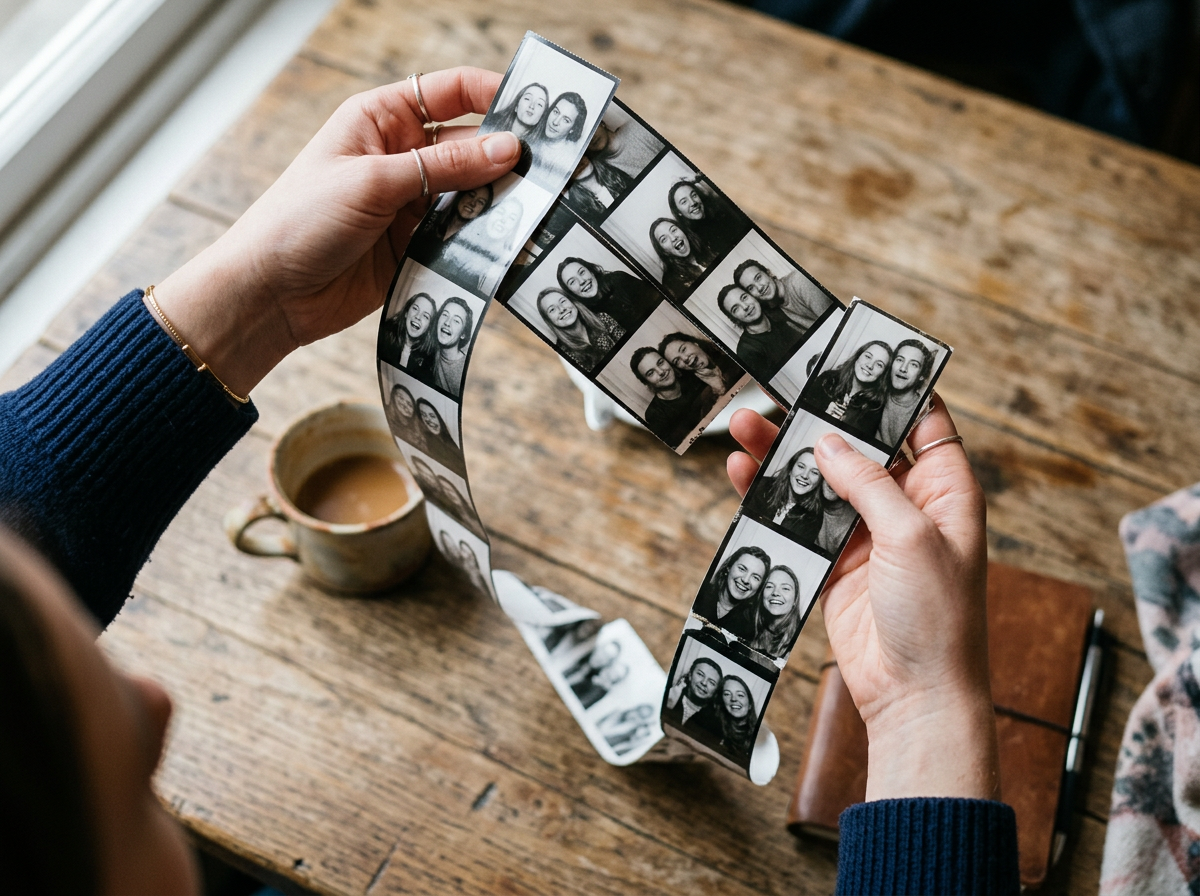
    The concept is simple, yet profound in its long-term application: once a year, on your birthday, you open the ZillaBooth application and capture a single, four-panel photo strip. That’s it. One dedicated moment, one specific format, repeated annually for as long as you choose to document your life. This seemingly small commitment transforms over time into one of the most powerful self-reflection and documentation projects you can undertake, yielding a literal, year-by-year time lapse of your journey.

    The ritual itself is the engine of the project. A birthday is the natural and universal checkpoint…the one day guaranteed to be distinct and separate from all others on the calendar. By tying the photography ritual to this annual marker, you eliminate the mental friction of choosing when to shoot and ensure near-perfect spacing between entries. It takes the project out of the realm of a fleeting hobby and elevates it to a tradition, a non-negotiable act of self-documentation. It’s a moment to pause, stand in front of the camera, and confront the person you’ve become in the last 365 days.

    Why a ZillaBooth strip, specifically? The photo booth strip format is the secret sauce. A single strip contains four distinct, sequential images taken mere seconds apart. This design is critical because it forces you to capture a micro-moment…a tiny, four-frame narrative of where you are right now. The first frame might be a default setting, the second a smile, the third a contemplative look, and the fourth a laugh. It’s an immediate, unposed sequence of genuine emotion that a single snapshot can never achieve. When you compile twenty of these strips, you don’t just have twenty pictures; you have twenty micro-stories, each a tiny window into your emotional state and physical self on that exact day. The consistency of the ZillaBooth app’s interface, framing, and signature filter (which often mimics the high-contrast, slightly grainy look of classic analog booths) is your greatest ally. Unlike using your native phone camera, which constantly optimizes and adjusts settings based on environment, ZillaBooth maintains a predictable aesthetic. This uniformity is what allows the time lapse to work; your photo strip from 2026 will visually ‘match’ your strip from 2036, making the subtle changes in your face and environment all the more dramatic and noticeable when viewed together. You are removing the photographer’s variable and leaving only the subject’s variable: time.

    To truly master this long-term Time Machine project, consistency must become your mantra. This goes beyond the annual date. You need to standardize your process to maximize the visual impact of the eventual time lapse.

    The Four Pillars of Consistency for the Time Machine Project1. The Background Anchor: Choose a consistent, simple background, if possible. A blank wall, a specific door frame, or even a recognizable piece of furniture in your home. While life changes and you may move houses or offices, try to keep the type of background the same…e.g., always a neutral, single-color wall. The human eye will focus on the most important variable (you), but a consistent backdrop creates a clean timeline.
    2. The Consistent Frame: On the first year, decide on your framing…a headshot, a three-quarter body shot, or a full body shot. Then, never deviate. The ZillaBooth app is designed to help with this by having fixed templates, but manually try to maintain the same distance from the camera. This ensures that the scale remains the same year after year, allowing for easy, side-by-side comparison of physical changes.
    3. The Lighting Standard: Try to take the photo at a similar time of day, ideally under the same type of light. This is where ZillaBooth is useful. If you use the app’s standard flash setting (which mimics the harsh, direct flash of a real booth), commit to using it every year. The flash eliminates the variable of ambient room lighting, providing a consistent, aggressive light source that showcases textures and features reliably.
    4. The Pose and Expression Baseline: This is the hardest, but most rewarding, pillar. Decide on a simple expression for the first frame…perhaps a closed-mouth smile. Then, let the other three frames be spontaneous. The key is to see the raw state of your face before the effort of posing. The consistency allows you to visually track, over decades, the deepening lines around your eyes when you smile, the subtle changes in your jawline, or the shift in the intensity of your gaze as you mature.The real magic of the Time Machine feature begins after five years. Before then, the changes are often too subtle to register. But once you can scroll through a collection of five, ten, or even fifteen strips, the growth becomes undeniable and often overwhelming.

    What You Will See: The Payoff of Decades * The Unconscious Style Guide: Your annual ZillaBooth strip becomes a fascinating chronicle of personal fashion history. While you may not intentionally try to be fashionable, the strips will ruthlessly document the rise and fall of trends in your life…the different hairstyles, the jewelry that was in one decade and out the next, the evolving fit of your clothes. You are documenting a personal style arc, a history of self-expression.
    * The Tectonic Shifts of the Face: This is the most emotional part. You will see the subtle, almost imperceptible signs of aging that happen so slowly you never notice them in the mirror. But the strips will line them up for you: the maturity that enters the eyes, the gray hairs that slowly accumulate, the softening or hardening of features. It’s a powerful, beautiful reminder of the passage of time, stripped of the daily anxieties of aging. You are charting the geography of your own face.
    * The Emotional Signature: Look at the four-frame story from the year you were married, the year you started a new career, or the year you went through a profound challenge. The flash and the consistent aesthetic cut through the polished performance we usually give the camera. You can see the lightness in your eyes during a happy period or the exhaustion and stress etched into your frame during a difficult one. The strip captures the raw mood of the moment.The ZillaBooth application, while primarily a photo-sharing tool, is perfectly suited to becoming a personal archival system. We recommend creating a dedicated, private album within the app, titled “Time Machine: [Your Name],” and setting it to the highest privacy level. This is where every annual strip is uploaded immediately after it’s taken. Some users even take an extra step, printing the physical strips (if the app offers this) and storing them in a dedicated album or shadow box…a tangible record that exists outside the digital realm.

    Pro-Level Time Machine Tips1. Embrace the Flaws: The core value of the ZillaBooth strip is its high-contrast, often unflattering honesty. Do not retouch, do not filter, and do not try to smooth out the inevitable lighting flaws. The red eye, the harsh shadows, the blown-out highlights…these are the aesthetic markers that tie the whole series together and lend it a sense of authenticity that a perfectly edited portrait lacks. The flaws are the proof of the timeline.
    2. Add a Consistent Prop (Optional): For those who want an extra dimension of comparison, consider adding a single, small, unchanging object to the frame every year. This could be a favorite ring, a childhood stuffed animal, or even a book with the year written on it. This object acts as a visual measuring stick, emphasizing the growth or change in your own scale and providing a consistent focal point for the timeline.
    3. The Before-and-After Review: On your birthday, before you take the new strip, scroll through your entire archive. This moment of self-reflection is the true purpose of the Time Machine. Spend five minutes looking at the first strip you took, and then slowly move forward to the last one. Notice the life that has been lived, the changes that have been made, and the person you’ve shed and become. This review is incredibly motivating and often provides clarity about the path you’ve walked and where you are headed.A life well-documented is a life well-examined. The ZillaBooth Birthday Strip is more than a creative photography project; it is a long-term commitment to self-awareness and a powerful hedge against the relentless blur of time. It requires minimal effort…five minutes, once a year…but yields a result that is priceless: a visual, empirical document of your personal journey. It’s not about capturing the best version of yourself, but the real version, year after year, documenting your beautiful, inevitable, and continuous growth. Don’t wait for a major life event to mark the start. Your next birthday is the perfect moment, but today is even better. Start your Time Machine now, and begin documenting the greatest story ever told: your own.

  • Guest Experience 2.0: Moving Beyond “Entertainment” to “Immersion”

    Guest Experience 2.0: Moving Beyond “Entertainment” to “Immersion”

    The shift in modern experience design…from theme parks and museums to corporate events and retail activations…can be summarized by a single, profound realization: Guests no longer simply want to be entertained; they demand to be delighted. Entertainment is passive; delight is personal. Entertainment is something that happens to them; delight is something they create and own. This difference is the foundation of what we call Guest Experience 2.0, a pivot from spectating to fully inhabiting a story or environment.

    For decades, the metric of a great attraction was the quality of its “props,” its stagecraft, and its spectacle. We built bigger rides, more detailed sets, and more elaborate shows. But today’s hyper-aware, social-first consumer has seen it all. They crave meaning, authenticity, and, most critically, a role. They don’t want to stand outside the velvet rope of a narrative; they want to be cast as the main character.

    This is the chasm between “entertainment” and “immersion.”

    The entertainment model operates on a principle of distraction: filling the guest’s time with stimulation to prevent boredom. It’s a consumption-based transaction: I pay money, you give me a show. But entertainment remains fundamentally separate from the individual. A magnificent firework display is entertaining, but it is an identical experience for everyone in the crowd. It leaves a memory of the event, but not necessarily a memory of self within that event.

    Immersion, conversely, is an active state. It is the successful dissolution of the boundary between the guest and the environment. True immersion doesn’t just look real; it feels consequential. It requires the guest to make a choice, perform an action, or receive an artifact that is unique to their personal journey through the story world. It makes them the indispensable protagonist. When a guest is immersed, they are no longer watching a movie; they are living a scene. And the artifacts they take home are not souvenirs; they are proof of their participation.

    This is where the traditional photo booth often falls short, functioning as a perfect example of a transitional-era prop…a tool that is almost, but not quite, fully integrated. In its standard form, a photo booth is entertainment. It’s a brightly lit box that offers a quick, silly diversion. The paper strip with the company logo on the bottom is a souvenir of the event, but the pictures themselves are generic: funny faces, plastic glasses, and neon wigs. The booth is a physical prop within the event; it is not yet an engine of the narrative.

    The challenge for Guest Experience 2.0 is to re-engineer every interactive element…from a queue line to a retail space…to serve the overarching narrative. The elements must stop being generic “props” and become essential “story artifacts” or “narrative stations.”

    Consider the ZillaBooth Party system, customized with branded overlays, as a case study in this narrative engineering. Its deployment transforms the simple act of taking a picture from a momentary distraction into a critical piece of the immersive experience.

    1. The Overlay is the Narrative Credential

    In a traditional photo booth, the digital overlay might be a generic “Happy Birthday” or a corporate logo placed carelessly in the corner. This is branding, not immersion.

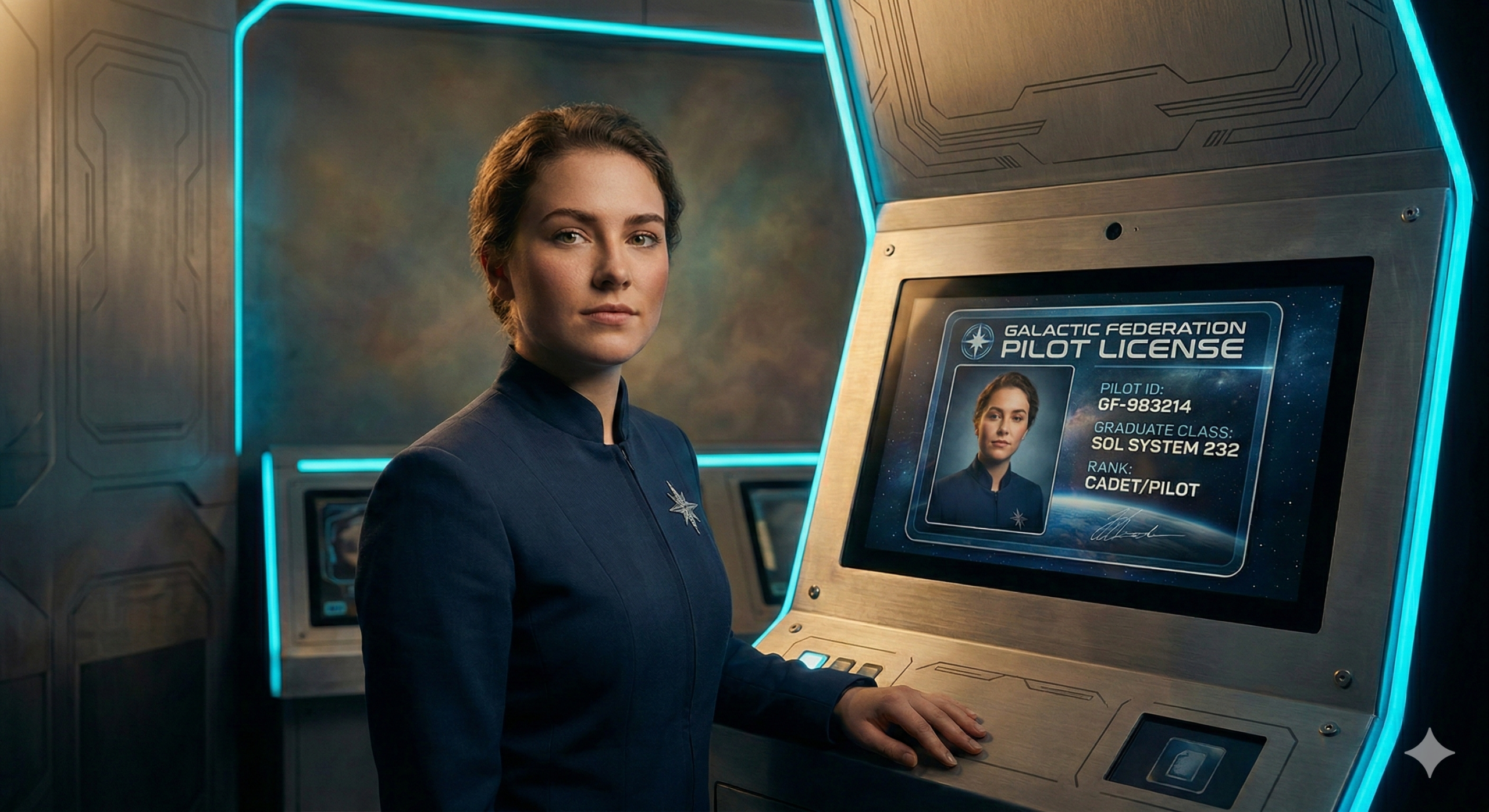
    In an immersive context, the ZillaBooth Party overlay is meticulously designed to be a piece of the story’s UI (User Interface) or diegetic world. Imagine an experience themed as a space academy training mission. The photo booth is physically built to look like the “Graduation Photo Station.” When the guest steps in, the branded overlay isn’t a logo; it’s a “Space Academy Pilot License” or an “Official Galactic Federation ID Card.” The moment the picture is taken, the resulting image is not a snapshot of a guest having fun; it is a document certifying their completion of a mission. The photo booth is no longer a prop for a quick picture; it is the official in-world government-issue machine for printing their new ID.

    This subtle but crucial shift in framing…from generic fun to narrative certification…elevates the action. The guest doesn’t just look at the camera; they pose for their official ID photo, embodying the character they have just spent the last hour playing. The artifact is now a badge of honor, a piece of proof they successfully navigated the narrative.

    2. Physical Integration as Scene-Setting

    True immersion requires seamless integration. A traditional photo booth, dropped into a medieval fair, screams “modern object out of place.” It breaks the immersion.

    The ZillaBooth Party system allows for comprehensive customization of the physical structure and the environment around it. To fully integrate the booth into the narrative, the physical shell must be treated as a set piece. * In a secret agent experience, the booth should be clad in brushed aluminum, with a flashing “classified” warning sign. The act of entering becomes a biometric scan or a security clearance process.
    * In a fantasy world, it might be disguised as an ancient, rune-carved pillar. The interface on the screen uses an in-world language font.The booth itself is transformed from a freestanding unit into a fully functional “set dressing.” The lighting, the sounds, and the physical aesthetic all reinforce the narrative, ensuring the guest never has to mentally leave the story world to snap a picture. The interaction becomes a natural, expected scene in their adventure.

    3. The Digital Artifact as Narrative Extension

    The ultimate goal of immersion is narrative extension: ensuring the guest carries the story with them after they leave the premises. The ZillaBooth Party’s digital output facilitates this in a way a simple paper strip cannot.

    When the guest receives their Galactic Federation ID Card via email or text, that image is inherently shareable. But critically, they are not just sharing a picture of themselves; they are sharing a story. The caption is no longer “Fun at the Space Event!” it becomes, “Just got my pilot license! Reporting for duty, Sector 7.” The artifact acts as a powerful social media trigger, but it is a trigger for the narrative, not just the brand.

    This digital artifact is the ultimate form of “delight.” The guest is delighted not by the technology, but by the fact that the experience acknowledged and validated their participation. The ZillaBooth didn’t just take their picture; it confirmed their new identity as a character in the world, and gave them the shareable proof. This is infinitely more valuable than a generic souvenir because it is a deeply personal, non-replicable moment.

    4. The Feedback Loop: From Spectator to Contributor

    The final component of immersion that a tool like ZillaBooth provides is the creation of a closed feedback loop. By generating a unique, story-specific artifact, the experience subtly signals to the guest that their actions matter. They stepped into the narrative, and the narrative changed to accommodate them by issuing a personalized document. This validation is the core of delight.

    It moves the guest from the mentality of a spectator (“I hope the show is good”) to that of a contributor (“I created a moment within this world”). The picture they take is now a permanent record of their agency within the story. The ZillaBooth is simply the machine that validates their story moment, printing a piece of the fictional reality for them to take into the actual reality.

    In the era of Guest Experience 2.0, every touchpoint must be an opportunity for a personalized narrative intervention. We are no longer designing theme parks, museums, or events; we are designing temporary, participatory realities. The customized photo booth is far from a mere prop; it is a critical narrative station…the passport office, the mission control debrief, or the winner’s circle. It is the tool that formally integrates the guest into the story and prints the definitive, shareable proof of their personal journey, ensuring they leave not just entertained, but profoundly and personally delighted.

  • Taking Photos of Photos: The Meta-Trend

    Taking Photos of Photos: The Meta-Trend

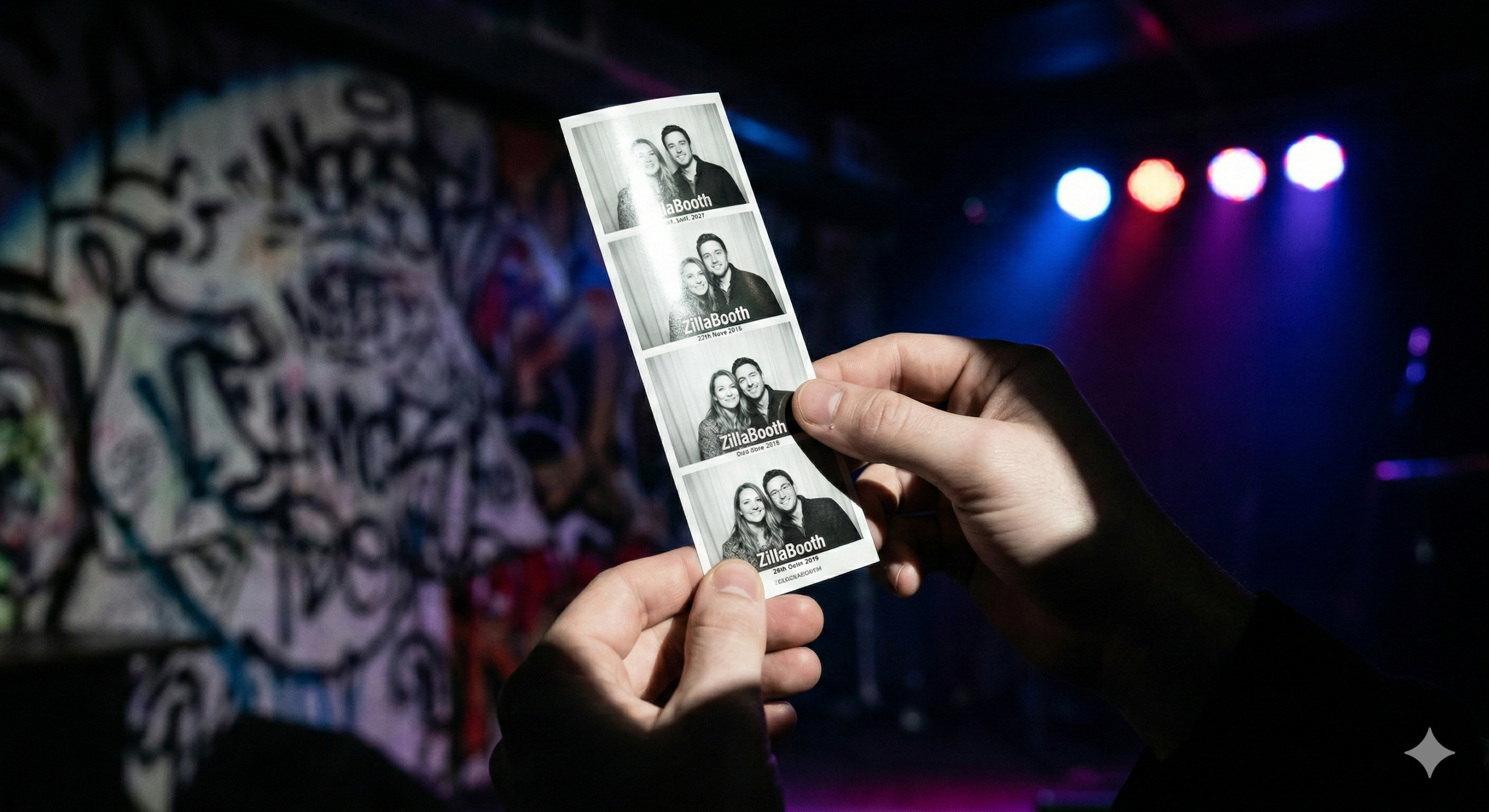
    The irony is not lost on us: in a world where everything is captured, shared, and stored digitally…from your most recent brunch to your wildest night out…one of the most popular and evocative social media trends involves deliberately stepping away from the screen to embrace the tangible, only to capture it all over again. This is the heart of the “meta-trend”: taking a brand-new digital photograph of a physical photo, a printed artifact, a moment captured on paper. It’s a deliberate layer of visual storytelling that adds texture, history, and a potent dose of nostalgia to your feed, and right now, the ZillaBooth photo strip is the undisputed king of this aesthetic.

    The rise of the perfect digital image has created an aesthetic fatigue. We’ve spent a decade chasing golden hour, mastering portrait mode, and using sophisticated apps to erase every wrinkle, shadow, or imperfection. The ‘meta-trend’ is a cultural rebellion against this polished perfection. By introducing a physical print, you’re instantly layering imperfection, and that’s the point. The print itself is a historical object. It carries the crease from your pocket, the fingerprint smudge from your friend, the slightly blurry quality of a flash-fired moment. When you photograph that object, you are not just capturing the original moment; you are capturing the current moment in which you are holding that artifact, bridging the past and the present. It turns a simple social media post into an archaeological exercise…a story within a story.

    This is a movement powered by two main cultural forces: a craving for authenticity and an intense wave of visual nostalgia.

    Authenticity is the most valuable commodity online. In an era of deepfakes and AI-generated imagery, a photo of a photo acts as a verifiable physical proof of experience. It says: “I was here. I printed this. I physically touched this memory.” The light reflections on the glossy paper, the way the edges curl, the shadows cast by your fingers…all of these elements testify to the object’s reality. It’s an un-retouchable truth embedded within your feed’s flawless scroll, offering a visual sigh of relief to viewers tired of the digital artifice.

    Nostalgia, particularly for the late ’90s and early 2000s, is the aesthetic fuel. Photo booths, disposable cameras, and point-and-shoot digital cameras defined an era of spontaneous, low-fidelity photography. The vertical ZillaBooth photo strip, with its four iconic frames, instantly evokes that sense of carefree, low-stakes fun. By holding that strip up against the venue background…the very place it was taken…you are collapsing time, bringing the energy of the moment out of the past and into the now. You’re giving your digital followers a tangible, haptic reference point.


    The ZillaBooth Guide: Capturing the Photo-Within-A-Photo

    To truly master this meta-trend for Instagram, you need to think of your ZillaBooth photo strip not just as a picture, but as a lens through which you are framing a larger, ongoing story. Here is the definitive, step-by-step guide to transforming a physical print into a captivating digital post, using the venue as your essential backdrop.

    Step 1: Secure Your Artifact (The ZillaBooth Strip)

    First, the obvious: you need the strip. The ZillaBooth is designed for high-quality, high-speed printing, making its vertical strip format the ideal canvas for this trend. After you take your strip, do not immediately flatten it or file it away. The most compelling meta-photos often have strips that are slightly bent, crinkled, or have the perforated edges still intact. These slight imperfections are the marks of authenticity that digital photography has tried so hard to eliminate. Embrace them.

    Step 2: Scoping the Scene – The Venue Background is Key

    The description specifically calls for holding the strip up “against the venue background,” and this is the most critical compositional element. The goal is to provide contextual layering.

    The Echo Effect: The most impactful posts photograph the print against a background that matches the environment within the print. Did you take the strip in front of the bar’s neon sign? Go stand in front of that sign and hold the strip up. The repetition of the location creates a dizzying, visually satisfying echo effect that emphasizes the “you are here” moment.

    The Contrast Shot: Alternatively, you can use the background to create a strong visual contrast. If the strip was taken in a dark, interior space, try holding it up against a brightly lit, exterior backdrop of the venue. For instance, holding the dark strip up against the venue’s brightly lit marquee or a busy street scene outside the door. The contrast draws the eye directly to the strip while still anchoring the photo in the physical location.

    The Atmosphere Shot: Use an environmental detail that screams ‘venue.’ This could be the pattern of a crowded dance floor, a distinctive piece of art on the wall, or a recognizable stage setup. Even if the detail isn’t in the original photo strip, it acts as a silent witness to the current moment.

    Step 3: Mastering the Hold and Composition

    The way you physically hold the print is where the magic happens and where the trend gets its “meta” designation. The inclusion of your hand or fingers is not a mistake…it is a mandatory compositional tool.

    The Finger Frame: Hold the strip at the very top and bottom using your thumb and forefinger. This frames the vertical strip and instantly tells the viewer, “This is an object I am physically presenting to you.” The slight shadow your fingers cast adds depth and proof of the physical plane. Ensure your fingers are clean, but don’t worry about minor smudges on the print itself; the grime is part of the charm.

    Rule of Thirds Placement: When capturing the digital photo, don’t center the strip dead-on. Place the ZillaBooth strip along one of the vertical lines of the rule of thirds. This leaves two-thirds of the digital frame to showcase the venue’s background, creating a more dynamic and visually engaging composition than a simple straight-on shot. The eyes of the viewer will move from the background context to the framed print and back again.

    The Peek-Through: For an advanced shot, position the print so that one of the frames perfectly lines up with an element in the background. For example, if one frame shows a person laughing, position the print so that the top edge of the frame lines up with the natural horizon line of the background, making it seem as if the action in the print is happening in the background scene.

    Step 4: The Digital Capture Settings (Intentional Imperfection)

    Your phone’s camera is powerful, but for this trend, you need to use that power wisely. You are aiming for a high-quality capture of a low-fidelity object.

    Focus is Paramount: This is the most crucial step. Use your phone’s manual focus (tap-to-focus) function and lock the focus directly on the ZillaBooth photo strip. Do not let the focus drift to the background. The text, the faces, and the glossy texture of the print need to be razor-sharp. If the background is slightly out of focus (shallow depth of field), that only enhances the print’s prominence.

    Embrace the Reflection: You will inevitably get reflections on the glossy paper, especially from ambient venue lights. Do not try to edit these out. A slight glare or reflection is another marker of the print’s physicality. It proves the image is being held in a real, live-action environment. The reflection is the “meta” light source.

    Use the Flash (The Power Move): For maximum effect, especially in dark venues, consider forcing your phone’s flash ON. The harsh, direct flash will brilliantly illuminate the photo strip while pushing the already dark background further into deep shadow. This mimics the low-fi aesthetic of a disposable camera shot, creating a dramatic, high-contrast image where the photo strip practically glows in your hand.

    Step 5: Minimal Editing and The Caption

    The beauty of the meta-trend is that the physical print is the “filter.” Keep your digital editing minimal to maintain the authenticity.

    Color and Contrast: A slight increase in contrast can help the photo strip stand out against the background. Avoid heavy-handed filters. If the photo strip itself is slightly desaturated, a simple black and white conversion of the entire digital image can create a cohesive and timeless editorial look.

    The Caption: The caption is where you provide the final layer of context. Use it to date the original event or to narrate the current situation. Instead of just “Last night was fun,” try: “Held onto this ZillaBooth proof of life from 2 AM and had to capture it against the neon one last time.” Use language that emphasizes the object and the memory. Popular hashtags include #PhotoOfAPhoto #AnalogMeetsDigital #MetaTrend #ZillaBoothStrip #PhysicalProof.


    Pro Tips: Elevating Your Meta-Game1. The Time-Travel Shot: Use an old ZillaBooth strip from a prior event…perhaps an entirely different venue or city…and hold it up in your current location. This is the advanced level of storytelling. The visual dislocation (a summer beach photo strip held up in a snowy city street) creates a powerful, dream-like contrast that viewers instantly engage with. It’s a literal representation of a memory being present in the now.
    2. The Collage/Grid: Don’t just post the single meta-photo. Use Instagram’s carousel feature. The first photo should be the digital picture of the physical print. The second and third photos should be zoomed-in details of the print itself, showing the texture, the gloss, and the perforated edges. The final photo could be the environment without the print. This tells the complete story of the artifact and its surroundings.
    3. The Photo-Frame: For a truly creative twist, use the ZillaBooth strip to frame an object other than the background. For example, hold the strip around a cocktail glass, a musician on stage, or a distinctive piece of furniture. You are using the nostalgia of the photo strip’s border to elevate a new subject, giving a mundane object the gravity of a preserved memory.
    4. Backlight the Artifact: For the most dramatic effect, find a light source (like an emergency exit sign, a stage light, or a window) and hold the print slightly over it. The light will bleed through the thinner parts of the photo paper, creating a subtle, glowing edge that visually separates the print from the background and gives the entire image a surreal, luminous quality.The trend of “taking photos of photos” is more than just an aesthetic quirk; it’s a profound statement about how we value and curate our memories in the digital age. By turning your ZillaBooth print into a physical prop, holding it up against the very background that hosted the moment, and capturing the resultant composite with your phone, you are performing a small, personal act of resistance against the relentless flatness of the digital feed. You’re celebrating the crease, the reflection, and the sheer, physical reality of being there. It’s imperfect, it’s raw, and it is the most honest, authentic way to share a memory right now.

  • The “No Do-Over” Challenge

    The “No Do-Over” Challenge

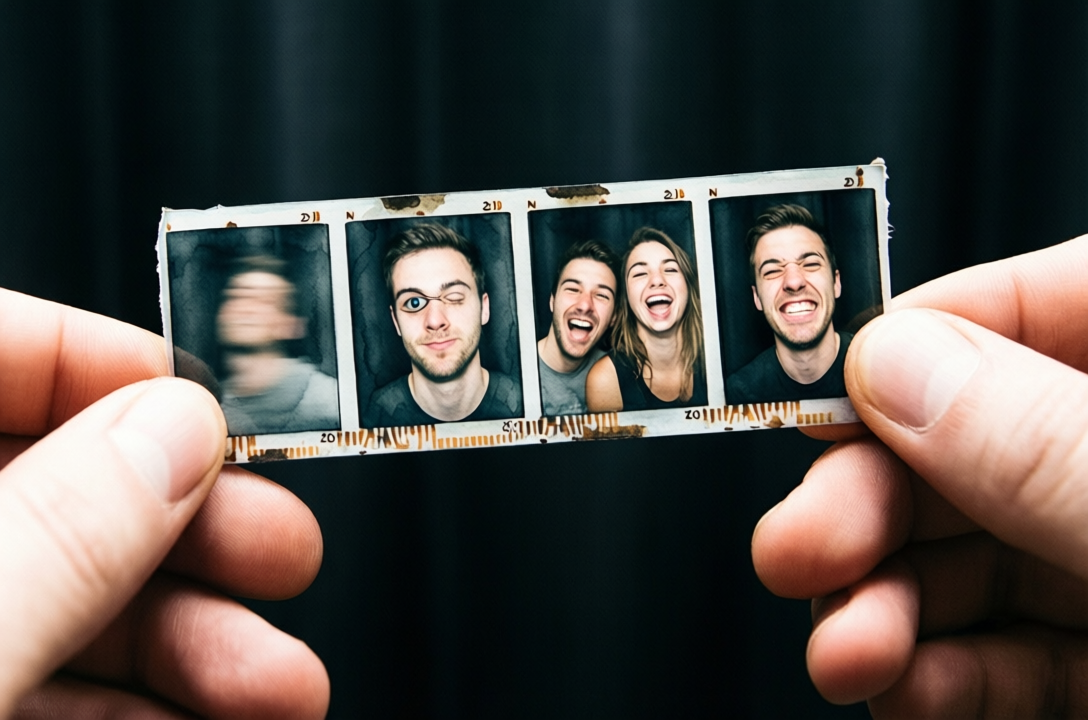
    It was a simpler time. A time when a night out wasn’t complete until you and your friends crammed yourselves into a tiny, velvet-curtained box, frantically trying to strike a pose before the blinding flash stole four precious moments of your evening. This wasn’t just photography; it was a performance art of rushed expressions, accidental intimacy, and absolute, unchangeable finality. You paid your four quarters, you pressed the button, and whatever happened in the next thirty seconds…the hair falling across your face, the untimely blink, the awkward, half-formed smile, the friend who couldn’t fit in the frame…that was it. There were no screens to check, no “Delete and Retake” button, and certainly no gallery of 50 similar attempts to scroll through later. The resulting strip, still warm and damp, was a genuine, raw, unedited, four-panel portrait of a specific moment in time.

    That tangible artifact, that imperfect strip of memories, holds a lesson that has been utterly lost in our digital age.

    Today, we are all professional curators of our own existence. The average person takes dozens of photos to get “the one”…the perfect angle, the ideal lighting, the candid-but-staged moment that makes us look effortlessly flawless. Our camera rolls are graveyards of near-misses, a constant cycle of correction, refinement, and elimination. The philosophy of digital photography is simple: if it’s not perfect, it doesn’t exist. We are terrified of the flaw, the shadow, the unpolished glimpse of reality. We airbrush our lives, creating a grid of sun-drenched, wrinkle-free, perfectly composed moments that bear only a passing resemblance to our actual, messy, wonderful lives. We’ve replaced memory with myth, and spontaneity with a script.

    But what if we could bring back the high-stakes, authentic thrill of the original photo booth? What if we could celebrate the raw, unrehearsed shot? What if we declared war on the delete button?

    This is the inspiration behind the challenge, and it’s built on the principle that the most meaningful photos are the ones we don’t take 17 times.

    The Challenge is simple, but the mental hurdle is immense: You must use the ZillaBooth app for a session, and you are forbidden from retaking any of the photos. You take the shots, and you live with the strip. The “blinked eyes,” the “awkward smiles,” the wild, windblown hair, the strange glare from the streetlamp…these are not errors to be corrected; they are the essential elements that elevate the strip from a staged moment into a true piece of art.

    We know what you’re thinking: But what if it’s bad?

    That’s precisely the point. “Bad” is subjective, and in the context of authenticity, “bad” often means real. The reason we cherish those vintage photo booth strips isn’t because they are technically superior to a modern portrait. They are cherished because they are an immediate, unfiltered snapshot of personality and interaction. They carry the energy of the moment. The forced, unflattering nature of the flash, the tiny space, and the knowledge that this is your one and only chance all conspire to create a genuine vulnerability that a 30-minute photoshoot could never replicate.

    Think about the psychological shift that occurs when the delete button is off the table. Suddenly, you stop trying to control the outcome. You stop posing and you start being.

    In the age of infinite digital storage and immediate preview, the delete function is both a blessing and a curse. It has allowed us to perfect our craft, but it has simultaneously eroded our confidence in the genuine. The moment you look at the screen after a snap and judge it, you’ve already broken the spell of spontaneity. You are no longer documenting; you are criticizing and reprocessing. The “No Do-Over” Challenge forces you to commit to the moment, trusting that the true magic happens when you let go of the reins.

    It’s an exercise in trusting your own life.

    We are specifically calling on the power of ZillaBooth to help enforce this radical shift. While most apps are designed for endless refinement, ZillaBooth’s intuitive interface and commitment to the classic photo strip format is the perfect vessel for this challenge. Its rapid-fire capture and layout mimic the pressure and pacing of the original booths, helping you to bypass your internal editor and simply react. The app becomes a tool for discipline, a digital velvet curtain forcing you to stay present.

    But this challenge is about more than just one app or one photo strip. It’s a cultural counter-movement. It’s a quiet rebellion against the curated perfection that has begun to exhaust an entire generation. We are all suffering from “Curation Fatigue”…the mental exhaustion that comes from maintaining a perpetually flawless facade. The desire for “authenticity” has become a massive, powerful trend because people are genuinely tired of the lie. They are tired of comparing their real, messy lives to the highlight reels of others.

    The “No Do-Over” photo strip is a powerful antidote to this fatigue.

    It says, “Here I am. This is what I looked like at 11:37 PM, after two cups of coffee and a long talk with my friend. I’m blinking in the third frame, and my smile is lopsided, but this is the real memory.”

    When you share an imperfect photo that you know you could have deleted and retaken, you are making a profound statement. You are granting permission to others…and to yourself…to be less than perfect. You are declaring that the story encoded in the image is more valuable than its technical polish. The photo where you’re mid-laughter, blurry and out of focus, is often a more accurate representation of true joy than the one where you’re perfectly composed, staring placidly into the lens.

    Embracing the Unflattering: A Practical Guide to Winning the Challenge

    To successfully complete the “No Do-Over” Challenge, you need to fundamentally change your approach to taking photos. It requires a shift from “posing for the camera” to “living in front of the camera.”1. Don’t Look at the Screen (Until the End): The core rule of the classic photo booth was delayed gratification. You didn’t see the results until the process was over. When using ZillaBooth for this challenge, resist the urge to peek at the camera preview. Focus on your friend, on the environment, on the feeling. Pretend the camera is a mystery box; your only job is to fill it with genuine reactions.

    1. Move Faster Than Your Internal Critic: The rapid-fire nature of the ZillaBooth strip is your friend. Don’t pause to adjust between shots. Change expressions quickly. Lean in, lean out, make a funny face, look serious, then burst into laughter. The speed prevents your brain from engaging in the pose-and-check cycle. The faster you move, the more authentic the results will be.

    2. Lean Into the “Flaw”: Specifically try to capture what you would normally avoid. Is the light source creating a harsh shadow? Great, use it to frame your face dramatically. Is a friend about to sneeze? Capture the sneeze! A “blinked eye” in a final photo is a timestamp, a clear signal that the shot was spontaneous and real. The mistake is the memory.

    3. Focus on Connection, Not Composition: Use the photo session as a chance to connect with your companion. Tell an inside joke. Whisper a secret. Make each click a reaction to something real happening between you, not a reaction to the camera itself. The strip will then become a document of your relationship, not just a document of your faces.

    4. Share the Strip as-is: Once the challenge is complete, share the entire strip. Do not crop. Do not filter. Do not use external editing apps. The power of the “No Do-Over” Challenge is in its raw presentation. Tag your post with #NoDoOverChallenge and #ZillaBooth and declare your commitment to the unfiltered reality.The beauty of the “No Do-Over” Challenge is that you cannot fail, because there is no perfect outcome to aim for. The goal is not to produce a technically beautiful photograph, but to produce an authentic, memorable moment. The success of the challenge is measured not in likes or comments, but in the moment you look at that final, imperfect strip and smile, knowing that every strange look and accidental gesture is a genuine piece of your life, captured with the brutal, beautiful honesty of a simpler time.

    We invite you to step away from the curated facade. Shut down your internal editor. Embrace the awkwardness. Get ready to blink, smile awkwardly, and reclaim the joy of the unrehearsed moment. Pay your quarters, press the button, and let your real life begin to show up in your feed. Join the “No Do-Over” Challenge today, and let’s make imperfection the new standard. Your most honest photo is waiting to be taken.

  • The Rise of the “Wedding Content Creator”: Do You Need One?

    The Rise of the “Wedding Content Creator”: Do You Need One?

    The wedding industrial complex has always been a bellwether for cultural priorities. For decades, the gold standard of post-nuptial happiness was a thick, leather-bound photo album delivered six months after the honeymoon, full of perfectly lit, posed, and timeless photographs. The focus was on legacy, permanence, and professional artistry.

    But if you’ve been paying attention to the digital zeitgeist, you’ve noticed a massive, seismic shift. The modern wedding timeline has been entirely reordered by the demand for immediacy. The new standard is not the album you look at in six months; it’s the 15-second Reel you look at the morning after.

    This cultural phenomenon has given rise to the most surprising and in-demand vendor of the modern age: the Wedding Content Creator (WCC). And the numbers don’t lie. Search demand for “wedding content creator” has exploded, surging by a staggering 586% in the last twelve months alone. This isn’t just a niche trend; it’s a full-blown revolution in how we capture, share, and consume wedding memories.

    The question for every couple planning their modern celebration is no longer, “Do we hire a photographer and a videographer?” it’s, “Do we now need a third person dedicated entirely to our social media footprint?”

    The answer, increasingly, is yes…and no.

    The appeal of the Wedding Content Creator is a direct reaction to the traditional wedding vendor model. The professional photographer and videographer are essential, but their services are, by design, slow. Their focus is on high-resolution, magazine-quality images and cinematic footage that require weeks, sometimes months, of post-production. They are focused on the perfect final product.

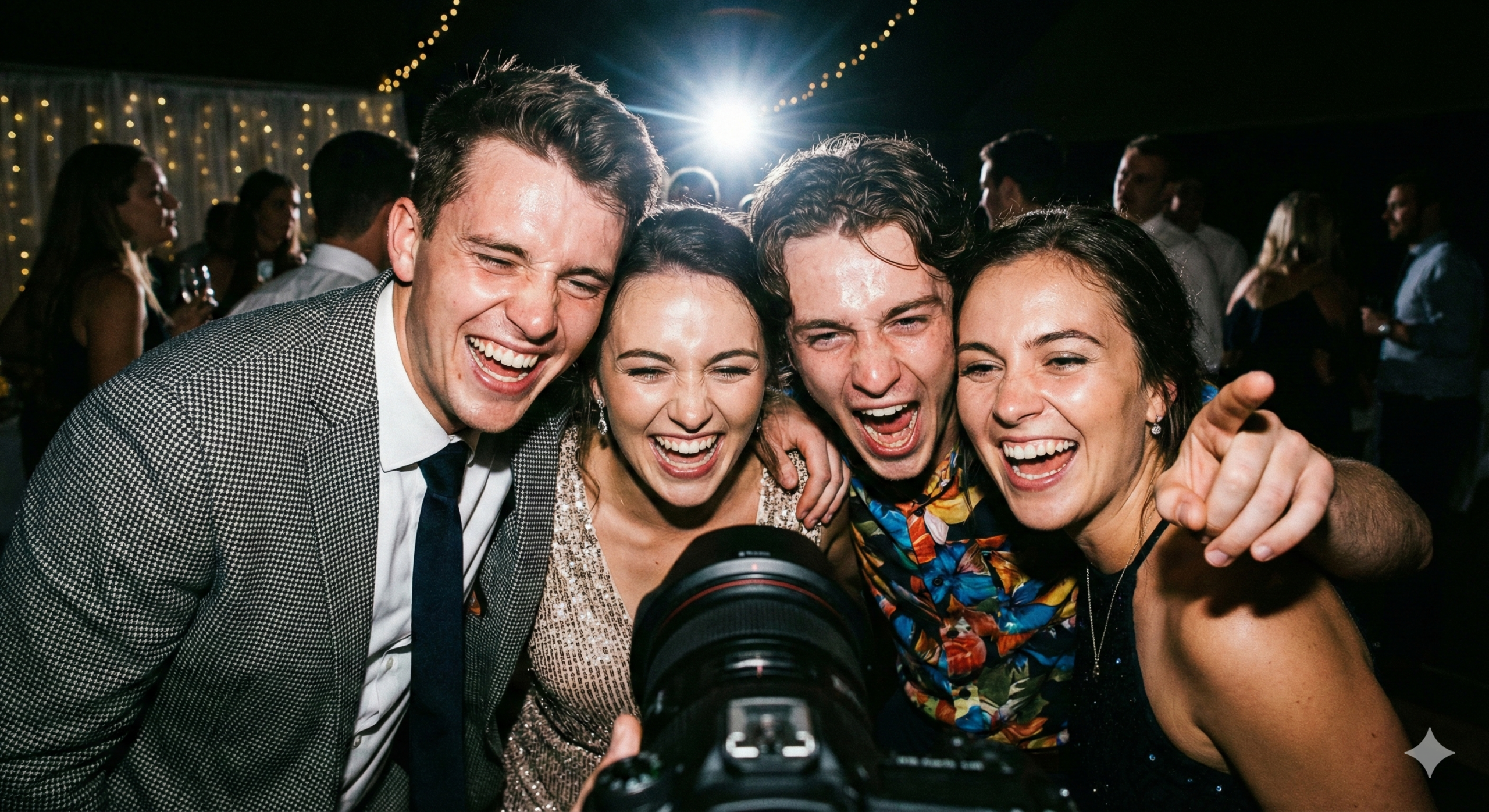
    The WCC, conversely, is focused on the instant product. They are hired to be a couple’s dedicated personal paparazzi, shadowing the event armed only with a smartphone. Their mission is to capture raw, authentic, behind-the-scenes moments…the bridal party’s final toast, the last-minute ring-bearer instructions, the groom’s first reaction…and to deliver this content immediately. We’re talking highlights posted to a shared album before the reception dinner even ends, and a fully edited TikTok or Instagram Reel ready for posting the next morning.

    This content serves a completely different emotional need. It’s not for the album; it’s for the feed. It’s not polished; it’s real. It satisfies the couple’s FOMO (Fear Of Missing Out) on their own event and, more crucially, fuels the social media machine, allowing them to share the excitement while the event is still trending.

    However, the human Wedding Content Creator has quickly created a new set of problems. They are a costly new addition to an already strained budget, often commanding thousands of dollars for a single day. They are another person a couple must vet, manage, and coordinate with their existing team of vendors. Their presence can, paradoxically, make the event feel less authentic, as they are constantly prompting the couple for “content moments.” Furthermore, the quality of this instantaneous footage is entirely dependent on one single person’s skill, energy, and phone battery.

    The market has spoken: couples desperately want instant, social-ready content, but they don’t necessarily want another vendor in their face. This is the exact inflection point where automation, technology, and clever design step in to solve a massive industry problem. The future of the Wedding Content Creator is not a person; it’s a seamless, automated system.

    This is why ZillaBooth has emerged as the definitive solution to the WCC bottleneck. ZillaBooth isn’t a person you hire; it’s an automated content engine that leverages the entire wedding environment to generate social-ready assets instantly, at a fraction of the cost of a human vendor. It is the ultimate expression of the “content creator” trend, removing the human element entirely while maximizing the content output.

    ZillaBooth works by transforming a designated, stylishly designed station into a highly intuitive, automated content hub. It’s often set up near the cocktail hour or reception and operates on a principle of collaborative content creation. Instead of one person shooting, every guest becomes an immediate, willing contributor to the couple’s social media story.

    Here is how ZillaBooth serves as the ultimate automated content creator, meeting the 586% surge in demand head-on:1. Distributed Capture, Centralized Curation: Guests simply walk up to the ZillaBooth station, which is equipped with a high-quality camera and an integrated, proprietary capture application. They take short video clips, candid photos, and Boomerangs…often responding to fun, pre-programmed prompts from the couple (e.g., “Give the couple your best marriage advice!” or “Show us your signature dance move!”). This removes the pressure from the couple and encourages raw, funny, and authentic guest-driven content.

    1. Instant AI-Powered Curation and Filtering: This is the core of ZillaBooth’s technology. The moment a piece of content is captured, it is instantly uploaded to the ZillaBooth cloud. Proprietary AI algorithms immediately go to work, analyzing the content for key factors that a human WCC would miss: proper lighting, high-energy moments, flattering composition, and most importantly, adherence to a predetermined brand aesthetic selected by the couple (e.g., a “Vibrant & Bright” filter or a “Soft Vintage” look). The system instantly discards blurry, unusable, or inappropriate content, ensuring the couple only receives the best, most shareable moments.

    2. The Signature 2×2 Grid Generator: The key deliverable for the human WCC is a ready-to-post Reel. ZillaBooth has innovated on this by automatically generating a different, equally viral social format: the 2×2 grid. In the world of social media, the 2×2 photo grid is the pinnacle of aesthetic curation. It is a set of four images, perfectly color-matched, thematically linked, and formatted to fill the entirety of a social media preview tile. ZillaBooth’s automation engine selects four complementary images or short video clips from the instantaneous feed, applies the couple’s chosen aesthetic filter, and arranges them into a cohesive, perfectly aligned 2×2 grid.

    3. Instant, Social-Ready Delivery: This content is generated and delivered instantly. The moment a high-quality 2×2 grid is complete (which takes mere seconds), it can be pushed in multiple ways:
      • Live Digital Display: The grids appear on a dedicated screen at the reception, entertaining guests and encouraging more participation.
      • Direct to Couple’s Phone: The couple and their designated content manager (maid of honor, best man) receive an alert with the ready-to-post grid, allowing them to upload it to their social media channel before the night is over.
      • Hashtag Feed: The content is simultaneously organized into a clean, searchable, and shareable feed accessible via a unique QR code or wedding hashtag, offering guests an instant photo booth experience with a professional-grade aesthetic.The result is that ZillaBooth doesn’t just replace the human WCC; it automates and democratizes the entire process. It turns a single, costly vendor into a scalable, highly efficient system that leverages the collective energy of the entire guest list. The content is more spontaneous because it’s guest-driven, it’s aesthetically consistent because it’s AI-curated, and most importantly, it is delivered instantly, satisfying the modern couple’s desperate need for immediate social proof and post-wedding excitement.

    By deploying ZillaBooth, a couple is no longer paying for one person’s time; they are investing in a cloud-based content infrastructure that guarantees a steady stream of highly-curated, perfectly formatted 2×2 grids throughout the evening and into the next day. The 586% rise in demand for “Wedding Content Creator” isn’t a plea for another person to hire; it’s a desperate cry for content immediacy. ZillaBooth answers that cry with the perfect blend of high-tech automation and high-touch aesthetic curation, proving that the future of wedding content is less human and exponentially more social.

  • Why “Authenticity” is the Buzzword of the Year

    Why “Authenticity” is the Buzzword of the Year

    The cultural pendulum has definitively swung. After nearly a decade defined by the relentless pursuit of digital perfection…the soft-focus portrait, the meticulously arranged flat lay, the sun-drenched, over-exposed travel shot…we have collectively reached a saturation point. The meticulously curated grid, once the gold standard of social media success, now registers as inauthentic, tiring, and even dishonest. The visual language of the internet is undergoing a seismic shift, and the single word dominating this new conversation, the one that serves as both a critique of the past and a blueprint for the future, is authenticity. It is more than a fleeting trend; it is a full-blown cultural mandate, a demand from consumers and creators alike to ditch the artifice and embrace the raw, the real, and the momentarily imperfect.

    This widespread craving for “realness” is a direct response to what can only be called ‘Digital Fatigue.’ We grew weary of the visual lie. The perfected image promised an unattainable lifestyle, fueling a low-grade, perpetual anxiety about presentation. The counter-movement began subtly…a return to grainy film simulations, the strategic use of phone camera ‘time stamps,’ and the celebration of images taken under difficult or unflattering lighting. This aesthetic revolution, however, has crystallized around a singular core principle: the preservation of true-to-life color and texture.

    For years, the goal of any casual picture-taker was the soft wash of light that erased blemishes, minimized shadows, and homogenized color into a single, pleasing, ‘golden hour’ palette. Technology bent over backward to deliver this; camera apps automatically smoothed skin, corrected for every possible lighting flaw, and defaulted to flattering, soft-focus portrait modes. But in striving for technical perfection, these tools stripped the image of its narrative power…the very details that make a moment feel real.

    Authenticity, in the current visual context, is defined by the integrity of the original detail. A photo is authentic when it registers the grit of the city street, the harsh reflection of fluorescent light, the true, undoctored color of a cocktail in a dimly lit bar, and the actual, imperfect texture of human skin. This is the visual equivalent of ‘lo-fi’ music…it deliberately eschews high-fidelity polish in favor of an imperfect, slightly messy, yet immediately evocative honesty. The shadows, the grain, the unforgiving color cast…these are no longer flaws to be edited out. They are essential characters in the story. They scream: This was taken right now, with no time for adjustments.

    This cultural moment demands a new type of tool…one that facilitates the trend of authenticity rather than fighting it. It requires a technology that gets out of the way, intentionally disabling the automated, ‘beautifying’ smart features that defined the last decade of phone photography. This is precisely where ZillaBooth Pro has emerged as the essential application for the authentic creator.

    ZillaBooth Pro’s defining feature is not a new filter or a groundbreaking editing tool; it is its revolutionary commitment to omission. The app is engineered with a purposeful lack of “beauty filters.” This is the anti-algorithm. While the native camera app on any modern smartphone uses incredibly complex artificial intelligence to automatically and preemptively soften skin, subtly adjust contours, and correct what it perceives as ‘flaws,’ ZillaBooth Pro provides a completely unvarnished feed. It hands the user the raw, high-contrast, technically ‘imperfect’ image that the culture is currently demanding.

    This intentional absence of automated enhancement is the key to unlocking the new aesthetic of truth. When the camera’s internal software is prevented from performing its automated smoothing, the lens is finally allowed to capture true-to-life texture.

    Consider the human subject. In the era of the beauty filter, every portrait was destined to look slightly airbrushed…skin tones were unnaturally uniform, pores were blurred, and the fine lines that tell a life story were digitally erased. ZillaBooth Pro throws this out entirely. Its lack of smoothing algorithms means that the texture of fabric…the heavy weave of denim, the sheen of silk, the glitter of sequins…is rendered with a brutal, almost hyper-real clarity. More importantly, it means that skin is captured with its true texture intact. A direct, harsh light source, like the forced flash ZillaBooth Pro so expertly controls, does not flatter; it magnifies. It highlights the pores, the natural oil of the skin, the delicate lines around the eyes. This unforgiving honesty is what audiences now equate with being ‘real,’ a defiant badge of authenticity worn by the subject.

    The effect is even more pronounced when it comes to true-to-life color. Modern camera algorithms are programmed to chase a specific color temperature, usually one that is warm, flattering, and consistent…a constant, soft-focus ‘golden hour.’ This results in an image where the colors of the environment are flattened and corrected to conform to an idealized vision. ZillaBooth Pro rejects this chromatic homogenization. By offering granular, manual control and intentionally avoiding automated white balance correction, the app allows the image to be saturated with the genuine color of the moment.

    The colors that were once aggressively ‘corrected’…the eerie blue of a late-night streetlamp, the intense green of an LED screen, the harsh yellow-orange glow of old-school incandescent bulbs…are now preserved. The result is a color profile that is chaotic, dynamic, and perfectly captures the feeling of being in that space, not the technically ‘correct’ version of it. The lack of an intervening filter means a subject’s true-to-life skin color is not warped by an attempt to make the whole scene uniformly ‘pretty.’ When you look at an image captured with ZillaBooth Pro, you are not seeing a post-processed interpretation; you are seeing the moment’s raw, unedited light signature. This is why the aesthetic is so compelling: it is visual proof that you were there, experiencing the moment as it truly appeared, not as an algorithm wished it had appeared.

    ZillaBooth Pro is, therefore, not just a camera app; it is a statement of philosophical intent. It operates on the principle that the most engaging image is the one that is the least filtered. It empowers the user to reject the soft-focus fantasy and embrace the high-contrast, hyper-textured reality. It’s a move that feels rebellious in a digital landscape still largely dominated by polished perfection.

    The tools ZillaBooth Pro does offer…manual control over flash, exposure, and focus…are designed to enhance the chaos and truth, not tame it. Forcing the flash to fire at maximum intensity, even in bright sunlight, is the ultimate power move of the authenticity trend. This technique, which instantly separates the subject from the background with aggressive shadows and blinding highlights, ruthlessly exposes texture and preserves the most chaotic, true colors of the scene, creating a sense of raw, unmediated drama.

    In this new visual economy, authenticity is the currency, and the preservation of true-to-life color and texture is the gold standard. ZillaBooth Pro is the definitive tool because its very function is a rejection of the artifice that came before. It is built for a generation that has seen through the digital veil and is now demanding the real, the raw, and the unedited truth in every frame. To capture an image with ZillaBooth Pro is to participate in this cultural moment, transforming a simple picture into an unflinching document of reality. By choosing an app defined by its lack of automated enhancements, the modern creator is making a powerful statement: that reality, in all its high-contrast, textured, and colorful glory, is far more compelling than any manufactured fantasy.

  • Gen Z Has Entered the Chat: What the New Generation Wants in a Photo Booth

    Gen Z Has Entered the Chat: What the New Generation Wants in a Photo Booth

    The wedding industry has officially entered the era of Gen Z. This generation, now forming the majority of newly engaged couples, is not just changing décor and menus; they are fundamentally reshaping the way memories are captured. Having grown up navigating the hyper-curated, filter-heavy landscape of social media’s adolescence, Gen Z has developed a powerful cultural counter-movement: a demand for authenticity and imagery that is definitively “raw and unfiltered.” This cultural shift explains exactly why they are walking past the traditional, overly-processed photo booths and flocking toward streamlined, simple-interface solutions like ZillaBooth.

    For the modern couple, a wedding is no longer a performance staged for the social media feed; it is an intimate, authentic gathering. This generational pivot is a direct reaction to the intense pressure of the mid-2010s aesthetic, where digital perfection was the unattainable standard. Gen Z watched as Millennials chased the elusive “Instagram Face” and polished every photo until it lacked any sense of realness. They experienced the mental fatigue of constant curation. Their response is a powerful aesthetic rebellion, prioritizing genuine connection and imperfect, candid moments over sterile, airbrushed visuals.

    This rejection of the digital veneer is most visible in their photography choices. They romanticize the aesthetic of disposable cameras, vintage film, and high-flash point-and-shoots…not because the images are flawless, but because they carry the weight and warmth of genuine, unmanipulated moments. They understand that a beautifully lit, slightly-off-center, candid shot is infinitely more valuable as a memory than an image scrubbed clean of all personality by a heavy smoothing filter.

    This deep-seated value system has created a significant problem for the traditional photo booth. For years, photo booths were defined by their excessive digital enhancements: cartoon filters, aggressive skin-smoothing effects, heavy color overlays, and digital props that looked tacked-on and cheap. While this “more is more” approach was initially fun, it now feels jarringly dated and, crucially, completely inauthentic to the Gen Z couple. They don’t want a memory that is obscured by a digital mask. They want the real, unvarnished emotion of their reception, captured brilliantly.

    The traditional photo booth’s greatest sin, in the eyes of this new generation, is complexity born from over-processing. A typical legacy system forces guests through a bewildering labyrinth of on-screen choices, demanding they select a frame, a filter, a digital prop, and an effect…all in the span of a few hurried seconds. This selection process distracts from the moment itself. The spontaneity is lost as a group of friends stares at the screen, arguing over which shade of sepia works best. The resulting images, laden with heavy digital manipulation, fail to capture the true atmosphere and genuine emotion of the evening. They look generic, temporary, and easily discardable.

    ZillaBooth: The Champion of the Anti-Filter Aesthetic

    ZillaBooth has successfully disrupted this outdated model by operating on a completely different principle: the technology must serve the moment, not dominate it. Its success lies not in the features it offers, but in its deliberate subtraction of unnecessary digital noise.

    The core appeal is the simple interface.1. Minimalist, Intuitive Design: When a guest steps up to a ZillaBooth, the interface is clean, fast, and intuitive. There is no overwhelming menu of filters and digital junk. The screen presents only the essentials: the clean camera feed and a large, clear start button. This minimalist design cuts down on the decision fatigue that Gen Z actively seeks to avoid. Guests spend less time scrolling through digital options and more time being fully present, spontaneous, and silly. The focus is immediately placed on the people in the frame and the fun being had, not the machine itself.

    1. A Focus on Foundational Quality: ZillaBooth trusts the quality of its underlying technology. Instead of compensating for poor lighting and camera quality with digital smoothing, it invests in professional-grade components. The images are captured with brilliant, flattering, high-end flash and excellent resolution. This foundational quality means that the resulting photo is already high-end, crisp, and beautifully lit, requiring no heavy-handed digital ‘corrections.’ It delivers the authentic, natural look that Gen Z finds editorial and timeless.

    2. The Editorial Look vs. The Social Filter Look: The final output from a ZillaBooth image looks like a professional, high-quality, candid photograph…the kind of flash-lit, high-contrast, beautiful moment one would expect from a talented editorial photographer. This look aligns perfectly with the current Gen Z aesthetic that embraces the “unfiltered” yet high-quality analog feel. The image preserves the texture, the expressions, and the real colors of the moment. In contrast, traditional filters flatten the image, smear the skin texture, and apply artificial colors that instantly date the photograph. For Gen Z, an image that respects reality is an image worth keeping.

    3. A Cultural Alignment with Authenticity: By defaulting to a clean, filter-free capture, ZillaBooth makes a powerful cultural statement that resonates with the new generation: “You don’t need digital alteration to be beautiful or to capture a great memory.” This message of radical acceptance and anti-perfectionism is precisely what Gen Z is championing in every corner of their lives. The simple interface is a facilitator of realness; it gives guests permission to be their true, silly, un-airbrushed selves, knowing the resulting image will be a true record of that spontaneous moment.For the Gen Z couple planning a wedding, every vendor choice is a reflection of their values. Choosing ZillaBooth is not just about entertainment; it is a statement against the performative culture of the past. It’s a commitment to safeguarding the authenticity of their celebration. The simple interface is the gatekeeper of this authenticity, removing the temptation and the friction of over-processing, and ensuring that the memories captured are genuine, high-quality, and completely unfiltered…perfect for the generation that is finally ready to embrace the truth behind the lens.

  • Analog in a Digital World: Why We Crave Physical Prints

    Analog in a Digital World: Why We Crave Physical Prints

    The modern paradox of photography is that in the age of endless images, we feel we have fewer actual photos. Our camera rolls overflow with tens of thousands of digital captures…perfectly exposed, flawlessly focused, and immediately shareable…yet they often feel weightless, ephemeral, and ultimately, disposable. We are drowning in JPEGs, but starving for keepsakes. This deep, persistent craving for something tangible…something we can hold, put in a frame, or slip into a wallet…is what fuels the powerful trend of returning to physical prints. It is not merely a retro fad; it is a profound psychological need for permanence and tactile connection in a world that has become overwhelmingly screen-based and transient. The solution is not to abandon digital, but to master the hybrid workflow: utilizing the speed and quality of modern digital tools, like ZillaBooth, and completing the experience by transforming those digital captures into timeless, analog-feeling prints. This approach gives us the best of both worlds, turning fleeting data into cherished objects.

    The Haptic and Emotional Superiority of Print

    Why does a print feel so much more significant than its digital twin? The answer lies in psychology and the human need for ritual and permanence. Firstly, a physical photograph demands a ritual. To print an image, one must intentionally select it from the digital multitude, a process of curation that elevates its value. Unlike endlessly scrolling through a camera roll where every image is equally available and therefore equally insignificant, the act of printing grants the chosen photograph a ceremonial status. It signifies: “This image matters. This moment is worthy of permanence.” Once printed, the image becomes a fixed, non-editable piece of history. A digital file is endlessly changeable, existing in a state of potential revision; a print is final, a concrete testament to a specific moment in time. This finality lends it a greater emotional weight.

    Secondly, the superiority of the print is fundamentally haptic, or related to the sense of touch. We experience digital images through cold glass and light. We experience a print through touch, smell, and substance. The texture of matte paper versus glossy; the slightly frayed corner from being handled; the weight of the cardstock…these physical properties engage our senses in a way a digital file simply cannot. The print possesses what the great photographer Henri Cartier-Bresson called “the feeling of a scrap of paper.” It accrues history through wear and tear. A crease is a memory of a child’s hand; a faded edge is the mark of time. When we hold a print, we are activating a different kind of memory…one tied to the physical world, making the recollection richer and more multi-sensory. This is the core of the analog craving: a desire for substance over simulation.

    The Great Digital Devaluation

    Our current digital photo ecosystem, for all its convenience, has a significant flaw: it promotes devaluation through abundance. We take thousands of photos without thought because storage is cheap and deleting them is optional. This sheer volume creates a paralyzing effect…the “digital archive paralysis”…where the most important images are lost in the noise of the mediocre ones. They exist in a perpetual digital purgatory, never truly seen, enjoyed, or shared in a meaningful way. Moreover, digital photos exist under the threat of technological obsolescence. File formats change, cloud services shut down, hard drives fail. The very ease with which they are stored makes them vulnerable to being forgotten, or worse, lost forever in an unreadable format years from now. The printed photograph, conversely, is immediately accessible without electricity, software, or passwords. Its technology is paper, ink, and light…a universally readable format that has survived for centuries.

    The ZillaBooth Hybrid Solution: Analog Feel, Digital Power

    The modern photographer doesn’t have to choose between the convenience of digital and the soul of analog. The hybrid workflow is the elegant compromise that captures the best features of both. This is where a dedicated professional camera system or application like ZillaBooth comes into its own. The power of ZillaBooth lies in its ability to offer granular control and high-quality capture, which is essential for a great final print, while maintaining the speed and ease of a digital device.

    The process is simple, yet transformative, and is built on intentionality at every stage:1. Capture with Digital Precision: Use the ZillaBooth application to take your photos. The advantage here is the immediate feedback, the high-resolution sensor, and the ability to take multiple shots quickly without the cost of film. ZillaBooth’s advanced controls allow you to fine-tune exposure, color temperature, and even apply specific grain or color-shift filters at the point of capture that are specifically designed to emulate classic film stocks, providing the “analog feel” from the start. By controlling the camera’s raw output, you ensure the image has the necessary depth and quality to withstand the printing process, unlike quick snaps taken with an auto setting. This attention to detail in the capture phase ensures the final print is not just a high-quality reproduction, but an image with rich tonal information.

    1. The Curation Stage: This is the critical step that restores value. Instead of printing everything, you must curate. Scrolling through the ZillaBooth gallery, the user is forced to select only the top 1%…the images that genuinely resonate. This digital culling process is the modern equivalent of choosing which roll of film to develop. It reintroduces the scarcity that gives a photograph worth. This curation should be done with a physical eye, asking: “Does this look good as a print? Will I want to handle this in ten years?” The act of deletion and selection sharpens your photographic eye and fundamentally changes your relationship with the images that remain.

    2. Preparation for Print (The Analogization): Before sending the digital file to a printer, ZillaBooth or a related professional editing suite is used for the final analog-style treatment. This involves several key steps to break the clean, sterile aesthetic of pure digital: * Aspect Ratio and Border: Cropping the image to a classic print size (e.g., a square 1:1 or a rectangular 4:3) and applying a digital border, often with a white or sepia tone, instantly frames the image like a traditional print. This border separates the image from the digital canvas and gives the eye a resting place, focusing attention inward.
      • Tonal Adjustments: Digital vibrancy is often too clean. The image should be slightly softened, with contrast gently lowered, and a subtle color cast (like a mild sepia or a pale yellow) introduced to simulate the chemical aging process of film. Film, particularly older film, has a distinct color bias, and mimicking this bias adds a layer of authentic nostalgia. This is often achieved by adjusting the white balance or using color grading tools to lift the blacks slightly, preventing true digital black.
      • Grain Application: A subtle but intentional layer of digital film grain is applied. This adds texture and breaks up the unnatural perfection of high-resolution digital capture, lending it the characteristic roughness and organic structure of an analog image. This grain is the texture of film, and its presence psychologically signals “old school” to the viewer.4. The Final Print: The choice of print medium is as important as the original capture. To achieve the “analog feel,” avoid standard inkjet photo paper. Instead, opt for specialty papers: * Matte and Cotton Rag Papers: These absorb light rather than reflecting it, giving the image a soft, luxurious, and non-reflective quality that feels much older and more substantial than glossy paper. The fibers in the paper interact with the ink to create an organic texture that mimics the subtle irregularities of a darkroom print.
      • Fuji Crystal Archive or Luster Finish: For a more traditional photographic feel, these professional papers are ideal. They offer a semi-glossy surface that is less reflective than true gloss, and their chemical composition helps colors pop in a way that recalls traditional photo lab processing.When a high-quality ZillaBooth digital file is printed on a textured matte paper, the transformation is complete. The digital grain integrates seamlessly into the paper’s texture, the intentional color shift warms the image, and the final result is a physical artifact that carries the emotional resonance of a film photograph, but with the technical sharpness and clarity afforded by a 21st-century digital camera.

    More Than Just Paper: The Power of Context

    The true victory of the physical print is not just its texture, but its context. A digital photo lives on a phone, competing with emails, social media feeds, and news alerts. A printed photo, however, has a dedicated space in the real world. It is pinned to a refrigerator, tucked into a journal, or displayed on a desk. This context forces interaction in a way a digital photo never can.

    The refrigerator magnet photo isn’t just looked at; it’s seen every day while grabbing a coffee. The wallet photo isn’t merely a file; it’s a tiny, worn talisman of a loved one that is handled and felt. The physical print creates a continuous, low-level emotional connection to the memory that its digital counterpart, locked away behind a passcode, cannot replicate. It is the final, ultimate form of the image…a permanent fixture in our lives, not just an entry in a database.

    Ultimately, the craving for physical prints in a digital world is a yearning for substance, ritual, and a tangible connection to our personal history. The hybrid workflow…from ZillaBooth’s digital precision to a deliberately chosen, analog-styled print…is the modern photographer’s way of satisfying this deep-seated need. We capture the moment with the speed of light, but we preserve it with the timeless gravity of paper. We use technology to make the photo, but we use the ritual of printing to make it matter. Stop hoarding JPEGs; start collecting memories. Embrace the power of the printed photograph. It is the only true keepsake in the digital age.

  • The Future of the Photo Booth: AI and Beyond

    The Future of the Photo Booth: AI and Beyond

    The evolution of the simple photo booth is at a critical juncture. For decades, the charm of the booth lay in its immediacy, its small-box intimacy, and the raw, often hilarious, imperfection of the strip of four photos it spat out. It was an analog anchor in a digitally accelerating world, a machine dedicated to capturing candid, unfiltered human connection. But as Artificial Intelligence (AI) permeates every layer of the digital ecosystem, the photo booth industry is bracing for a transformation that promises…or threatens…to completely redefine the experience.

    The future, as projected by many tech optimists, is one where the photo booth becomes a highly sophisticated, predictive, and generative tool. At the forefront of this shift is the deployment of advanced AI imaging and facial recognition technologies. Imagine a booth that doesn’t just take a picture, but instantly analyzes the composition, light, and subjects’ expressions. This next-generation system would employ AI to automatically perfect the image, going far beyond simple digital flash. It could correct for bad lighting in real-time, instantly smooth out skin texture, adjust color balance to match a high-end photographer’s signature look, and even subtly alter facial symmetry to conform to prevailing aesthetic ideals. The output would be a product of machine-generated perfection…an image that is technically flawless but perhaps emotionally sterile.

    Beyond mere correction, the predictive capabilities of AI promise an era of hyper-customization. Facial recognition, a technology that has already sparked widespread debate in public safety and social media, is poised to enter the booth. An AI-powered booth could recognize a returning customer, recall their preferred filters, and instantly generate backgrounds tailored to their past choices or, more invasively, to data pulled from their public social profiles. Planning a trip to Paris? The AI might instantly render a dynamic Eiffel Tower background. The process moves from capture to generation, where the photo booth is less a camera and more a content factory. Furthermore, generative AI could be used to remix the subjects entirely, placing them into a completely different artistic style, turning a simple photo strip into a Van Gogh-esque painting or a comic book panel on demand. This shift represents a move toward content that is highly consumable, shareable, and optimized for virality…but it fundamentally alters the relationship between the subject and their memory.

    This wholesale embrace of ‘over-AI’d photos,’ however, introduces a critical and often overlooked set of trade-offs. The first casualty is authenticity. The very charm of the classic photo booth was its commitment to the moment: the awkward, spur-of-the-moment pose, the goofy face, the genuine, unforced laughter. When AI intervenes to “perfect” an image…smoothing, correcting, and stylizing…it erodes the candid truth of the moment. The output becomes a manufactured, idealized version of reality, indistinguishable from a dozen other heavily filtered selfies. As consumers, we are already experiencing significant fatigue with this aesthetic uniformity. When every image is polished to the same sheen of perfection, the emotional resonance of the photograph declines. We want to see the real moment, not its improved avatar.

    The second, and far more serious, concern revolves around privacy and control. The integration of facial recognition, while convenient for instant sharing and personalization, represents a massive step toward surveillance and data collection. When a photo booth uses facial recognition, it’s not just recognizing a face for a moment; it’s potentially creating a permanent biometric profile linked to a unique piece of personalized, private data. Furthermore, the push for instant, automated social sharing, often touted as a feature of these AI-powered systems, transforms a private moment of fun among friends into public marketing collateral. The couple or event host loses control the moment the photo is taken, as the data is instantly beamed into a cloud governed by the photo booth operator and its AI vendors. This trade-off of convenience for personal data and control is the core issue defining the “over-AI’d” future. The consumer’s memory becomes another input for a machine’s data model. The moment is sacrificed to the metric.

    In this context of accelerating digital perfection and eroding privacy, ZillaBooth is staking a firm and necessary claim as the streamlined, “human-centric” alternative. It is not an anti-technology stance, but a purposeful rejection of unnecessary complexity and data-hungry AI. ZillaBooth’s philosophy recognizes that the true value of a photo booth is not in its computational power, but in its ability to facilitate authentic, spontaneous human interaction.

    ZillaBooth’s design is intentionally streamlined, serving as a clean, high-quality capture tool rather than a complex AI engine. The focus is on exceptional hardware…professional-grade cameras, lighting, and printing…that ensures a stunning image without resorting to deep-learning algorithms for correction. This commitment to ‘streamlined’ operation translates to a user experience that is simple, instantaneous, and focused on the interaction happening inside the booth, not the processing happening behind the screen. The machine steps back, allowing the human element to dominate. The memories are genuine, crisp, and true to the moment they were captured, celebrated for their spontaneity, not their digital polish.

    The “human-centric” core of ZillaBooth manifests most powerfully in its privacy-by-design approach. In a world where photo booths are becoming data collectors, ZillaBooth operates on a principle of trust and absolute user control. The system is designed to be self-contained and locally managed, minimizing the inherent risks associated with cloud-based, automated sharing and facial recognition. The images and data are sequestered and placed directly in the hands of the event organizer or host, not automatically broadcast to the world.

    This model rejects the modern impulse for instantaneous, uncurated public sharing. There is no automated social media integration, no “upload to Instagram” button presented to the user inside the booth. Guests are encouraged to capture the memory for the host…for the shared experience…not for their own personal social feed. This design choice powerfully reinforces the notion of a “circle of trust” around an event, ensuring that the precious, candid moments remain the private property of the people who created them. This is the antidote to social media fatigue; it is a commitment to the memory as a private heirloom, not a public piece of content.

    Furthermore, ZillaBooth’s rejection of excessive AI-driven personalization is a deliberate choice to maintain accessibility and authentic fun. While AI-booths might generate 100 different digital backgrounds, ZillaBooth prioritizes physical, tangible props and backdrops that encourage real-world play and interaction. The memories created are not composites of algorithms and digital overlays; they are high-quality records of genuine human expression and interaction…the goofy prop combinations, the spontaneous huddle of friends, the simple, honest fun of being present. The focus remains on the people and the party, not the processing power.

    The future of the photo booth is thus a fork in the road: the path of the AI-driven system, which prioritizes technical perfection, data collection, and viral shareability at the cost of authenticity and privacy; or the path championed by ZillaBooth, which doubles down on the core, timeless appeal of the photo booth…simplicity, quality, and human connection. In an era where digital noise and algorithmic perfection are the defaults, ZillaBooth stands as a necessary, refreshing counterpoint…a technology designed to capture real life, not to refine or replace it. It ensures that the memories made remain just that: memories, not metrics. And in the long run, it is the genuine, human-centric memory that truly endures.